



Democracy: Not a Problem of Legitimacy, but a Problem of Culture
As we observe in the geography we live in, dictatorial regimes where the principle of separation of powers has vanished and which are not subject to any oversight are emerging today as various forms of autocratic governance. In other words, totalitarian regimes where elections ultimately hold no meaning, and opposition elements can be imprisoned, killed, or exiled when necessary, are rarely encountered in the 21st century.
However, despite the persistence of competitive elements, we are going through a period where the political process is systematically turned against opposition elements through changes in election laws, propaganda, and the judiciary. Authoritarian and hybrid forms of governance, which do not relinquish power at any cost through the practical "solutions" they produce, have replaced totalitarian regimes today.
The process of breaking away from democracy, which manifests itself through increasing authoritarian tendencies within society, develops with political will that uses religion or an ideology as a tool for legitimacy and voter bases that do not question this. After gaining a certain distance, it enters a phase from which it is very difficult to return. Because this rupture has largely eliminated the legal and institutional mechanisms that would make a return possible, as well as the intellectual segment and the public masses sensitive to it that could realize this. Institutions can be reorganized and new laws can be enacted, but at its core, a cultural change is required. Developments outside, independent of domestic politics, and the prevailing conjuncture will shape this cultural change, which will take generations.
Democracy is not a natural outcome. On the contrary, authoritarian tendency, where people protect their interests and benefits, compete with each other, and try to eliminate the obstacles they encounter, is the natural one. Democracy is a system that operates within the framework of certain principles and requires education and ethics. In other words, democracy is not a problem of legitimacy, but a problem of culture. Beyond mechanical exercises such as voter bases and casting votes, democracy is essentially a cultural phenomenon. In the absence of a political culture that will form within society to nourish and protect itself, democratic regimes cannot survive. Led by populist leaders who portray themselves as true democrats, autocracies replace democracy.
The fact that authoritarian leaders find supporters and gain popularity in a society indicates that there is a serious cultural degeneration and disintegration in that society in terms of democratic norms. Moreover, these types of leaders, who see themselves as indispensable and stand out with narcissistic personality traits, are outspoken enough to leave no room for ambiguity regarding their political tendencies, motivations, and goals. At this point, the real question is what stance society will take against this populist threat.
In the process of breaking away from democracy, we can mention three defining personality traits that serve as a warning about political leaders. The creation of masses that will obey him unconditionally under any circumstances, thanks to the cult of self the leader creates around himself, will pave the way for him to recreate the state by identifying it with himself. "Truths" produced in an environment where there is no verification and confirmation, and where the irrational is repeated at every opportunity and turned into legendary facts, will gain the support of the masses not through logic, but only through the emotion and excitement it creates. Rational and concrete expressions will be replaced by slogans that appeal to masses that have lost the ability to question, such as "they are jealous of us," "our century," "national resurgence," "national destiny," and "make us great again."
While the problems experienced are attributed to "foreign powers," opposing and contrary ideas that question this will be targeted as "enemies of the people and society." Politics, now fed by conspiracy theories and paranoia, will distance the masses—who remain indifferent to wrongs and are not bothered by being deceived as long as their emotions are stroked—even further from "reality." Following this, the achievement of a one-man state will make it possible to deny the legitimacy of opposition figures and elements it sees as a threat to its own will, and will eliminate fair competition.
The Priority is Not to "Win" an Election, but to Ensure the Continuity of Democracy
For a voter who will cast a vote and has internalized democratic political culture, the primary goal, beyond winning or losing, is the continuity of the democratic regime and institutions. In this context, a voter with a democratic political culture prioritizes their principled stance over all kinds of political promises, projects, and personal interests and ambitions when making their choice. This vital attitude for democracy becomes even more important in a race where there are populist alternatives that try to appear charming to the voter and promise to give them everything they want.
A politician's personality traits and character are the most defining indicators of their political tendencies. A voter who has internalized democracy will always vote against a candidate who is at odds with democratic principles and norms, whose autocratic tendencies are visible in their rhetoric, and whose ignorance and narcissistic personality traits are prominent, even if they agree with their election promises and views.
In other words, from the perspective of democracy, a leader's personality is always more important and decisive than their political promises and policies. At this point, in societies where democratic political culture is established, the voter will set aside their personal interests and political preferences and unite against a leader they see as a threat to the democratic regime. Because the priority is not to "win" the election in line with certain interests and policies, but the continuity of democracy and the protection of institutions.
Democratic Political Culture: Jacques Chirac / Jean-Marie Le Pen, 2002 Presidential Elections
In the first round of the Presidential elections in France held on April 21, 2002, Prime Minister and socialist candidate Lionel Jospin came in third after President Jacques Chirac and far-right candidate Jean-Marie Le Pen, losing his hope for the presidency. In the first round, where left-wing votes were divided among 7 major parties, the French left had received an unexpected blow when the favorite, Socialist Party candidate Jospin, was tripped up by National Front candidate Le Pen.
However, at this point, the real problem that disturbed French public opinion was, beyond the Right/Left competition, to defend the regime against the far-right Le Pen and, in a sense, to "save France's honor." In his election night speech on the evening of April 21, Jospin assessed the situation as "a very worrying picture for France and our democracy," and spontaneous protests began in the streets on the same day. The next day, the right-leaning Le Figaro assessed the first-round elections with the headline "Earthquake," while France Soir reported the news as "The Le Pen Bomb."
All socialist parties invited their voters to support their arch-rival Chirac against Le Pen, whom they saw as a threat to the regime, in the Presidential election to be held on May 5. The French voter, who grasped the threat well, set aside their ideological and political differences and formed the "Republican Front" coalition against Le Pen's National Front. On May 1, the streets of France saw the largest crowd since the country's liberation from the NAZI occupation, with protests attended by 1.3 million people. On May 5, while the French voter gave Jacques Chirac a historic 82.2% victory against Le Pen, they were also teaching a lesson in democracy with the harmony and political reflex they displayed.
Most Read

Striking picture for Özgür Özel's 'New Party'

Özgür Özel gives a dated response regarding the number of resignations

Forest fire in Antalya brought under control

Houthis strike Saudi-owned tanker

4 drones shot down near US Consulate General in Erbil

Özel’s new party move in the world press

The new rule of the field: Attrition
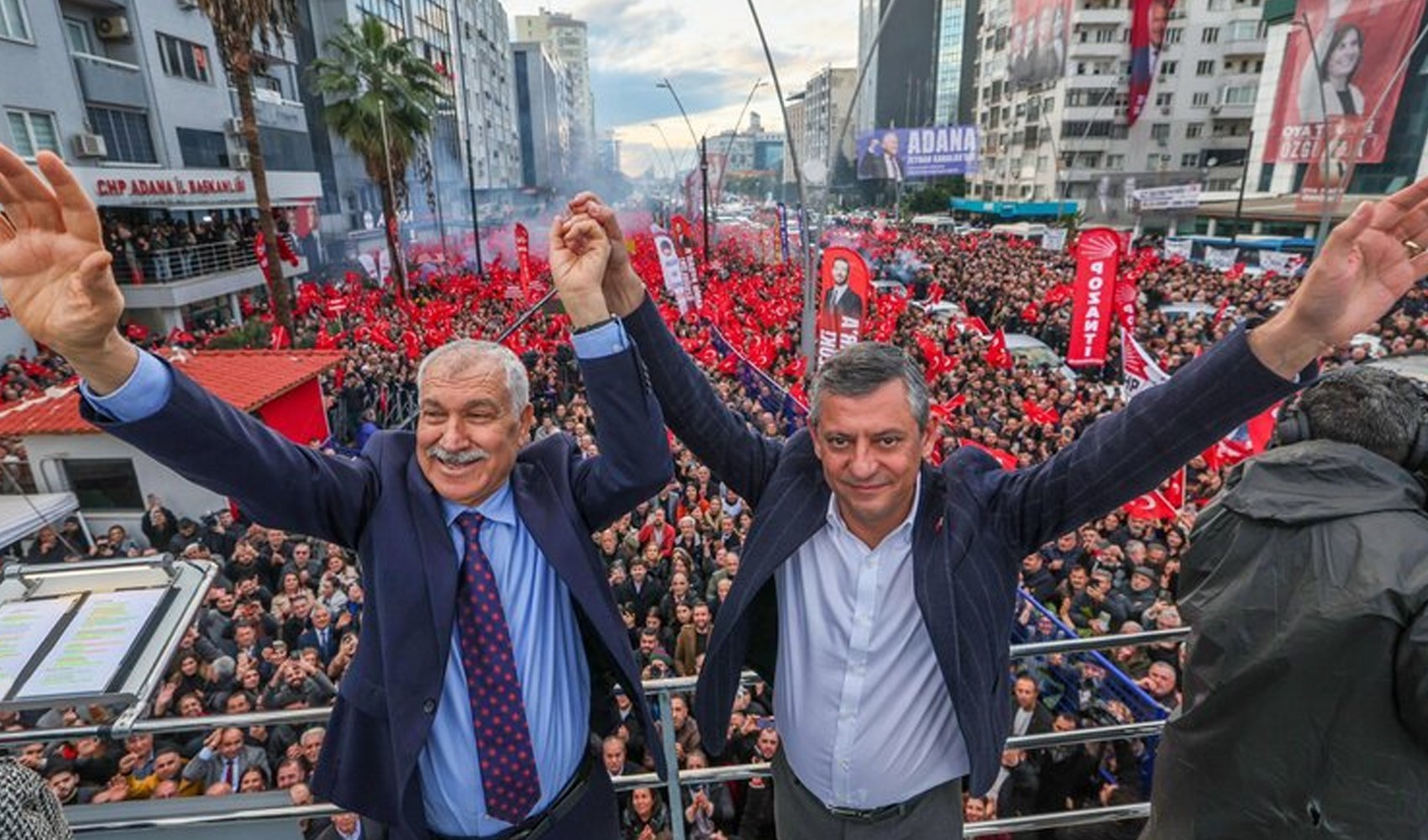
Zeydan Karalar's decision on the New Party

Key figure in Epstein files found dead at home

Famous director Ezel Akay and his brother have been detained