



Greetings,
Free-thinking, free-conscienced, beautiful people.
Continuing to look through the mirror of art…
What appears to us today in the mirror of art,
Rebirth,
In other words, the Renaissance,
In other words, Humanism,
When we say humanism, it is not the humanism based on the love of humanity that we always misunderstand or want to misunderstand,
And which we embellish,
But rather the first enlightenment doctrine after Sophist thought that points to the rational existence of man,
That believes in the necessity of secularizing man and his actions,
And that emphasizes that human reason and experiences should be directed to expand the boundaries of scientific and artistic creativity with a high-level questioning skill,
So, who were the architects of this light born from within the darkness of the Middle Ages, or what great transformative effect emerged from the interaction of which social dynamics,
What was the real power that set the wheel of history in motion in an unstoppable way and transformed all of Europe in the plastic arts, literature, science, and thought from the 14th century to the 17th century, starting from Italy?
Could it be competition?
You seem a bit confused….
I feel that way.
Weren't they the artistic geniuses who produced masterpieces like Leonardo da Vinci, Michelangelo, and Raphael?
Yes, they were, but let me confuse you a little more by saying…
The real power was the "patrons" who embraced their talents and genius, opened their arms to them, and gave them a place in their palaces.
You might ask, what is a patron, where did these patrons come from now.
Let me explain; the word, which was brought into Turkish as "mesen" from the French word "mécène," has been used to define people who protect and support scientists, artists, and thinkers economically and morally.
Medieval Italy consisted of city-states such as the Republic of Florence, the Duchy of Naples, the Republic of Venice, and the Republic of Genoa, and in all these city-states, there was a developing and influential merchant bourgeoisie.
Representatives of the wealthy class, who wanted to establish a balance in their favor with the ease of the wealth they obtained through trade against traditional aristocratic powers, especially the church, which dominated almost all of social life, began to act as patrons to have a say in the fields of culture, art, and science.
With artists being embraced and supported, they created architectural structures of extraordinary beauty and, again, masterpieces of extraordinary beauty.
All these artistic developments that emerged caused a cultural jealousy among the city-states, and each state entered into an effort to create superiority over the other in this field. Initially, popes and cardinals also joined the patrons who emerged from the merchant class. Because the changing, transforming, and superiority-providing power of art had been discovered.
The first name that comes to mind when it comes to patronage is the Medici Family from Florence. You won't believe it, but three popes have come from this family, which was involved in banking (Leo X, Clement VII, Leo XI).
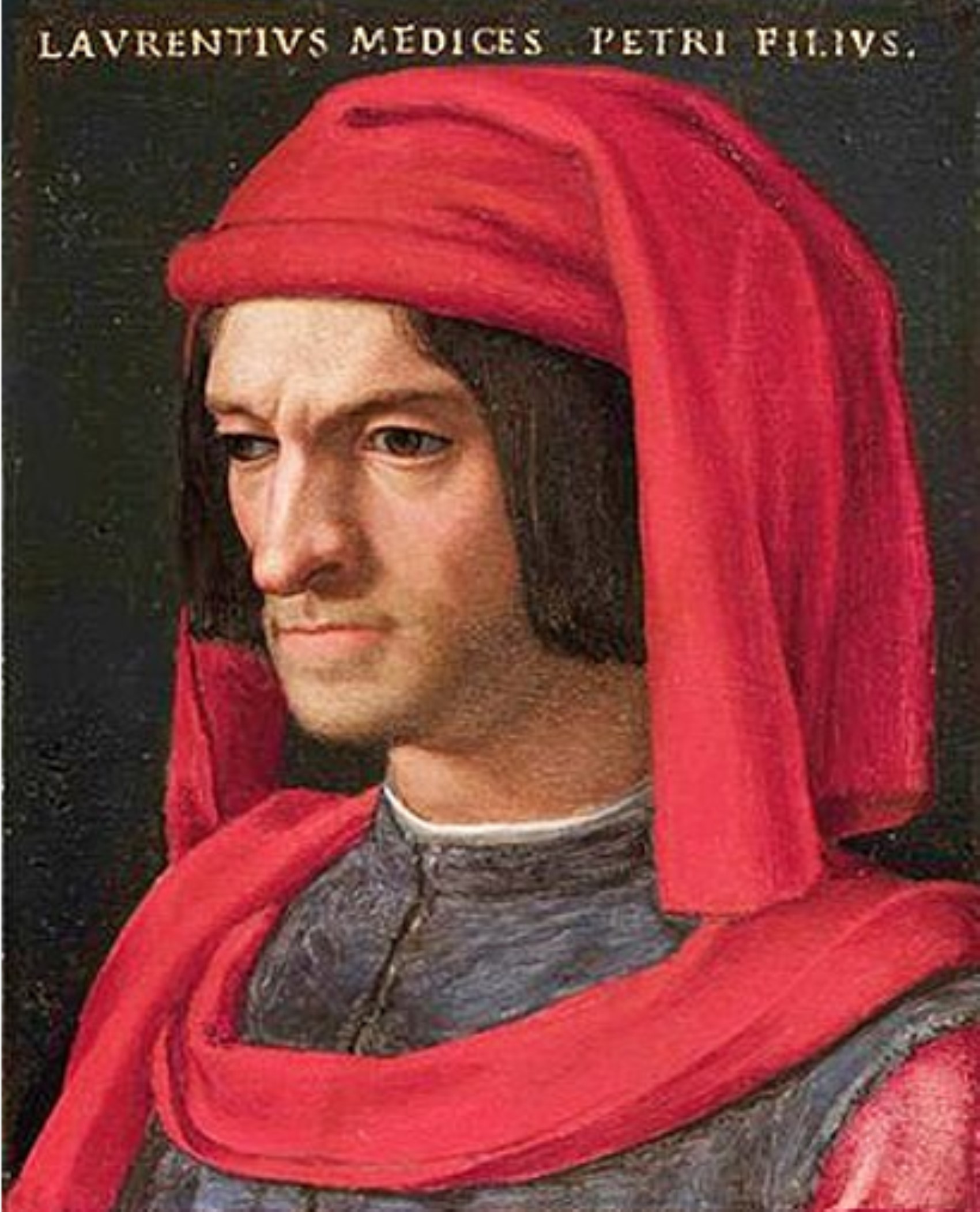
Lorenzo de’ Medici (1449-1492)
With the emergence of patrons on the historical stage and their beginning to compete with each other, the artists of that period also began to be invited from one city-state to another. From then on, the most valuable thing became showing one's power through art and science.
For example, Leonardo was first under the protection of the Medicis in Florence, then he entered the protection of the Duke of Milan, and finally, he went to France at the invitation of King Francis I of France.
Competition, even if it did not provide the rebirth entirely, had acted as a midwife to the rebirth.
So, the point was not just to earn money and become rich, but to transform that money into art, culture, and science to create civilization.
May the same be true for those among us who have money but cannot become bourgeois,
So, competition is important,
Not in the race of ignorance, of course..
In the race to create civilization,
Just like our Great Leader Gazi Mustafa Kemal Atatürk, the patron of our Republican Renaissance, who believed in art, culture, and science with everything he had, enough to have the Özsoy Opera commissioned even while in the midst of scarcity,
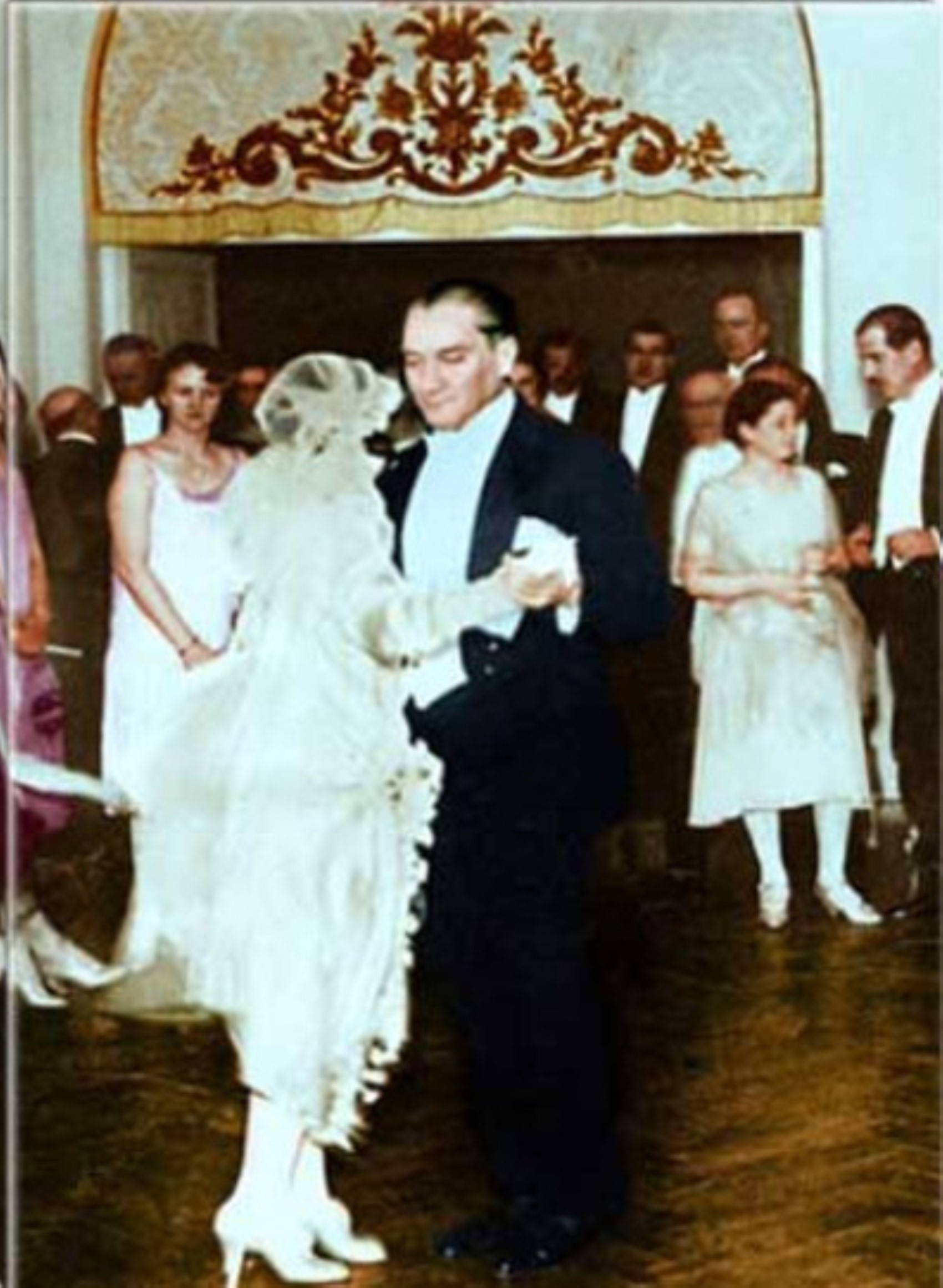
Competition is important,
Otherwise, there is no civilization….
Until our next meeting, goodbye for now, now and always, breathe with art, stay with art.
Most Read

Striking picture for Özgür Özel's 'New Party'

Özgür Özel gives a dated response regarding the number of resignations

Forest fire in Antalya brought under control

The PKK opening and Özgür Özel’s path!..

How did the newspapers view Özgür Özel's farewell to the CHP?

What did the CHP do?

Özel’s new party move in the world press

The New CHP, against CEHAPE

From self-efficacy to despair
The return of craftsmanship in the age of artificial intelligence