



Greetings,
Free-thinking, free-conscienced, beautiful people.
Continuing to look through the mirror of art…
What appears to us today in the mirror of art,
Is an old man with a white beard from across the water,
Who asks, “What is art anyway?”
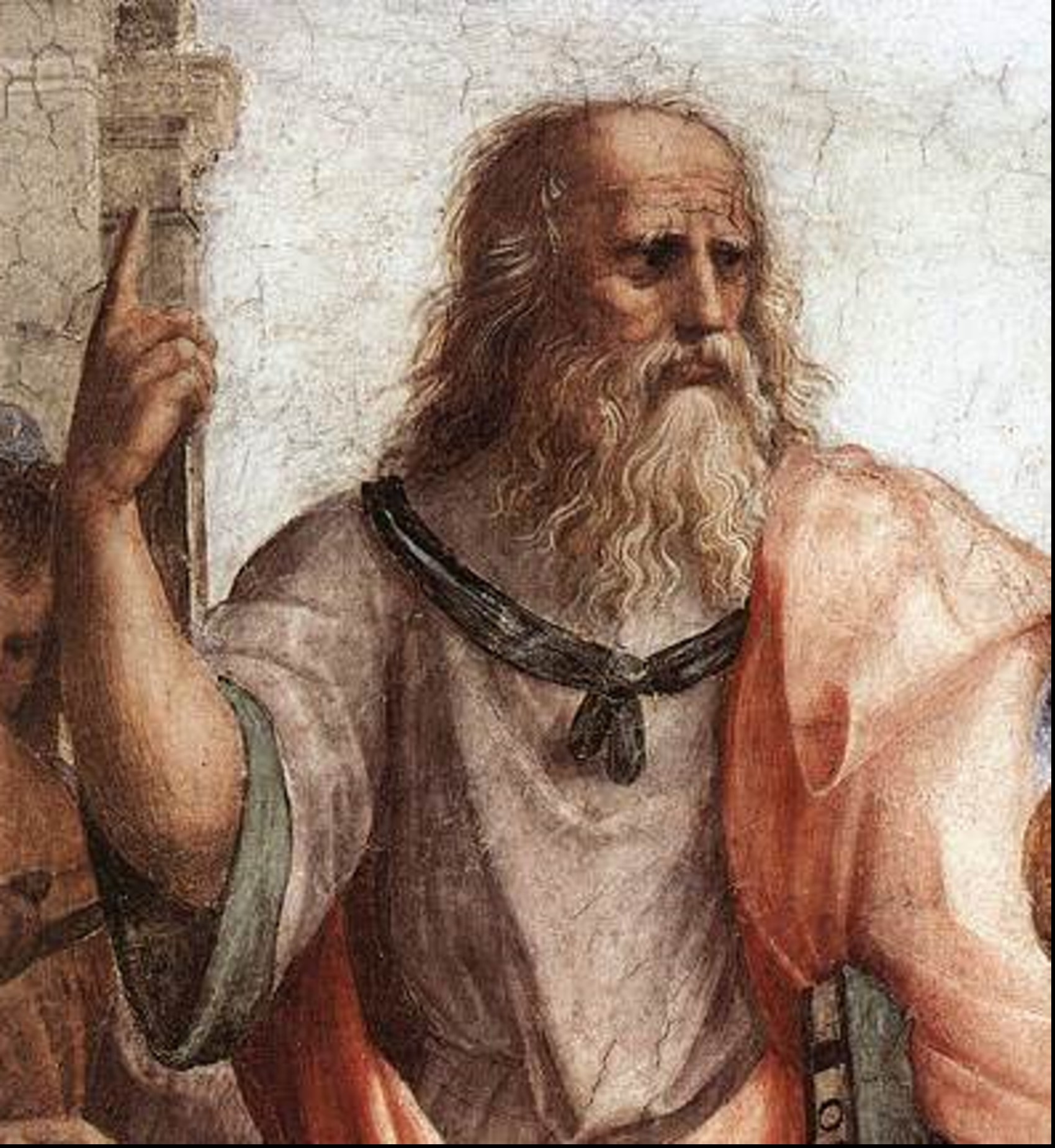
And when we say that, we don't mean the white-bearded man you might be guessing.
It is Plato, the student of Socrates—who said, “The only thing I know is that I know nothing”—the man who dreamed of the first utopian state and served as a tutor to Alexander the Great.
This old man, who appears to us today in the mirror of art, is also the founding father of Idealist Philosophy.
Plato, who lived in Ancient Athens between 428-347 BC and was the child of a deep-rooted, aristocratic family,
Says that art should be the work of reason, not emotions.
Oh, artists,
Don't get carried away by your emotions….
He says, don't be shameful.
Because according to the philosopher, every component of the visible world was an imitation of the realm of ideas. The essence of every being and object, especially humans, existed in the world of ideas. Furthermore, in our world of mortals, everything was ephemeral, meaning temporary. The world we live in was an illusion.
Everything we see with our eyes, hold with our hands, hear with our ears, smell with our noses, and taste with our tongues is an imitation, and artists were engaged in a futile task by creating an imitation of this imitation.
The nature that humans are a part of changes moment by moment, and the formation that emerges as a result of this change determined our perception through our senses, which are the tools we use to perceive the outside world.
Our white-bearded philosopher, by the nature of his philosophy, asked this question: Could there be a fixed, unchanging truth in a constantly changing world? If there could be no fixed truth in this state, there could be no knowledge of it, and it would result in nothing but deceiving us.
Therefore, the fact that imitations of imitations of things are constantly being made under the name of art clouds human reason, preventing reason from turning toward the pure and absolute ideas, and making truth unable to make itself felt.
And of course, artists were accused of being shameful by disrupting social order in terms of moral and ethical values, as we can understand from Plato's expressions: “For poets and writers do not speak properly about humans either. In their tales, we see that crooked people are happy and the righteous are unhappy.”
Our white-bearded grandfather even went further and demanded censorship.
Censorship,
Does that sound familiar to your ears?
So, what did Plato want to point to as the truth? Of course, the Divine and its divine order.
Artists, on the other hand, by creating illusions through the imitation of imitations, clouded human reason, paved the way for emotional fervor, and made it difficult to understand the divine order.
In other words, by mixing up the minds of us mortals like a blender, they were being shameful!
They were being very shameful!
As if they are still being shameful!
Shame!
Some people are still saying “what is art anyway,”
And continuing to shame.
To shame.
Until our next meeting, goodbye for now; for now and always, breathe with art, stay with art.
Most Read

Striking picture for Özgür Özel's 'New Party'

The PKK opening and Özgür Özel’s path!..

How did the newspapers view Özgür Özel's farewell to the CHP?

He killed his wife by slitting her throat: Their children witnessed the moments

What did the CHP do?

Özel’s new party move in the world press

Fire at TUSAŞ engine factory in Eskişehir under control

The New CHP, against CEHAPE

From self-efficacy to despair

Kılıçdaroğlu's first message on Özgür Özel's new party announcement