



Mustafa Kemal's most important characteristic was his love for his homeland. For Mustafa Kemal, who viewed the defense of the homeland as more important and superior to everything else, his love for the country and his trust in the Turkish nation played a significant role in the victory of the War of Independence.
Mustafa Kemal was an idealistic leader. His greatest ideal was to create a civilized society, united by a sense of national unity within our national borders. For this reason, he implemented comprehensive and progressive reforms that transformed Turkey into a secular, industrializing nation. Mustafa Kemal was a leader who ensured unity during the periods of national struggle, a great commander on the battlefields, and a political figure who founded the modern Turkish state.
Mustafa Kemal became a global leader not only in the national War of Independence fought against Western imperialism but also in the struggle against colonialism. The most valuable lives are those dedicated to society. Mustafa Kemal, who spent his short 57-year life for the Turkish nation, also bequeathed all his assets to his nation, as can be seen when examining his will.
Mustafa Kemal gained great prestige in the country and the world for his devotion to his homeland and nation, his love for the country and people, his idealism, his power to seek out the youth, his creative mindset, his understanding of patience and discipline, his foresight, his kindness, his frankness, his contentment, and his love of peace.
Aware that prestige does not come with cars, palaces, and armies of bodyguards, Mustafa Kemal resided in a modest mansion in Çankaya, traveled across the country by train on the network he wove with iron rails, and mingled freely among the people.
When the transition to a multi-party system occurred, dormant religious sects began to resurface, and disrespect and attacks against the cherished memory of Mustafa Kemal Atatürk increased, making it necessary to enact Law No. 5816 on Crimes Committed Against Atatürk on July 25, 1951. Unfortunately, it was not becoming of Turkish society to have to pass a law to prevent disrespect and rudeness toward its founding leader.
My grandfather was a soldier who fought in Mustafa Kemal's regiment during the Gallipoli Campaign. At every opportunity, he would recount what a great commander and good person Mustafa Kemal was. He carried the pride of being Mustafa Kemal's soldier until he died. I am happy that my grandfather, who spoke of him with praise and gratitude throughout his life, did not live to see these days when being Mustafa Kemal's soldier is treated as a crime.
Today, we unfortunately observe with sadness that all kinds of disrespect are shown toward the cherished memory of our great leader Mustafa Kemal Atatürk, that those who do so are encouraged, and that there is an attempt to virtually erase him from our lives. Finally, we watch with astonishment as formulas are sought to punish the lieutenants who shouted "We are Mustafa Kemal's soldiers" at their graduation ceremony.
"There can be no crime or punishment without law" is the most fundamental principle of both our criminal and disciplinary law. As a legal professional, I am waiting with curiosity to see under which article the lieutenants will be punished. In my opinion, to punish the lieutenants, the "catch-all" disciplinary article of "inciting the public to hatred and enmity" could be used!
Whether he is omitted from sermons or attacked at every opportunity, the vast majority of this nation maintains its gratitude, respect, and love for its founding leader, Mustafa Kemal Atatürk.
My advice to those who have wanted to erase Mustafa Kemal Atatürk from the hearts of the Turkish nation for years is to look at the visits to Anıtkabir and the celebrations of national holidays.
Most Read

Striking picture for Özgür Özel's 'New Party'

The PKK opening and Özgür Özel’s path!..

How did the newspapers view Özgür Özel's farewell to the CHP?

He killed his wife by slitting her throat: Their children witnessed the moments

What did the CHP do?

Özel’s new party move in the world press

The New CHP, against CEHAPE

Fire at TUSAŞ engine factory in Eskişehir under control

From self-efficacy to despair
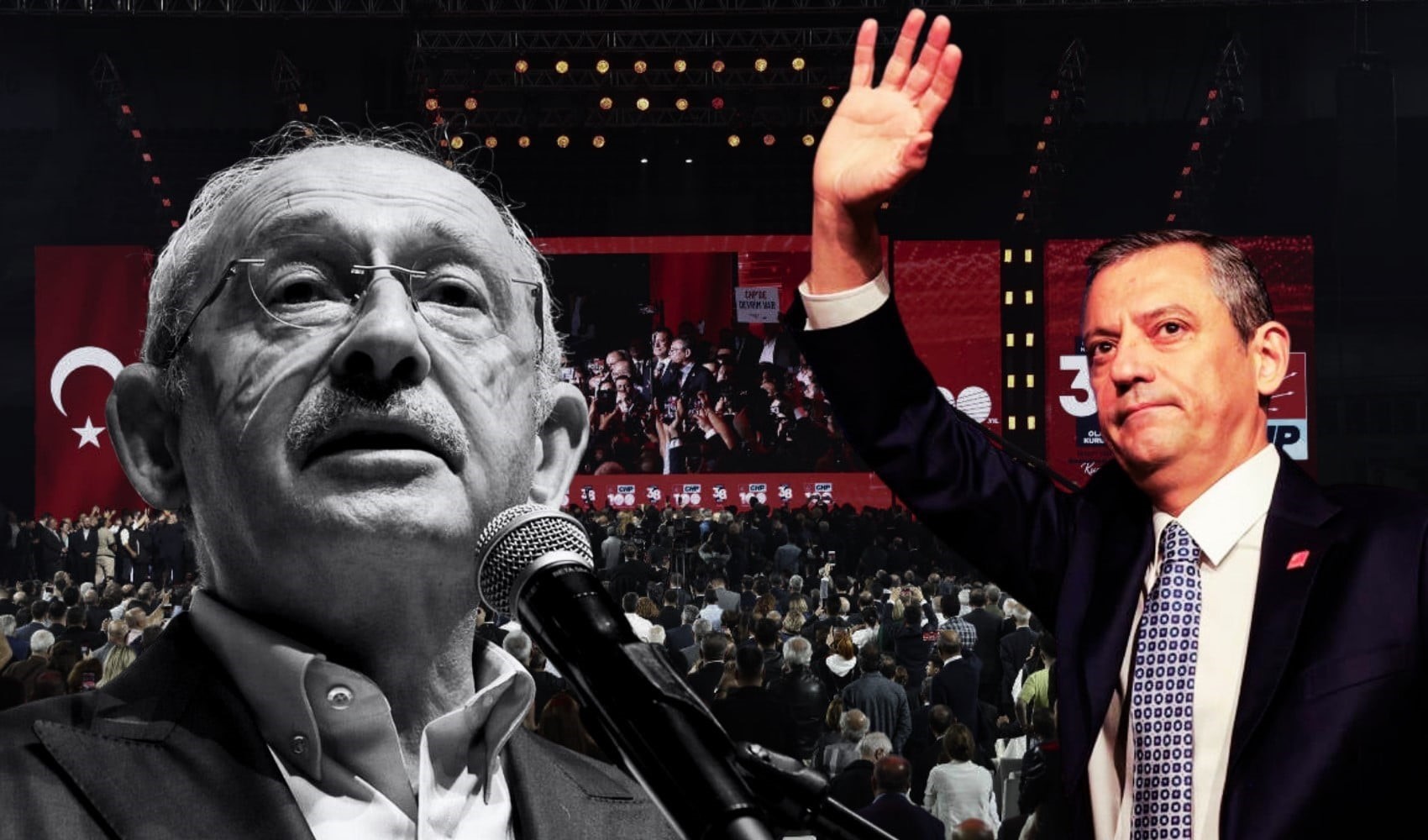
Kılıçdaroğlu's first message on Özgür Özel's new party announcement