



The diplomats of the late Ottoman period always lived with the shame and humiliation of being the foreign representatives of the 'Sick Man.' This was because they were the looked-down-upon representatives of a country whose energy-rich geography was soon to be partitioned by imperialists! One should reflect on how Chancellor Bismarck frequently scolded Ottoman diplomats and almost never gave them the floor while the Ottoman political geography was being carved up by imperial bigwigs at the 1878 Berlin Congress.
The Republic, having learned lessons from the pathetic state of the 19th-century Ottoman foreign service, would carefully select and well-train its foreign affairs staff. Behind the diplomats of the Republic lie not the shame of Berlin (1878) or Sèvres (1920), but the victories of Mudanya (1922) and Lausanne (1923).
It is time to turn to Bilal Şimşir, whom we lost yesterday, one of the first names that comes to mind when one speaks of "Republican diplomacy." Following his graduation from the Ankara University Faculty of Political Sciences, Department of International Relations (1957), Bilal Şimşir began his academic life as an assistant at the Chair of Diplomatic History in the same faculty. With the purge operation directed at universities by the political power of the time, Bilal Şimşir would also end his 3-year academic career.
Joining the Ministry of Foreign Affairs in 1960, Şimşir was a noble person who made national sensitivity, patriotism, commitment to Republican values, and identity his philosophy of life. When the qualities we have listed are combined with academic accumulation, they produce a profile of a diplomat who should be taken as an example.
My acquaintance with Bilal Şimşir, which turned into a friendship over time, began when he accepted my invitation to a Lausanne Panel during my tenure on the board of the Istanbul Bar Association. I have always been amazed at how, amidst his intense diplomatic workload, he could write so many books, each of which is a lesson in diplomacy, general history, and political history, and whose scientific rigor is indisputable.
It was 2015, the days when a Russian plane was shot down on the Syrian border. The victory could not be shared; those governing the country were elbowing each other, saying, “You gave the order to shoot down the plane, no, I gave it.” And when Russia showed its teeth, in a 'save your own skin' fashion, no one took responsibility for the mess, and they simply blamed it on FETÖ!
In those days when the dust and smoke were so thick you couldn't see, I called Bilal Şimşir and invited him to the Istanbul Bar Association to give a lecture on the past and present of Turkish Foreign Policy. He apologized and said he could not leave Ankara due to his intense book projects. When I stated that we attached great importance to his assessment of the subject, I received the following answer:
“I entered the Ministry of Foreign Affairs in 1960. The senior professionals of the time would tell those of us just starting out, citing former Foreign Minister Numan Menemencioğlu, about Atatürk’s three-point instruction for Turkish Foreign Policy, and they would say, 'Let this instruction be your professional principle, never forget it.' I would like to share with you Atatürk’s three-point instruction, which I made my professional motto during my tenure and strove to follow to the letter:
Do not follow in the footsteps of great powers (Do not be a tail/pawn)
Do not fall out with Russia (Maintain good neighborly relations)
Keep your distance from the Arabs (Do not get involved in their internal affairs or their endless quarrels)
For the Neo-Ottomanist crowd who mistake the endless piles of sand in the Arab deserts for gold dust in a mirage, Atatürk’s words may mean nothing. Even if a schizophrenic mindset that cannot perceive objects correctly loads them with meanings that do not exist in the real world, the objectivity and plain reality of life continue on.
Although Atatürk’s diplomat, a noble human being, has left us at the age of 90, he will undoubtedly continue to teach lessons in diplomacy and history forever with his works.
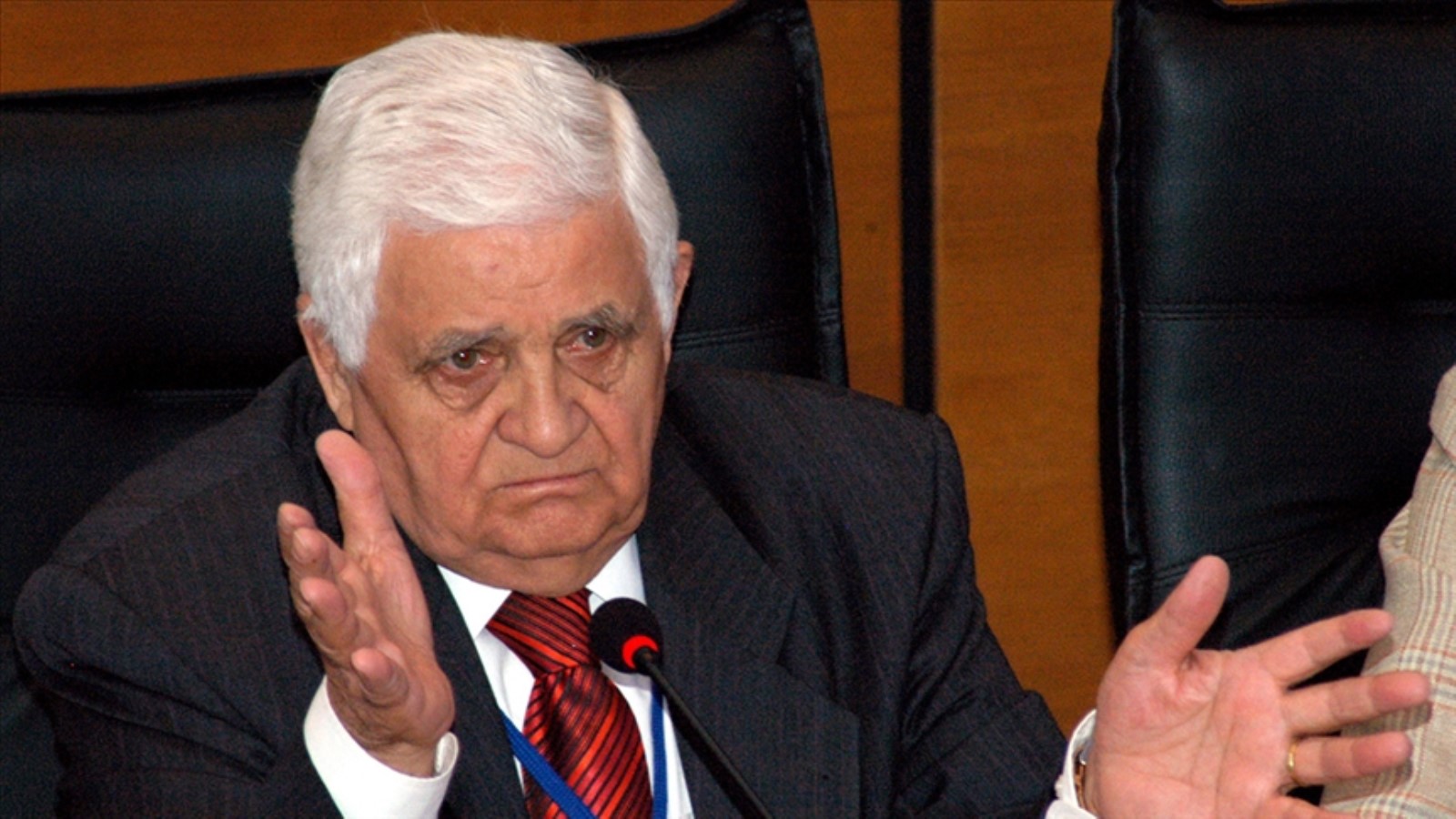
(Bilal Şimşir)
Most Read

Striking picture for Özgür Özel's 'New Party'

The PKK opening and Özgür Özel’s path!..

How did the newspapers view Özgür Özel's farewell to the CHP?

He killed his wife by slitting her throat: Their children witnessed the moments

What did the CHP do?

Özel’s new party move in the world press

The New CHP, against CEHAPE

Fire at TUSAŞ engine factory in Eskişehir under control

From self-efficacy to despair

Kılıçdaroğlu's first message on Özgür Özel's new party announcement