



Hakan Evrensel’s novel YER EKSİ İKİ (Ground Minus Two) was published by Alfa Yayınları in April 2005. Following his STORIES FROM THE SOUTHEAST, which shook, moved, and provoked thought in its readers, this first novel of his was also the subject of much discussion. The novel, which Evrensel develops around the axes of Captain Tayfun, journalist Ufuk, and Salman, is in fact our own tragedy. The events, which unfold with the speed of a motion picture around these three main characters, cover the period between May 4, 1993, and May 8, 1993.
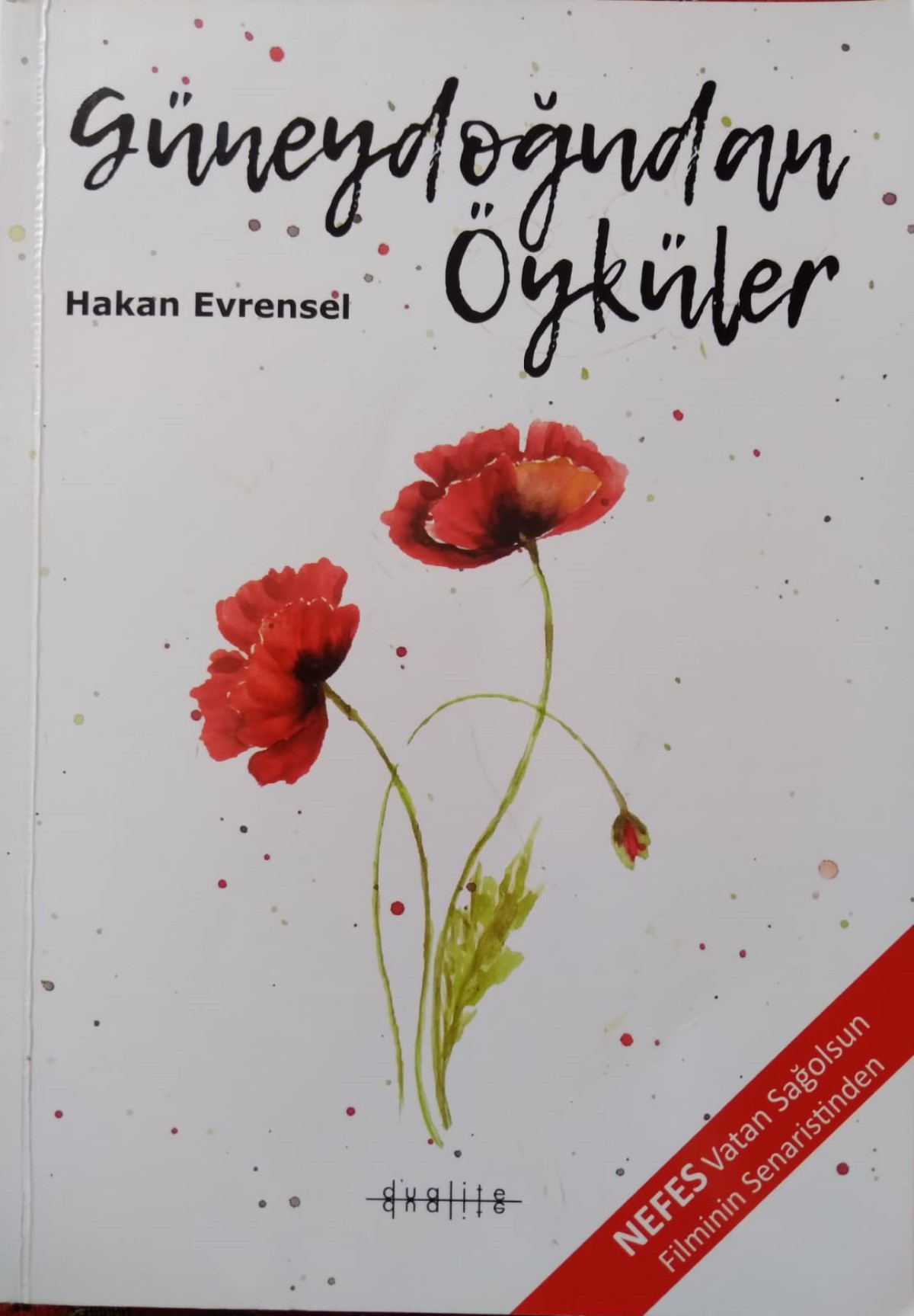
The paths of Ufuk, the Captain, and Salman—a grocer who has taken on the entire burden of his family after his older brother joined the PKK—intersect in the Southeast, leading each of them to experience events in this short time that would fit into a century of life. You will not be able to put the novel down until you finish it: Captain Tayfun, who is the commander, mother, father, and confidant to the soldiers entrusted to him, and who ages a hundred years in three or five days due to what he experiences; Ufuk, who discovers the order, the cycle, and the secret of the world in the mountains of the Southeast in just a few days; and Salman, who struggles in the whirlpool of family problems, a cousin who is a PKK sympathizer constantly overwhelming him, and his passion for his sister-in-law, which he is afraid to confess even to his own inner world.
In one of the outposts on the mountain peaks of the Southeast, while the Captain defends the homeland he and the soldiers entrusted to him have sworn to die for, his mind is on his wife, who is pregnant after a long treatment far away.
In the short time Ufuk is a guest of the soldiers at this remote outpost in the Southeast, he experiences moments worth a century that he will never forget for the rest of his life.
The section describing the outpost, which is subjected to a night raid by the PKK, is very impressive; it depicts Sergeant Oktay, who has been through many trials, the veteran private, and the novice private who is experiencing the smell of gunpowder, the complex harmony of rockets, mortars, and machine guns, and the confusion of the clash, the struggle, and the cries blending into the soil and nature for the first time. You also see how the warrior identity, which the Turkish nation has formed throughout its long historical journey and which lies dormant in its essence and genetics, suddenly emerges during moments of conflict and difficult times.
The dialogues with Ufuk will also strike you as very poignant, involving Salman, who is looking for a way out in the spiral of a sick father who has loaded the burden of his sons in the mountains onto him, his family members, his sister-in-law, the shop he is trying to keep running, a truck that keeps breaking down, and the military unit he supplies, all while dreaming of escaping to distant cities to study with the support of Captain Tayfun.
You feel as if you are watching a plain, impressive, high-artistic-level, fast-paced film while reading the novel. You wonder how the events will develop and how they will conclude, and you cannot put it down until you finish. The simplicity and fast flow of the novel draw you in and do not let go. Yer Eksi İki is not a novel you can read with the comfort of a third person outside of the story. You will run toward the end with the characters of the novel at the speed of a film. You will see in the novel Tayfun’s dilemma after receiving intelligence that the outpost will be raided while he is getting leave to be with his wife who is about to give birth, and the unique resignation of Ali from Kastamonu, who is going on leave with his commander and whose wedding is to be held in the meantime, when faced with the same dilemma.
The novel is, of course, not just what we have described here. Ancient Anatolia, Egypt, Hittite civilization, and mythology are skillfully blended with the present day.
Evrensel’s definitions and descriptions regarding nature, humans, conflict, dialogue, and inner reckoning are very impressive:
”And the poppies were slowly rising to the sky. As their bodies, heavy with dew drops, bent toward the ground, a petal from the black knob at the tip of each was finding its freedom. The poppies were embracing the sun. Defiantly throwing their black spots, the symbols of death beneath their petals, toward the sky.”
Being able to reflect Turkey, the world, the rampant nature of globalization, the marketing of landmines and Kalashnikovs, and the terror spiral whose roots extend to European capitals and across the Atlantic within the flow of the novel through the four-day prism of the Southeast is hidden in Evrensel’s power to combine the simplicity of a soldier with artistic depth.
“THE TURK’S TRIAL BY FIRE” was given in the first quarter of the last century as a result of great pain and hardship. The “NEW TRIAL BY FIRE OF THE TURK”, which has been initiated since the last quarter of the century, continues. Hakan Evrensel is one of those who gives this test with both his pen and his blood. Therefore, know that what drips from his pen is the blood of his comrades-in-arms, veterans, and his own.
Let us make one last quote from the novel:
“When he lifted his head, he saw that the child in the front seat had taken the pacifier out of his mouth and was looking at him with a smile. The child was saying, 'Take it!'
'Take it!'
Salman looked into the palm of the child. The flower he had just extended the stem of was a poppy. The blood-red color of the flower, crushed between his lumpy fingers, had left stains between his tiny fingers. Salman took the child’s hand and touched his lips to the tiny fingers adorned with poppy stains. The smell of soil and fresh poppies spread in waves to his nose. Then, he placed the wooden carved rosary in his hand into this tiny hand with red stains and closed its fingers one by one.
Then...”
Note to the reader: The film adapted from the novel has been released in theaters under the same name.
Most Read

Striking picture for Özgür Özel's 'New Party'

Özgür Özel gives a dated response regarding the number of resignations

Forest fire in Antalya brought under control

The PKK opening and Özgür Özel’s path!..

How did the newspapers view Özgür Özel's farewell to the CHP?

What did the CHP do?

Özel’s new party move in the world press

The New CHP, against CEHAPE

From self-efficacy to despair
The return of craftsmanship in the age of artificial intelligence