



The 36th NATO Summit of Heads of State and Government will convene in our capital Ankara on 7–8 July 2026. Founded in 1949 under U.S. leadership — with Turkey joining in 1952 — this organisation is a military alliance that accounts for more than 70 percent of global defence (in reality, aggression and war) spending.
Although NATO, established in the aftermath of World War II, presents its purpose as defence and cooperation, it was in fact an armed structure with civilian components directed against the Soviet Union and socialism. It organised coups through Gladio networks and carried out armed actions against the peoples of member states. The 12 September coup was one of the most glaring examples of this.
Even after the Soviet threat disappeared following 1991, the organisation continued its activities. It was on the scene wherever U.S. and allied interests lay — the bombing of Yugoslavia, and operations in Afghanistan, Iraq, and Libya. Today, although the Russian Federation may appear to be at war with Ukraine, it has in fact been at war with NATO for more than four years.
Our participation in the Korean War by sending troops in 1950 was, in a sense, the entry fee for NATO membership. Our membership in this alliance is not merely a matter of military cooperation; it is an indicator of a political and economic alignment. Since 1946, Turkey made a choice and aligned itself with the Western alliance. To understand the roughly eighty years of the Turkish Republic that followed, it is necessary to correctly analyse this alignment and NATO itself.
In 1945, the Soviet Union's demands — raised during the meeting between Soviet Foreign Minister Molotov and Turkish Ambassador Selim Sarper — for control of the Turkish Straits and territorial concessions (Kars and Ardahan) were used to lend legitimacy to NATO membership and our entry into the U.S. orbit, and this had its consequences. Turkey, cast in the role of a forward outpost against the Soviets, was shaped — through its politics, its military, and its capitalist class — to protect the interests of this alliance in line with NATO's objectives. Today, NATO is one of the few subjects on which a broad consensus exists across the ruling party and the opposition in Turkey. Turkey's membership has been absorbed and accepted as beyond question.
We have lived through the negative consequences — over the decades that followed — of the Turkish Armed Forces being equipped by the U.S. and NATO, and of officers being subjected to indoctrination. Looking at which countries the perpetrators of 15 July are fugitives in today is enough to give one a clear idea. The embargoes we faced over the Cyprus issue, and the overt or covert support given to separatist and reactionary movements, came from the very states we call our allies. NATO's influence and propaganda activities were also conducted intensively within civil society; publications and research in the press and academia were supported in this direction.
Although this is a difficult debate to address in a short piece, my view is that NATO membership has done Turkey more harm than good.
Ahead of the meeting to be held in Ankara, a state resembling martial law has effectively been declared in the central districts of our capital. Administrative leave has been granted to public employees, and public events including exams, symposiums, panels, graduation ceremonies, entertainment, celebrations, and similar gatherings have been banned. At hospitals across the city, appointment intervals have been extended from five minutes to twenty minutes — the aim being to reduce patient density. Road surfaces have been repaved, and construction work in Çankaya is to be suspended so as not to disturb visitors.
Among the arrangements made on account of the meeting, there is one practice that is deeply humiliating. The fronts of shanty houses along protocol routes have been screened off with panels, and neglected buildings have been painted. Although the stated justification is security procedures, the real purpose is to prevent foreigners from having their aesthetic sensibilities offended. If there is a picture of poverty in our capital that is deemed unfit to be seen, those responsible for it are the very participants of this meeting and those who have done business with them for eighty years. Humiliating tasks such as having brothels repainted when the U.S. Sixth Fleet visited İstanbul are, regrettably, still being carried out today.
The Mayor of Ankara Metropolitan Municipality is pleased to have finally achieved the coordinated working relationship with the government he has long yearned for; the elected but former leader of the main opposition party is writing an article/petition to Newsweek magazine saying he could work more harmoniously with NATO than the government can. Those who never stop talking about nativism and nationalism, and the nationalists themselves, had already enlisted in NATO's service from day one. Even our most ardent Islamist advocates for Palestine are watching what goes on from behind the parapet when the subject is NATO.
I want to believe that patriotic people of every persuasion in our country are deeply disturbed by these humiliating, quasi-martial-law practices taking place in our capital, and that they stand opposed to every form of organisation that shackles the national sovereignty of the Republic of Turkey.
Most Read

Striking picture for Özgür Özel's 'New Party'

Özgür Özel gives a dated response regarding the number of resignations

Forest fire in Antalya brought under control

The PKK opening and Özgür Özel’s path!..

How did the newspapers view Özgür Özel's farewell to the CHP?
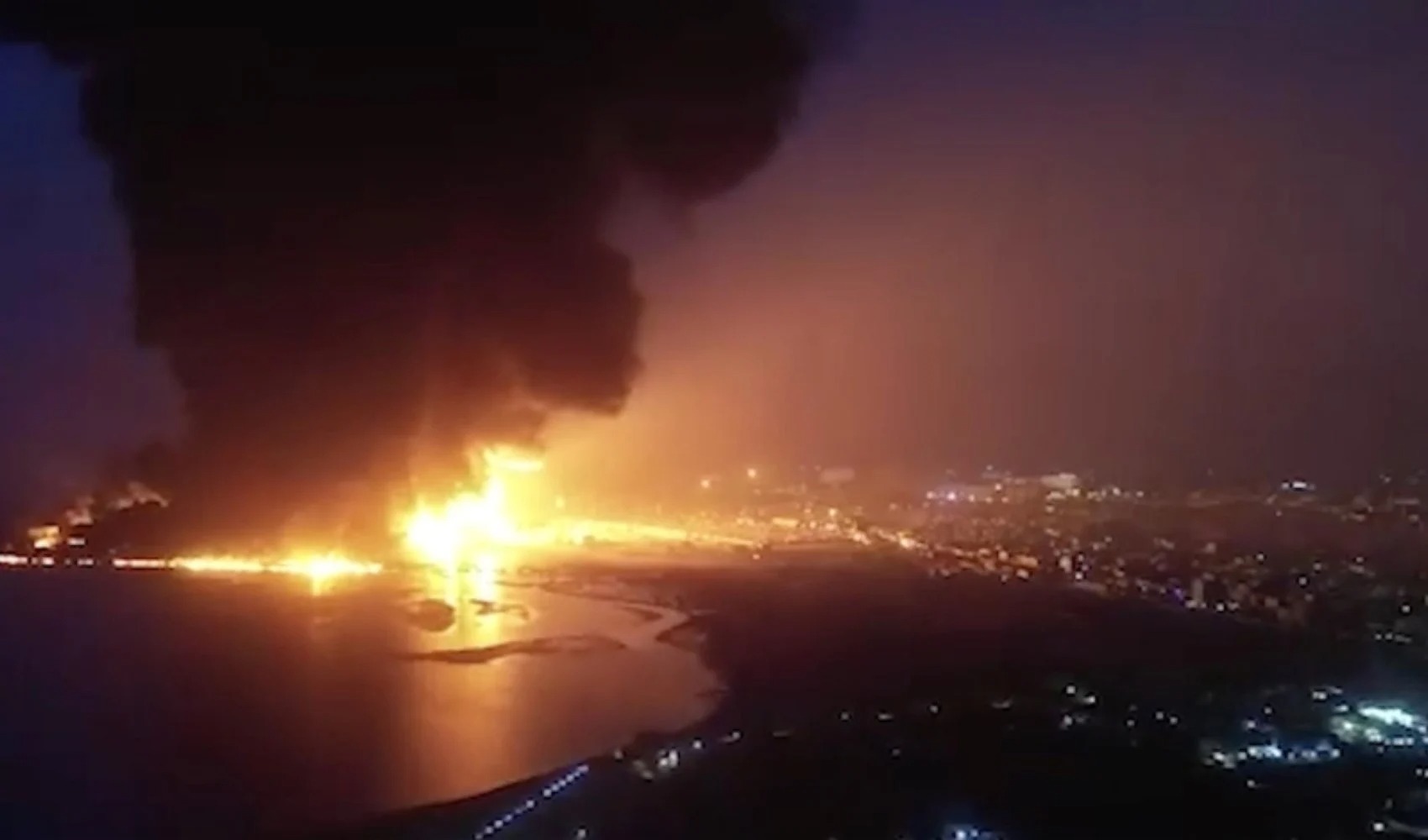
Houthis strike Saudi-owned tanker

What did the CHP do?

Özel’s new party move in the world press

The New CHP, against CEHAPE

From self-efficacy to despair