



He was 13 years old.
He was on the Gallipoli front.
His acts of heroism had previously been the subject of the German press. This time, the German writer Vollmoellar from the magazine “Berliner Illüstrirte Zeitung” had come to the front and wanted to meet him.
The commander of the German machine gun unit called out, “Ali.” From behind the tent, a thin, small 13-year-old boy appeared. He was almost lost inside his brown uniform. On his head, he wore an Enveriye cap that was far too large for him.
His name was Ali Reşat. He was a bomber.
His father was a captain in Macedonia. However, he had fallen as a martyr in Kumanovo during the Balkan Wars. Ali Reşat had lost his family during the Balkan Wars; his mother and siblings had been massacred by the Serbs.
However, Ali Reşat had survived this massacre and, by taking refuge with the Ottoman Army, had reached Thrace. And when the soldiers he took refuge with joined the Gallipoli Campaign, he came to the Gallipoli Front with them.
On this front, he fought just like his older brothers. Because he was young, he could approach enemy trenches fearlessly without being seen, cut barbed wire, throw bombs, and escape back. Ali was young in age, but his heart was big. He had caused the deaths of many enemy officers in this way. However, he had also been seriously wounded twice.
In April 1915, during an attack, he was wounded in both legs and his lungs, and after about four weeks of treatment, he had returned to the front.
When he returned to the front, this time he was slightly wounded in his left shoulder.
Due to these acts of heroism, Enver Pasha met with him during a visit to the front and granted him the rank of sergeant.
Ali Reşat stood before the German writer Vollmoellar, who had come to visit him, saluted, and introduced himself. That day, he had turned 14. On the shoulders of the uniform he wore were sergeant epaulets.
It was at that moment that the German writer pressed the shutter of his camera. This visit was published in the August 22, 1915 issue of the magazine Berliner Illüstrirte Zeitung under the headline “The Turkish Army’s youngest non-commissioned officer,” and Ali Reşat’s story was given extensive coverage.
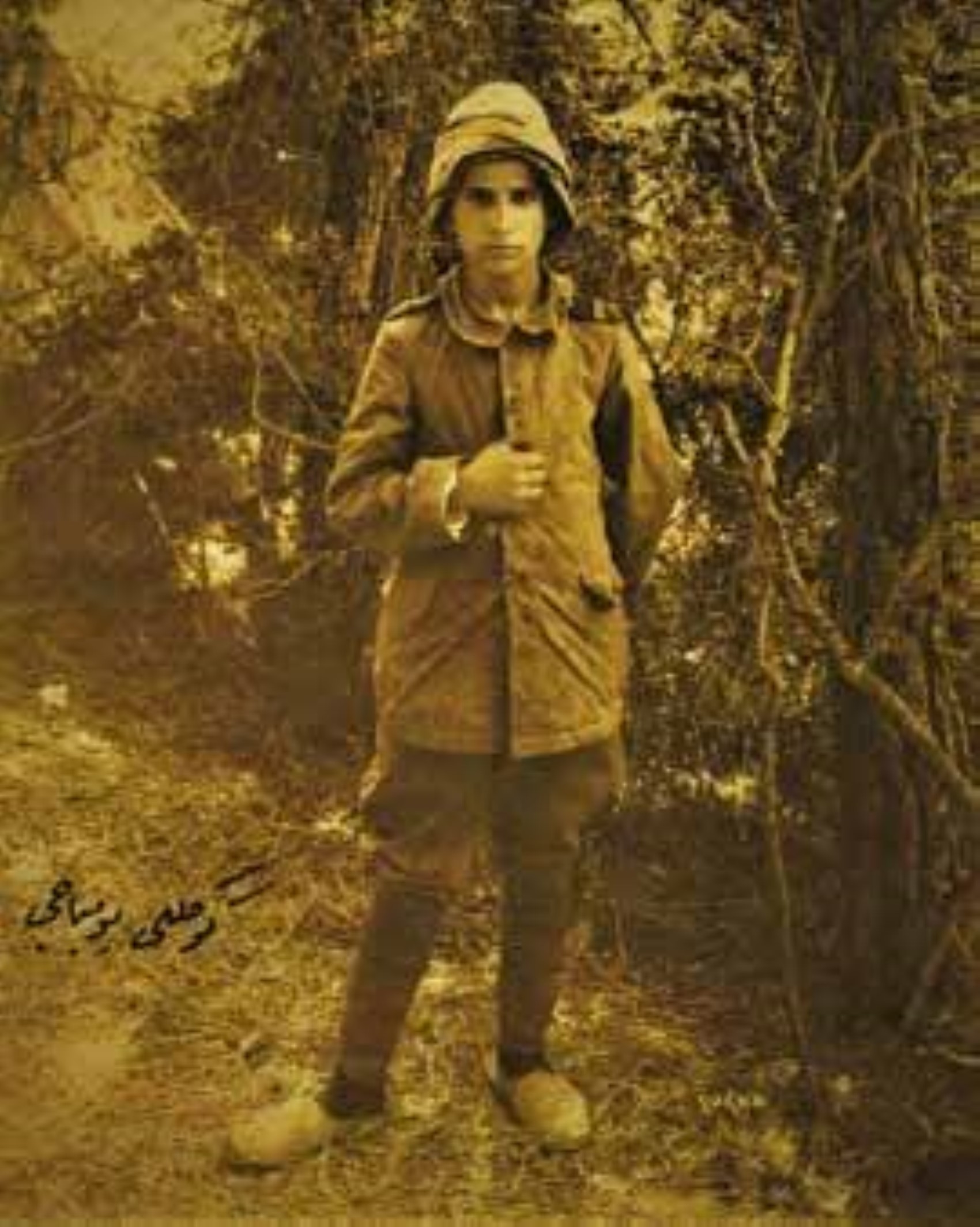
Thus, the entire public came to know Ali Reşat, the child hero of the Gallipoli Campaign.
In 1921, his life became a book. Armin T. Wegner, who had previously come to Turkey as a health worker, turned Ali Reşat’s story into a book in 1921.
Although the name of the hero mentioned in the book was different, his life was the same as Ali Reşat’s. In his book, Wegner wrote that this hero would return to Edirne after the war, but no news of Ali Reşat was heard after the Gallipoli Campaign.
He was neither seen nor heard of anywhere.
Like thousands of nameless heroes, Ali Reşat found his place on the golden pages of history.
May your soul rest in peace, child,
For gifting us this beautiful homeland.
Most Read

Striking picture for Özgür Özel's 'New Party'

The PKK opening and Özgür Özel’s path!..

How did the newspapers view Özgür Özel's farewell to the CHP?

He killed his wife by slitting her throat: Their children witnessed the moments

What did the CHP do?

Özel’s new party move in the world press

The New CHP, against CEHAPE

Fire at TUSAŞ engine factory in Eskişehir under control

From self-efficacy to despair

Kılıçdaroğlu's first message on Özgür Özel's new party announcement