



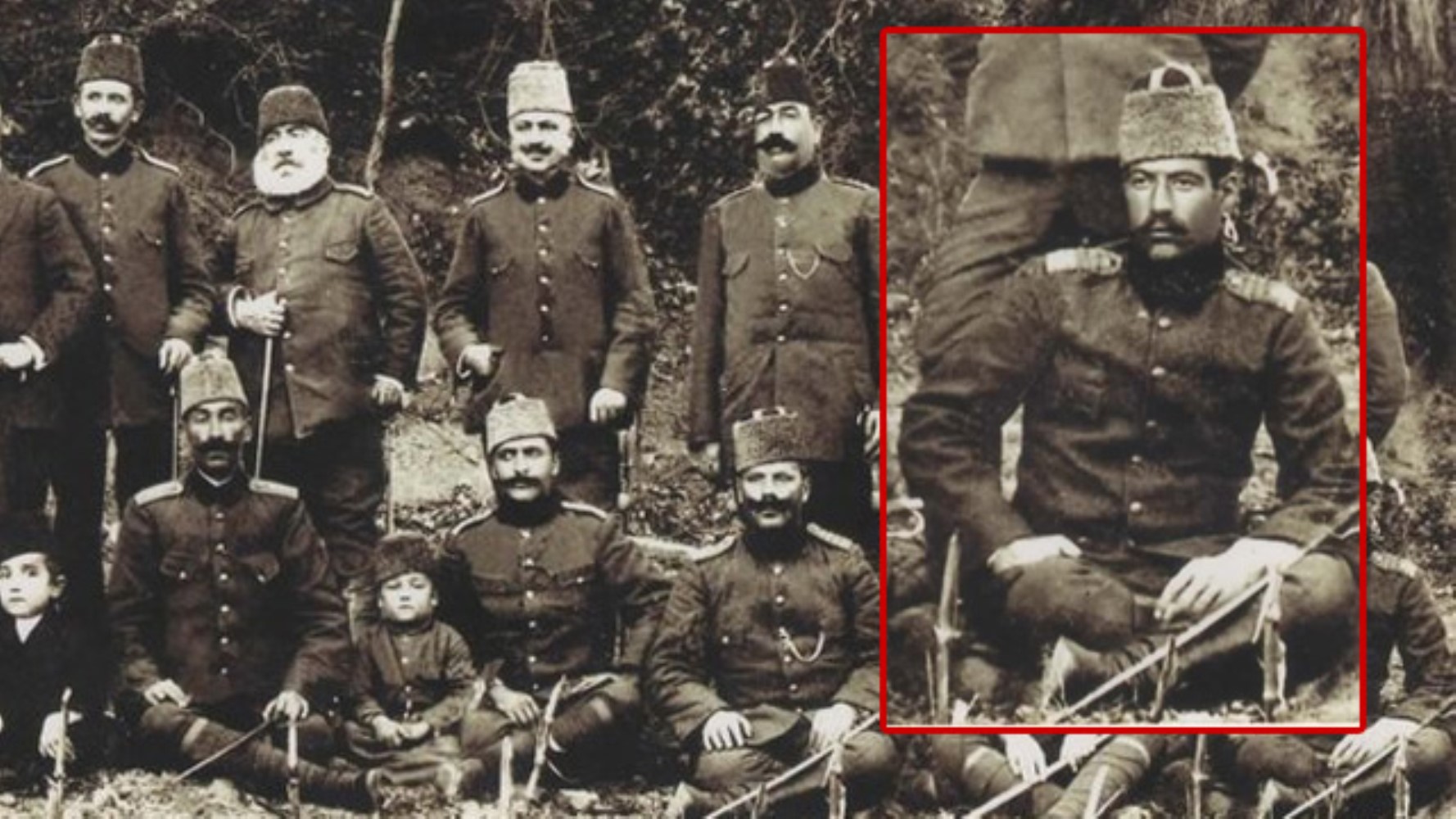
He was a captain.
He was in the same class as Atatürk.
He fought in Tripoli, he fought in the Balkan Wars, he fought in the Gallipoli Campaign.
His name was Yusuf Kenan.
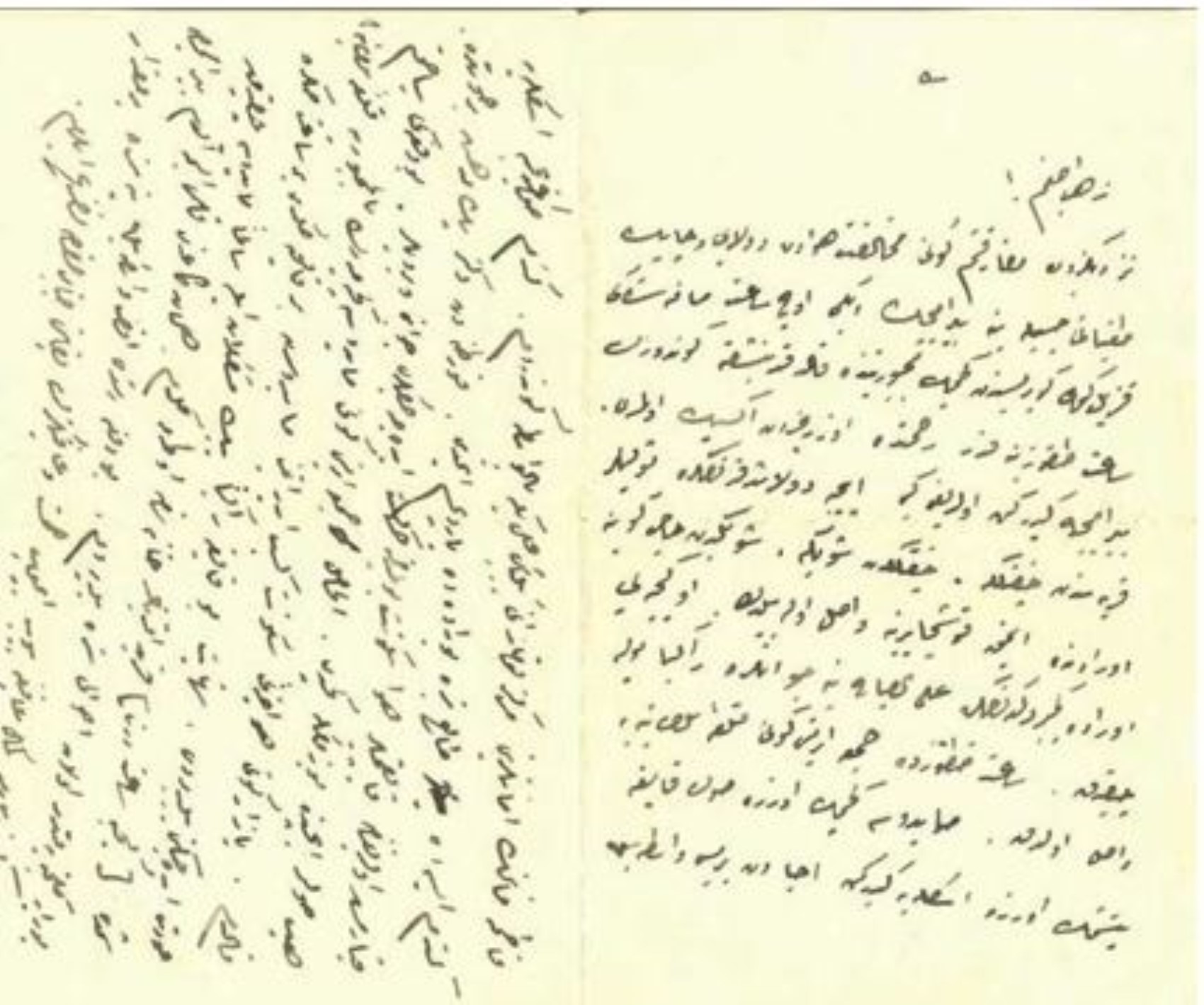
He was bound to his wife with a very powerful love. So much so that the letters he wrote from the front lines were legendary. Letters starting with “My love, my darling, my dear wife, my source of happiness” continued with “Oh my love, I cannot describe to you how emotional I felt while scribbling this piece of paper.”
His wife wrote with the same beauty, of course...
Their writings were unique.
Moreover, they would argue from time to time. They would pour their arguments onto paper with the mastery of a naive writer. For instance, when Yusuf Kenan Bey wrote a distressing letter, his wife Zehra Hanım would complain, calling her husband's sad letter a “poison letter,” and on June 11, 1913, she wrote these lines to him;
“I received your submitted poison letter. I was very saddened. I remained in sorrow. I was hurt. Misfortune is playing many tricks on me these days. When I glance at the letters I wrote to you, I weep with sobs. I write the most delicate, most affectionate feelings of my heart, yet....”
There was no such love.
There were no such lines describing love. Especially in this age we live in, these lines are never written at all.
Yusuf Kenan wanted his love for his wife to last forever; for example, he expressed this on September 9, 1913, as follows;
“My Zehra! I want our hearts to be satisfied with love forever. I wish for that love, let it be small, but let it not be shattered. My heart is filled with such love for you.”
Yusuf Kenan Bey’s addresses and verses were so beautiful, so naive; for instance, on January 18, 1913, from the Thrace front, he called out to his wife: “My Dear Wife. My source of happiness. My beloved Zehra! Is it not proof enough that the sun's light illuminates the universe, for me to try to explain my love for you?”
The war was continuing in Thrace..
The Bulgarians had withdrawn from Çatalca due to the Second Balkan War, and Edirne had been recaptured. After the Balkan War ended, Captain Yusuf Kenan Bey was assigned to the Gallipoli front. On December 13-14, 1914, he grabbed his pen again. He wrote these lines, which were like poetry, to his wife Zehra Hanım from Gallipoli;
“My soul!
I was very happy when your letter, which you wrote with that elegant pen of yours that is the interpreter of your pure and clean heart, and with your loyal style that both gladdens and saddens me, reached my hands. A year ago, in my reclusive life that I spent so strangely during the Balkan War, only your lovely letters were capable of destroying my pain and sorrow. Believe me, the black lines you will write on that bright paper will illuminate and brighten my heart, which is very dark, just as they did for my sad heart again.” he said.
Zehra Hanım also addressed her husband with the same feelings, replying with a letter saying, “My source of honor, my dear husband.”
They also had two little daughters, the fruit of this naive love.
Their names were Rüçhan and Müjgan.
Zehra Hanım wrote that they were comfortable and well in Istanbul, that he should not worry about her and their daughters, that Müjgan was sleeping soundly in her cradle, and that their older daughter Rüçhan missed him very much, telling guests “Our father went to Maydos,” and that she would take his photograph into her small palm, crying “Ahh my dear father, come now. I won't be naughty,” kissing and smelling his picture.
From time to time, Zehra would complain, “If only the war would end so we could retreat to our homes,” saying, “Oh Lord, when will we sit in our home to our heart's content like everyone else? When will we take our Rüçhan, who has started to understand everything, between us and laugh?”
On December 27, 1914, Yusuf Kenan Bey comforted his wife in a letter he wrote to her, saying, “My dear wife, I think of you day and night. You are in my life. You are in my soul. You are in my happiness.”
His wife Zehra Hanım wrote a reply on January 5, 1915, and answered, “My benefactor, I received your heart-caressing compliment that truly revived me with great happiness. I have read it many times. I am still reading it now.”
The letters written to each other were read over and over with sobs and tears, kissed and smelled over and over, and wept over over and over in sudden loneliness.
The Gallipoli Campaign was continuing with all its intensity.
On March 18, enemy ships were defeated in the Strait, and a lesson like a slap in the face was given with the naval victory.
While things were quiet for a moment, ten days later, on March 28, 1915, Captain Yusuf Kenan wrote one more letter to his wife. He stated that she should not worry about him and that he was well. In his letter, he gave brief information about the Gallipoli Naval Battles and said that the enemy would be ruined.
When the Entente fleet, which was forcing Gallipoli from the sea, suffered a major defeat, it wanted to pass by land this time. It prepared all its plans accordingly. For this purpose, it landed troops at Seddülbahir and Arıburnu on April 25. The full intensity of the war had begun again. This intensity was on land this time. Soldiers were anxious and running from trench to trench. They were trying to protect the Gallipoli peninsula from land against enemy soldiers who were far superior in number. For this reason, Yusuf Kenan had not found the opportunity to write letters lately.
On the other hand, Mustafa Kemal Atatürk had displayed a great example of heroism at Arıburnu and pushed the enemy back, but the enemy had managed to advance at Seddülbahir. They had landed from Ertuğrul Bay and surrounded Aytepe.
The situation at Aytepe was critical.
If Aytepe fell, the south of Alçıtepe would fall. If Alçıtepe fell, the enemy would easily descend to Kilitbahir from there and win the war. Battalion Commander Mahmut Sabri, who was defending Aytepe, was in a difficult situation.
He requested urgent help from Alçıtepe. Alçıtepe Regiment Commander Major Hafız Kadri Bey prepared 7th Company Commander Captain Yusuf Kenan Bey to be sent to Aytepe on the morning of April 25. Yusuf Kenan Bey, who received the order, moved from Balıksırtı. He was going to help Aytepe. While turning around the farm of Islam with his 250-man company, he coincidentally saw another 2,000-man enemy force landing at İkizkoyu in the Kızıltoprak area. And he stopped right there, examined the surroundings, and realized that there was no obstacle in front of the landing enemy.
İkizkoyu and its front were completely empty.
He stopped, thought, he had two options. Either he would stay here and stop the enemy, or he would go to help Aytepe. But if he went to Aytepe, the enemy landing here would both surround Aytepe from the rear and march to Alçıtepe. If Alçıtepe fell, Seddülbahir would fall. Yusuf Kenan Bey made a decision. He would not go to Aytepe.
He would stay there and stop the enemy.
And he did so.
Like Mustafa Kemal, he used initiative, he did not think of his friends waiting for help, he did not think of himself, he thought of Seddülbahir. He thought of Gallipoli.
He thought of his homeland.
Together with the soldiers waiting for help at Aytepe, he said 'let thousands of Yusuf Kenans be sacrificed' and threw himself into death. He sat down, took a position right there, and fought heroically with his 250 soldiers against the 2,000-man fully equipped enemy until evening.
This resistance ruined all the plans of the enemy that landed. It ruined their game. While the enemy was stalling the Turkish soldiers at Aytepe, they were going to land at İkizkoyu to both surround Aytepe from the rear and capture Alçıtepe. And Seddülbahir would fall. Moreover, as a result of this, Mustafa Kemal Atatürk, who was fighting at Arıburnu, would have been surrounded from the south and would have been in a difficult situation.
With this decision and this heroism, Yusuf Kenan Bey prevented the fall of Seddülbahir.
He stopped the enemy, which was ten times his size, and inflicted heavy casualties.
It was evening.
However, towards evening, a piece of shrapnel from the shells fired from the enemy ship unfortunately hit Yusuf Kenan Bey. And Yusuf Kenan Bey lost his life.
The war fell silent. The fronts fell silent. Those naive lines, unfortunately, fell silent. And those beautiful verses and letters had also fallen silent.
Yusuf Kenan Bey was 34 years old. He had become a martyr. The letter he sent to his wife, starting with the words “My soul, my angel, my dear wife” and ending with “my darling, my love,” dated March 28,
was his last letter.
It was painful; his body was searched for after the war, but Captain Yusuf Kenan’s grave could not even be found. His grave was all the sacred lands of the homeland.
Theirs was such a love that even if it were possible for Ferhat and Şirin, Kerem and Aslı, Leyla and Mecnun to read those letters, I am sure even they would be jealous.

Yusuf Kenan and Zehra.
They were the heroes of love, affection, and war.
And many others. And many others like Yusuf Kenan and Zehra, many heroics, many affections, and many loves. They flowed like water, becoming tears on the unknown pages of history.
These beautiful, unique, naive people left this beautiful country to us...
Most Read

Striking picture for Özgür Özel's 'New Party'

Özgür Özel gives a dated response regarding the number of resignations

Forest fire in Antalya brought under control

The PKK opening and Özgür Özel’s path!..

How did the newspapers view Özgür Özel's farewell to the CHP?

He killed his wife by slitting her throat: Their children witnessed the moments

What did the CHP do?

Özel’s new party move in the world press

The New CHP, against CEHAPE

Fire at TUSAŞ engine factory in Eskişehir under control