



The year is 1936.
The place is Hasanoğlan, Ankara.
A gendarmerie patrol arrives in Hasanoğlan. They wander among the broken oxcarts dating back to the Hittites and under the ruined adobe walls, eventually finding the house of Hidayet Efendi.
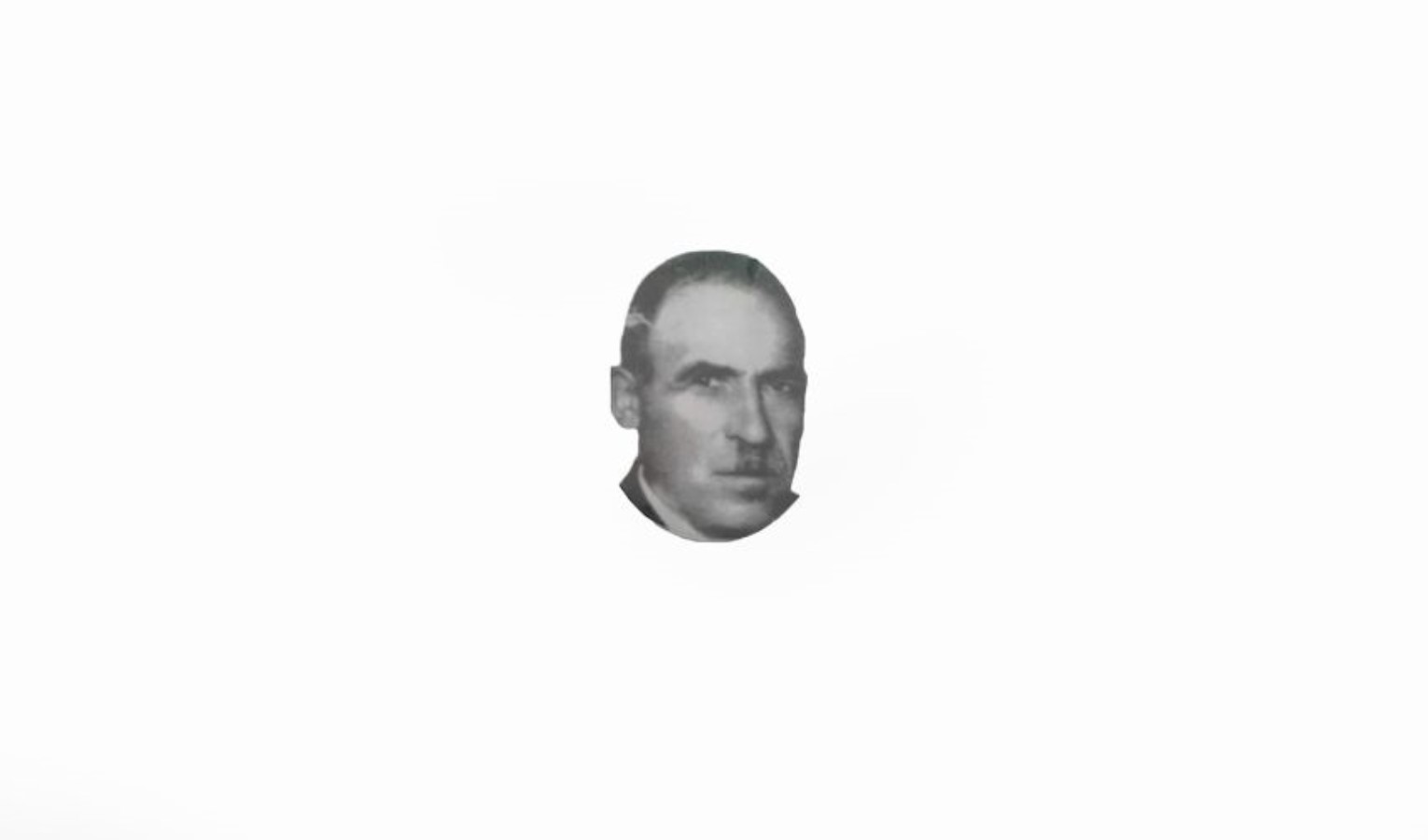
They ask for his son, Ağadede Çobanoğlu. Ağadede, however, has gone off to herd cows, to work as a shepherd. The gendarmerie does not say why they are calling him. It is important.
Saffet Arıkan, who became the Minister of National Education in 1935, was facing a major problem.
The young Republic of Turkey had cleared the country of enemies through the War of Independence, gained its identity of independence with the Treaty of Lausanne, and carried out a series of economic and socio-cultural revolutions, but it had not been able to solve the problems and inadequacies in the field of education.
35 thousand out of 40 thousand villages were without teachers.
According to the calculations of the Teacher Training Schools, which graduated only 350 teachers per year, it would take 3,500 teachers in ten years and 35 thousand in a hundred years; unfortunately, it would take a century to send teachers to all the villages.
To resolve this issue, Saffet Arıkan appeared before Atatürk.
"My Pasha, yes, we have carried out the alphabet revolution. But we do not have the teaching staff to implement this alphabet revolution. It will take a hundred years to train them," he said. And he asked Atatürk what they should do.
Atatürk replied;
"Do we not teach our privates to read and write in the army? We even taught corporals and sergeants the Pythagorean theorem for artillery fire. Call them, make them instructors after a 6-month course, and send them to the villages," he said.
Let them enlighten.
Saffet Arıkan was very pleased with such a practical solution. With this method, talented young villagers who had served as sergeants and corporals in the army would be selected, put through 6-7 month courses, and sent back to the villages as "Instructors." They would provide reading, writing, and citizenship education to village children and adult villagers, and the instructors would also teach them modern agricultural techniques and basic health knowledge.
Preparations were made, and the necessary laws were enacted. The first of the Village Instructor Training Courses was opened on July 6, 1936, in Mahmudiye, next to the Çifteler Farm in Eskişehir.
The Ministry of National Education immediately sent word to the villages through the Gendarmerie and called those who had served as corporals and sergeants and were volunteers to enlist. Young Ağadede Çobanoğlu from the village of Hasanoğlan was among the first to be called for this purpose, as he had served his military service as a corporal.
Young Ağadede learned of the situation at the Çankaya Military Recruitment Office.
Evening falls. He explains the situation to his father. But he encounters a huge reaction.
The Ministry of National Education had taken such a revolutionary step under Atatürk's instructions, but because the Village Teacher Schools provided education using the Latin alphabet, they were already being branded as "infidel schools" by reactionaries.
This is why Ağadede Çobanoğlu's father opposed it with such fury. How could he explain this to those around him? He had taken his stance;
"If you go, I will not grant you my blessing. I will disown you," he said.
Hearing these words, Ağadede falls silent. He bites his tongue. He goes to his room. He thinks. If he goes to school, he will defy his father and be disowned. If he does not go, the fire inside him will not be extinguished. He had seen Atatürk once while in the army. He had come for an inspection. Ağadede had been captivated by Atatürk's blue eyes. What does it mean not to go to Atatürk's schools, not to enter that light, not to become an instructor, not to become a teacher, not to enlighten society?
What a great ignorance.
He has made his decision. He will go. Morning comes. His mother is already gone. He is an orphan. He quietly takes his jacket and leaves the house without his father knowing. He does not think about whether he has money in his pocket or bread in his bundle. He walks from Hasanoğlan to Mahmudiye, half-naked and barefoot. He arrives at the school, starts, and graduates after a rigorous 6-month course. He goes to the villages and enlightens society.
He raises hundreds, thousands of students.
He does not just raise students in the villages. He also teaches health knowledge and modern agricultural techniques. As an instructor, he heals the sick and provides first aid. He leads the villagers in their prayers. He conducts their funerals.
He gives them true religious knowledge, far from nonsense and superstition.
But on the other hand, he had burned his bridges, left his own village, and never met his father again. His father had disowned him, but he did not care.
He had lost his father, but he had gained the village children.
He had gained society.
He had gained an enlightened country.
Greetings to those who went to Mahmudiye. To those who went to İvriz, Savaştepe, and Clavuz. And to those many who lit a torch. Greetings to those who stood against the darkness.
Greetings. Greetings.
To those instructors and teachers from Hasanoğlan to Mahmudiye whose hands are worthy of being kissed.
Most Read

Striking picture for Özgür Özel's 'New Party'

The PKK opening and Özgür Özel’s path!..

How did the newspapers view Özgür Özel's farewell to the CHP?

He killed his wife by slitting her throat: Their children witnessed the moments

What did the CHP do?

Özel’s new party move in the world press

The New CHP, against CEHAPE

Fire at TUSAŞ engine factory in Eskişehir under control

From self-efficacy to despair

Kılıçdaroğlu's first message on Özgür Özel's new party announcement