



The year was 1925.
In Iran, the Qajar Dynasty, which had lasted for approximately 131 years, had been overthrown, and they had fled the country.
At that very time, Atatürk was laying the foundations of the Young Republic and working on domestic and foreign policy.
Reza Khan had taken the place of the Qajar Dynasty. The newly established Republican regime in Turkey was also attracting the interest of Reza Khan. He was pro-modernization and innovative, just like Atatürk. However, two groups in Iran were opposing the Republican regime as if they had collaborated;
One was the British, and the other was the Mullahs.
Atatürk immediately made a move and appointed Memduh Şevket Esendal as the Ambassador to Tehran. Because he wanted Iran to transition to a Republican regime. Through Memduh Şevket Esendal, Atatürk advised Reza Khan that “he did well to abolish the Qajar monarchy, but he should not replace it with his own dynasty and should instead declare a Republic.” He said, “Thus, as Russia, Iran, and Turkey, these three powerful neighbors that declared Republics in place of their collapsed old dynasties could stand more firmly against Western imperialism.” However, Reza Khan stated to Memduh Şevket Esendal that “he could not do this, that the Iranian people were accustomed to the Shahdom, that it could not be governed by another regime, that the British opposed this, and likewise, religious groups, namely the Mullahs, were also against the republic.”
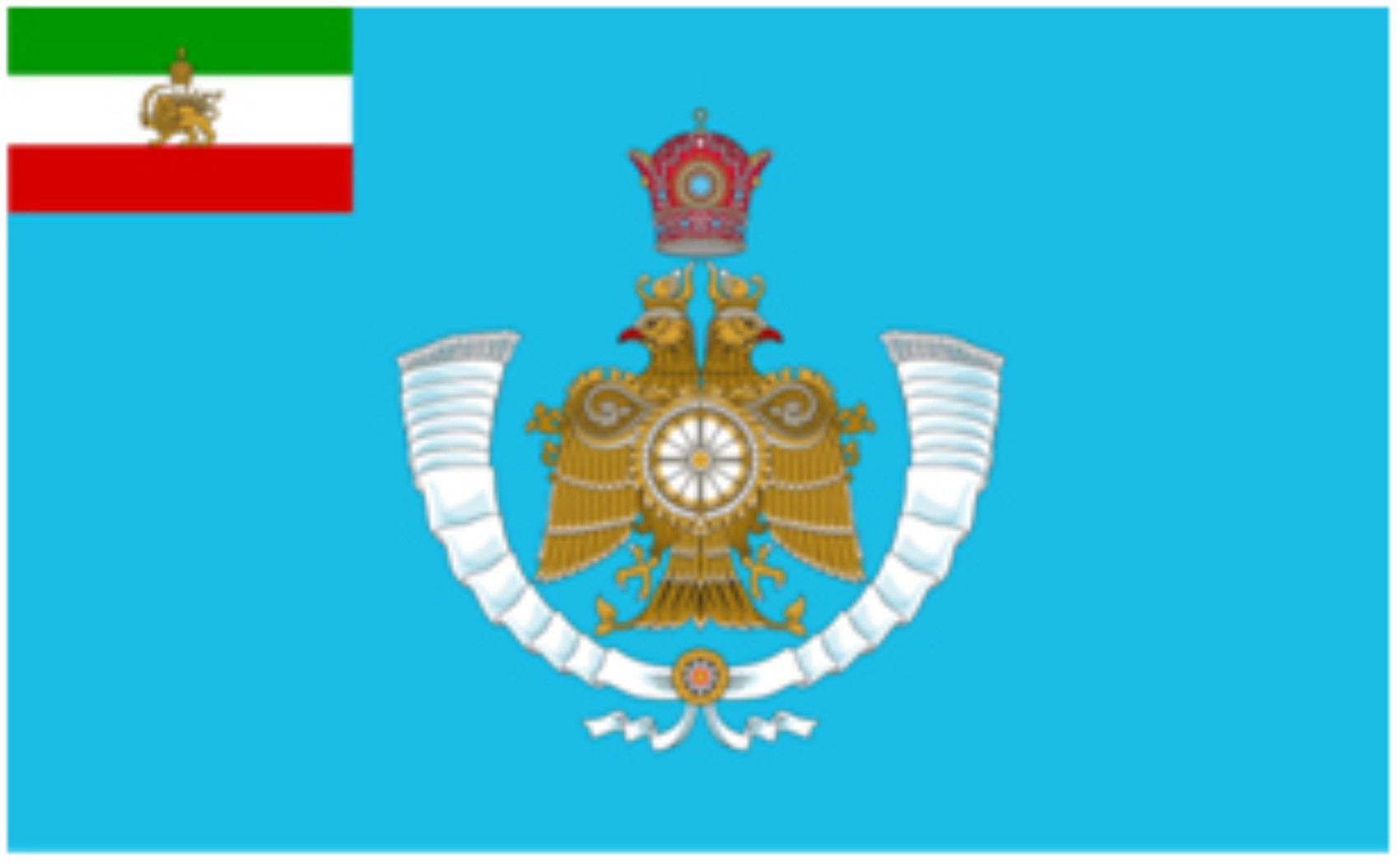
And subsequently, Reza Khan declared his Shahdom in Iran by a parliamentary decision on December 12, 1925. The Pahlavi dynasty replaced the Qajar dynasty.
In other words, the monarchical regime—the dynasty, the Shahdom, the kingdom, the Crown—would continue.
Reza Khan's title also became Shah Reza Pahlavi. He was the Shahanshah. That is, the King of Kings.
Atatürk had no choice but to get along with his neighbor. He maintained bilateral friendships with Shah Reza Pahlavi. He invited him to Turkey to show the revolutions and innovations he had made in Turkey under the Republican Regime. Shah Reza Pahlavi accepted the invitation but was only able to come to Turkey 9 years later, in 1934.
Atatürk showed him special attention during this visit and personally demonstrated all the advancements of the New Turkey and the breakthroughs they had made under the Republican regime.
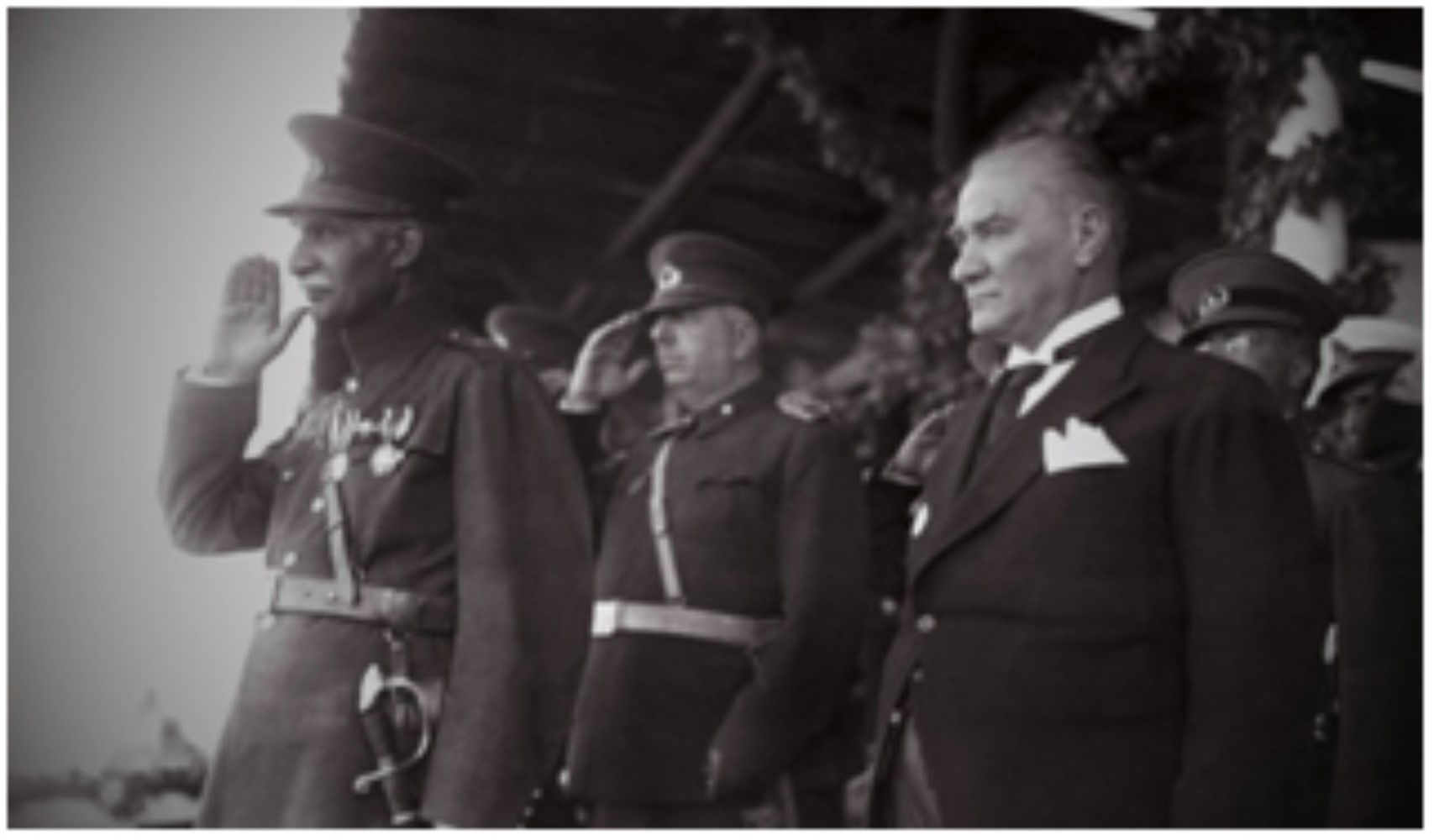
Atatürk was actually sensing something here. He wanted Iran, our eastern gate, to take Turkey as an example, to rid itself of internal political problems as soon as possible, to transition to a Republican regime, and under the umbrella of this regime, for Iran to develop on solid foundations in the Middle East against Western Imperialism. Iran and Turkey would stand back-to-back, take Russia and other countries along with them, and would not let any foreigners into the Middle East.
Because he knew that imperialists would not leave oil-rich Iran alone.
Shah Reza Pahlavi came to Turkey, saw, and was amazed by what had been done. He visited important factories and saw the innovative excitement in society.
On the last day, a farewell dinner was given in his honor at Çankaya. Turkish was spoken at the dinner. The Shah of Iran also spoke Turkish well. The following conversation took place between the Shah of Iran and Atatürk;
Shah of Iran:
-“My brother! I am returning to my country tomorrow. My visit was very useful. I will implement most of the innovations I saw here over there.”
Atatürk:
-“I am very pleased. We are brothers. We are neighbors. It would be good if we resembled each other. But what are you thinking of doing about your Akhunds?”
Shah of Iran:
-“I cannot do anything about this. They support me. We get along well. I will not touch them.”
Akhund means mullah. Atatürk saw the Mullahs, who collaborated with the British and opposed the declaration of a Republic in Iran, as an obstacle to Iran's development.
That is why he had asked what he would do about the Mullahs. Receiving a negative answer, Atatürk continued his words: “Do not forget that every leader who wants to make radical changes in society is obliged to fight against reactionaries and win. Otherwise, ten, twenty, or perhaps fifty years later, someone will emerge claiming to act in the name of religion. They will turn everything upside down,” he said.
But Shah Reza Pahlavi did not listen to Atatürk.
He did nothing about the Mullahs. Then World War II began. Reza Pahlavi stood close to the Germans against the British. When the Germans attacked the Soviet Union, the British, along with the Russians, entered Iran in the summer of 1941. Because there were rich oil fields in Iran and they wanted to keep them under control.
The British forced Reza Shah to resign in 1941. They put his son Mohammad Reza on the throne. Then they exiled Shah Reza Pahlavi all the way to Johannesburg in South Africa. Shah Reza Pahlavi died there.
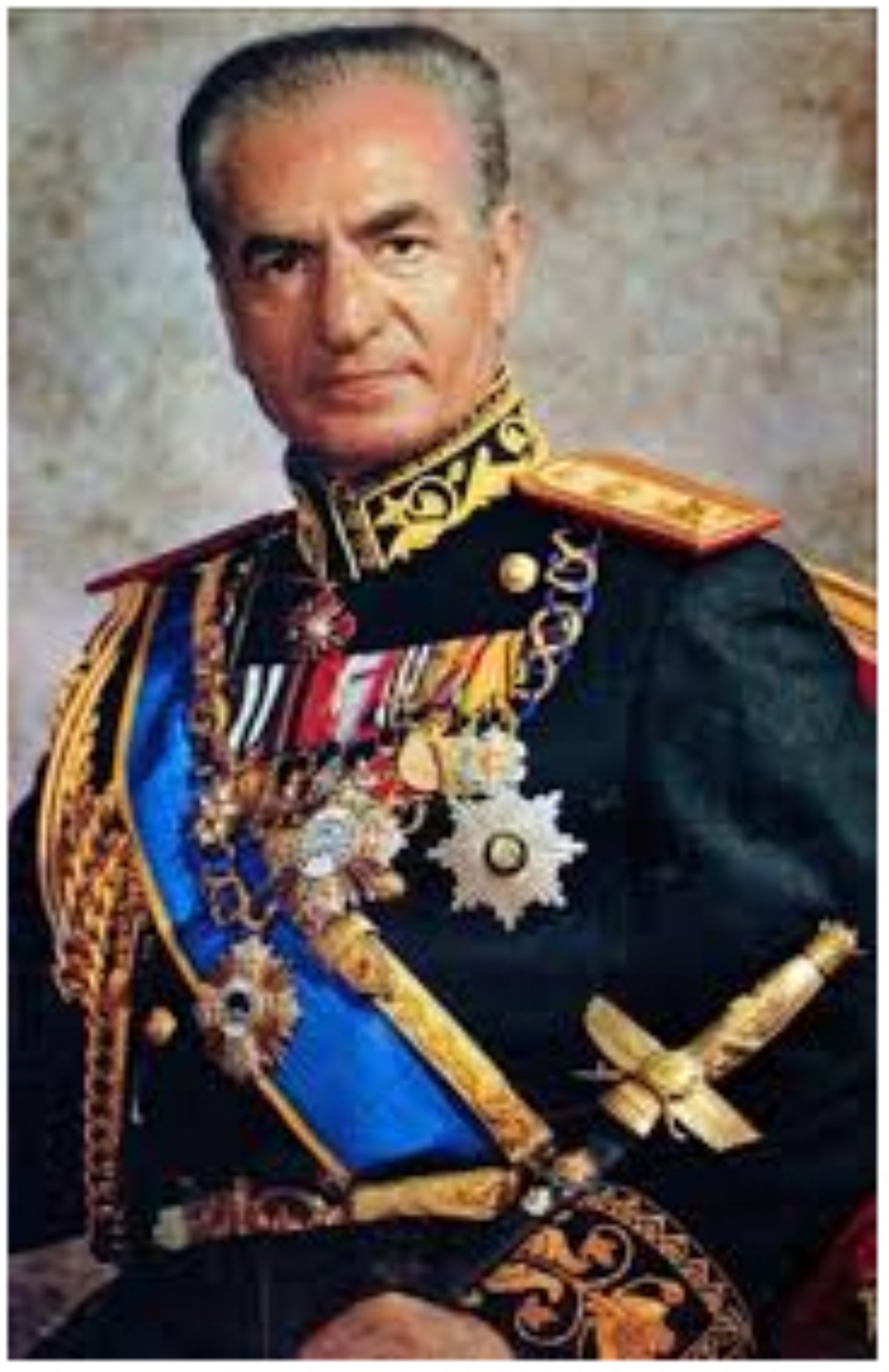
Interestingly, the Akhunds, that is, the Mullahs, whom Reza Pahlavi said “they support me, I will not do anything against them,” supported the British in this event. They did not support Shah Reza Pahlavi. They stabbed him in the back.
Anyway.
His son, Mohammad Reza Shah, maintained a soft stance toward the Ulema. He allowed the Ulema to resume mourning ceremonies in Karbala. He did not object to the observance of certain religious rules in state institutions during the month of Ramadan. Relations with Arabia were improved, and the Hajj ban was lifted. He allowed the Ulema, that is, the Mullahs, to ban unveiled women from shopping in markets and bazaars.
The Ulema were carrying out these bans by supporting Mohammad Shah Reza and staying close to him. That is why he did not object. In fact, Ayatollah Borujerdi, the sole authority of the Ulema class, held a pro-Shah meeting in the city of Qom with two thousand clergymen. In this meeting, it was even emphasized that the Ulema should not interfere in politics. Son Mohammad Reza Shah either did not notice these hypocritical, insidious policies of the Mullahs or did not dare to intervene. But the truth was that he was being deceived by the Akhunds, that is, the mullahs.
In 1951, Dr. Mohammad Mosaddegh appeared before Mohammad Reza Shah with leftist and social policies. He became Prime Minister. A nationalistic discourse emerged against the oil agreements the Shah made with the British and his rapprochement with America. In April 1951, he began the nationalization decision. Mohammad Mosaddegh launched a broad nationalization campaign in the country, primarily in oil, by holding street demonstrations and mass movements with high participation.
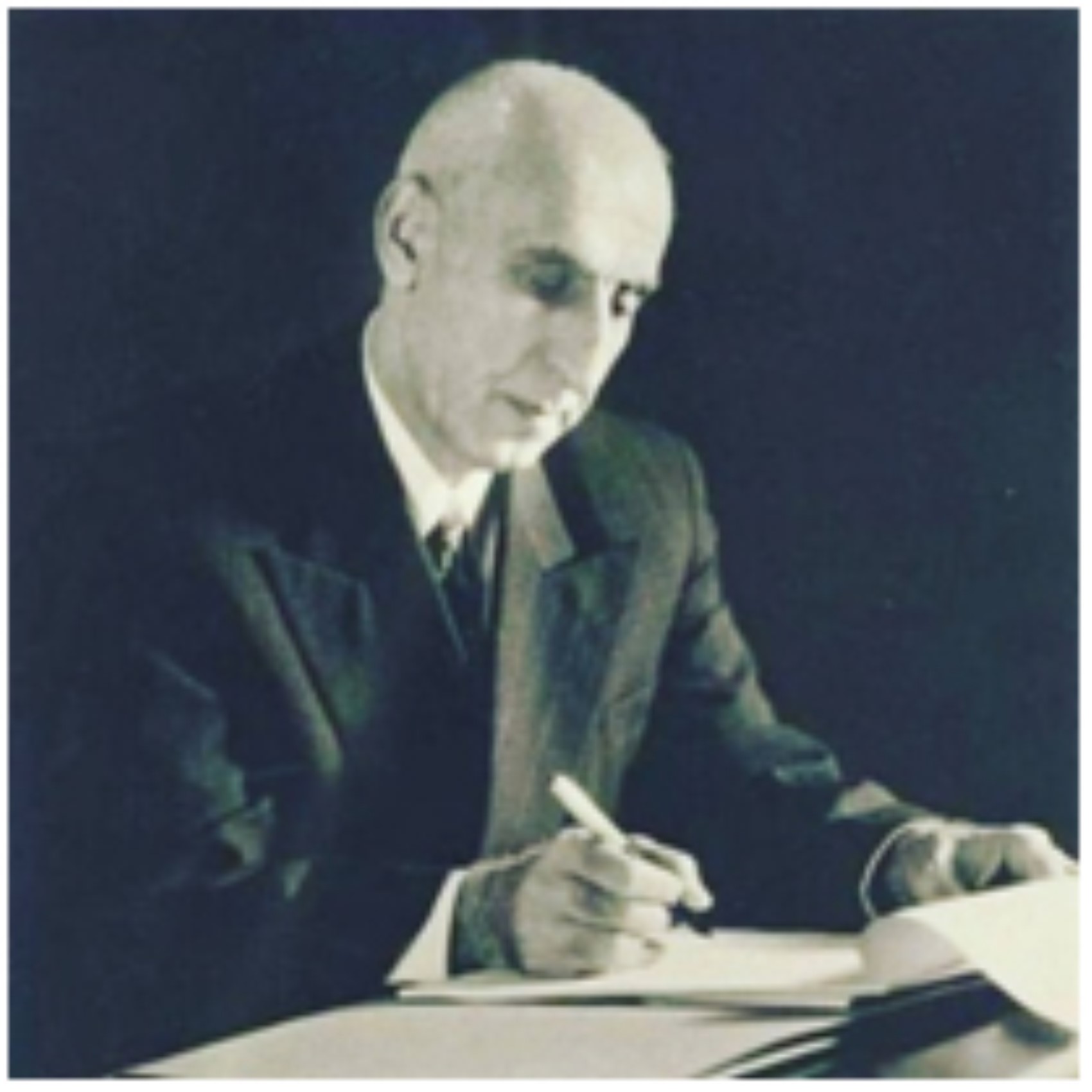
He was also against Shah Reza's one-man system. Mosaddegh and the National Front Party he led began to gain strength among the people. However, two years later, in 1953, the Shah, taking Britain and America by his side, overthrew Mosaddegh in a coup.
He declared martial law in the country.
If Mosaddegh had not been overthrown, he would have declared a Republic.
After overthrowing Mohammad Mosaddegh, Mohammad Reza Shah consolidated his dictatorship within the country by falling further under American influence. He managed to maintain his power. Since the Mullahs were anti-Republican, they supported Shah Reza, who drew strength from America and Britain.
Already, when Mosaddegh was overthrown, the Mullahs had become the only opposition left against the Shah, and those who opposed the Shah began to gather around the opposition, that is, the Ulema.
After Mohammad Reza Shah ousted Mosaddegh, as a reward for this, he sat at the table with British companies, and Iranian oil returned to the world market; embargoes were lifted. But the price of the Shah's one-man rule and dictatorship cost the Iranians dearly. Because the British had taken exactly 50% of Iran's oil revenues at the table.
Atatürk had not said it for nothing. He knew how dearly the Shahdom and the Crown would cost the Iranians. He knew this from the Caliph who surrendered to the British. When imperialists captured the Caliph, the Shah, the Crown, and the Pahlavi, they were capturing the country.
Because they were taking refuge in all kinds of powers to protect their personal rule.
After Mohammad Mosaddegh was overthrown, Britain's position on Iran declined, and the USA began to spread rapidly in the region. As part of creating a green line in the Middle East and Asia against Communist expansionism, the USA began to interfere in Iran's domestic politics alongside Iraq, Pakistan, and Turkey. In this context, it nurtured and supported Mohammad Reza Shah and the radical religious groups and sects in Iran. It began to manage and design Iranian politics.
When Mohammad Reza Shah took the reins completely, he established a despotic organization called SAVAK and tried to suppress society with this organization. Whatever was necessary was done to sustain the Crown and the Shahdom against the rising public rebellion. The coup against Mohammad Mosaddegh and the increasing pro-American and pro-British policies also caused protests to increase in the country.
And against this, Mohammad Reza Pahlavi was doing whatever was necessary to save and protect the crown and the Shahdom and to keep his power standing. And finally, he closed the parliament and began to govern the country through decrees. When the parliament was closed, protest demonstrations in the country peaked.
Just at this period, when the protests were peaking, an unexpected development occurred. The greatest religious authority of the Qom region, Ayatollah Borujerdi, died. This death increased the division within the Ulema. It was at that moment that the anti-American and anti-Israeli sermons of a little-known religious leader began to stand out and be heard in society.
That religious leader's name was Ayatollah Khomeini.
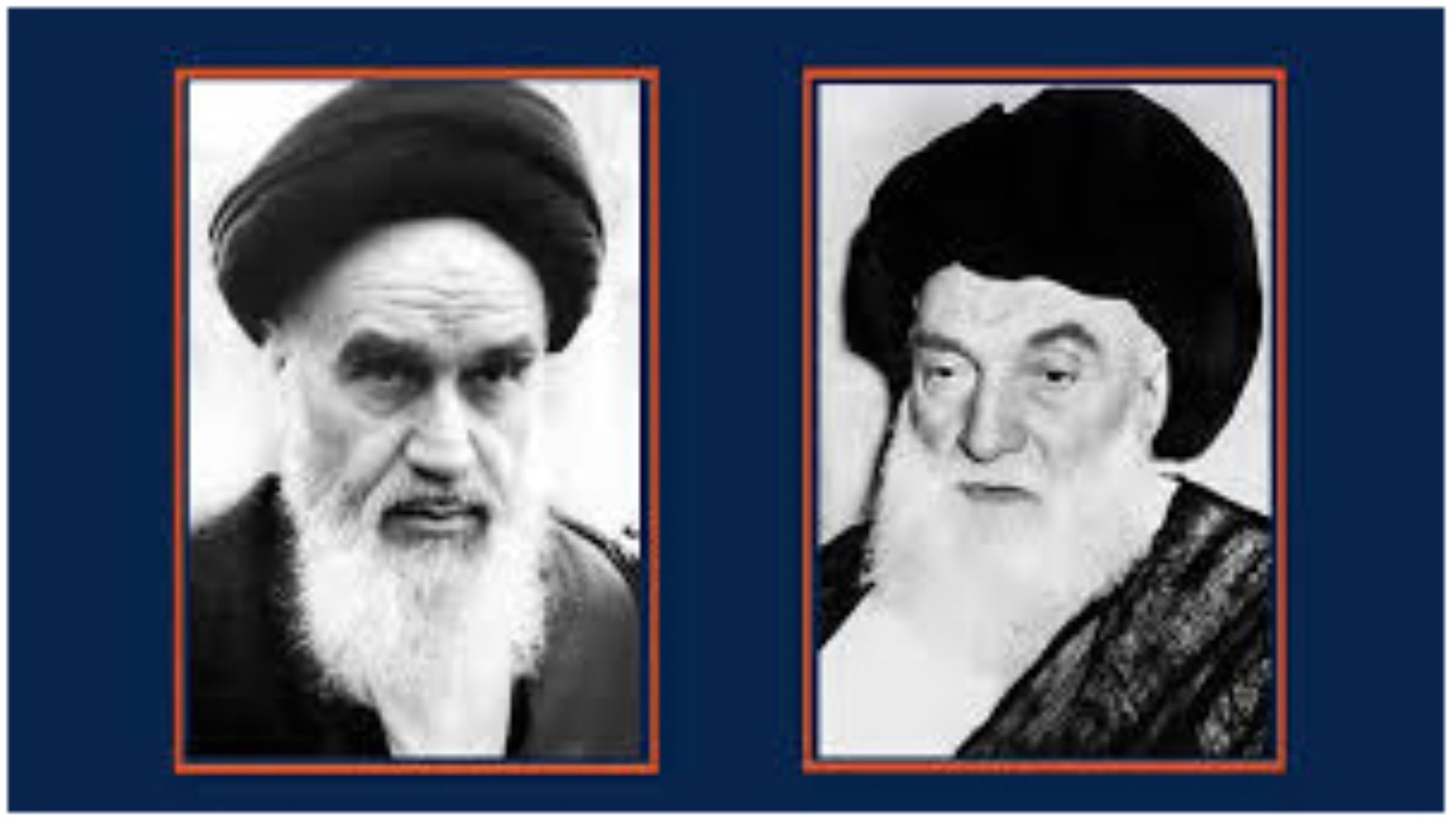
When the protests that reached a peak in Iran combined with Khomeini's anti-Shah, anti-US, and anti-Israel sermons, the opposition reached its zenith. When Khomeini became the Shah's target, he grew significantly in the eyes of society.
As the protests grew, Khomeini was exiled. He continued his work in Paris.
Exile added a sense of holiness to him and he gathered wide support in society. And in the end, in 1979,
When Khomeini's supporters abused the month of Ramadan and increased anti-regime demonstrations, Shah Reza Pahlavi declared martial law and curfews in many places. The people gathered in Jaleh Square in Tehran and clashed with soldiers. According to some, there were hundreds, and according to others, thousands of dead. This clash turned into a rebellion. A sea of blood and hatred formed between the Shah and the people.
The Iranian people completely cut ties with the Shah. After the rebellion in Jaleh Square, Khomeini continued the demonstrations by saying that Zionist forces had massacred thousands of innocent Iranians, and upon this statement, the protests turned into a wave of general strikes. All workplaces shut down; the oil industry, markets, private and public banks, government offices, schools, and railway operations closed.
Production in the country stopped. Its economy collapsed.
The demonstrations spread in waves all over Iran. Leftist groups also supported this. Because the leftists wanted the imperialists to be removed from the country and the Pahlavi monarchy to be destroyed and replaced by a Republic. The number of people gathered in Tehran had exceeded 2 million.
America, in a final move to keep the Shah's government it supported standing, tasked a moderate person, Shapour Bakhtiar, to form the government, but it did not work. Because Khomeini had already begun preparations to return from France, where he was in exile. Khomeini declared that he did not recognize the Bakhtiar government and the Shah, and that the Shah was someone who had declared war on Islam.
Upon this, Shah Reza Pahlavi left the country with his wife on January 16, 1979. The Shah's army, consisting of 700 thousand soldiers, had been of no use against the rebelling people.
And finally, the Akhund Ayatollah Khomeini, the Mullah Ayatollah Khomeini, returned to his country from Paris on February 1, 1979, with the promise of destroying Shah Reza Pahlavi and his Shahdom administration.
3 million people welcomed him at the airport. And as soon as he arrived, he established his own Monarchy.
Now, Shah Reza Pahlavi's grandson, Reza Pahlavi, will return from Israel's Wailing Wall, take a tour, put on a kippah, come to Iran, and save the country.
Yeah, sure.
As Atatürk said in 1922, "What independence is there that can rise with the advice of foreigners, with the plans of foreigners? History has not recorded such an event."
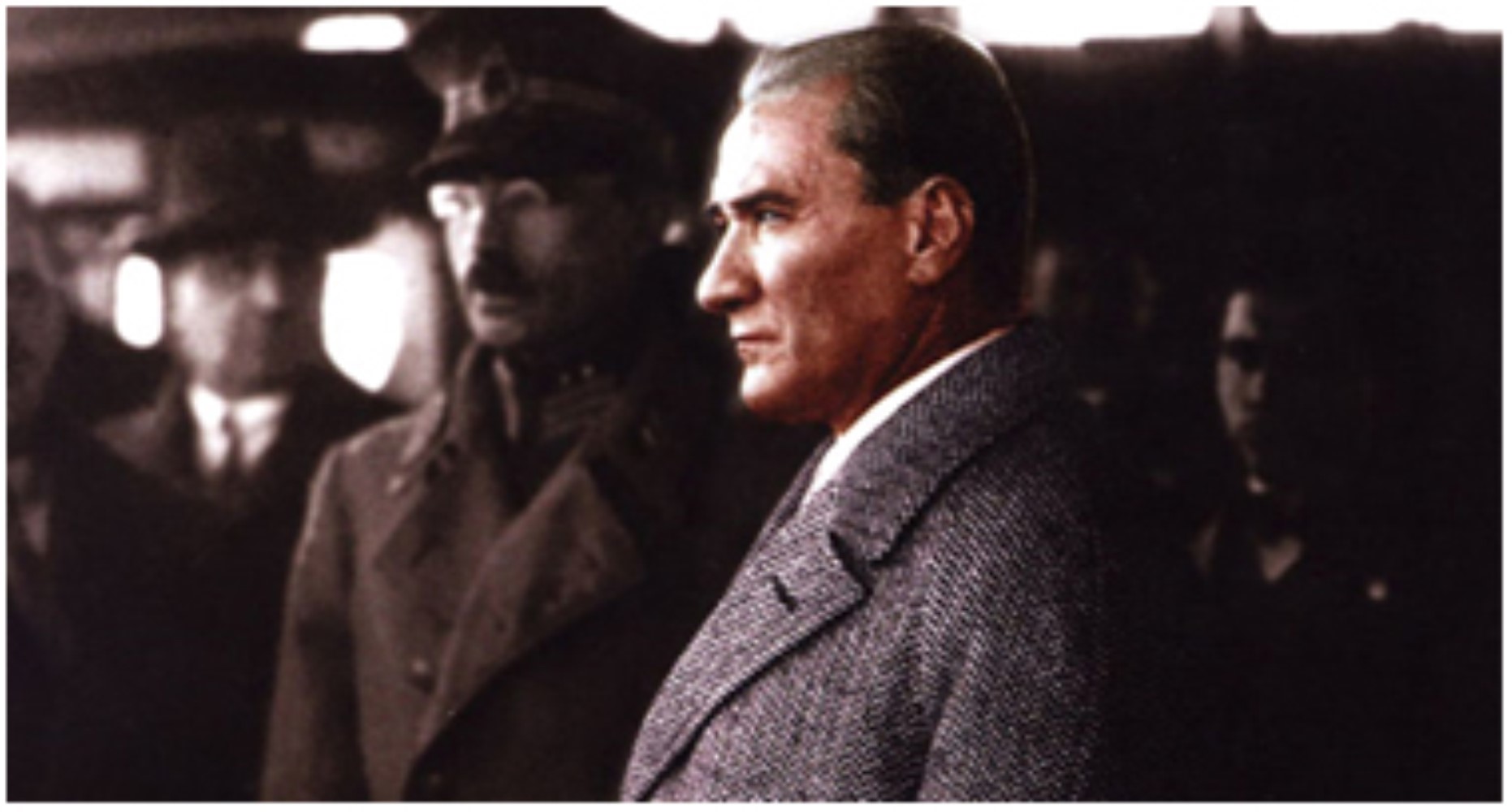
Finally, let us remember once again what Atatürk said to the King of Kings, the Shahanshah (it is funny even to say it) Shah Reza Pahlavi in 1934;
“Do not forget that every leader who wants to make radical changes in society is obliged to fight against reactionaries and win. Otherwise, ten, twenty, or perhaps fifty years later, someone will emerge claiming to act in the name of religion. They will turn everything upside down.”
Father Shah Reza Pahlavi, that is, the King of Kings, the Shahanshah, wanted to make radical changes in his country. However, he tolerated the Akhunds, the Mullahs. He did not fight against them. He did not take precautions. And in the end, an Akhund emerged claiming to act in the name of religion, a Mullah emerged, that is, Ayatollah Khomeini emerged, and turned everything upside down.
And not only the Iranian people but the whole world is paying the price for this now.
As for Atatürk.
He did not accept any crown, Shahdom, kingdom, or sultanate. He was already against them. He was on the side of the people and the people's administration. Even now, we live in his shadow in peace and tranquility. In this beautiful country of ours. If a Republic had been declared in Iran in time, as he foresaw, Iran would be living in peace today, just like Turkey. It would be a healthy and strong country.
Then, not even Trump could enter this region,
Not even the highest of the high could enter it.
Most Read

Striking picture for Özgür Özel's 'New Party'

The PKK opening and Özgür Özel’s path!..

How did the newspapers view Özgür Özel's farewell to the CHP?

He killed his wife by slitting her throat: Their children witnessed the moments

What did the CHP do?

Özel’s new party move in the world press

Fire at TUSAŞ engine factory in Eskişehir under control

The New CHP, against CEHAPE

From self-efficacy to despair

Kılıçdaroğlu's first message on Özgür Özel's new party announcement