



When we approach a crime by looking at the identity of the perpetrator, we set the act aside and conduct the discussion over the perpetrator. In such cases, even if the act itself involves violence, harassment, rape, or even mass slaughter, we can ignore it and draw the attacks into a legitimate sphere. This must be one of the evil sides of the human species. To ignore the swamp in front of one's eyes, to sweep files with long criminal records under the rug, and to back the perpetrator in plain sight.
The HKG case is known to many of us. We came to know her through the criminal complaint she filed in recent years. According to her allegations, in 2004, when she was only 6 years old, a religious marriage was performed with Kadir İstekli, one of her father's followers; she was married off before she turned fifteen, and had a child at seventeen. Kadir İstekli was 29 years old at the time of the religious marriage. What HKG recounted was horrific. She had been subjected to sexual abuse and harassment since childhood. The incident was soon brought to the judiciary. The former husband, Kadir İstekli, was sentenced to 37 years in prison, and the father, Yusuf Ziya Gümüşel, to 19 years. In recent months, because the Court of Cassation issued a reversal decision in the aforementioned case, the father, Yusuf Ziya Gümüşel, one of the detained defendants in the trial, was released due to health problems.
The second act of this horrific event took place right after this release. Namely, some community members known to the public and certain newspapers welcomed the release decision with joy and practically declared father Gümüşel innocent. Community members greeted Gümüşel with shouts of "Allahu Akbar" as if they had achieved a victory. Cübbeli Ahmet visited him at his home and said: "This resulted from the soundness of your faith and the strength of your connection (rabita), and the madrasas, mashallah, have become centers for good." So much so that a community teacher evaluated the allegations/statements made in the context of this incident as "the delusions of a person diagnosed with schizophrenia." Again, some newspapers and figures stated that this case had "turned into an attack on the Islamist community."
First of all, I want to open up this subject of statements/allegations. The victim, HKG, had recorded a conversation she had with her former husband, Kadir İstekli, and this conversation later entered the case file. According to this conversation, after the victim said that the incident in question took place when she was six years old, that a religious marriage was performed at this age, and that her father allowed it, she says, "I wish these had not happened, believe me, we would have been happy, none of these troubles would have occurred." The former husband, upon this conversation, says that what happened was a mistake but there was nothing to be done. In other words, he accepts everything that happened. Naturally, this conversation is reminded to him in the case, but İstekli does not accept this conversation in any way. But wait, when someone says "I didn't speak" to a conversation that has a recording, does it mean it wasn't spoken? Are there no examinations or technical expert stages for this? Of course there are! Therefore, the attitude here should not have been in the form of "I didn't speak," but in the form of "a request for a technical examination of the mentioned conversation by an expert committee." The allegation should only have been met with this response. On the other hand, the former husband is asked about some "intimate" photos he took with HKG. The husband, after stating that his victim was eight and a half or nine years old at that time, says, "Those photos were taken upon the insistence of the older brother." There was nothing strange here, there was only the insistence of the older brother.
I do not know if those who see the allegations and statements as the declarations of someone with slanderous intent or even psychological problems are aware of these conversations in the case, or if they are aware of the dialogues here and the questions of the judges. If they are, and despite this, they still take refuge in the "slander" narrative, how do they explain this situation, let alone religiously, but humanely? Do the voice recordings, photos, allegations regarding the falsification of her age, and all the years of imprisonment given after all this mean nothing to them? No, if they are not aware of all this, that is a separate dilemma, a separate disaster. Because in such a case, speaking without being based on information is, to put it mildly, blind fanaticism; from another perspective, it is violating the rights of others (kul hakkı).
Let's come to another narrative voiced within the scope of the case. As we stated above, some segments that we can define as "Islamist" claimed that this case had "turned into an attack on the Islamist community." First of all, let us state that within the scope of this case, KADEM, which is also under the administration of President Erdoğan's daughter Sümeyye Erdoğan, made a statement and stated that the sentences given were appropriate and deterrent. While emphasizing the bodily and spiritual integrity of women in the statement made, it used the expressions, "...no matter where or from whom the attack comes, we are always against child abuse and violence against women." In other words, there was no community being targeted; the event itself was being targeted. The events themselves were already an attack, and looking for the attack elsewhere could only be a distraction.
At the point we have reached, we can state the following:
When we evaluate a crime according to the identity of the perpetrator, we actually start discussing affiliations, not the crime. From that point on, the victim's voice is stifled, the evidence becomes unimportant, and the truth is lost amidst the noise of the parties.
This is what is happening in the HKG case as well. While what should be discussed are the allegations of abuse a child was subjected to, the evidence in the case file, and the justifications put forward by the court; some circles preferred to make the issue a subject of communities, neighborhoods, and ideological polarization. Thus, what a little girl went through was pushed to the background, and the identities of the perpetrators were placed at the center of the defense.
However, what is moral is to be able to look at the act itself, not the identity of the perpetrator. Abuse does not change according to the title of the person who commits it. Oppression does not become innocent according to the perpetrator's worldview. If our first reflex in the face of an injustice suffered by a child is not to hear the victim's cry but to protect our own neighborhood, it means there is a serious problem of conscience.
Because justice is not a test of affiliation. Truth is not measured by partisanship. A person being religious, being a member of a community, or being seen as respectable in society does not exempt them from criticism. On the contrary, those who claim to believe should stand by justice and righteousness above all else.
Today, those who do the greatest harm to religion are those who try to cover up the mistakes committed in the name of religion instead of facing them. Because people often do not learn about religions from books, but from the attitudes of those who speak in the name of that religion. Those who remain silent in the face of a child's scream actually leave not only the victim alone, but also the beliefs they claim to defend.
In short, the truth is sometimes burning. But ignoring the truth does not make it disappear. On the contrary, it deepens the wound. Therefore, what needs to be done is to defend the truth, not the perpetrator, and to judge the act, not the identity. Only then does justice gain meaning.
Most Read

Striking picture for Özgür Özel's 'New Party'

Özgür Özel gives a dated response regarding the number of resignations
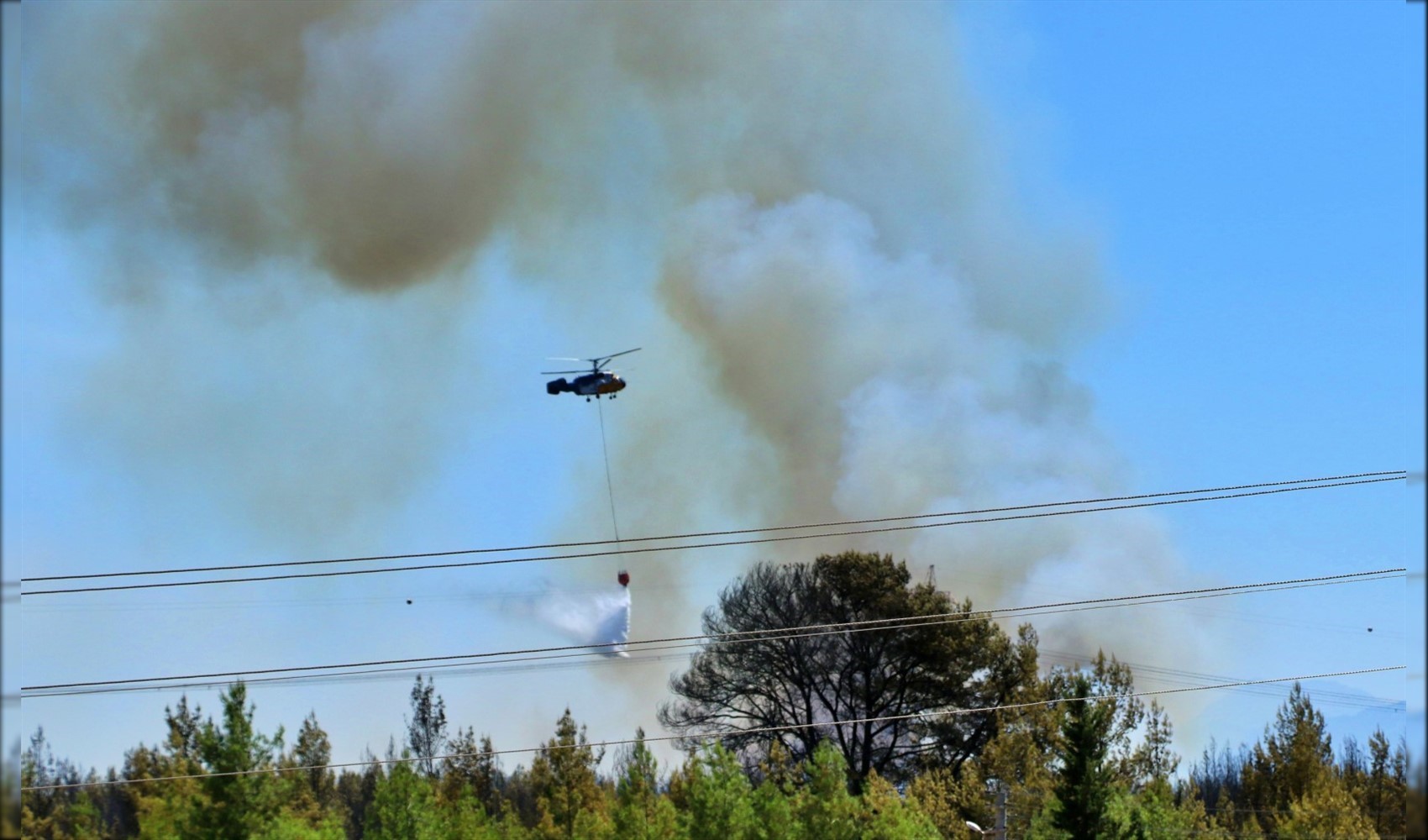
Forest fire in Antalya brought under control

The PKK opening and Özgür Özel’s path!..

How did the newspapers view Özgür Özel's farewell to the CHP?

What did the CHP do?

Özel’s new party move in the world press

The New CHP, against CEHAPE

From self-efficacy to despair

The return of craftsmanship in the age of artificial intelligence