



The bookish definition of religion cannot fully express its counterpart in the human and social spirit. It is precisely for this reason that we cannot understand at first glance why and how religions are so influential in human life. The bookish definition is mechanical because it produces expansions at the dictionary level, whereas the religion that is lived finds meaning within life, not between the pages.
So what is this meaning? What does religion mean for humans? Interestingly, one of the most effective answers to this question was given by Karl Marx. Marx says the following about religion: “Religion is the sigh of the oppressed creature, the heart of a heartless world, and the soul of soulless conditions!” If religion often gives breath to life like the heart of the world, then humans will continue to breathe along with it. In this respect, talking about religion will leave an impact like touching a person's heart; indeed, religion is one of the bonds established on the path to the sacred. It contains a great world of values; belonging, identity, the future, and the construction of eternity are just a few of these values. This is why it receives reverence and is met with great love. Therefore, every conversation about religion first touches the human heart and then goes from there to the mind.
On the other hand, every subject related to life, including religion, will inevitably be opened to debate and will be the subject of criticism in proportion to its claims. Finally, the situation we faced regarding Diamond Tema appeared as an example of this. Indeed, discussions about religious texts or prophets are not just a topic of today. These discussions have existed throughout history and will continue to exist hereafter. The sensitive point here is to establish a healthy ground for discussion; this point is important both for those who defend religion and for its opponents. Because every discourse that breaks away from the ground of discussion not only moves away from its purpose but also remains under the shadow of shallow and dangerous debates. In this context, we must first say that the country's Minister of Justice failed the test. On the other hand, ISIS targeting Tema, and the hate- and lynching-oriented discourse spreading in the social media environment, feed not a debate but tragic incidents that could end in bloody events and lead to the emergence of these incidents. Without a doubt, we must condemn this attitude and unite against it.
American neuroscientist and author David Eagleman states that being part of a group gives us happiness and peace. Our family, our friendships, our work, our culture, even the sports teams we support, and of course, religion are among these groups. According to Eagleman, this sum of belongings is also the values that shed light on the world surrounding us. The preservation of these values is important for the human self; for the self does not exist in a vacuum. It is the outside world and its acceptances that bring it into existence. At this point, Eagleman shares an important experiment with us and shares the information that social pain, which can arise in situations such as exclusion, activates the same regions in the brain as physical pain. Eagleman answers the question “Why does exclusion hurt?” as follows: “Our established neural circuits drive us to bond with others and form groups.” Therefore, there is a pain created in the human spirit by exclusion from these bonds or discourses directed at them. This reality, says Eagleman, is a clue in itself about the history of our species.
Then, we must not forget these realities when addressing religion or the human-sacred relationship. This necessity is important for the scientific basis of the discussion rather than censorship or a similar reservation. If the place of religion in the human world is far beyond the limits of the book, the content of the discussion should also be of that richness and inclusiveness. If the goal is to reach the religion within the human, then what we should actually be discussing is not books, but the human being themselves. In that case, it will not be very possible to turn to religion by bypassing the human.
This situation, of course, does not lead to the conclusion that we should not discuss religions. However, procedure is often as important as substance. This is not actually true only for religions; we also want care to be taken with the style and the language used when talking about an ideology we are affiliated with or a historical character we embrace. There is a sensitivity we expect in the interpretation of acquired information and data. The issue is the protection and valuing of this sensitivity in every field. As Sadi Shirazi said, “The wrong style is the executioner of the right word.” We must not sacrifice the truths we defend to our style.
On the other hand, it is shameful for members of a religion to approach their interlocutors aggressively, establish inquisition courts, and issue death fatwas against those who hold discussions, even if the procedure or style is problematic. The burden of history is very heavy at this point; from the darkness of the Middle Ages to dictatorships established in the name of religion, it has always carried this burden on its back and has paid very heavy prices in this regard. Intimidating, suppressing, or terrorizing cannot be a defense of an idea; on the contrary, such approaches reinforce ideas. Because “ideas are like felt; they harden as they are struck.”
As I bid farewell to this article, I want to leave the floor to Alain De Botton, author of the book “Religion for Atheists.” Botton says: “The situation actually becomes interesting when we stop believing that religions were handed down from above or that they are completely the work of madmen. That is when we realize that we created religions because of two fundamental needs that still persist today, but which secular society has failed to meet in a successful way. The first of these needs is the need to live together in harmony as communities, despite our deeply rooted, selfish, and wild impulses. The second is the need to cope with the terrifying intensity of pain stemming from vulnerabilities regarding professional failures, troubled relationships, the death of our loved ones, the deterioration of our health, and our own death.”
This is actually the crux of the matter; we are talking and talking within a pain, and it is not easy to make progress while talking about pain.
Most Read

Striking picture for Özgür Özel's 'New Party'

The PKK opening and Özgür Özel’s path!..

How did the newspapers view Özgür Özel's farewell to the CHP?

He killed his wife by slitting her throat: Their children witnessed the moments

What did the CHP do?

Özel’s new party move in the world press

Fire at TUSAŞ engine factory in Eskişehir under control

The New CHP, against CEHAPE

From self-efficacy to despair
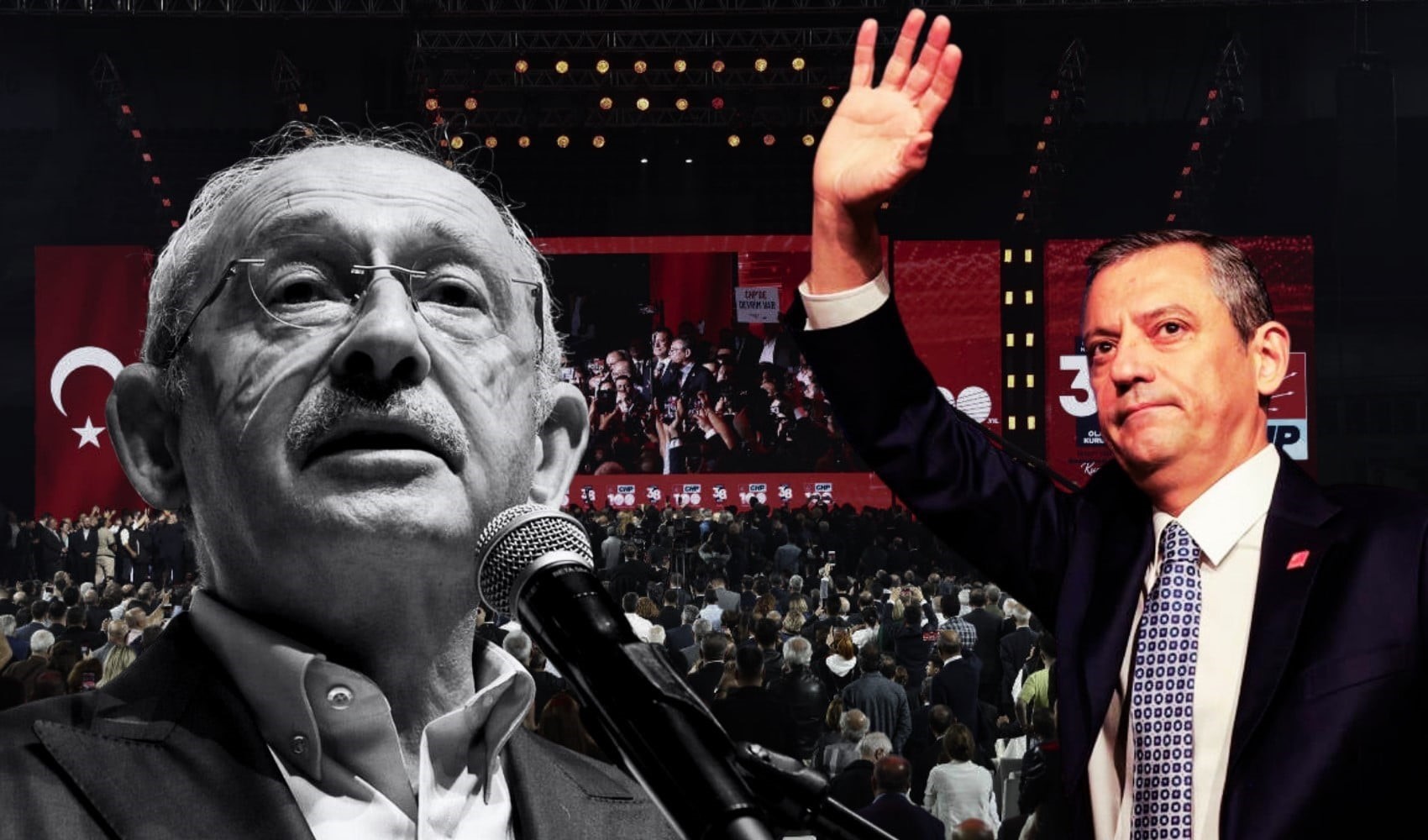
Kılıçdaroğlu's first message on Özgür Özel's new party announcement