



History is kept alive through sustained traditions and understandings; the lifestyle one upholds and the set of values one adopts carry the past into the present. In this respect, one looks not at what a person says, but at what they do; it is action, not words, that reveals a person's connection to history.
The bond the Islamic world establishes with the past at this point is significant. Because history is one of the places we look to in order to understand the present. So, what kind of bond does the Islamic world establish with the past, and how does its way of reading yesterday affect today? Unfortunately, we cannot give positive answers to these questions. Moreover, according to the dominant way of thinking, the past is practically a rose garden without thorns. So much so that, according to this mentality, the wars and conflicts that took place are seen as almost a detail, and people's criticisms of the past are blocked through the armor of the Sahaba (companions of the Prophet). Undoubtedly, the issue here should be seen as a fundamental reckoning with the history presented in the name of faith and the practice of not repeating the same mistakes. Otherwise, the issue is not about criticizing history or creating controversy for no reason.
If we return to Islamic history, one of the most important names that will greet us is undoubtedly Muawiyah. In this respect, Muawiyah should be seen as a mentality and a paradigm rather than just a name. Since the practice he exhibited has been embraced by his successors, he can also be seen as the founding leader of this living mentality.
So, what is that practice, and how exactly is the Muawiyah lifestyle continued today?
First of all, let us state with an open heart that Muawiyah, along with his family, did not become Muslim with a "voluntary and heartfelt faith," but as a result of the compulsory reasons brought about by historical conditions. This is not an interpretation we have made, but a fact conveyed by history. Moreover, after Muawiyah's father, Abu Sufyan, became a Muslim, he expressed his first request through war spoils, asking for a larger share of the spoils for themselves.
At this very stage, one must ask: for what reason, on what legitimate ground is such a request made? While the question awaits an answer, let us state this: This request also reveals the fundamental motivation of the bond established with faith. As can be clearly seen, the main motivation here appears through worldly desires. Spoils, that is, money, property, wealth, privilege... Moreover, this situation did not happen just once; it has been recorded as a permanent trait left by the mentioned family in history.
In that case, the practice of faith maintained for the continuity of personal prosperity and interests in today's world is also a Muawiyah policy. The historical references of this policy protect both the powerful of the past and the rulers of today.
How so?
Look, today, when you bring up the issues of accumulating wealth and property in the name of Islam with a critical eye and interpret them in a system-oriented way, you are immediately confronted with the "wealthy Sahaba"; certain names, especially Muawiyah, are shown as examples. For instance, rhetoric such as "weren't the Sahaba wealthy, didn't they live in the best conditions too" is brought to light. Thus, history is skillfully used as a shield for the present, and the wealthy of the day are protected through the past.
That is not the only issue. For example, the so-called arbitration issue that took place at Siffin is not handled in terms of the exploitation and abuse of faith; it is not read as the instrumentalization of the Quran for politics. Thus, the door is implicitly opened to today's abuses of faith; the pages of the Quran are always kept at hand according to the circumstances. Whenever needed, modern spears are brought out at that moment. Then, no trick is left unplayed, no sin left uncommitted.
Another situation concerns Muawiyah's term of power. He did not leave the seat of power for nearly forty years, including his time as Caliph. He is the governor who remained in office for the longest time in that period. Almost twenty years. Moreover, he lived this duty not as a governor, but almost like a king. When he was dismissed by Caliph Ali, he did not accept it; on the contrary, he waged war against Ali. His excuse was the murder of Caliph Uthman. Otherwise, he had no eyes on power or strength! Of course, this is not the case, because when we look at his life in general, the murder of the Caliph is an excuse for him. The real target is power. So much so that he caused the deaths of tens of thousands of people on this path. In this sense, the "she-camel" stories told in the person of Muawiyah are exemplary in summarizing the spirit of the period.
On the other hand, for Muawiyah, the only issue was not his own power. He also appointed his son Yazid as caliph after him and brought the sultanate to the Islamic world. Naturally, the Muawiyahs of the era also continued the aforementioned sultanate order with their own children. Yet, even in terms of the political reality of that day, this is a historical regression.
Let us come to today. Disregarding all faith and moral principles, seeing the seat as one's own property, benefiting from the opportunities of power for almost as long as one lives, and maintaining a sultanate regime instead of a pluralistic style of politics is a Muawiyah tradition. Even if their names are different, today's rulers and oligarchs are each a Muawiyah in their own right. The life they lead, focused on power, money, and strength, corresponds to the spoils ideology of the period, which leads us to the founding names of the era. Muawiyah is, of course, at the head of these names.
At the point we have reached, the situation is exactly as follows: The Muawiyahs of the era, just as in the past, defend the life they lead in the name of faith, and the masses gathered around them embrace this rhetoric. There are, of course, many reasons for this situation. Leaving those reasons for another article, let us end our piece with these lines: As long as history is not read as it deserves, what has happened will repeat itself in the same way, and even if the names change, the mentalities will always remain the same.
Most Read

Striking picture for Özgür Özel's 'New Party'

Özgür Özel gives a dated response regarding the number of resignations
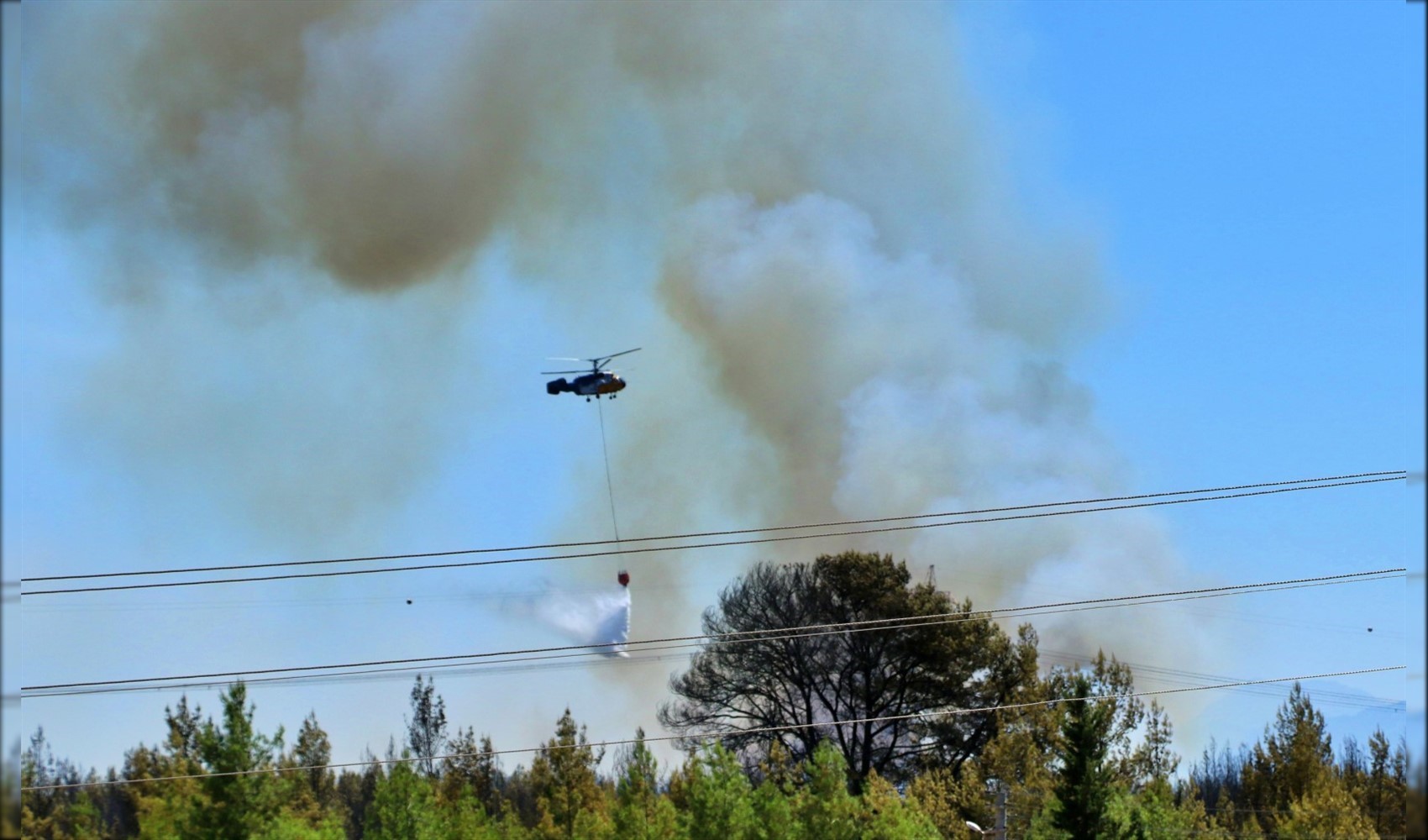
Forest fire in Antalya brought under control

The PKK opening and Özgür Özel’s path!..

How did the newspapers view Özgür Özel's farewell to the CHP?

Houthis strike Saudi-owned tanker

What did the CHP do?

Özel’s new party move in the world press

The New CHP, against CEHAPE

From self-efficacy to despair