



In his book Lost Connections: Uncovering the Real Causes of Depression – and the Unexpected Solutions, Johann Hari states that today, one in five adults in the US takes at least one medication for psychiatric issues. Among middle-aged women, this rate is even more striking: nearly one in four women uses antidepressants. This picture is not unique to the US. For instance, in France, one in three people resorts to legal psychotropic drugs such as antidepressants. According to Hari, the United Kingdom leads Europe in antidepressant usage rates.
There is more. Scientists examining the water sources of Western countries regularly find traces of antidepressants in their tests. This situation shows just how many people are using these drugs and excreting them from their bodies. It has become almost impossible to completely filter these substances out of drinking water. Humanity is practically swimming in antidepressants.
However, the picture is not limited to these data points alone.
According to a report published by the United Nations in recent years, approximately one billion people worldwide are living with some form of mental disorder. Even more striking is that one in seven young people belongs to this group. Another important piece of data regarding the situation of young people comes from the World Health Organization. According to this, a large portion of people experiencing mental illness cannot access adequate treatment support.
For example, 71% of people with psychosis worldwide do not receive mental health services. While it is reported that approximately 70% of psychosis patients in high-income countries are treated, this rate remains at only 12% in low-income countries. The picture is even darker in terms of depression: even in high-income countries, only one-third of depression patients can receive formal mental health services. It is estimated that the rate of minimally adequate treatment falls below 23% in high-income countries and down to 3% in lower-middle-income countries.
The world seems to be spinning in a deep crisis. People cling to medication, trying to stay afloat with antidepressants; when they can no longer hold on, they end their lives. According to official figures, more than 700 thousand people commit suicide worldwide every year.
Speaking of antidepressants, the data regarding Turkey is also noteworthy. According to data from the Organisation for Economic Co-operation and Development (OECD), the per capita consumption of antidepressants in Turkey increased by 76% in the 12-year period covering 2008–2020. According to the same data, Turkey ranks fourth among countries in Europe that spend the most on antidepressant drugs.
The World Mental Health Monitor Survey published by Ipsos in October 2024 also confirms this picture. While 19% of the public saw mental health as the country's most important health problem in 2021, this rate rose to 30% in 2024.
Perhaps the calm before the storm has long since passed. Now, one in three people is showing signs of the approaching storm. They are bringing mental health—that is, our minds, emotions, and behaviors—to the forefront and speaking of the deep wounds in these areas.
Evaluating the increase in antidepressant use, Prof. Dr. Ebru Şalcıoğlu, a faculty member at İstinye University's Department of Psychology, summarizes the situation with these words:
“This jump in antidepressant use reflects the collective struggle the society is experiencing.”
According to Şalcıoğlu, in the post-pandemic period, social conditions such as economic crisis, unemployment, uncertainty, migration, and natural disasters have made mental health issues like anxiety, hopelessness, and depression more visible, especially in Turkey. In this environment, the increase in antidepressant use may, in one respect, be related to rising awareness of mental health, the weakening of stigmatizing attitudes, and individuals becoming more open to seeking help. However, on the other side of the coin, there are systemic limitations. Prescribing medication during short outpatient appointments often becomes the fastest form of intervention. Many people can only access a prescription, not therapy.
Anxiety, hopelessness, and depression… Even when these three words enter a person's world and take a permanent place in their life, they can lead to extremely devastating consequences. CHP Deputy Chairman Gamze Taşçıer drew attention to one of these consequences in recent months. According to the data shared by Taşçıer, 1,301 people ended their lives due to financial hardship between 2021 and 2024. When the time frame is expanded, this number reaches much more frightening dimensions. Indeed, while the number of those who committed suicide because they could not make ends meet was 275 in 2023, this figure rose to 402 in 2024. There is a 46% increase in just one year.
Let us remember these names for a moment: Emine Akçay, who gave her child a hair dryer to keep warm and ended her life in the next room; Nuh Mercimek, who set himself on fire in front of the municipality; Adem Yarıcı, who set himself on fire in front of the governor's office... Then Yavuz Polat, Mesut Babat, Tugay Adak, Samet Özer, Ünal Çetinkaya, and many others. The common point of all these names is the order of deprivation and poverty in which they lived.
I say “order of deprivation and poverty”; because according to the latest statement by TÜRK-İŞ, the monthly food expenditure alone for a family of four has reached 28,412 TL. The poverty line is 92,547 TL. The monthly cost of living for a single worker is calculated at 36,984 TL. In contrast, the minimum wage is at the level of 22 thousand TL, and the pension is approximately 15 thousand TL. Millions of public employees are trying to live on an income below the poverty line.
This picture points to a literal order of deprivation and poverty.
So, what is this order telling us?
Even the most basic needs cannot be met. Rents cannot be paid, bills are delayed, and going to the bazaar or market is becoming increasingly difficult. People are struggling even to make it through the day. Pots are not boiling, hopes are fading, the future is becoming uncertain; hope is being replaced by anxiety and stress.
In such an environment, it is impossible for anyone to feel good, be happy, or look to the future with confidence. A human is a relational being; every social condition they are in directly affects them. We see the results of this in every area of life.
So, what will happen? How will our mental state improve? Where is the country heading, and what kind of test is the world going through?
To seek answers to these questions, we spoke with psychiatrist and author Cemal Dindar, one of the pioneers of the Association for Psychotherapy for the People. Dindar made striking assessments on many issues, from the country's mental health to global trends.
Aydın Tonga: According to OECD data, the per capita antidepressant consumption in Turkey has increased by 76% in the last 12 years, covering 2008-2020. May we have your thoughts on the subject? What could be the reasons for this increase?
Cemal Dindar: The previous Minister of Health, Fahrettin Koca, clearly said that antidepressant use in Turkey has become a public health problem. This is a field where pharmaceutical companies are the determining subject, not just in our country but globally, and it is shaped not by scientific methods but by the aggression of capital... Ali Babaoğlu, who served as a clinical chief in Bakırköy for many years, once said; “we (psychiatrists) are the outposts of pharmaceutical companies.”
Aydın Tonga: The World Mental Health Monitor Survey published by Ipsos in October 2024 also reveals striking findings at this point. According to this, while 19% of the society saw mental health as the country's most important health problem in 2021, this rate rose to 30% in 2024. What is your assessment of this data?
Cemal Dindar: This and similar data are proof that the social system and the conditions it creates are decisively creating mental distress. Yet, mainstream psychiatry-psychology is completely oblivious to this reality. The most superficial reality in the world is not accepted as seen by expert groups; the collapse of neoliberalism is creating mental problems that are difficult for the vast majority of the world's population to endure, and it is making humanity sick.
Aydın Tonga: Do you see a relationship between social problems such as unemployment, poverty, and hopelessness, and mental illnesses such as depression?
Cemal Dindar: It is direct. Psychiatry and its American-style classification, the DSM system, hypocritically classify these as 'adjustment disorders.' If you include intergenerational relationships and the developmental conditions of the new generation, the problem becomes far from being a matter of adjustment.
Aydın Tonga: How do conditions such as intense working conditions, urbanization, and the abandonment of old traditional social relationships affect people's mental health?
Cemal Dindar: The inadequacy of institutions, the disintegration of sociocultural support mechanisms, being neither an extended nor a nuclear family, but rather a kind of transition state... It creates a socio-cultural framework that produces mental difficulties, distorts their form, and limits the possibilities for solutions. First and foremost, the meaning and value of mental distress are changing...
Aydın Tonga: What kind of future does the current economic, political, and cultural structure promise on a global level? How do you see the mental state of the future?
Cemal Dindar: We are clearly in a transition period in the world... The future is not given, of course; humanity will create it. Today, humanity's creative vein seems quite castrated. However, there have been more difficult periods in history... We hope we will live to see it. It is obvious that today is an environment of crisis, not only in mentality but also in human sociality and even in the relationship with the body. It is clearly a crisis of civilization...
Aydın Tonga: Do you find the psychological health services in Turkey sufficient? May we learn your suggestions and approach regarding the subject?
Cemal Dindar: More important than whether it is sufficient or not, there is a mental health system that is not suitable for social needs. The hegemony of psychiatry in this field is one of the biggest problems. Clinicalism is also problematic with the medical rigidity it contains... As the Association for Psychotherapy for the People, we propose a new paradigm in line with the psychodialectical understanding. We see that practices that bridge the individual-group opposition are more effective. A very valuable body of knowledge has accumulated in the field of mental health... We are in an effort to reinterpret this for the people and create its praxis.”
In conclusion, what should be done, where should we look, and how should we approach “the human” in this direction? The following lines in the “manifesto” of the Association for Psychotherapy for the People can guide us at this point. I would like to conclude my words by quoting those lines.
Look at what those lines say:
“We must say more often that the defining quality of being human is sociality, that each of us overcomes our helplessness in nature through our sociality, and even the truth that human mentality is sociality concentrated in the individual; we must defend the individual in the group and the group in the individual, in their mentality, against inegalitarian social systems that hide that this is the case and try to absolve their own responsibility from the sufferings of great humanity.”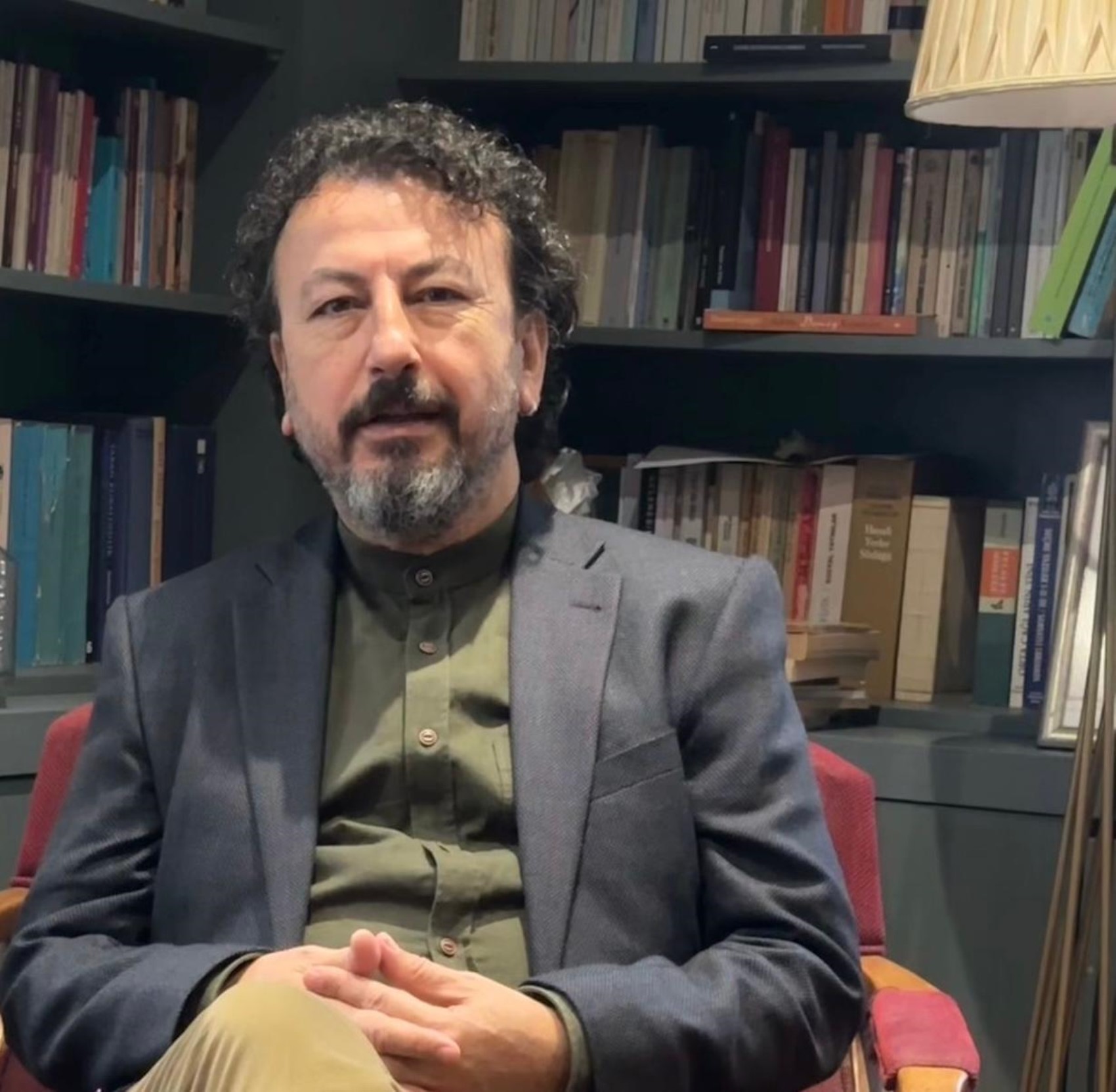
Cemal Dindar (Above)
Most Read

Striking picture for Özgür Özel's 'New Party'

Özgür Özel gives a dated response regarding the number of resignations

Forest fire in Antalya brought under control

The PKK opening and Özgür Özel’s path!..

Houthis strike Saudi-owned tanker

How did the newspapers view Özgür Özel's farewell to the CHP?

What did the CHP do?

Özel’s new party move in the world press

The New CHP, against CEHAPE

From self-efficacy to despair