



They reflect the news, the language, and the voice of the world they wish to build. Newspapers, television stations, news bulletins, and politicians often behave this way. Seeing the whole is often seemingly impossible; there are ideological, cultural, and economic reasons for this. There are sides to this perspective on the whole we speak of, and depending on where one looks, the part replaces the whole and is presented to the public as truth.
Taking a side is perhaps natural; what is important is the meaning of the side taken, the set of values it is in relation with, the perspective on nature and humanity, and the way it establishes a relationship with life. In this respect, religion is also a phenomenon that is shaped, rewritten, constructed, and built by the side one takes. In reality, there is no religion independent of those who dominate it. Whoever is in power makes religion speak according to them; it gives voice or remains silent, dons a sword, extends a hand of friendship, or sees or ignores things according to them. There is a saying attributed to Ali ibn Abi Talib that we shall quote here as it is relevant: "The Quran does not speak; people make it speak."
So, who makes religion speak? We have actually provided the answer to the question above: Those in power. Of course, the dominant understanding of religion is what we mean here. Otherwise, when Muawiyah was speaking, Ali or Abu Dharr did not remain silent, for instance. One of the prices paid for his being killed in the desert is the voice of Abu Dharr. Throughout history, behind the books written in the name of religion, the armies formed, and the rebellions that broke out or were incited in its name, there have always been those different voices. What is important is to see the source of the voice, its subjects, to be able to bear witness to their voices, and to be able to reveal the side of that voice. Otherwise, neither religious debates nor interpretations of religion will ever end. In one sense, the issue is more of a political struggle than a difference of interpretation. In other words, when we dig a little beneath those interpretations, we encounter cold, hard political realities. It is a famous saying: "If you learn your religion from a fox, you will think stealing chickens is a good deed." After all, those whose business is theft bring us a fox in the guise of a cleric.
The palace, the Diyanet, the madrasa, the Sheikh ul-Islam, and the politician have all built religion throughout history based on the ground they stand upon. Whichever part they claim, they have replaced the whole with it as religion. The ground one stands on is important here. As the thinker said, the one living in the palace thinks differently from the one living in a hut. That way of thinking ultimately keeps different religious voices alive, makes them visible, and brings them to the fore.
As is known, the Diyanet issues a sermon every Friday. For instance, this week (May 2, 2025), it addressed the subject of "adultery" and quoted verses and hadiths related to it. Since the subject of this article is not the sermon itself, I will not discuss what was written in detail. However, I do not want to pass over a sentence written in the mentioned sermon without quoting it. That sentence is exactly as follows: 'This great sin can never be shown as innocent with concepts such as "flirting, living together, friendship, affairs, or cheating."'
The sermon, which is already problematic in itself, pushes the limits of tolerance with this sentence. What I cannot understand is whether "flirting or friendship" is seen as adultery; if so, there is no acceptable side to this. Because people can establish a healthy bond by getting to know each other and developing a friendship; they can come to the decision-making stage after this bond. Breaking this bond is an injustice not only to the individuals but also to society. Now, one must ask here: Is this what God thinks, or is it what the Diyanet thinks?
As I have stated, the subject of this article is not the sermon, but the reality of the religion being constructed. And yes, the Diyanet is one of the actors that emerged in the construction process we mentioned. In this respect, the Diyanet is not in a position independent of the political power, to oppose it, to express truths against it, or to recount the mistakes, waste, and irregularities committed. Indeed, it is not independent; it is a structure intertwined with the government, from its organizational structure to its president. In that case, its sermons, speeches, statements, president, and staff are, as a whole, another manifestation of the political power. Then the religion it keeps alive will not be any different; I think we are in agreement on that.
The verses of the Quran are clear: there are verses on charity, justice, and sharing there as well. Similarly, there are reported hadiths. Yet, you look and see a religion that has been turned into an oligarchic structure with Muawiyah. Neither its cleric nor its judge objects to the palace order being experienced. The line that follows is generally no different. After all, the order of the sultanate has not diminished from history from that day to this. What other religion were they going to keep alive?
Classes, kings, sultans, the wealthy, and those who hold the sultanate are on one side; the oppressed, the laborers, and those trying to live by the sweat of their brow are on the other. Religion is right in the middle of this conflict. Whoever wins the fight, their voice becomes the religion.
That is the truth.
Most Read

Striking picture for Özgür Özel's 'New Party'

Özgür Özel gives a dated response regarding the number of resignations

Forest fire in Antalya brought under control

The PKK opening and Özgür Özel’s path!..

How did the newspapers view Özgür Özel's farewell to the CHP?
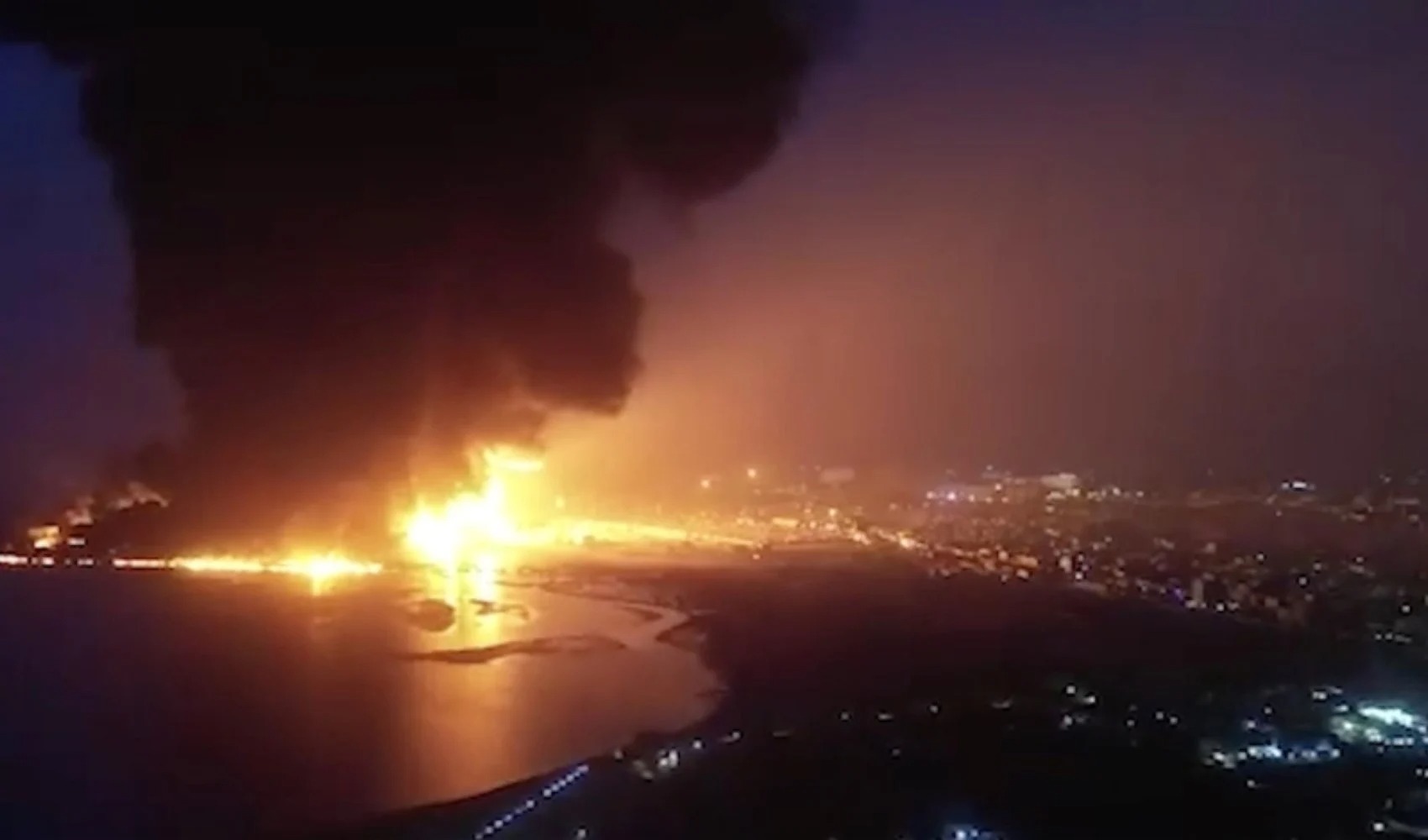
Houthis strike Saudi-owned tanker

What did the CHP do?

Özel’s new party move in the world press

The New CHP, against CEHAPE

From self-efficacy to despair