



'When it comes to the Israel-Palestine issue, nothing means what it appears to mean'
The Middle East has once again turned into a bloodbath following the attack launched by Hamas against Israel in the early hours of Saturday.
Hamas militants had infiltrated from Gaza, taken numerous military personnel hostage—including a general—seized a police station, and even destroyed Israel's famous Merkava tanks with drone attacks!
Israeli civilians were also among their targets.
The world was left in horror as footage of the attack hit social media.
24 hours after Hamas's attack, Lebanon's Hezbollah also joined the clashes.
Unfortunately, the possibility of the clashes turning into a regional war is increasing.
Anyone who is even remotely interested in the Middle East and the Israel-Palestine issue is trying to understand what is happening in the region.
The questions in people's minds are growing:
How could the world's legendary intelligence agency, Mossad, fail to receive prior intelligence about such a comprehensive attack,
Will Hamas's attack play into the hands of Netanyahu, the leader of Israel's far-right coalition, or will the Israeli public hold him accountable for this attack and topple him in the next election,
What is the goal of Iran, which has declared its support for Hamas; will the US use the attack on Israel as a pretext to put Iran in its crosshairs,
Is there a link between the developments in the Caucasus and Hamas's attack; is Iran, which is losing strategic ground in the region, trying to put the region in check through Hamas and set up a new game,
Is the goal to ensure Arab countries align behind Hamas and prevent Israel's rapprochement with Saudi Arabia, the UAE, and Egypt?
Since yesterday, answers to these and similar questions have been sought on TV discussion programs!
As for me, I was reminded of the sentence in the title of this article by Timur Göksel, the former spokesperson for the UN in Lebanon.
Timur Göksel was a very important figure for journalists interested in the Middle East, specifically Lebanon.
He knew Lebanon's mind-bogglingly complex social and political structure and its organizations down to the finest detail.
He analyzed regional politics, the Israel-Palestine issue, and the attitudes and stances of international actors very well, made extremely accurate assessments regarding the behind-the-scenes of events, and would unhesitatingly share intimate information that not many people could access with the journalists he spoke to.
Unfortunately, he passed away during the global pandemic.
I met him in Beirut in 2006, where I had gone to cover the "Summer Rains" operation, which Israel launched against Lebanon and during which the Shiite Hezbollah resisted for 33 days, earning the appreciation of even the Wahhabi Al-Qaeda.
When we sat down for the interview, his first sentence was, "When it comes to the Israel-Palestine issue, almost nothing means what it appears to mean."
The message he gave me was clear:
- During your time on duty here, try to understand not what you see, but the schemes turning behind what you see. Otherwise, you too will become a journalist used by the power centers here for their own interests.
Following this sentence, one must make this observation: In the Middle East, global powers have calculations that emerge at different points and serve different interests.
Provocations are often considered a legitimate tool; acts that produce black propaganda materials blended with blood and tears, which are shameful in the name of humanity, are seen as "routine occurrences."
After such a long introduction, let's flesh out the sentences above with a journalistic memory.
The US had invaded Afghanistan in 2001 and Iraq in 2003, and was doing everything in its power to shape the region in line with its own interests through the Greater Middle East Project.
Through identity politics, the religious, sectarian, and ethnic lines in the political structures of regional countries were being thickened, and as a result, political Islam was gaining strength. US strategic game-makers had an extremely irrational approach that political Islam was the "antidote to Radical Islam"!
The leadership of political Islam was held by the Muslim Brotherhood.
A few years later, the Arab Spring would give the Muslim Brotherhood a great opportunity for power in regional countries.
In short, regional countries were increasingly facing the consequences of US policies.
Inevitably, this wind had also affected Palestine, and in the summer of 2006, Palestine had begun to boil.
Elections had been held, Fatah and the Brotherhood-affiliated Hamas had formed a coalition government, but the political rivalry between them had turned Palestine into a powder keg, so to speak.
Israel's blockade and pressure, along with economic difficulties, were leaving Palestinians in Gaza breathless. This situation was increasing support for Hamas.
Hamas wanted to maintain its power in the government on one hand, and aimed to become the sole authority in Palestine by further consolidating its base on the other.
Ultimately, it announced that it would abide by the ceasefire agreement reached a year earlier.
It also had the support of the AKP government in Turkey behind it.
Hamas was acting cautiously against Israel to gain legitimacy in the international community.
However, militants affiliated with the Izz ad-Din al-Qassam Brigades and the Popular Resistance Committees were not sitting still, harassing Israel with small attacks.
In other words, in a sense, they were preparing a legitimate pretext for Israel to launch an operation against Gaza.
Hamas was in a difficult position. It was in the government and bore responsibility.
Moreover, the Minister of Interior was also from Hamas!
What could have been the goal of these provocations?
Was it to further radicalize the Palestinian people with the reaction Israel would give, or did they want to involve Lebanon, for example?
Was someone trying to design Lebanese politics over the blood of Palestinians?
Were Israel's arch-enemy Iran and the Iran-backed Hezbollah involved in this planning?
Hezbollah striking Israel with a legitimate pretext and putting it in a difficult position would inevitably bring Lebanese Hezbollah, and thus Iran, to the forefront of regional politics and allow it to gain significant power.
This meant Iran would increase its influence in the region much more.
This was a nightmare scenario for Israel.
On June 9, the ceasefire, which was barely holding, ended.
Israel attacked a beach in Gaza, and many Palestinian civilians lost their lives. The 16-month period was over. Clashes accelerated. On June 24, Mossad arrested Osama and Mustafa Muamar, whom they claimed were Hamas members, in the Gaza Strip.
On June 25, the ties were severed.
Palestinian militants retaliated. They raided the Kerem Shalom checkpoint and took an Israeli soldier named Gilad Shalit hostage.
For Israel, the capture of one of its soldiers was unacceptable.
This gave Israel the opportunity it wanted.
Prime Minister Ehud Olmert held the Palestinian Government responsible for the attack.
On June 28, Israel launched the "Summer Rains" operation. First, it hit roads and bridges. The goal was to eliminate Hamas's mobility. The only power plant in Gaza was targeted. By the end of the first day, 700 thousand people in Gaza were left without electricity and water, and a humanitarian crisis emerged.
Israel also bombed the office of Palestinian Prime Minister Ismail Haniyeh.
On July 12, Hezbollah entered the scene.
Let's open a short parenthesis here:
Although Lebanon was a complete religious, sectarian, and ethnic mosaic, Shiites had not been decisive in the country either socially or politically. Until the Iran-backed Hezbollah grew stronger.
Starting from the mid-80s, Iran had begun to strengthen Hezbollah to consolidate its Shiite crescent policy and had become influential in Lebanese politics through it.
Lebanese Shiites, in a sense, did not lean towards the "velayat-e faqih" approach, which is the foundation of Shiite political Islam and demands that politics be implemented according to religious rules. That is, they were not following the "Qom Position" in Iran, which theorized the institution of velayat-e faqih. For this reason, the non-velayat-e faqih Lebanese Shiite leader Grand Ayatollah Muhammad Hussein Fadlallah was, so to speak, an outsider for Tehran!
Iran was polishing Hezbollah leader Hassan Nasrallah at that time.
Moreover, if we draw a parallel with today's academic literature, Nasrallah, who held the title of Hujjat al-Islam, which would not even qualify as an assistant professorship, should not have been mentioned alongside Fadlallah, who held the title of Grand Ayatollah, which corresponds to an Ordinary Professor.
But for Iran, religious titles could be ignored when necessary.
As long as there was someone to blow their own horn in the region!
Let's close the parenthesis and continue...
Hezbollah militants attacked a patrol vehicle in northern Israel and kidnapped two Israeli soldiers.
Then, they demanded the release of some Palestinian prisoners in jails in exchange for the soldiers.
Israel entered Lebanon, from which it had withdrawn in 2000, without wasting time.
It launched the most intense air and naval attack since 1996.
It first targeted the infrastructure.
It razed roads, bridges, and viaducts to the ground.
The destruction of main roads, bridges, and viaducts had paralyzed daily life. Vehicles carrying the wounded and ambulances could not reach hospitals. Doctors and nurses could not go to the health centers where they worked.
Israel's goal was to immobilize Hezbollah and force it into an agreement.
The Cumhuriyet newspaper, where I worked at the time, had assigned me to cover the war in Lebanon. I landed in Beirut on the last flight before the airport closed.
While going from the airport to the city center, I noticed that the first city had almost turned into ruins.
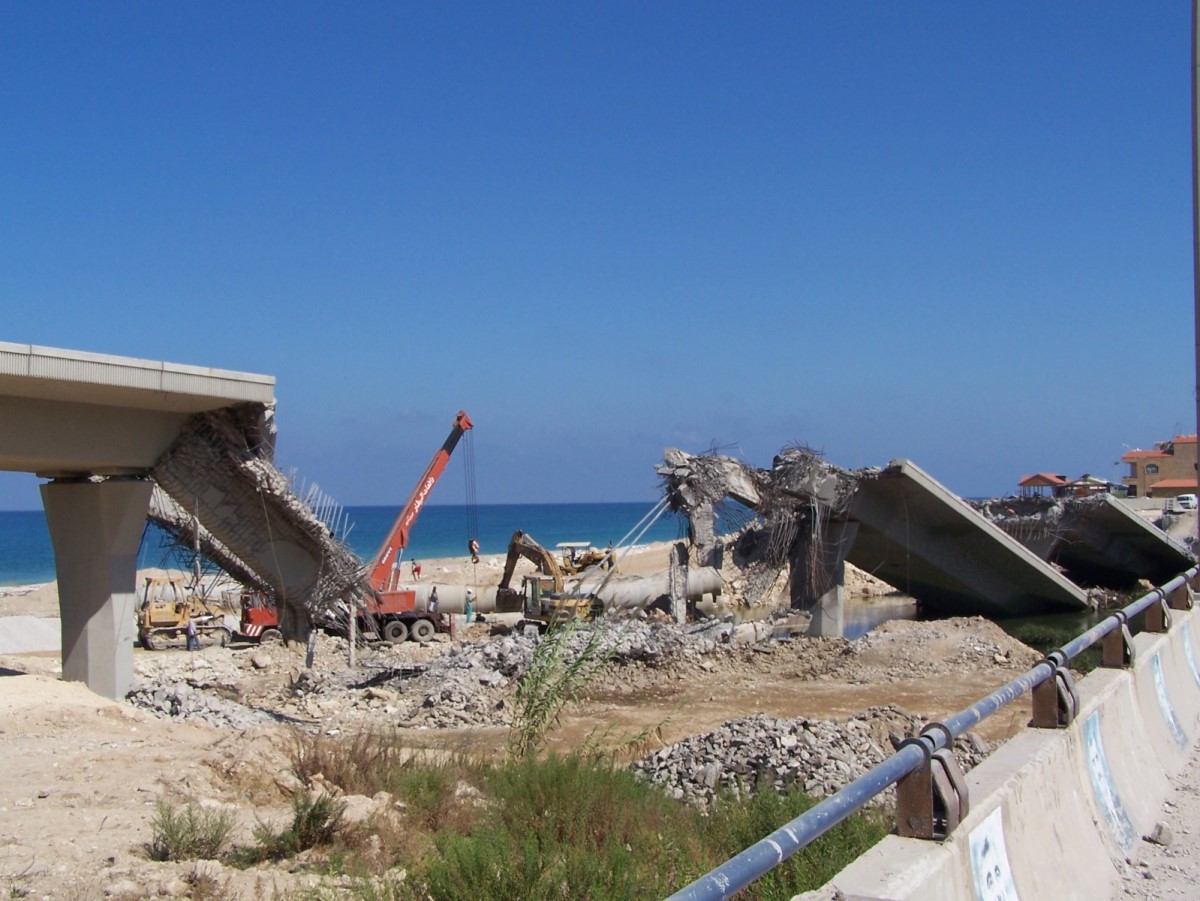
Beirut was living a schizophrenic life, so to speak.
Israel was bombing the country during the day, Hezbollah militants were firing missiles at Israel, and when night fell, they were strolling on Hamra Street or by the seaside as if there were no war or as if people were not dying at all. Daily life was flowing despite all the tragedy being experienced.
Shortly before I arrived in Lebanon, an attack that shook the country had occurred on July 30.
The Israeli Air Force had carried out an airstrike on Qana, a small village in southern Lebanon, and had committed a massacre, so to speak.
As a result of the attack, 28 people, 16 of whom were children, lost their lives.
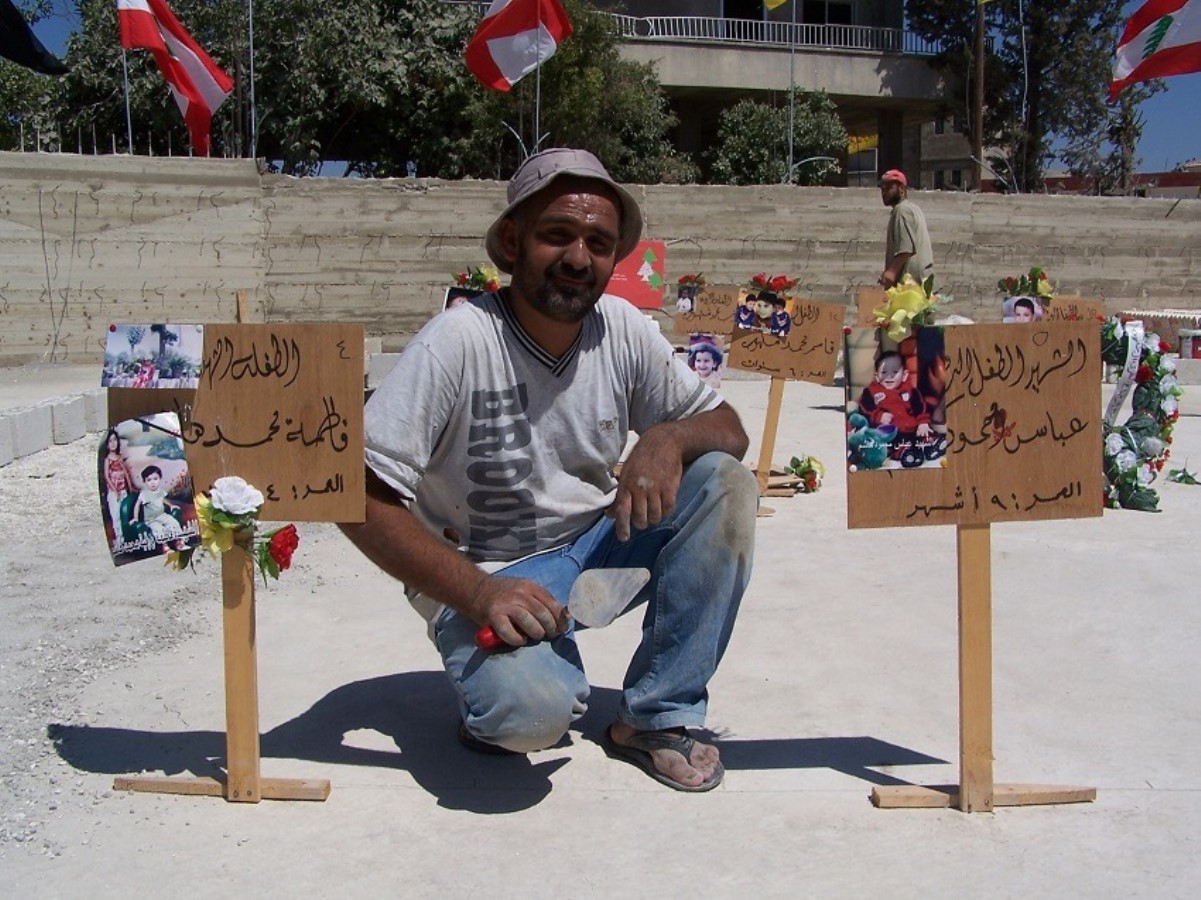
Since there was no social media at that time, international news agencies and global news channels had announced this massacre, and the world had risen up. Voices of "revenge" were rising from the streets of Islamic countries!
Israel, on the other hand, had only sufficed with saying, "We had warned them in advance!"
When I arrived in Lebanon, while I was thinking, "My first job should be to go to Qana," I woke up on the morning of my first night in Beirut to Hezbollah militants knocking on the door of my room at the hotel where I was staying.
Before I even had the chance to learn the answers to extremely logical and reasonable questions such as how they knew I was a journalist, when I arrived in Lebanon, and which hotel I was staying at, I found myself heading towards Qana inside a massive 4x4 off-road vehicle!
While heading towards southern Lebanon, we used side roads and reached the coastline through palm trees.
We reached Qana by crossing sometimes dirt roads and sometimes footpaths!
The first thing that caught my attention was the serene atmosphere of the village.
The wind carried the scent of the Mediterranean. It was as if this was not the village where a massacre had occurred shortly before.
People were sitting in front of their houses quietly, watching those coming and going to the village, as if they had not lost their mothers, fathers, wives, husbands, siblings, or children in the attack.
I was stunned.
Another thing that caught my attention was that the Hezbollah militant accompanying me had already made a program for me.
First, I was going to talk to an elderly woman who had lost her husband in the attack. Then I was going to take a photo of a father waiting at the graves of his children. Then I was going to see the house that Israel had hit.
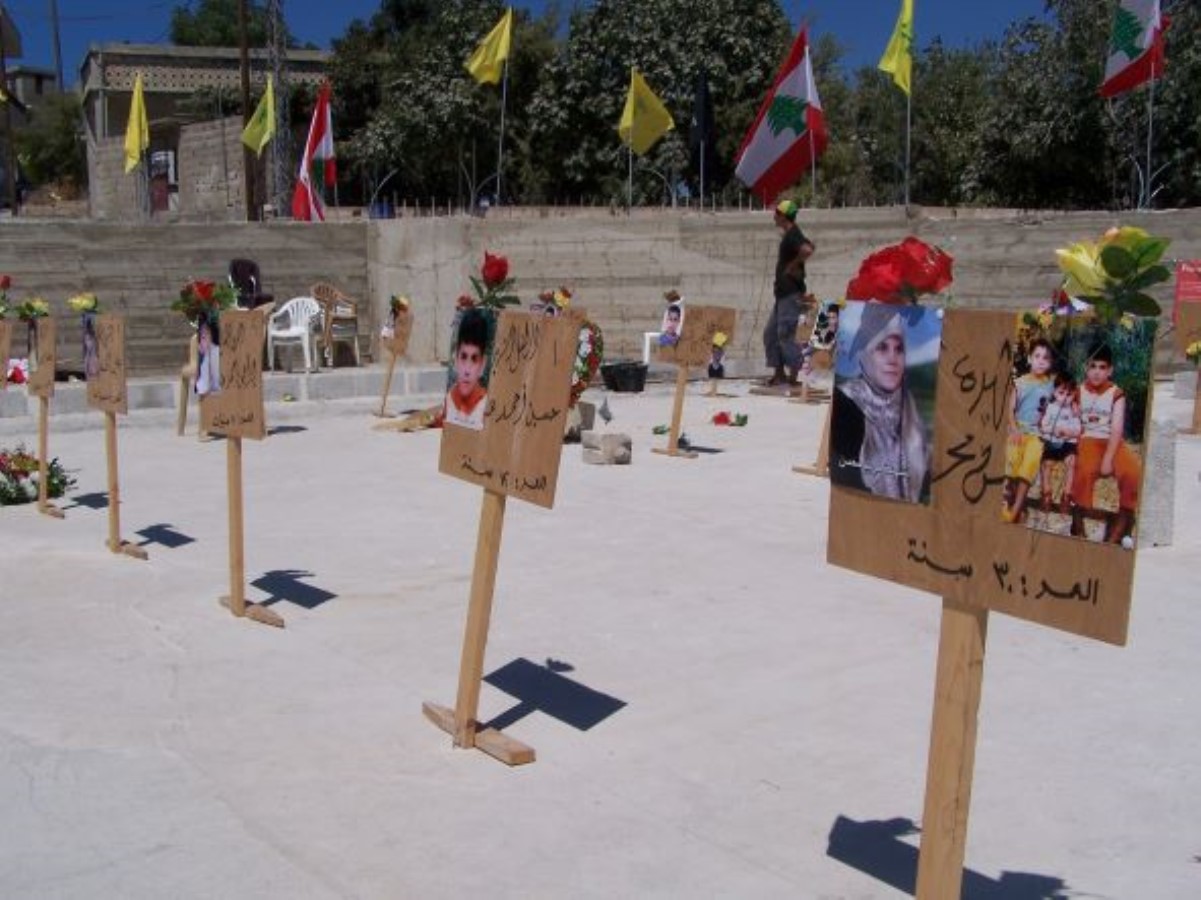
I completed the program as envisioned.
The people I spoke to were describing the tragedy experienced with extremely similar expressions. Even the words they chose were similar to each other.
I had initially attributed this to the Hezbollah militant doing the translation not having sufficient English, but I would soon understand that the matter was not as I thought.
I returned to Beirut with question marks in my head.
I spoke with the newspaper's foreign news desk.
I said I did not want to write the impressions regarding Qana without finding satisfying answers to these questions myself.
They accepted.
The next day, I interviewed former Lebanese President Amine Gemayel. He insistently focused on the fact that Hezbollah was an expert in provocation and black propaganda.
Suddenly, I had an epiphany!
Could what happened in Qana have been a planned provocation?
Were we, journalists, being used as tools for black propaganda?
I went back to the village without wasting time.
By chance, there were no Hezbollah militants in the village.
While looking around to find answers to my questions, I saw a young woman sitting with a small child in her arms.
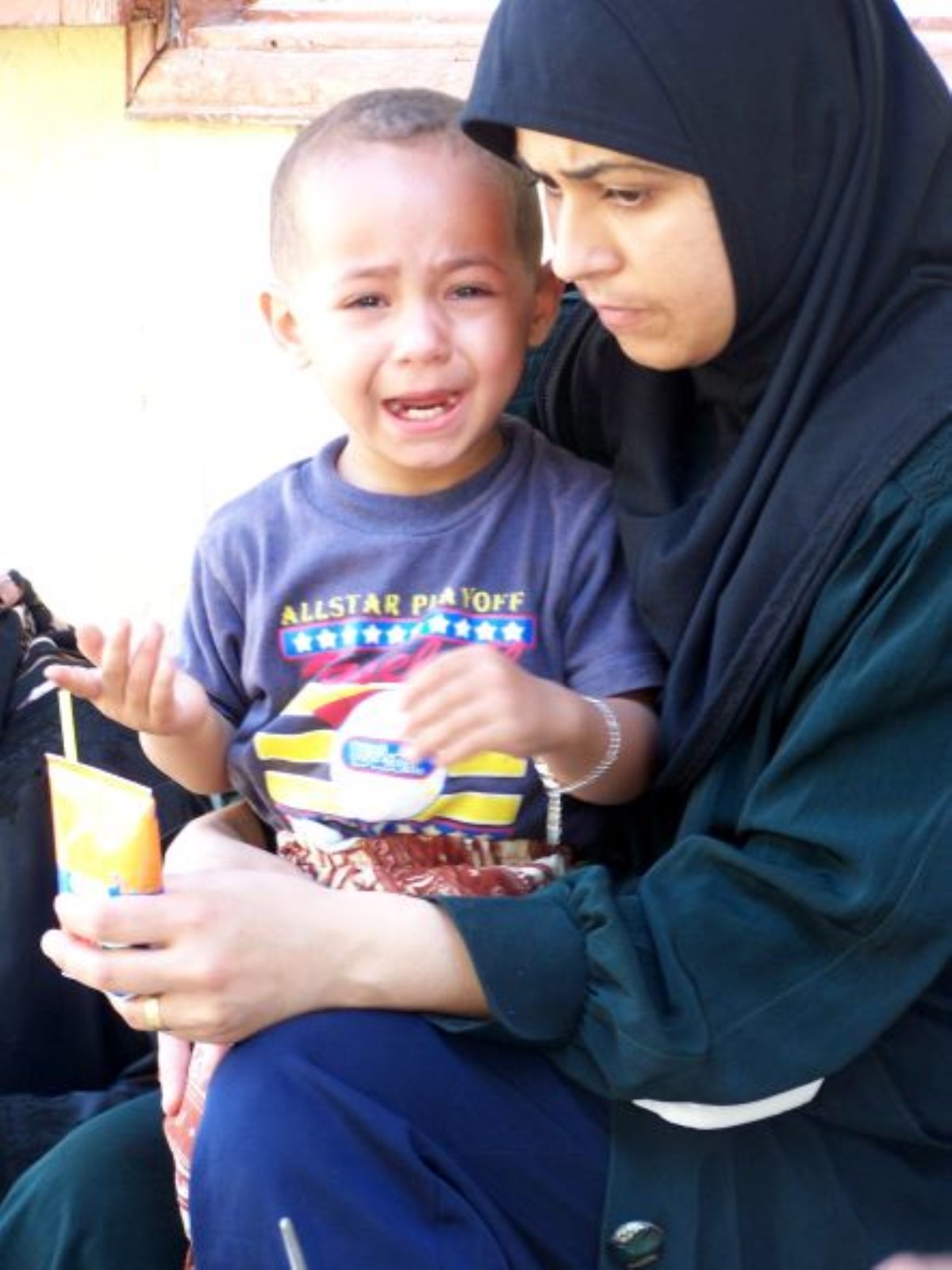
Her eyes, which had turned white, were purple from crying. While I was thinking about whether she could talk to me, she said in a trembling voice, "I know English, I am a teacher."
She was a woman who had studied at university in Beirut, lived in Syria for a while, and was a mother of two.
When the war started, she had come to Qana to be with her father-in-law and mother-in-law.
Her husband had stayed in Beirut.
It was obvious that I was a journalist, but she started telling me without even letting me introduce myself.
"They knowingly sent our children to their deaths," she said. She did not give me a chance to ask "How."
It was clear that she wanted to tell what she had experienced as soon as possible.
I was horrified after every sentence.
Shortly after the war started, Hezbollah had brought Katyusha rockets to the village and placed them inside a mosque and in the basement of the house next to the mosque.
Israel, known for its very good human intelligence, had received information shortly after that these weapons were hidden in the village.
Had it learned this through its own efforts, or had someone from within Hezbollah come out and whispered that the weapons were hidden in the village?
The young woman believed that Hezbollah had knowingly and willingly passed this information to Israel.
Israel had issued warnings several times from the radio, which was also listened to from the village and broadcast in Arabic, and had asked for certain places to be evacuated.
That was the reason why it made the "We had warned them" statement after the attack!
That night, the Hezbollah official in charge of Qana had come with a group of militants and asked for the children to be gathered in the house where the rockets were hidden.
People had to watch the children and the elderly go knowingly under the threat of weapons; those who got angry, cried, and objected were silenced by force of arms, and they were told that this should be accepted as a religious duty.
In fact, a tragedy was being experienced in the true sense of the word.
When it was their turn, she had not wanted to hand over her children to the militants, she had cried, and thrown herself on the ground. Hezbollah militants had beaten her father-in-law, who did not want to give the children.
Ultimately, the militants, who learned that she was a teacher, had made an extremely inhumane offer. They wanted to take one of her two children, saying the other child could stay, but they wanted her to make the choice.
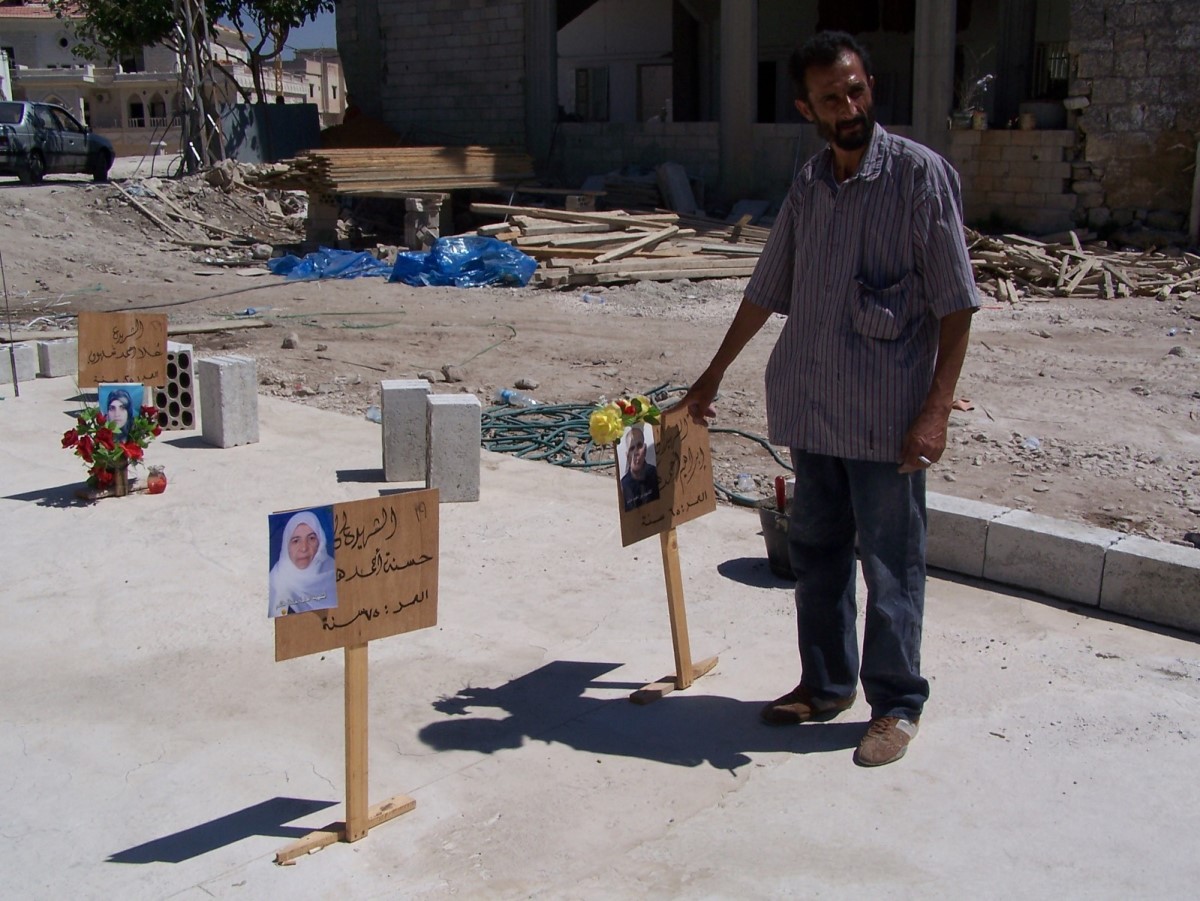
The 1982 film "Sophie's Choice," directed by Alan J. Pakula and in which Meryl Streep gave a magnificent performance and won an Oscar, had become a reality in the Lebanese village of Qana!
The young woman had to give one of her two children to Hezbollah; that house was hit that night, and an incredible tragedy was experienced in the village.
28 people, 16 of whom were children, had been torn from life for Hezbollah's black propaganda.
Immediately after the attack, the system had started working, and stories and photos from the village had been rapidly serviced to international agencies.
There was no excuse for what Israel did under any circumstances.
It had committed a crime against humanity.
But the issue was not as it appeared, as it was reflected in the world press.
Behind it, the Iran-backed Hezbollah had a much larger calculation.
This calculation was actually based on the struggle between Iran and America in the Middle East. Every position Iran gained against American-backed Israel through Hezbollah was important for it to maintain its claim in the region.
It was clear that the "killing innocent children" propaganda was intended to bring about reactions against Israel in world public opinion, and with this, Hezbollah, or rather Iran, was intended to gain psychological superiority in the region!
At the end of the day, I returned to Beirut in great horror because of what I had heard.
I took good notes of what I had learned and kept them to write about when I returned.
I had once again understood the difficulty of writing about the Middle East.
During my time in Lebanon, I had the chance to observe the Middle East's unique reality dozens of times.
Whatever happens in this unfortunate geography of the world, whatever is experienced, it has a meaning beyond what is seen; let us end our article by saying that unless one looks at the issue from this framework, it is not very possible to understand the calculations in the background.
Most Read

Striking picture for Özgür Özel's 'New Party'
Özgür Özel gives a dated response regarding the number of resignations
Forest fire in Antalya brought under control

The PKK opening and Özgür Özel’s path!..

How did the newspapers view Özgür Özel's farewell to the CHP?

Houthis strike Saudi-owned tanker

What did the CHP do?

Özel’s new party move in the world press

The New CHP, against CEHAPE

From self-efficacy to despair