



Ten days have passed since the attack launched by the US and Israel on Iran.
We go to sleep and wake up to war in front of our screens. The humanitarian dimension of the issue is, quite literally, heartbreaking. A tragedy is unfolding before the eyes of the world, and the conscience of humanity is bleeding.
This is a war that no one, except for a few misguided individuals, approves of.
Our right to criticize the medieval regime in Iran is, of course, reserved. However, being against the mullahs does not mean we will remain silent in the face of this imperialist aggression.
Since February 28, Iran has received very heavy blows. It has lost its religious leader and high-ranking military officials. Its major cities, primarily Tehran, have been the targets of bombs and missiles. Telecommunications infrastructure, industrial facilities, and public buildings have suffered serious damage.
But despite this, it continues to resist.
Looking at all of this, it is difficult to say that things are going exactly according to plan for Trump either. He is strutting around here and there, acting as if "this will be over any minute now."
But Iran is like a thistle...
It scratches, draws blood, and hurts you on all sides.
Therefore, at the point we have reached today, we see that trying to extract a heroic tale from the Iran issue is no longer just an optimistic delusion, but an unrealistic expectation.
Moreover, the economic bill for the war has already begun to grow.
In particular, the sharp rise in oil prices has turned Trump's calculations upside down. With the increase in surrounding risks, oil prices have reached nearly 120 dollars per barrel. It has hit its highest level in the last four years.
This picture is shaking not only the Middle East but the global economy as well.
The rise in oil prices is pushing up global inflation expectations. The possibility of stagflation is being discussed once again for developed economies.
The bill for this is, of course, also reflected on US consumers. Energy costs are rising, production and transportation expenses are increasing, and inflation is directly affecting daily life.
With Trump describing this as a "small price to pay," we understand that he is also disconnected from the economic reality in his own country.
His expression of indifference toward the rise in oil prices might be political rhetoric. But the realities reflected in the public's wallet are much more ruthless.
Energy costs rise.
Production becomes expensive.
Transportation expenses increase.
In the end, inflation rises.
In short, the "heroic tale" Trump wanted to write is gradually turning into a strategy of producing excuses.
He has now moved into a defensive position, saying, "this war was something that had to be done anyway."
Whether anyone is buying this defense is another matter.
One of the goals of Trump and Netanyahu when attacking Iran was to cut off Tehran's oil revenues. They were planning to put Iran under economic pressure this way.
However, the emerging picture has shown the exact opposite.
The withdrawal of Iranian oil from the market and the uncertainty in the Strait of Hormuz have become a threat to global oil supply.
The result is clear:
Oil prices have risen.
Risk premiums in the markets have increased.
Moreover, this situation has also led to a drop in production in Gulf countries like Iraq. Following the US-Israel attacks, Iraq's crude oil production fell by nearly 60 percent.
This means a new contraction in the already sensitive global oil supply.
Let's be clear...
The fact that oil prices remain high for a long time will put pressure on growth not only in the US but in the entire world economy.
As energy costs rise again in Europe, production costs will increase, supply chains will be strained, and the possibility of an economic slowdown will strengthen.
You don't need to be an economist to see this.
Anyone with a little economic literacy can read this picture.
Now let's look at the possibilities ahead.
At the center of Trump's Iran policy is the goal of "regime change." He defines Iran as one of the greatest threats to the US. He says he aims to weaken its nuclear program, ballistic missile capacity, and regional influence network.
But reaching this goal does not seem that easy.
Iran has rejected unconditional surrender and declared that it is ready for a long-term resistance.
This situation frustrates Trump's expectation of "unconditional surrender."
Washington now has two main options.
The first is for the war to deepen even further.
This option seems to be Trump's initial reflex. However, instability in oil markets, global economic risks, and the possibility of a long-term military burden could create serious debates within the US.
The second option is negotiation and diplomacy.
Although this path seems to contradict the harsh rhetoric of Trump's election campaign, economic pressure and internal political balances could force Washington to seek such an exit.
A negotiation process to be conducted with Iran, either directly or through intermediaries, could reduce tension in oil markets.
But for this, trust must be established between the parties, which is the hardest part of the job.
As a result, Trump's desire to write a victory story in the Middle East seems to have hit the wall of economic reality and geopolitical hardness.
At the point we have reached today, the possibility of Trump turning the Iran issue into a heroic tale is getting weaker.
Perhaps we may soon see him searching for a more defensive, more cautious, and less populist strategy.
Because the rise in oil prices in the US is not just an economic issue, but also means a serious internal political cost.
It is not for nothing that even some circles supporting Trump in Congress are voicing criticisms regarding increasing defense spending, ammunition stocks, and economic risks.
Let us conclude our article by saying that all of this shows that Trump may have to reconsider his foreign policy.
Most Read

Striking picture for Özgür Özel's 'New Party'

Özgür Özel gives a dated response regarding the number of resignations

Forest fire in Antalya brought under control
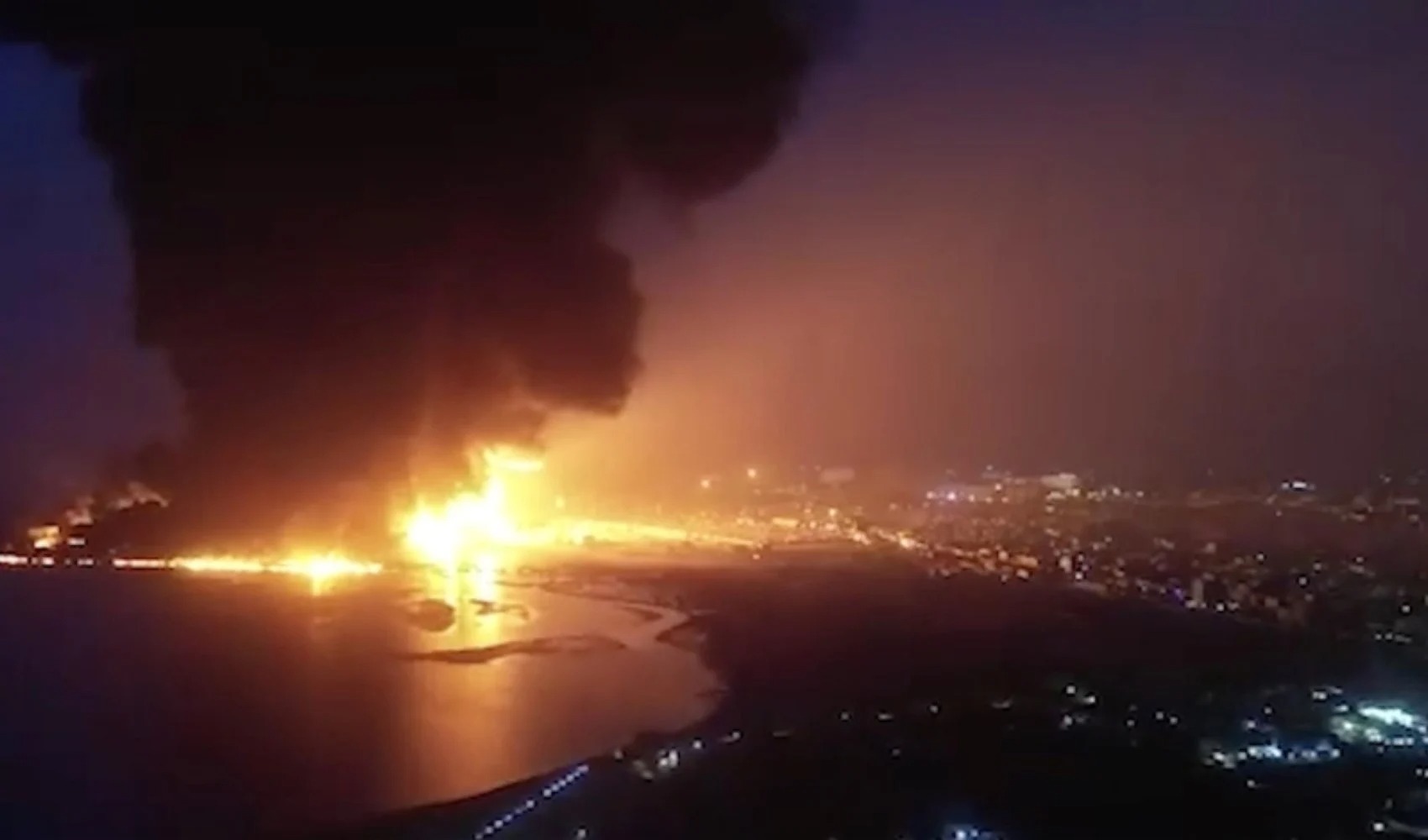
Houthis strike Saudi-owned tanker
4 drones shot down near US Consulate General in Erbil

Özel’s new party move in the world press

Famous director Ezel Akay and his brother have been detained

The new rule of the field: Attrition
'Papers with spells and curses' operation: 'Master, my spouse filed for divorce'
Key figure in Epstein files found dead at home