



Last week, the country's agenda was dominated by Nagehan's revelations and confessions.
As if we had no other issues to discuss, as if we were all living in comfort and prosperity, we forgot about the medieval darkness that has descended upon us like a nightmare and the poverty that hurts us more every day; we didn't eat or drink, we just debated Nagehan's social media posts.
She had made a flashy entrance to the subject via her 'X' account, saying, “These are the most difficult minutes I have spent at the keyboard, the biggest regret of my life. It is time to talk about some truths that I have been unable to admit to myself for years and have kept inside.”
Even though her very first sentence made one think, “these are attention-seeking stunts,” what she wrote was not something to be easily dismissed.
It turns out that while she was shouting at the top of her lungs for others, she was always silent for herself, keeping it all inside. For many years, she lived within a spiral of psychological, physical, and economic violence of unimaginable proportions.
Her biggest regret was that she had remained silent for so long, as if what she was experiencing was her own fault. Moreover, she couldn't escape the violence even after the divorce, and so on!
In reality, the meaning of these fancy sentences, with which she tried to be literary and pull at the heartstrings of our souls, was this:
“Throughout our marriage, Rasim beat me and cursed at me. And I couldn't raise my voice.”
We don't know how much of it reflects the truth, but let's accept it as true and continue.
Following Nagehan's revelations and confessions, social media erupted. In the neighborhood where she had acted as a hitman for years, she was, to put it colloquially, largely ignored, but the other neighborhood was, as always, split right down the middle like a watermelon.
On one side were those saying that if a woman is subjected to violence, one must stand behind her unconditionally regardless of who she is, and on the other were those saying, “Let her suffer.”
However, apart from a few old-school journalists and soldiers who were victims of the Ergenekon and Balyoz cases, no one came out to ask, “Why is this happening out of the blue?” Not many people said that the timing was suspicious.
When the person making these posts is a figure who, like Nagehan, has been a staunch defender of the political Islamist medieval mentality that has ruined, devastated, and finished off the country in every respect, these confessions and revelations must be handled from a different perspective.
I first saw her in 2008.
In Ankara, aside from those who don't pay particular attention to the signatures above or below news reports, there are hundreds, perhaps thousands of press workers who carry the burden of newspapers and television stations, and then there are the “journalists” who are born with a silver spoon in their mouths, educated in elite schools, and then dropped in by parachute from above.
They reveal themselves at first sight.
They are usually relatives of bosses, editors-in-chief, or, at worst, Ankara representatives.
The path for these princes or princesses is always clear.
Interviews that will make a splash are given to them, their signatures are added to behind-the-scenes news stories obtained by senior political reporters, even their routine reports are treated as exclusive news, and they are provided with close access to prominent politicians; in short, they are not put through the master-apprentice training that is essential to the profession, but are constantly pushed to the forefront and polished.
After completing their “internships” in Ankara, they are mostly given a column in a newspaper or a program on television.
Then they are marketed to the people of our country as “very important journalists,” and they climb the career ladder rapidly.
Of course, during this time, they learn whose tune they need to play.
Nagehan was one of them.
If my memory, hit by Covid-19, does not deceive me, I saw her in front of the Ministry of Foreign Affairs residence. At that time, journalists had a routine of waiting in shifts in front of the door.
It caught my attention that she was doing her best to make her difference felt in the middle of the crowd. I asked, “Who is this?” and they said, “İsmail's (Küçükkaya) new princess.” I remember joking, “May it be auspicious for the nation and the country,” as I must not have liked her at all.
You already know the rest.
With what she has done, said, and her demeanor from that day to this, she has become an object of “hatred” not only for those who have suffered at the hands of political Islamists but even for those who carry the slightest concern for the country in their hearts.
So, why did she feel the need to air her personal life and make herself an object of pity for the people of our country out of the blue?
If she had wanted to, she could have had Rasim's account settled long ago by activating influential acquaintances in the upper echelons of the state.
But she didn't; she waited.
First of all, let us underline with a thick pen that this behavior of Nagehan is symbolic.
She has made a tactical—let's not call it strategic—maneuver to take a political position regarding the process ahead.
She had already seen in the 2019 local elections that the wind was changing direction and that, one way or another, the time of the political Islamists would expire in the foreseeable future.
Although it was too early to abandon ship, she was testing the ground on where to land and whose tune she would play from now on.
She took the first step by appearing on İmamoğlu's bus during his Black Sea tour last year.
If İmamoğlu had not taken the massive backlash into account, we might still be seeing Nagehan by his side today.
Now, she is acting with the tactic that “the people of our country stand by the victim.” Thus, she wants to gain sympathy in the other neighborhood so that a reaction similar to the one during İmamoğlu's Black Sea tour does not occur again, or remains too weak to be taken into account.
The support given by some of the opinion leaders of the other neighborhood without a second thought, simply because she is a “woman,” shows that this tactic of Nagehan's is successful to some extent.
Let us not be surprised if we see her sashaying next to Özgür Özel tomorrow or the next day.
Yet, the memory of how she disgracefully targeted the wives of soldiers who were victims of the Ergenekon and Balyoz plots, who are the contemporary, bright faces of this country, remains fresh.
Let's be clear: Nagehan has the blood of Ali Tatar, Kuddusi Okkır, and Türkan Saylan on her hands. Ignoring this and opening a door through nonsense about normalization and softening will cause the great anger that has accumulated against her to be directed at the CHP. Let us conclude our article by reminding Özgür Özel that when this dystopian period ends, Nagehan should be at the top of the list of those who must be held to account.
Most Read

Striking picture for Özgür Özel's 'New Party'
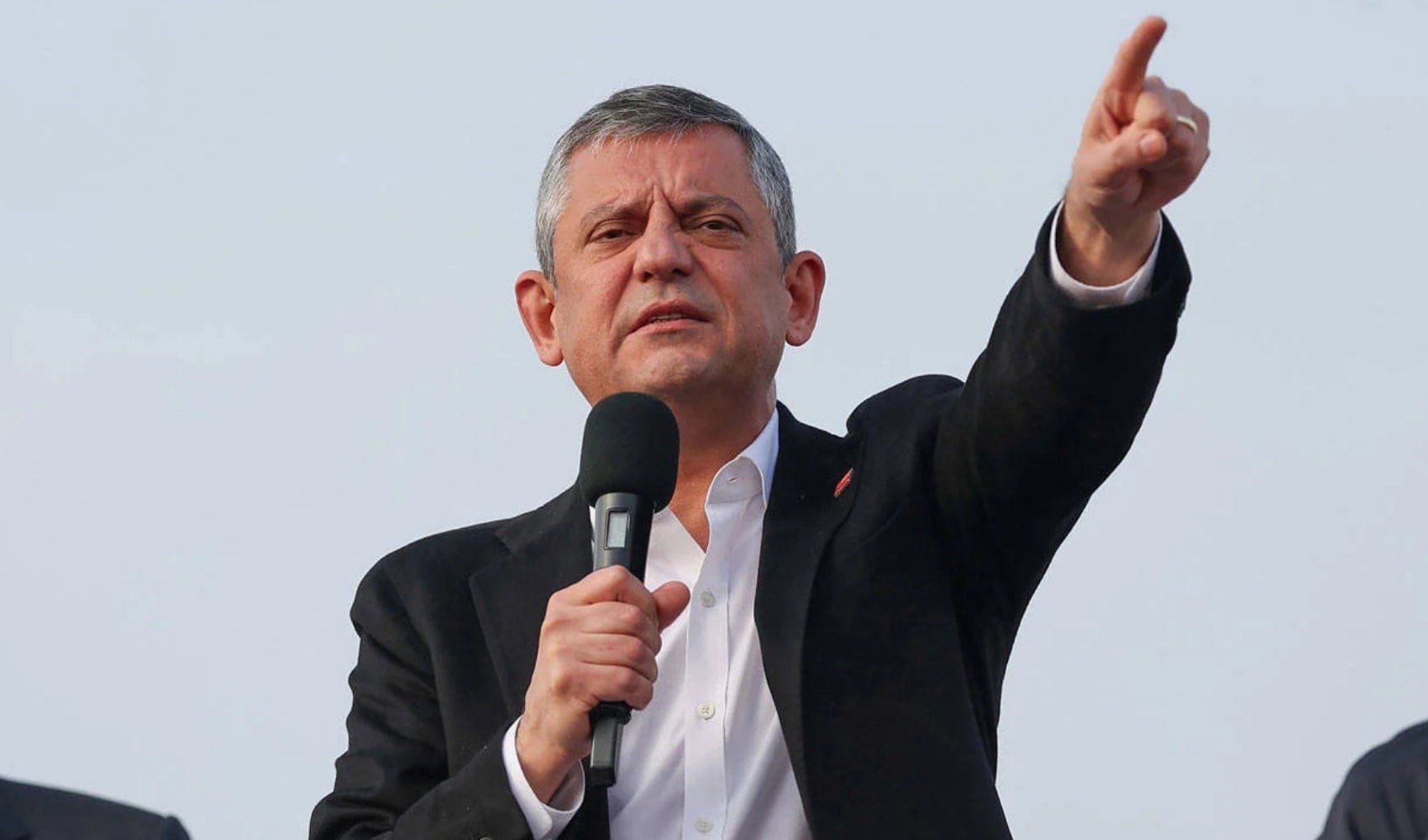
Özgür Özel gives a dated response regarding the number of resignations
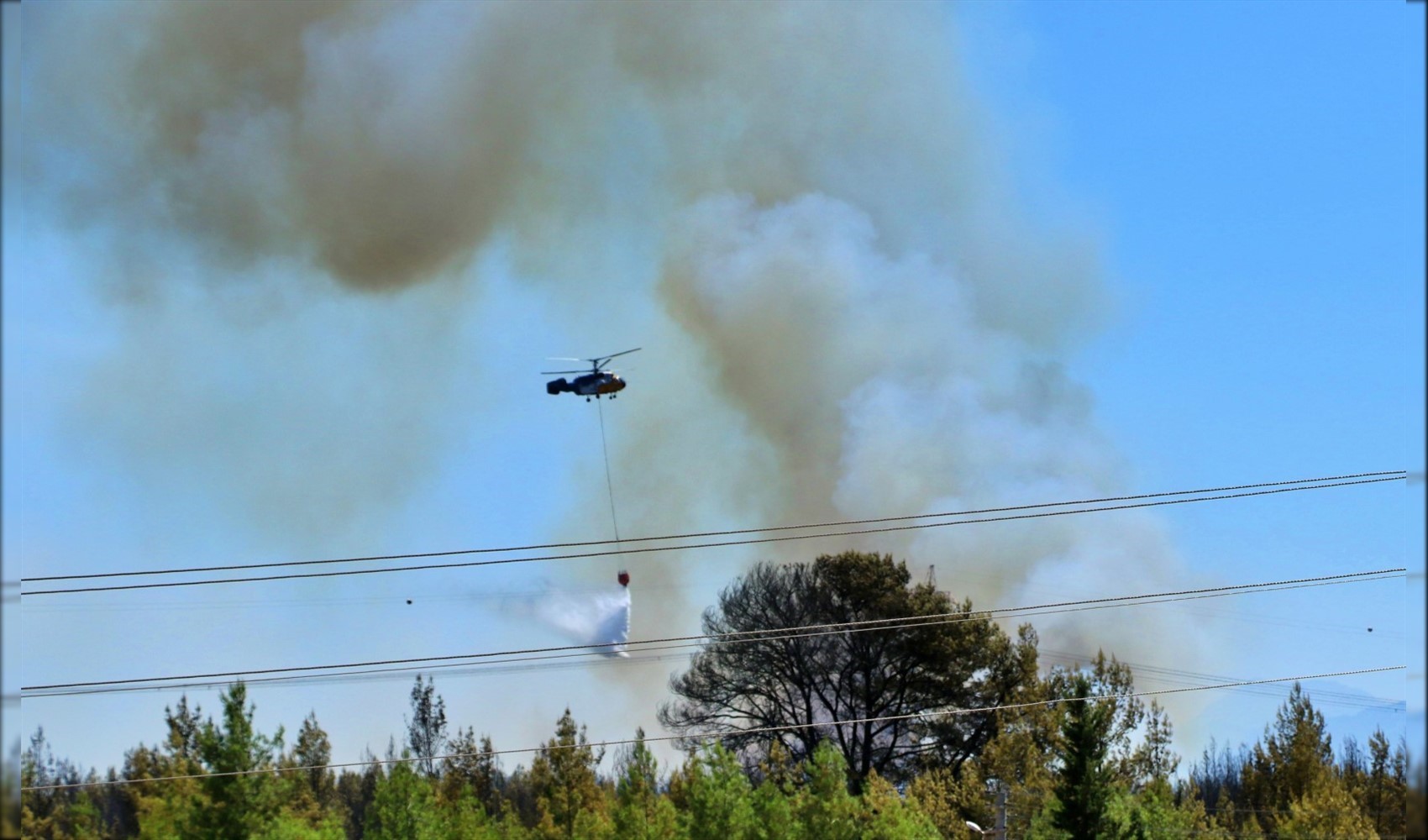
Forest fire in Antalya brought under control

The PKK opening and Özgür Özel’s path!..

How did the newspapers view Özgür Özel's farewell to the CHP?

What did the CHP do?

Özel’s new party move in the world press

The New CHP, against CEHAPE

From self-efficacy to despair
The return of craftsmanship in the age of artificial intelligence