



It is not just our forests that are burning; the country's agenda is also ablaze...
Let us leave aside for now the hundredth day of İmamoğlu's captivity, the operations carried out against CHP municipalities, the bigoted crowd seeking provocation in front of Leman, Özgür Özel's speech filled with profanity, Tayyip Erdoğan's verbal attacks on the opposition, and the greedy tourism merchants—who are crying their eyes out on social media because the people they have been shamelessly ripping off until today have pulled out of Bodrum, Marmaris, Antalya, and Alaçatı.
Let us also leave aside the high cost of living, inflation, the price of cherries reaching 750 liras per kilo, and the government leaving the natural gas price hike for July 1st so as not to give more money to retirees...
Let us go to Ayvalık, the pearl of the North Aegean.
But not for a vacation...
Heartbreaking developments have been taking place for some time in Cunda, the tourism hub of this beautiful district of Balıkesir.
Do not immediately think of the operators who double or triple their prices because the season is short, who refuse to seat two people at four-person tables, or who get angry at those who order only appetizers instead of a main course!
Or those trying to push a scoop of ice cream for 60-70 liras or a single stuffed mussel for 25 liras onto the public...
The issue is about our history, our historical heritage, and our social memory.
Let us put on our reading glasses, open the book, and go back to the early years of the republic.
After the Treaty of Lausanne was signed, a population exchange took place between Turkey and Greece in 1924. Our people living within the borders of Greece were torn from the lands where they were born and raised and migrated to Anatolia.
Turks coming from Crete, along with those from Lesbos and other islands, were settled in Ayvalık, Edremit, Mersin, and their surroundings.
13 thousand 975 people came from Heraklion and 8 thousand 837 from Chania. Let us underline that at that time, Turkey's population was only 13 million.
A new but difficult life awaited them. From that day on, they took root in the lands where they were settled and became established. Their children were born on these lands, and those who passed away were buried in these lands.
Today, there is a significant population in Ayvalık descended from the Cretan exchangees.
They were, as Mustafa Kemal Atatürk said, the sacred memories of lost lands!
With this expression, the Great Leader had entrusted the exchangees to the people of Anatolia.
So, how well have we been able to protect this trust?
Unfortunately, it cannot be said that we have passed the test.
About a month ago, the phone of Alihan Tavşan, a member of the Ayvalık District Municipal Council, rang.
The callers were the 'older brothers' who are the grandchildren of the local Cretan exchangees of Cunda.
“Brother,” they said, “men from the municipality came, they are digging up our cemetery...”
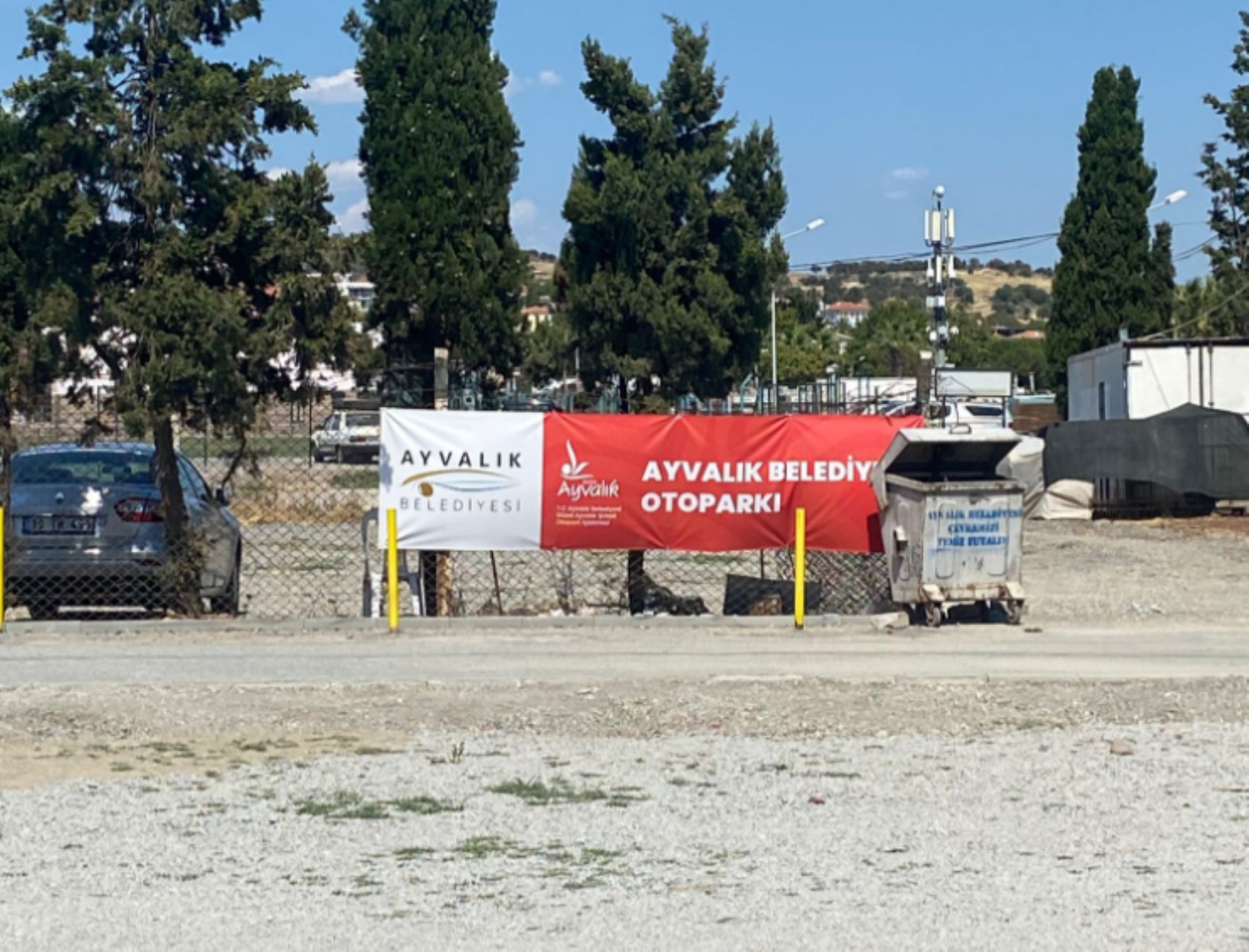
Moreover, they had not even informed the village headman. It was clear they intended to create a fait accompli.
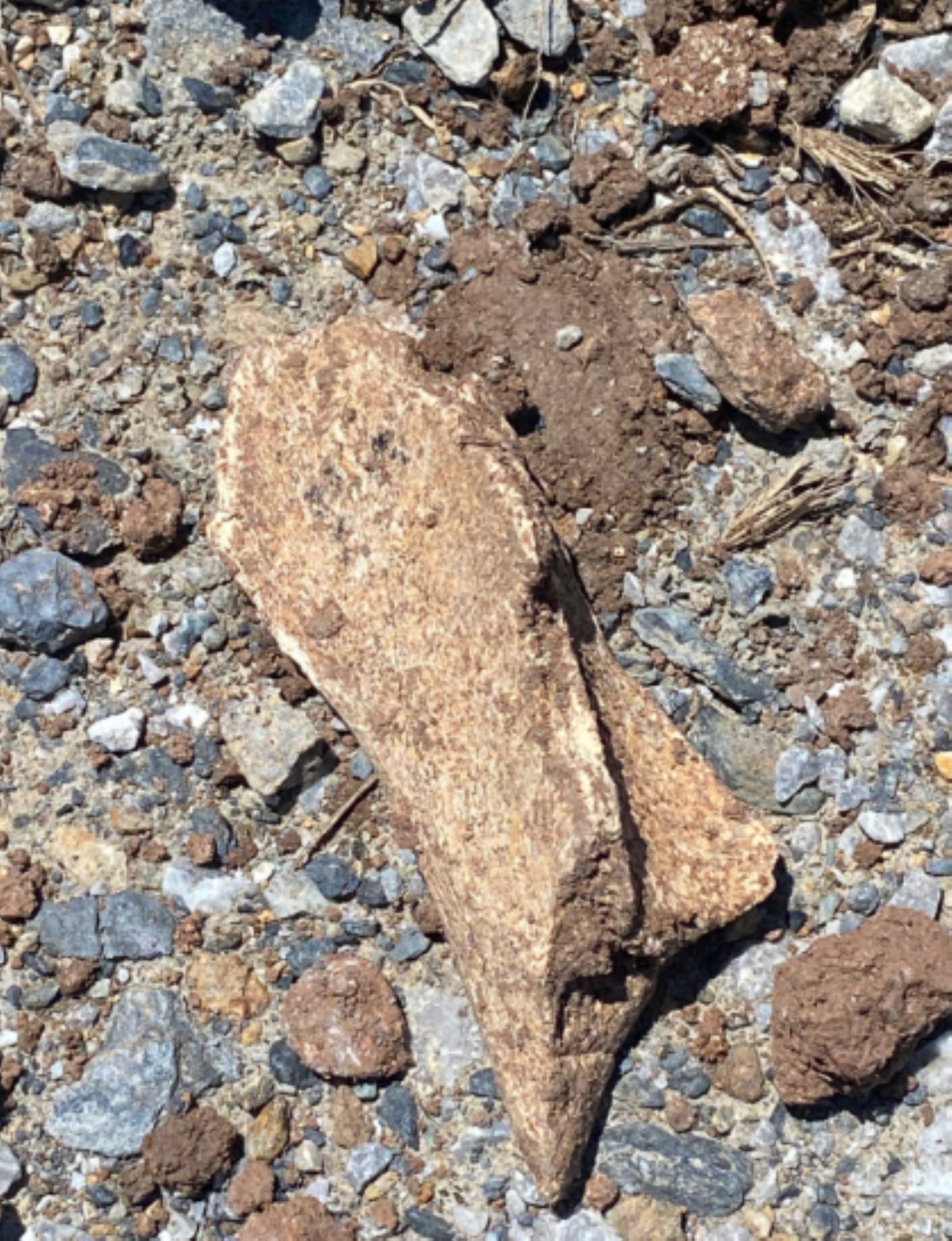
However, human bones emerged where the excavator struck. The situation changed; the municipal workers hurriedly covered the place they had dug, poured gravel over it, and left.
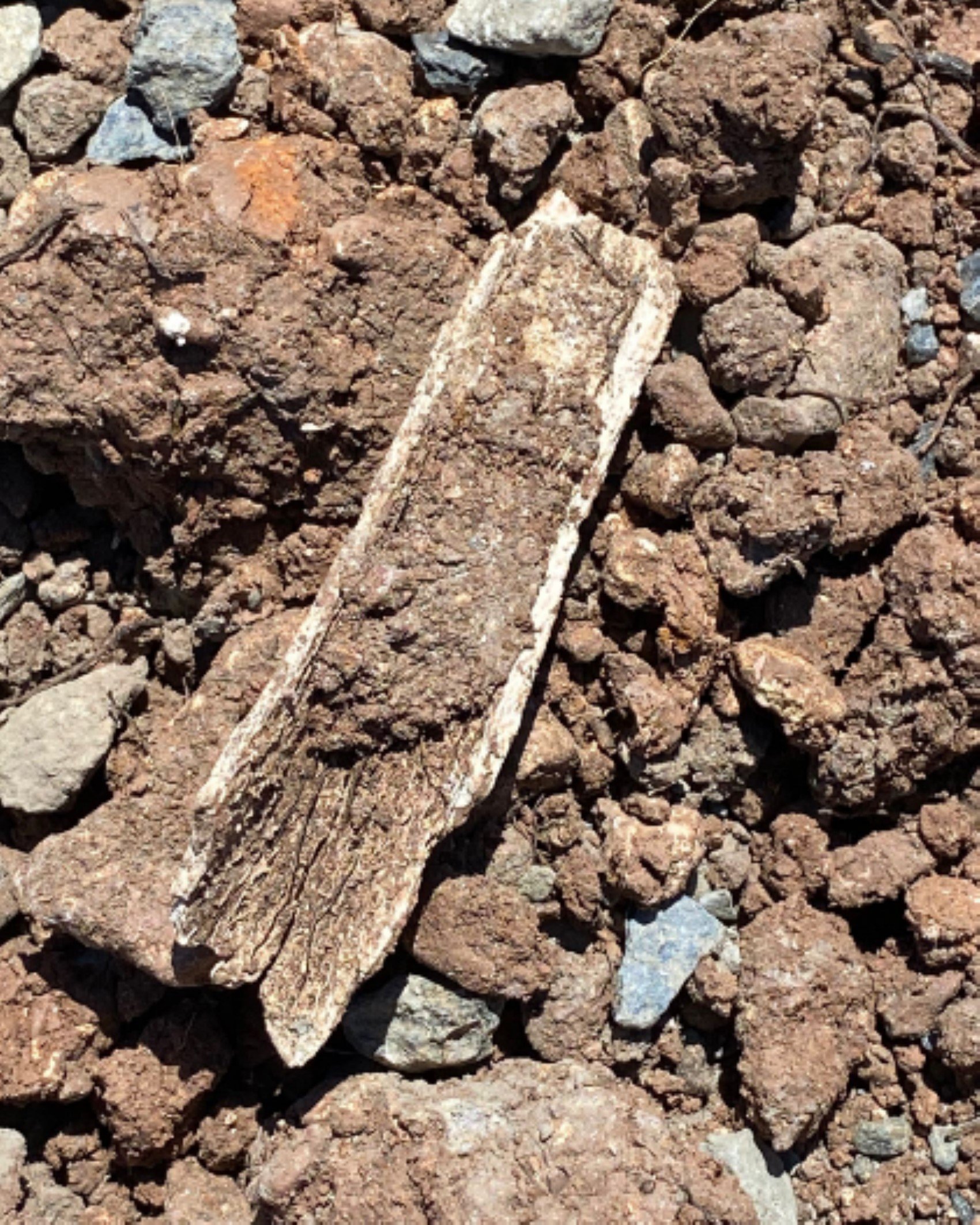
In fact, there was a major scandal at hand.
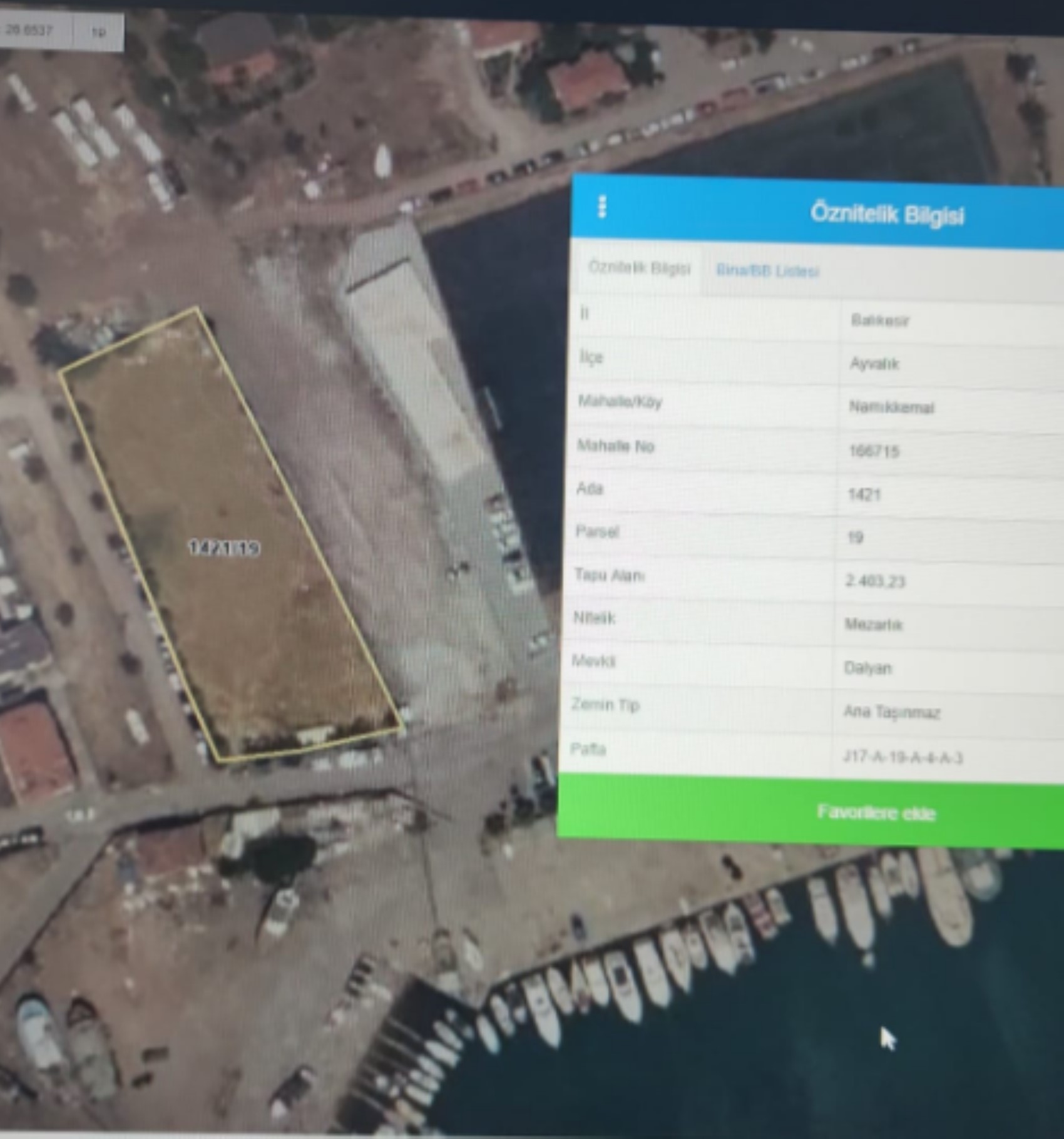
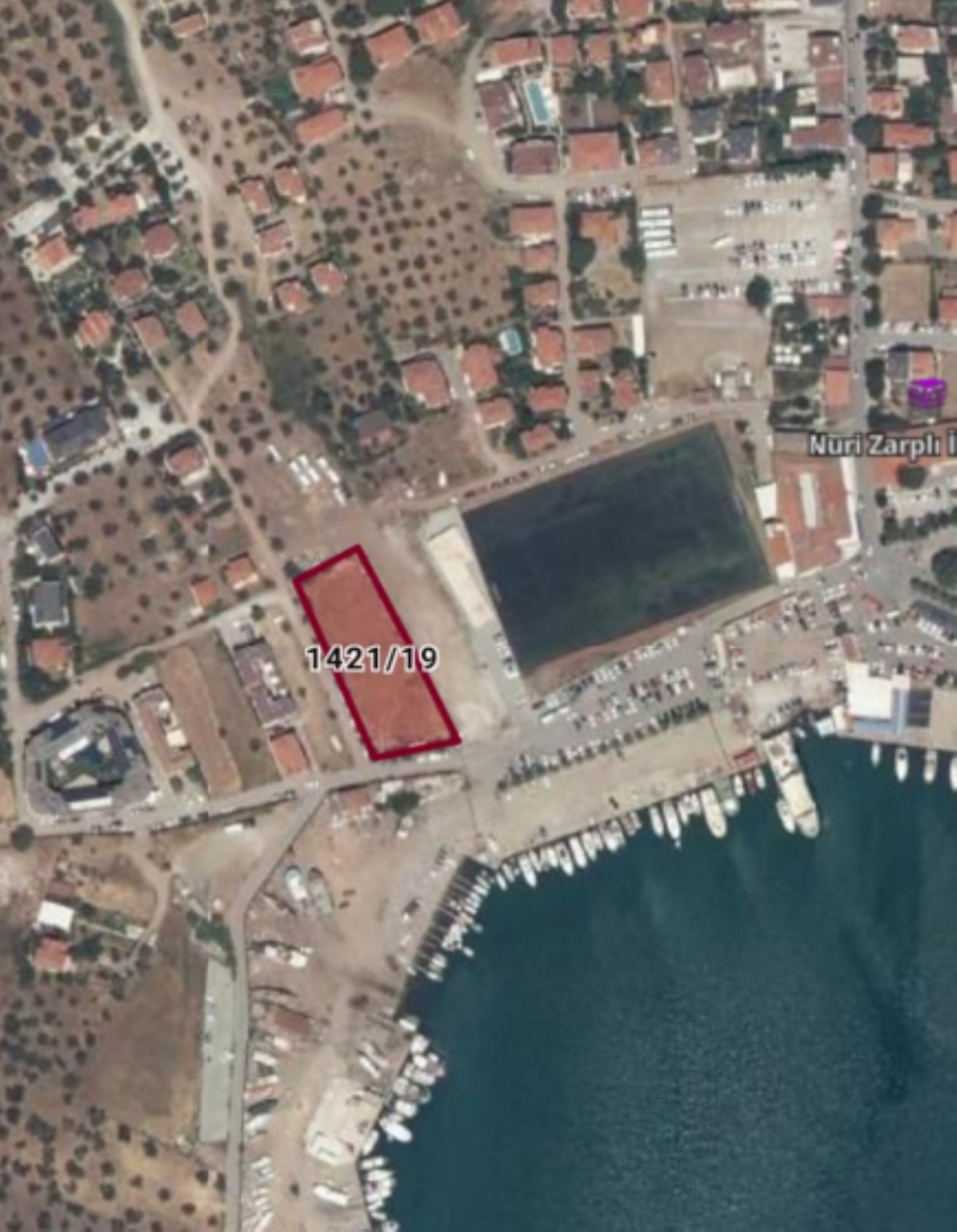
This was not a remote corner of Cunda; it was in the center of the island, right next to the football field, and it was already known to be a cemetery.
In other words, it was no coincidence that human bones came out of the place they dug, and there were cypress trees inside, which are planted only in cemeteries in Anatolian culture.
But more importantly, this place was registered in the land registry as a cemetery. Legally, its status would have needed to be changed by a Municipal Council decision to build a parking lot.
Clearly, the municipality did not feel the need for this.
Exchangees who passed away between 1924 and 1940 were buried here, and burials were closed after that year.
The Municipal Council member Alihan Tavşan, whom the 'older brothers' called, was both Cretan and Lesbos-born on his mother's and father's sides; moreover, his grandmother's mother and three siblings who died at a young age were buried there.
Over the years, the graves had disappeared due to neglect. Only a few wealthy families were able to have headstones made, so their locations were known.
In any case, the first exchangees were too poor to put stones on their graves. They were struggling with epidemics and diseases.
Later, the municipality asked for permission from wealthy families and moved their graves, but the others remained.
Among those buried here are Samizade Süreyya Berkem, the son of Turkey's first detective novelist Ebu Süreyya Sami Bey and the first Turkish journalist to go to Japan, and Şerife Hanım, the wife of İbrahim Yalçın, known as the last Imam of Lesbos Sığrı and the first Imam of Cunda, known as Gayrı Hoca.
In other words, there are many more people buried in the cemetery where the municipality wants to build a parking lot than just three or five individuals.
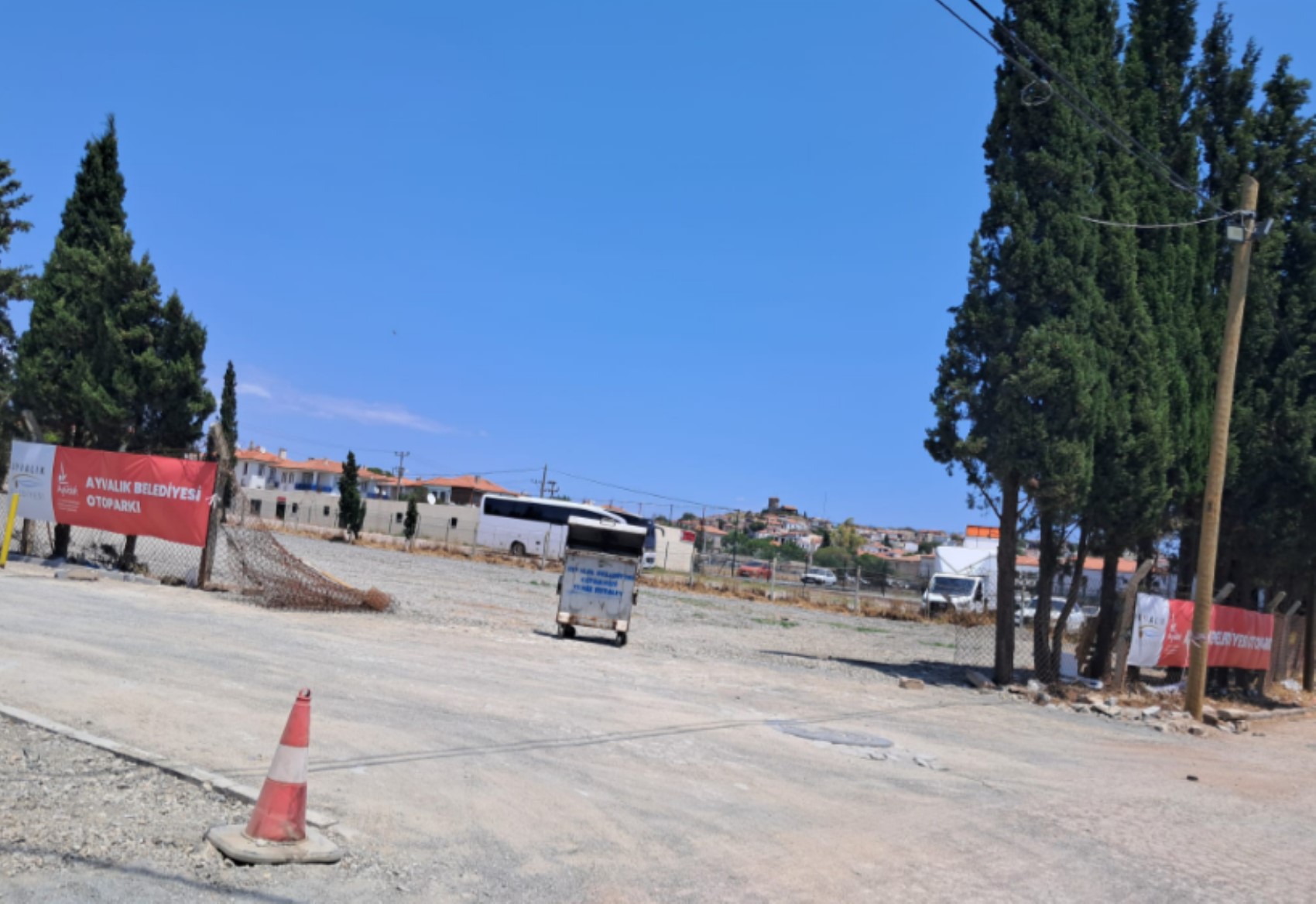
Let us open a brief parenthesis here. Journalist Samizade Süreyya Berkem was buried in 1968 in this cemetery, where burials were closed in 1940. This shows us that the cemetery was in use until 57 years ago.
It is said that the municipality wants to get a large share of the Cunda parking lot rent by taking over this place.
They have already widened the road leading to the exchangee cemetery and turned it into an alternative route. If a one-way traffic application also begins, visitors coming to Cunda will first encounter the municipality's parking lot; they will refrain from going further and park their vehicles here.
Apparently, this is the plan...
Let us stop and take a breath and ask:
At what cost...?
In that cemetery, there are still the bodies, shrouds, and bones of the first exchangees who arrived, even if they have now decayed.
This is beyond disrespect to the memory of our ancestors who were torn from the lands where they were born and raised; it means the complete erasure of our social memory.
New generations will never know their ancestors, their grandparents!
Is it worth it?
Yet, in 2021, the ruins of the Agios Nikolaos Grave Chapel, known as the old Greek cemetery of Cunda, were registered as a cultural asset inventory along with its surrounding walls and the still-standing "bone repository."
Let us end our article by asking: do the graves of the exchangees not have as much value as the Greek graves?
Most Read

Striking picture for Özgür Özel's 'New Party'

Özgür Özel gives a dated response regarding the number of resignations

Forest fire in Antalya brought under control

The PKK opening and Özgür Özel’s path!..

How did the newspapers view Özgür Özel's farewell to the CHP?

He killed his wife by slitting her throat: Their children witnessed the moments

What did the CHP do?

Özel’s new party move in the world press

The New CHP, against CEHAPE

Fire at TUSAŞ engine factory in Eskişehir under control