



As expected, the Civil Contract Party, led by Prime Minister Nikol Pashinyan, won the general elections held in Armenia on June 7, receiving half of the votes. Also as expected, despite winning the election, he failed to secure a constitutional majority (two-thirds). This picture is poised to have significant consequences not only for Armenia's domestic politics but also for the region and the great power competition within it.
Why, you ask?
Let us discuss it point by point…
First, Pashinyan received strong support from the public despite suffering a crushing military, political, and diplomatic defeat in Azerbaijan's just and legitimate cause regarding Karabakh. Despite the defeat, his promise of a "real Armenia" rather than an "imaginary Armenia," his intention to rapidly normalize relations with Azerbaijan and Turkey, and his pledge to improve the economy and enrich the people found a response.
Second, when Pashinyan first took office, he underestimated Russia's weight in the region and trusted the West, the US, and European imperialism too much. Seeing this, Russian leader Putin reminded Pashinyan of the realities—not by beating him directly with his own hands, but by not stopping Azerbaijan against Armenia and by not preventing Baku from beating Yerevan.
Third, there is a significant Russian influence in Armenia's domestic politics, economy, and security bureaucracy. A large number of Armenians live in Russia. It is impossible for Pashinyan to change this reality in a short time, overnight. With a population of roughly 3 million, a surface area of 30 thousand square kilometers, and a weak economy, Armenia exports 90 percent of its goods to Russia and buys its natural gas from Russia (at a quarter of the price Europe pays). Given that the number of Armenians in Russia is approximately 2 million, Pashinyan cannot afford further tension with Moscow, even if he wanted to. That is why, before the elections, he stated that if he won, his first trip abroad would be to Moscow, and his subsequent trip would be to Brussels. Despite receiving great support from the US and Europe, declaring Moscow—which supported the opposition against him—as his first foreign destination shows that he has learned at least some lessons from the mistakes he made during the first period of his leadership since 2018.
Fourth, Armenia is very eager to establish the best possible relations with NATO on one hand, and to become a member of the European Union on the other. In response to this ambition, Russia says that Armenia cannot be both a member of the Eurasian Economic Union and the European Union. It tells them to choose one. Due to Armenia's geographical location, trade relations, energy dependence, and Russia's influence over Yerevan, it is not possible for it to easily abandon the Eurasian Economic Union.
Fifth, Pashinyan believes that rapidly normalizing relations with Turkey and Azerbaijan will also break the influence of the Armenian diaspora over Armenia, specifically over Armenian foreign policy, and that this will make Armenia's relations with Western countries healthier.
Sixth, Armenia is also experiencing problems with Georgia. There is historical mistrust between them. Relations are strained. Armenia, which has problems with Turkey, Azerbaijan, Russia, and Georgia on different scales and for different reasons, has only one neighbor with whom it has good relations: Iran, with which it shares a 44-kilometer border. Since Iran is preoccupied with its own survival, it cannot pay much attention to Armenia, which it has supported for years.
In conclusion, the new era in Armenian politics is significant not only for the country itself but also for the region and the great power competition within it, namely the US-Russia rivalry.
Most Read

Striking picture for Özgür Özel's 'New Party'

Özgür Özel gives a dated response regarding the number of resignations

Forest fire in Antalya brought under control

The PKK opening and Özgür Özel’s path!..
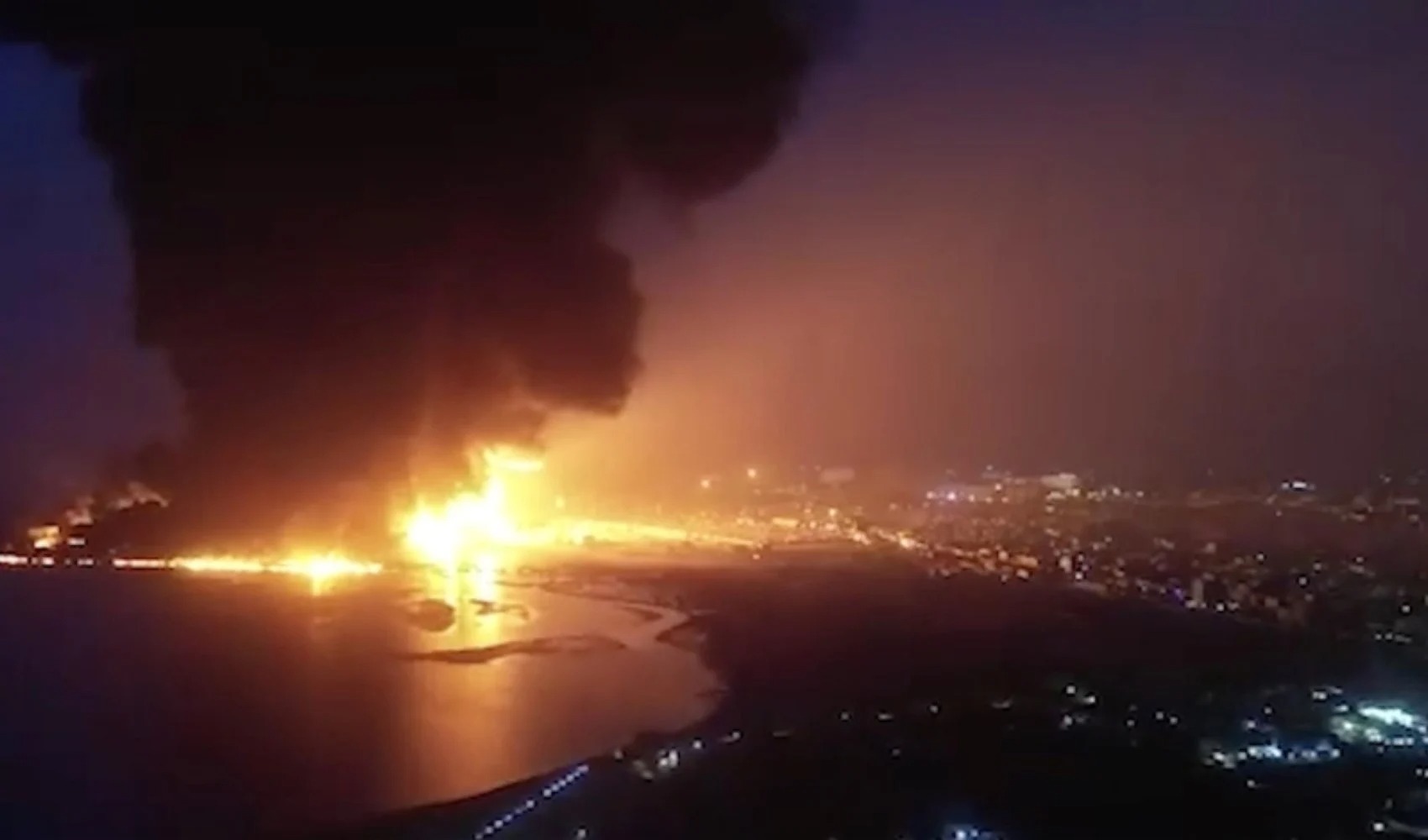
Houthis strike Saudi-owned tanker

How did the newspapers view Özgür Özel's farewell to the CHP?

What did the CHP do?

Özel’s new party move in the world press

The New CHP, against CEHAPE

From self-efficacy to despair