



The attacks by the US and Israel on Iran, the conflicts between Afghanistan and Pakistan, and the war between Russia and Ukraine that began in February 2022—now entering its fifth year after completing its fourth—demonstrate that the fundamental principles in the relationship between foreign policy and armed power remain unchanged.
It is useful to recall these principles.
First, rationality and realism are important in foreign policy. It is important to observe regional and global balances. The conjuncture is important. Being reliable and predictable is important. Being an element of stability is important. It is important to primarily rely on one's own strength, and to be able to form alliances when necessary, depending on the circumstances, the scale of the issue, and the volume of the opposing power, forces, or alliances. Being a deterrent is important. Keeping the domestic front strong is important.
Second, war is the last resort, the method of last resort in foreign policy. To prevent war, or to stop it once it has begun, third countries attempt to carry out mediation activities. However, there are certain conditions to being a mediator. The first condition is that all warring parties must accept the request of the country wishing to be a mediator. The second is that the world must also accept the request of the country attempting to mediate. The third is that if one of the parties is eager to leave the table after negotiations have begun under the supervision of the mediating country, the mediating state must possess the power and tools to keep them at the table. It should also not be forgotten that if there is a major problem at hand, the mediating state is expected to be a major power. A medium or small-scale state struggles to mediate in a major problem where major states are parties.
Third, public interest in negotiations conducted to end war or armed conflict is very high. Because public sensitivity, attention, and pressure are very strong, negotiations are often not conducted in the public eye. Sensitive issues are not debated in front of the public. They are conducted away from prying eyes. Developments are not shared with the media or the public moment by moment. Sometimes, former diplomats are even included in the process. In this way, both their experience is utilized and a message is sent to the interlocutor that the understanding of diplomacy and diplomatic preferences represented by these diplomats are being continued and upheld.
Fourth, it is very important for states to have qualified personnel in foreign policy making and in the conduct of traditional, classical, and conventional diplomacy. It should not be forgotten that public diplomacy and soft power, which have been observed to come to the fore quite a bit in recent years, do not carry much weight if the state's classical power elements (political, economic, military power) are weak. In other words, it is impossible for a state lacking classical power elements to possess soft power elements. For example, Afghanistan. Furthermore, not every regime needs soft power, nor does every regime use soft power. Even if they possess such power elements, they do not use them. For example, Russia. Moreover, soft power is not a power that solves every problem, nor is it a key that opens every door.
Ultimately, foreign policy is not conducted solely with armed power. But it cannot be conducted without armed power either. Alongside rationality and realism, it is impossible to conduct foreign policy without a strong economy, a strong army, and a solid domestic front.
Most Read

Striking picture for Özgür Özel's 'New Party'

Özgür Özel gives a dated response regarding the number of resignations

Forest fire in Antalya brought under control

The PKK opening and Özgür Özel’s path!..

How did the newspapers view Özgür Özel's farewell to the CHP?
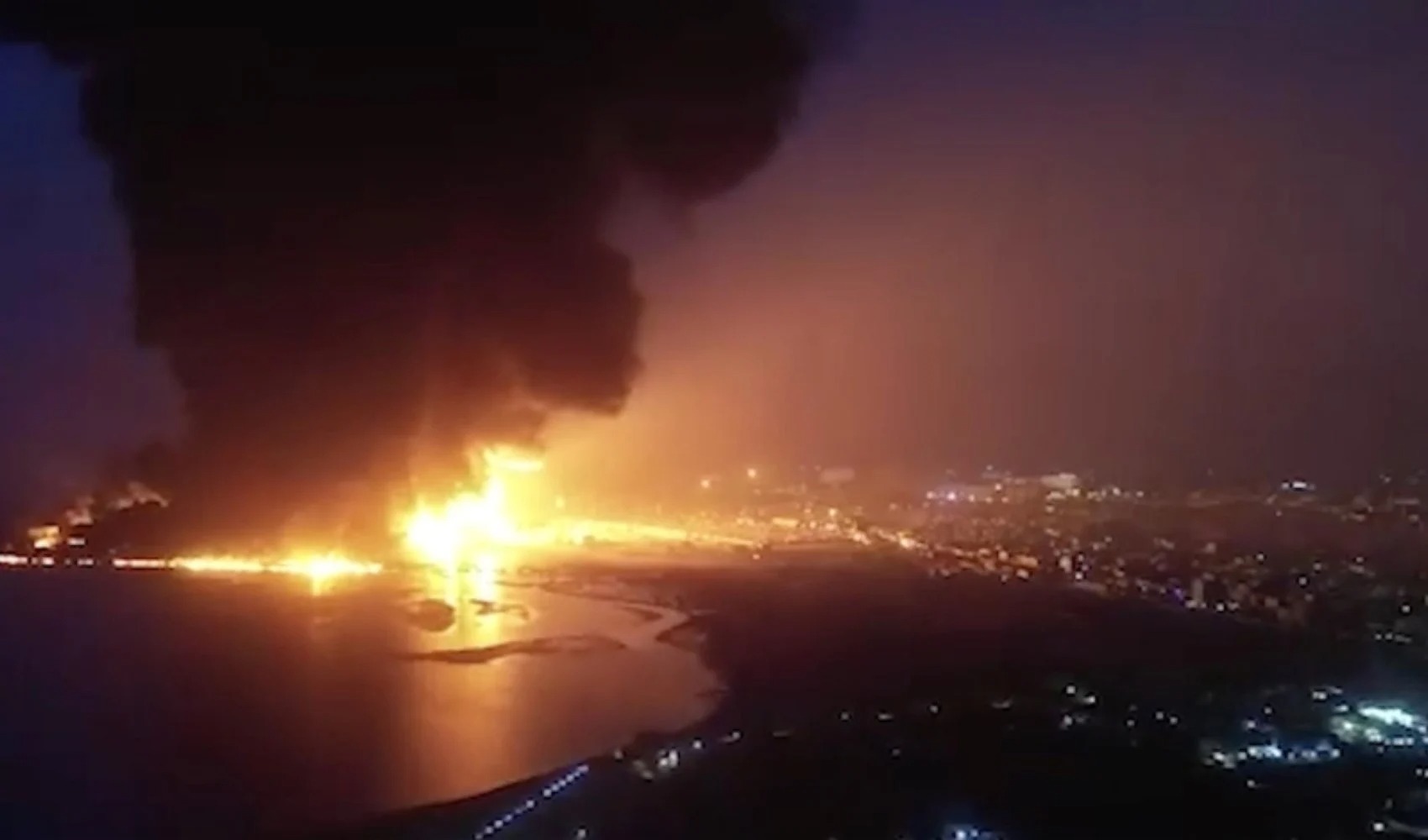
Houthis strike Saudi-owned tanker

What did the CHP do?

Özel’s new party move in the world press

The New CHP, against CEHAPE

From self-efficacy to despair