



The term "house negro" has been used by certain individuals in the conservative camp since the early days of the Israel-Hamas war to describe opposition groups that do not belong to their own faction, whom they accuse of not condemning Israel enough and of engaging in shameful (!) acts like going to Starbucks. We have frequently encountered this term on social media.
President Recep Tayyip Erdoğan also used this inappropriate term in his speech on August 5.
"House negro," or more accurately "house slave," is a term that emerged in America and was used to define the status and position of a slave.
The first known use of the term "house slave" or "house negro" appeared in an American newspaper in 1711. It is estimated that the term was widely used orally before this date. The term was used to distinguish servant slaves who worked and resided in their master's house from slaves who worked in the fields.
In the sense used by Recep Tayyip Erdoğan, the term "house negro" became popular worldwide following a speech given by Malcolm X in 1963:
"The house negro lived in the master's house, he dressed like the master, he wore the master's clothes, he ate the master's food, he lived in the basement or the attic, but he still lived in the master's house.
The house negro always identified himself with the master. When the master said, 'We have a good meal,' the negro would say, 'Yes, we have a good meal.' When the master said, 'We have a fine home,' the negro would say, 'Yes, we have a fine home.' If the master got sick, he identified so much with the master that he would say, 'What's the matter, boss, we sick?' His suffering was the master's suffering. If the house caught on fire, the negro would be the first to run to put it out, performing even better than the master would.
In the field, the house negro was in the minority. When the masters got sick, the field slaves prayed for them to die. If the house caught fire, they prayed for the wind to spread the flames.
If someone told the house negro, 'Let's run away,' Uncle Tom would say, 'Where would I go? What would I do without the boss? How would I dress? Who would take care of me?' That is the house negro."
The Uncle Tom mentioned by Malcolm X is the protagonist of Harriet Beecher Stowe's 1852 novel "Uncle Tom's Cabin," a kind-hearted house negro who does his best for other slaves, refuses to punish them even at the risk of being punished himself, and even risks death to save others. Malcolm X, however, rejects Uncle Tom—who was kind-hearted and had a positive impact on the lives of many slaves—because he accepted being part of the system. He interprets him as a negative figure because he chose conformity instead of the "rebellion" that Malcolm X considered the primary duty of every Black person, thereby willingly accepting a key role in the functioning of the system.
We saw a much more extreme version of Malcolm X's description in the character of Stephen, played by Samuel Jackson in Quentin Tarantino's film "Django Unchained." Stephen defends his master's privileges even beyond his master's own demands, sometimes even opposing his master, and approaches other negroes with a racism and cruelty that even the whites do not display. This iconic character is one of the most extreme depictions of being "more royalist than the king."
Although Tarantino's depiction of the house negro is much more extreme than Malcolm X's definition, it is more realistic. Because, unlike Malcolm X and Stowe, Tarantino also reveals the purpose of the house negro's existence. The purpose of the house negro is not to deal with housework, but to act as a foreman and commissar over other slaves, thereby drawing the slaves' hatred for their white masters onto themselves. He does this by often acting "more royalist than the king" while performing his duties. The house slave whips other slaves more than their masters do when necessary, acts more cruelly, and degrades them more. In this way, the negroes in the field hate the house negro more than their masters; they pray for the house negro to die before their masters, and thus the house negro becomes the primary potential target of a possible hate attack, acting as a shield for the master and his family.
The house negro is a person who ignores their honor and dignity at the expense of living in better conditions, betrays their own society by switching to the enemy's side and forgetting their identity and where they came from. The house negro does not stop there; they view the individuals they have risen above as inferior to themselves, and because of this, they are more racist and more fascist than their masters. The house negro has adopted the enemy's culture, dresses like them, tries to act like them, and hates the culture and traditions of the society they emerged from.
I can say that I have not heard a term that fits the current polarization in Turkey better than this. With the term "house negro," Recep Tayyip Erdoğan is not only defining the opposition in Turkey as traitors collaborating with the enemy, but he is also emphasizing that the only idea, the only perspective, and the only reason that should be followed is their own. Only their truths are true, and those who do not share the same opinion as them are traitors to the homeland, consciously or unconsciously collaborating with the enemy...
Under normal circumstances, it is impossible for me to take such a statement seriously. The contradiction created by this statement coming from a decision-maker who contributes to Israel's fighting capacity by not cutting off trade with Israel reduces its credibility to sub-zero levels.
Most Read

Striking picture for Özgür Özel's 'New Party'

The PKK opening and Özgür Özel’s path!..

How did the newspapers view Özgür Özel's farewell to the CHP?

He killed his wife by slitting her throat: Their children witnessed the moments

What did the CHP do?

Özel’s new party move in the world press

Fire at TUSAŞ engine factory in Eskişehir under control

The New CHP, against CEHAPE

From self-efficacy to despair
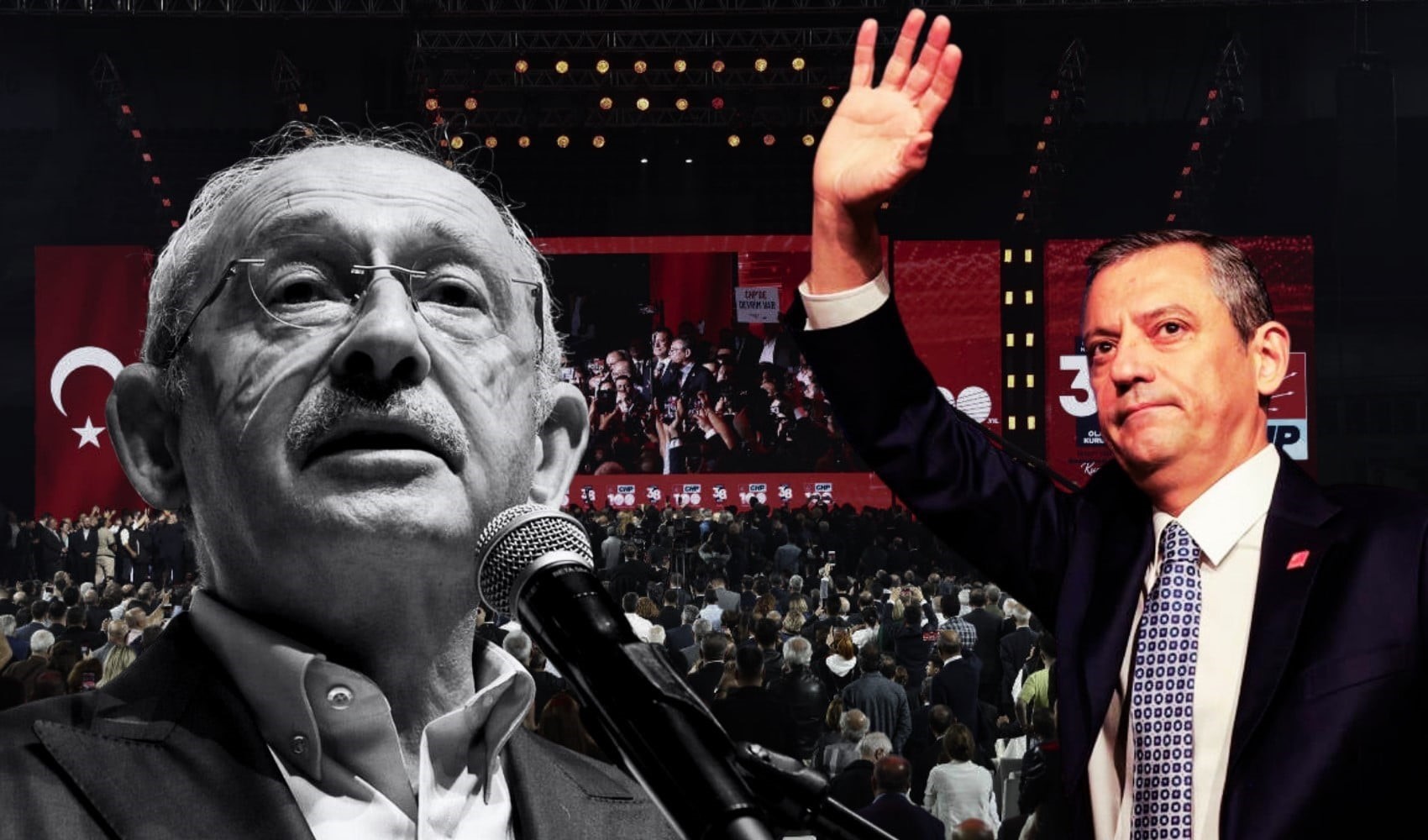
Kılıçdaroğlu's first message on Özgür Özel's new party announcement