



Japan is the country in world history that has been exposed to the most severe earthquakes. Today, earthquakes are accepted in Japan as a natural phenomenon that can be encountered at any moment. Despite this, the number of people who have lost their lives by being trapped under rubble in Japan as a result of earthquakes for many years is quite low compared to other countries where similar earthquakes occur, and the vast majority of these losses are due to the tsunami triggered by the earthquake rather than the destructive effect of the earthquake itself. In other words – leaving aside tsunamis, for which no solution has been found – the Japanese have almost completely succeeded in removing earthquakes from the category of disasters.
So how did the Japanese achieve this?
The answer to this question is quite simple. The Japanese have become the society that takes earthquakes most seriously and approaches them in the most systematic and scientific way worldwide. By approaching earthquakes in an extremely systematic manner, the Japanese have managed to almost completely eliminate the destructive effect of earthquakes on structures as a result of the research they have conducted over many years. The most investment in earthquake preparedness worldwide has been made by the Japanese, and naturally, the most effective solutions have come from Japan.
Throughout their history, the Japanese have been a society that is sensitive to earthquakes and has tried to build their structures as earthquake-resistant as possible. However, the beginning of the steps that would finally solve the problem of destruction took place after the Nobi earthquake in 1891. One year after the Nobi earthquake, which is estimated to have occurred with a magnitude of 8, the “Imperial Earthquake Investigation Committee,” the first official earthquake research institution known in history, was established. The purpose of the institution was to develop a method or tool for the early detection of earthquakes and to produce techniques to minimize the damage caused by earthquakes. With the Nobi earthquake, the fight against earthquakes became a part of state bureaucracy for the first time in history, and scientific and systematic studies were initiated on a scale unseen in previous years to reduce the destruction caused by earthquakes.
The first fruits harvested after the Nobi earthquake were not so much about making buildings in Japan earthquake-resistant, but rather about creating a remarkable delegation of earthquake experts consisting of domestic and foreign scientists in the country.
The 1923 Kanto earthquake, estimated to have occurred with a magnitude of 7.9 to 8.1, revealed that not much had changed in Japan from an architectural perspective since the Nobi earthquake. As a result of the earthquake that occurred near Tokyo, many structures in Tokyo – including those built after 1891 – were razed to the ground, and 59,000 people lost their lives.
However, when the Kanto earthquake occurred, there was now a competent delegation of earthquake experts in Japan consisting of domestic and foreign scientists. These experts systematically examined the damage the earthquake caused to Tokyo, and the city was rebuilt to be much more resistant to earthquakes and fires (a significant portion of the structures damaged in the earthquake were due to fire) compared to previous structures. After the Kanto earthquake, Tokyo became a laboratory that guided earthquake-resistant architecture in Japan.
The Kanto earthquake took its place in history as the earthquake that caused the highest loss of life in Japan. From this date on, the Japanese focused on earthquake-resistant architecture and soil surveys, and they first reduced the loss of life by building structures that would not collapse even if they sustained heavy damage. Over time, they further refined construction technologies to produce buildings that did not sustain permanent damage even from the most severe earthquakes, thereby minimizing material losses as well.
The 2011 Tohoku earthquake, with a magnitude of 9.1, is probably the most severe earthquake in Japanese history. Despite this, the destruction caused by the earthquake itself was quite low. Ninety percent of the approximately 20,000 people who passed away died by drowning as a result of the tsunami that occurred about four hours after the earthquake. The vast majority of the remaining ten percent also consists of crushing cases that occurred during the tsunami. It is estimated that the number of people who lost their lives by being trapped under rubble is very low.
The 2011 earthquake is proof that the Japanese have solved the problem of destruction caused by earthquakes. Although the tsunami triggered by the earthquake is still an unresolved problem, earthquakes with a magnitude equivalent to or greater than the February 6 Kahramanmaraş earthquakes cause damage to a relatively small number of buildings in Japan, and disasters like the 7.3-magnitude 1995 Hanshin earthquake, which resulted in about 6,500 deaths, are now exceptions in Japan.
The Japanese largely solved how to fight earthquakes on their own and provided a unique service to humanity by offering invaluable knowledge to the rest of the world in this field. Today, it is quite simple to remove earthquakes from the disaster status in places where tsunamis are not seen. Despite this, for reasons I cannot understand, the successes of the Japanese in the field of earthquakes have remained largely limited to Japan.
Although severe earthquakes do not occur as frequently in Turkey as they do in Japan, Turkey is also an earthquake country like Japan, and earthquakes are a natural phenomenon that can be encountered frequently in Turkey, just as they are in Japan. However, the Turkish public and the state have never taken earthquakes as seriously as the Japanese, and consequently, a very high rate of loss of life has always occurred in Turkey as a result of severe earthquakes. The helplessness faced in the face of severe earthquakes reflects the Japan of nearly a hundred years ago.
Today, there is no need to reinvent the wheel to find a solution to the earthquake problem. All that needs to be done is to benefit from the solutions produced by the Japanese and do exactly what they are doing.
Despite this, there is an unbelievable indifference toward the knowledge and experience of the Japanese in third-world countries like Turkey where earthquakes occur frequently.
Unfortunately, I do not see any satisfactory evidence that this reality has changed with the recent earthquake disaster.
Most Read

Striking picture for Özgür Özel's 'New Party'

Özgür Özel gives a dated response regarding the number of resignations
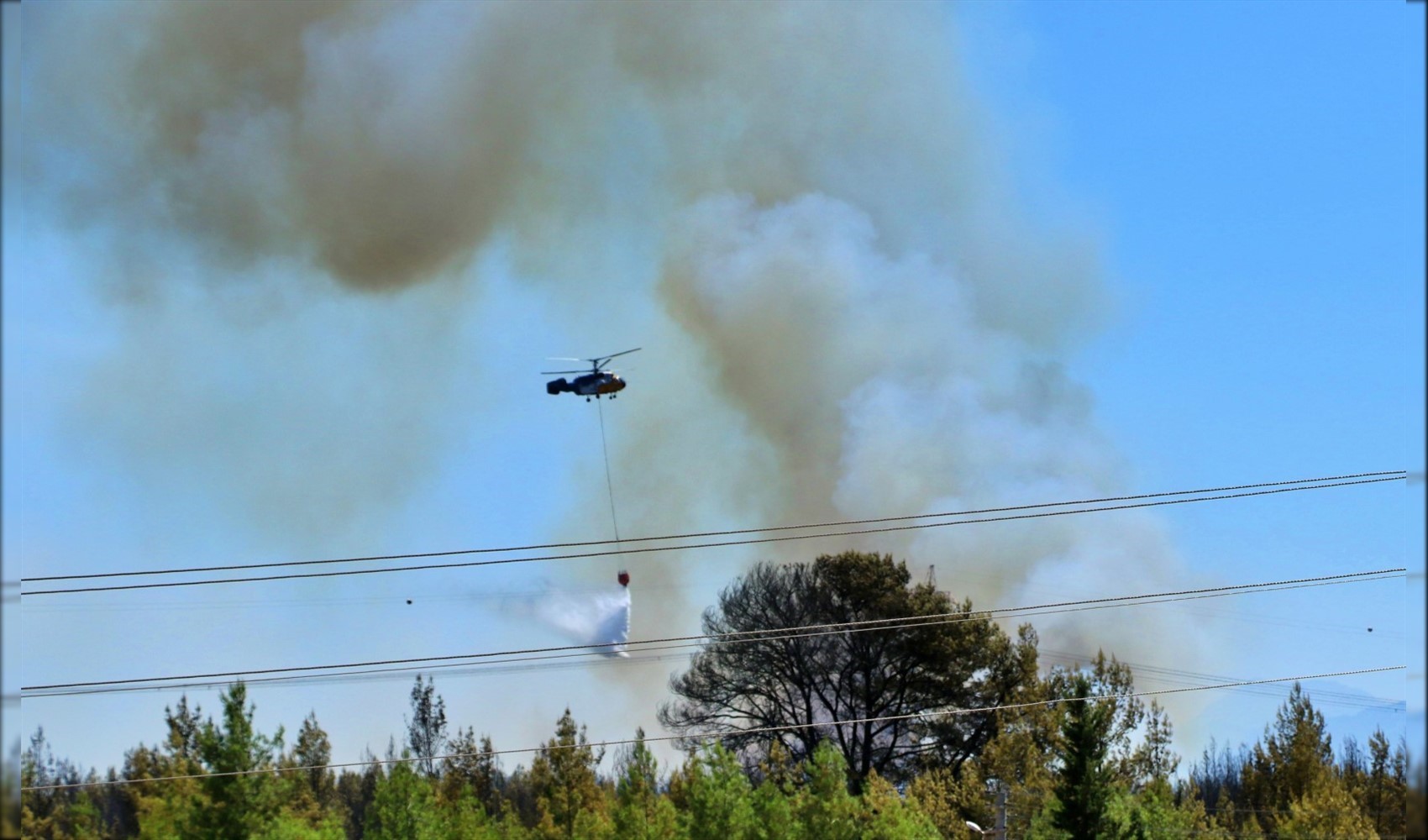
Forest fire in Antalya brought under control

The PKK opening and Özgür Özel’s path!..

How did the newspapers view Özgür Özel's farewell to the CHP?

He killed his wife by slitting her throat: Their children witnessed the moments

What did the CHP do?

Özel’s new party move in the world press

The New CHP, against CEHAPE

From self-efficacy to despair