



If the political leadership, the Ministry of Treasury and Finance, and the Central Bank were sincere about economic stability, they would have started austerity measures with themselves and capital first. They are neither giving up on public spending nor on waste. The amount of tax expenditure they have waived in the 2024 budget is 2.2 trillion TL. First, collect these taxes you have waived and give them to the poor, the retirees, and the workers. Despite so many election defeats, one should not ask for sacrifice from the public. If you are asking for the only thing they have left—their lives—then you can no longer remain in power.
If you do not provide an increase to retirees and wage earners in July, this attitude of the Central Bank and the Ministry of Treasury and Finance reveals that they have made a backroom deal with the government. It is impossible for a government to be economically successful in a country that has changed five Central Bank Governors in five years. Until now, the government would immediately dismiss the Minister of Treasury and Finance or the Central Bank Governor whenever it wanted. Or have the roles changed? In another sense, has the bureaucracy started to stand up to the government as the government weakens? We will see the truth of this rebellion in the coming days. However, monetary policy cannot be carried out alone; it must also be supported by economic and fiscal policies.
Let us touch upon some dangers foreseen by the Central Bank management and the Minister of Treasury and Finance:
There is an election defeat in the background. The point to which this is linked is seen as fiscal discipline policies. That is, tight fiscal and tight monetary policy. This situation is stated in the medium-term program and the 12th Development Plan. The Central Bank management and the Minister of Treasury and Finance state that the fundamental problem is the increase in public spending and the budget deficit, and that this situation disrupts price stability. Therefore, they are of the opinion that price stability will be achieved through fiscal discipline policies. However, the bureaucracy is concerned that the government will loosen these tight monetary and fiscal policies after the election defeat. They have concerns that public spending will be increased again and the progress made so far will be undone. If the government abandons or loosens its tight monetary and fiscal policy, they warn the government with the concern that the public deficit will increase again and inflation will gradually become structural.
One day, when the economy moves toward a more negative structure, the bureaucracy wants to shift this responsibility to the government instead of taking responsibility itself. "I have made progress, but you see the progress I have made as an election loss. You might engage in policies that disrupt this. If you do this, we will head toward a much worse economy. Be warned, I am warning you, do not do it," they say.
How do I understand this? I believe the government has an idea of adjusting the minimum wage before July arrives. This situation will naturally also reflect on civil servants and retirees. Thus, the budget deficit will gradually increase. As a result, the progress made so far will have been in vain. The wage-price spiral will determine inflation. When wages rise, prices will rise. This situation leads to an inflation spiral. By saying that if you do this, we will be crushed under the economy, they are implicitly saying that we will quit this job. The low wage-low price expectation of the Central Bank and the Minister of Treasury and Finance is actually called wage and price control. The name of this policy is IMF policy without the IMF. The name of this policy is a transfer of wealth from the public, the retiree, and the poor to the rich.
This policy is actually the heterodox policy mentioned by former Minister of Treasury and Finance Nurettin Nebati. With this, Minister Nebati actually meant the following: the reason for our irrational economic management is not our incompatibility with market actors, our tendency to act on our own, our inexperience, our lack of knowledge, our insufficient equipment, our ignorance, and our lack of planning. On the contrary, it is our belief in the new economic theory. However, the public no longer believes these senseless statements.
If the policy proposed by the Central Bank and the Minister of Treasury and Finance is implemented, wages will remain low and prices will remain high after a while. As a result, there will be a recession. Thus, our country will enter stagflation.
So what should be done?
• A fair tax system must be introduced.
• The informal economy and money fleeing to tax havens must be prevented.
• Waste and corruption must be prevented.
• A fair spending system must be established.
• Public investments must be spread over years.
• A transition to high value-added production must be made.
• For these, a transition to the parliamentary system must be made immediately and institutions must be strengthened.
• A return to a planned economy must be made.
• An economic policy must be determined that includes universities, institutions such as the State Planning Organization, trade unions, and non-governmental organizations.
CONCLUSION
This system is clogged and has entered a coma. The government is making statements such as "we will review our mistakes." However, the foundations of the error were already present from the beginning. Rather than election mistakes, the Turkish economy has lost its stability since the 2013-2014 period. Despite efforts to reduce inflation, the targets set, especially after 2016, could not be achieved. This situation has caused the constant changing of Central Bank Governors.
Ministers in the government, on the other hand, cannot make clear decisions on almost any issue. This stands out as a task too big to be accomplished by one-man rule. Confidence must be given to society immediately, and the democratic state of law and democracy must be operated. If the government uses this rebellion as an excuse and chooses not to make wage increases for wage earners and retirees in July, this situation will inevitably increase the pressure for early elections.
Most Read

Striking picture for Özgür Özel's 'New Party'

Özgür Özel gives a dated response regarding the number of resignations

Forest fire in Antalya brought under control

Houthis strike Saudi-owned tanker

4 drones shot down near US Consulate General in Erbil

Özel’s new party move in the world press

The new rule of the field: Attrition
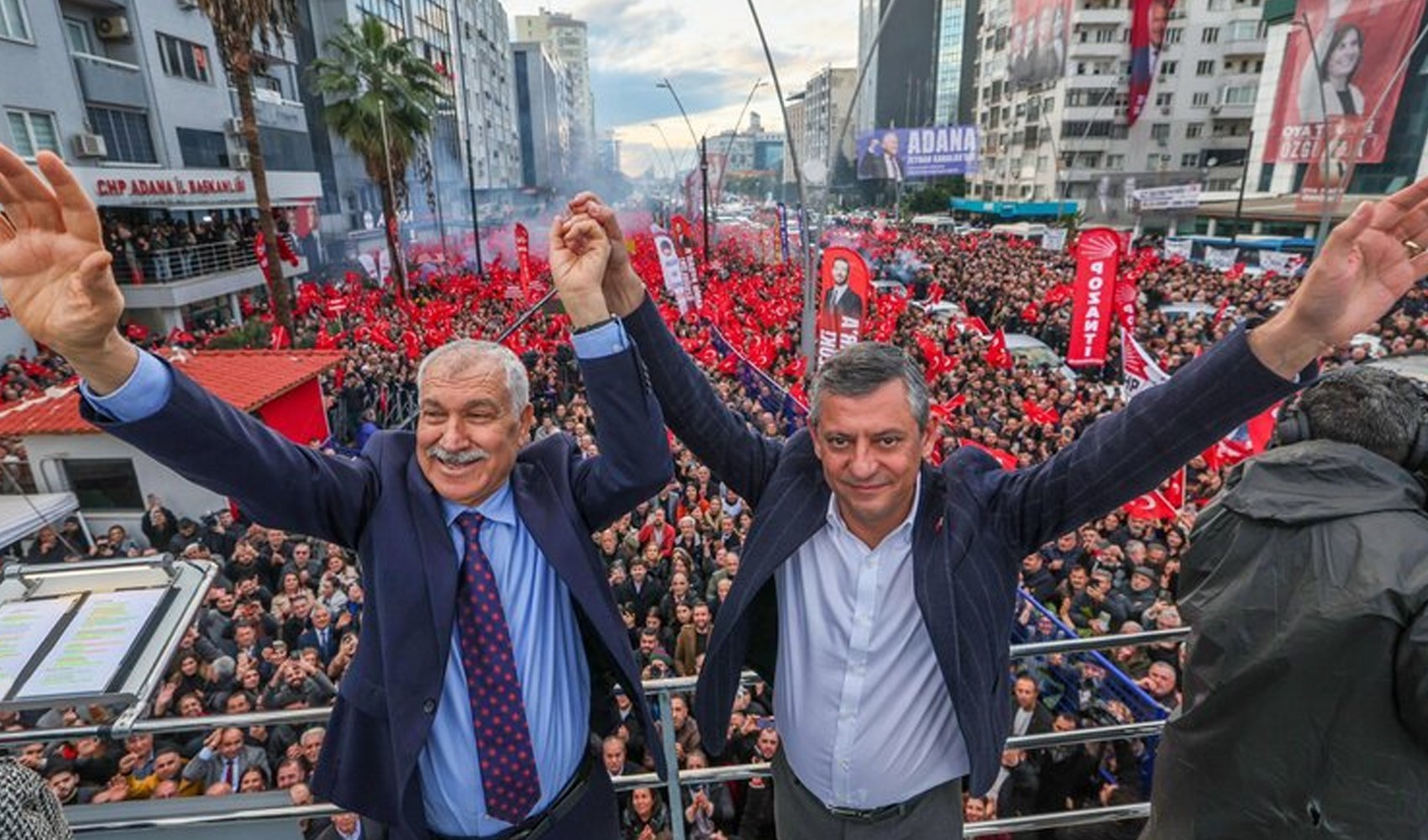
Zeydan Karalar's decision on the New Party
Key figure in Epstein files found dead at home

Famous director Ezel Akay and his brother have been detained