



Turkey's 2024 population data was included in the "Address-Based Population Registration System Results" report released by the Turkish Statistical Institute (TÜİK) on February 6, 2025. According to this report, Turkey's total population increased by 0.34% compared to the previous year, reaching 85 million 664 thousand 944 people. Considering that the world population is 8.2 billion, Turkey's population accounts for approximately 1% of the global population.
Population Growth and Demographic Change in Turkey
As of 2024, Turkey's population has shown an increase of 0.34% compared to 2023. We can list our 10 most populous provinces as Istanbul, Ankara, Izmir, Bursa, Antalya, Konya, Adana, Şanlıurfa, Gaziantep, and Kocaeli, respectively; and our 3 least populous provinces as Bayburt, Tunceli, and Ardahan.
The population of our most crowded city, Istanbul, increased by 45 thousand 678 people compared to the previous year, reaching 15 million 701 thousand 602 people. Istanbul, where 18.3% of Turkey's population resides, is followed by Ankara with 5 million 864 thousand 49 people, Izmir with 4 million 493 thousand 242 people, Bursa with 3 million 238 thousand 618 people, and Antalya with 2 million 722 thousand 103 people.
While Bayburt became the province with the lowest population at 83 thousand 676 people, it was followed by Tunceli with 86 thousand 612 people, Ardahan with 91 thousand 354 people, Gümüşhane with 142 thousand 617 people, and Kilis with 156 thousand 739 people.
Turkey's population growth rate is shaped especially by the immigrant population and birth rates. Turkey took significant steps regarding immigrant acceptance in 2024, and as a result, population growth was observed, particularly in large cities. Furthermore, developments in healthcare services and the increase in life expectancy have also influenced this growth.
The median age in Turkey, which was 34 in 2023, rose to 34.4 in 2024. Sinop is our province with the highest median age at 43.4. Sinop is followed by Giresun and Kastamonu with 42.9. On the other hand, while Şanlıurfa is the province with the lowest median age at 21.4, it is followed by Şırnak with 23 and Ağrı and Siirt with 24.5.
The "number of people per square kilometer," defined as population density, was 111 people across Turkey. Istanbul became our province with the highest population density, with 2 thousand 934 people per square kilometer. Istanbul is followed by Kocaeli with 623 people and Yalova, the province with the smallest surface area, with 390 people. The province with the lowest population density, as in the previous year, was Tunceli with 11 people per square kilometer. Tunceli is followed by Ardahan with 19 people and Erzincan and Gümüşhane with 21 people. On the other hand, the population density of Konya, which ranks first in terms of surface area, was 59.
According to the TÜİK report, Turkey's total population in 2024 is around 85.7 million. As of 2023, this number was around 85.4 million, meaning there was a population increase of approximately 300 thousand people in one year. This increase stems from demographic factors such as Turkey's fertility rate, migration movements, and life expectancy.
Turkey's Population Growth and Comparison with the World
The world population reached the 8.2 billion level as of 2024. While Turkey's population represents a little over 1% of the world population, it ranked 18th among 194 countries in terms of population size. While global population growth is generally concentrated in developing regions such as Asia, Africa, and South America, Turkey's population also has a growing demographic structure between the Middle East and Europe. However, unlike some European countries, Turkey's population growth rate still shows a positive momentum.
Turkey's population growth is at a high altitude when compared to world averages. Global population growth is slowing down, especially in developed countries. While Turkey's population growth rate was 1.1 per thousand in 2023, it rose to a level of 3.4 per thousand as of 2024.
• The Difference Between Developed Countries and Turkey: While fertility rates are falling rapidly and populations are aging, especially in European countries, Turkey continues to grow steadily in this area. While some countries in Europe are experiencing population loss, Turkey benefits from having a high proportion of young population during this process. For example, while countries like Germany, Italy, and Japan face low fertility rates and aging populations, Turkey maintains its population growth with its young population.
• The Role of Migration: Furthermore, Turkey's immigrant intake is also an important factor affecting population growth. Conflicts in the Middle East and Turkey's regional role have increased the flow of immigrants. As of 2024, the number of foreign residents in Turkey has reached a significant level, which creates a visible impact on total population growth.
Population Changes Within Turkey
Compared to 2023, population increases were recorded in some of Turkey's provinces in 2024, while decreases were observed in others. While a decrease in population was seen in 10 provinces in our country in 2023 compared to the previous year, the population of 40 provinces decreased in 2024. Among the reasons for population changes in Turkey, fertility rates, internal and external migration, economic conditions, and differences in quality of life have been influential.
-Provinces with the Highest Population Increase
As of 2024, some of the provinces with the highest population growth in Turkey were Ankara, Istanbul, Gaziantep, Kocaeli, Antalya, Bursa, Şanlıurfa, and Tekirdağ. The main reasons for the increase in these provinces are the economic and cultural appeal of large cities, infrastructure investments, and immigrant intake. While Ankara achieved the highest population growth, Istanbul, as Turkey's most populous province, achieved the second-highest increase with a population of around 15.7 million.
• Ankara: Ankara, the capital of Turkey, reached approximately 5.9 million people with the highest population increase of approximately 60 thousand people at 1.04%, due to migration and the density of public services.
• Istanbul: Istanbul's population reached around 15.7 million in 2024 with an increase of 45 thousand people, or approximately 0.29% compared to 2023, becoming our province with the second-highest population increase. Istanbul's appeal continues to grow constantly due to the concentration of economic activities, migration, and job opportunities.
• Bursa: Bursa has a significant share in population growth with its growing industrial sector and developing infrastructure. Compared to 2023, the population reached 3.2 million in 2024 with an increase of around 24 thousand. That is, the annual increase shows a rate of 0.75%.
• Gaziantep and Şanlıurfa: Due to increasing economic opportunities, industrial investments, and trade volume in the Southeastern Anatolia Region in recent years, a significant population increase has also been experienced in these provinces. While Gaziantep stands out especially with its industrial development with a population increase of 1.35%, Şanlıurfa has grown due to its young population and agriculture-based labor force with a population increase of 1.07%.
-Provinces with the Highest Population Decrease
Intense migration and industrialization in metropolitan areas are increasing population loss in rural areas. Especially in the Eastern and Southeastern Anatolia regions, the population migrating from villages to cities is causing the population of rural areas to decrease rapidly. For example, in provinces such as Gümüşhane, Siirt, Tunceli, Bayburt, Çankırı, Ağrı, Kars, and Sivas, the decrease in population is noteworthy. Such provinces stand out as regions that provide migration.
• Gümüşhane: Gümüşhane, which is among the provinces experiencing population loss as the young population migrates to large cities, became our province with the highest percentage decrease, falling to around 142 thousand with a 3.99% population loss.
• Siirt, Tunceli: Siirt experienced a 3.15% population loss, and Tunceli experienced a 3.03% loss. The main reasons for the population loss in these provinces are the limited job opportunities and the migration of the young population to large cities due to migration.
• Bayburt: Bayburt experienced a population loss of 2.76%. As of 2024, its population has fallen to 84 thousand people.
• Ağrı, Kars, Sivas: These provinces in continental regions are experiencing population loss due to migration and the contraction in the agricultural sector.
Notable Population Changes in Bursa and Its Districts
In the TÜİK 2024 Address-Based Population Registration System, as can be seen in the table below, interesting results stand out for our Green Bursa, where approximately 3.78% of Turkey's population lives:
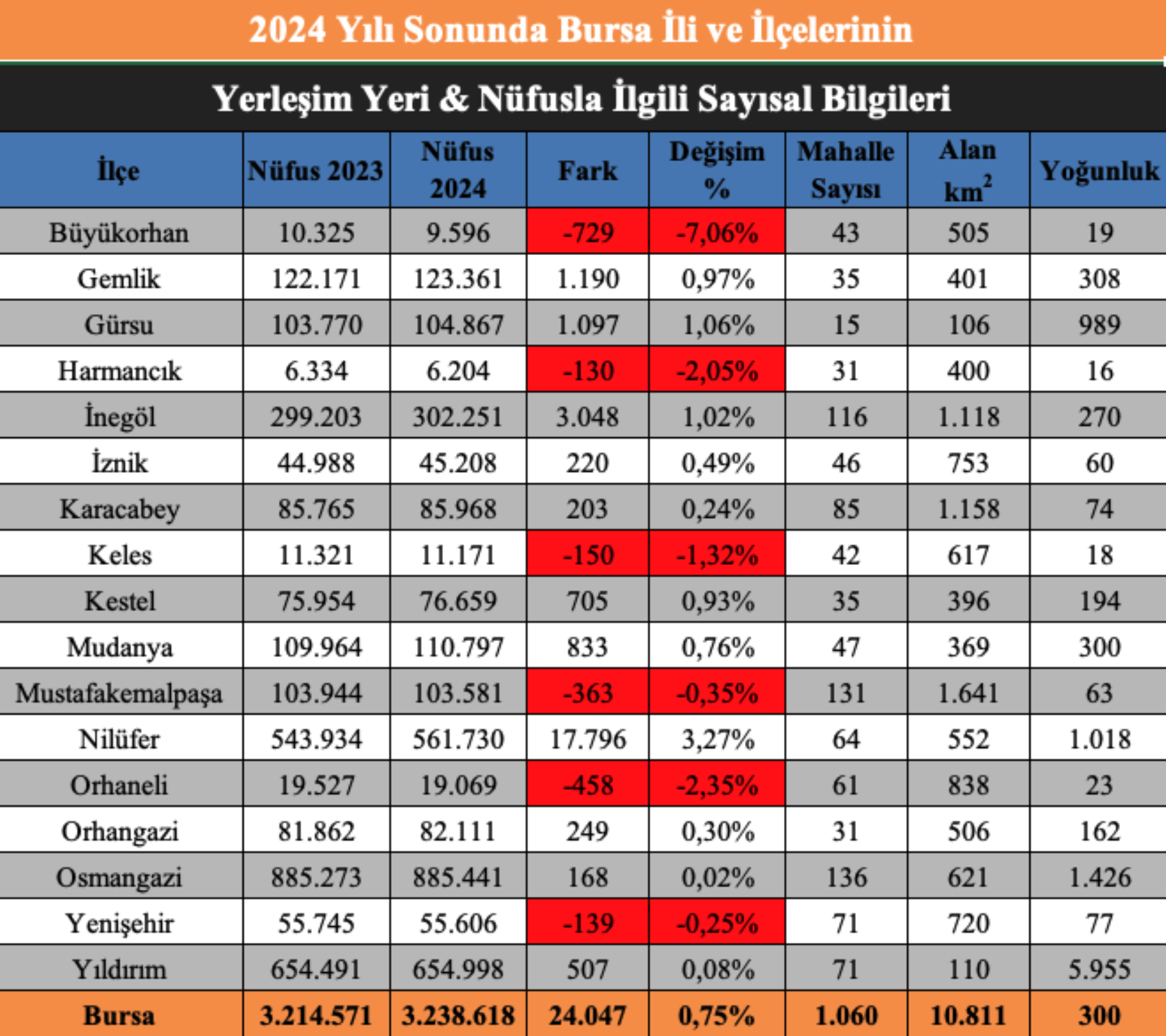
- The population of our Green #Bursa as of the end of 2023 had increased by 0.62% compared to 2022, reaching 3,214,571 people. The population of our Green #Bursa as of the end of 2024 increased by 24,047 people (0.75%) compared to 2023, reaching 3,238,618 people.
- With this population, our #Bursa is the 4th most populous province in the country after Istanbul, Ankara, and Izmir.
- Our district with the highest population is Osmangazi with 885,441 people. #Osmangazi, where 27.34% of the #Bursa population resides, is followed by our #Yıldırım district with 654,998 people, #Nilüfer with 561,730 people, and #İnegöl with 302,251 people.
- #Harmancık became our district with the lowest population at 6,204 people. Harmancık is followed by our #Büyükorhan district with 9,596 people, #Keles with 11,171 people, and #Orhaneli with 19,069 people.
- There are 17 districts and municipalities in Bursa, and a total of 1,060 neighborhoods in these municipalities. While our district with the most neighborhoods is #Osmangazi with 136, our district with the fewest neighborhoods is #Gürsu with 15 neighborhoods.
- While the population decreased in 6 of our districts, the population of 11 of our districts increased. In total, the population in Bursa increased by 24,047 people (0.75%).
- While the district with the highest proportional population increase compared to the previous year was #Nilüfer (3.27%), the district with the highest decrease was #Büyükorhan (-7.06%).
- In terms of individuals, our districts with the highest population increase were #Nilüfer with 17,796 people, #İnegöl with 3,048 people, and #Gemlik with 1,190 people, while our districts with the highest population decrease were #Büyükorhan with -729 people, #Orhaneli with -458 people, and #Mustafakemalpaşa with -363 people.
- The surface area of our Bursa is 10,811 km2. #Mustafakemalpaşa is our district with the highest surface area at 1,641 km2, and #Gürsu is our district with the lowest surface area at 106 km2.
- There are 300 people per km2 in our province. While our district with the highest density is #Yıldırım with 5,955 people, our district with the lowest density is #Harmancık with 16 people...
Notable Population Changes in Adana and Its Districts
In the 2024 Address-Based Population Registration System published by TÜİK on February 6, 2025, as can be seen in the table below, interesting results also stand out for our Beautiful Adana, where approximately 2.66% of Turkey's population lives:
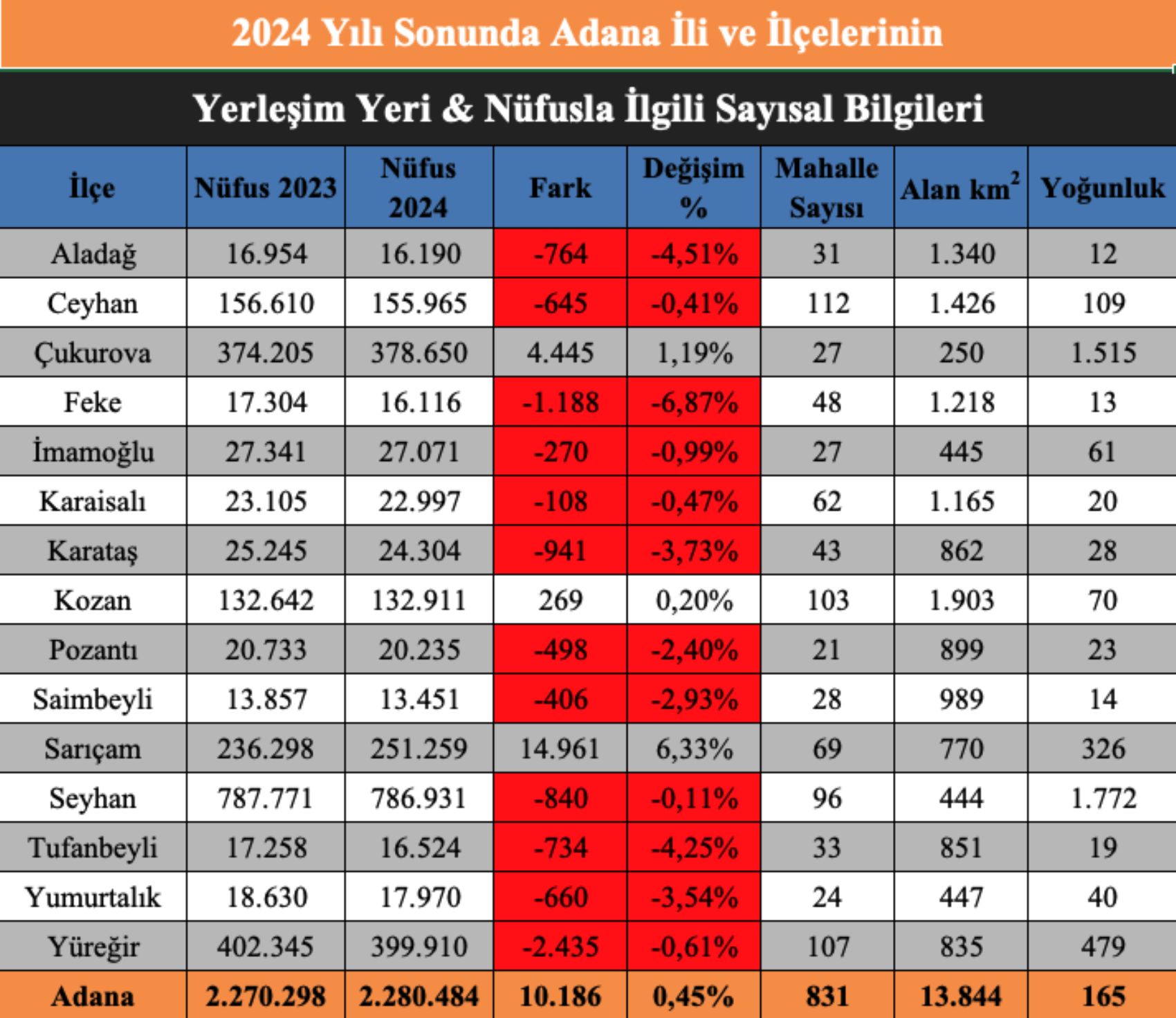
- The population of our #Adana as of the end of 2023 had decreased by 3,808 people (0.17%) compared to 2022, reaching 2,270,298 people. The population of our Beautiful #Adana, which experienced a population decline for the first time last year, increased by 10,186 people (0.45%) as of the end of 2024 compared to 2023, reaching 2,280,484 people.
- With this population, our #Adana is the 7th most populous province in the country after Istanbul, Ankara, Izmir, Bursa, Antalya, and Konya.
- Our district with the highest population is Seyhan with 786,931 people. #Seyhan, where 34.51% of the #Adana population resides, is followed by our #Yüreğir district with 399,910 people, #Çukurova with 378,650 people, and #Sarıçam with 251,259 people.
- #Saimbeyli became our district with the lowest population at 13,451 people. Saimbeyli is followed by our #Feke district with 16,116 people, #Aladağ with 16,190 people, and #Tufanbeyli with 16,524 people.
- There are 15 districts and municipalities in Adana, and a total of 831 neighborhoods in these municipalities. While our district with the most neighborhoods is #Ceyhan with 112, our district with the fewest neighborhoods is #Pozantı with 21 neighborhoods.
- While the population decreased in 12 of our districts, including our 2 central districts, the population of 3 of our districts increased. In total, the population in Adana increased by 10,186 people (0.45%).
- While the district with the highest proportional population increase compared to the previous year was #Sarıçam (6.33%), the district with the highest decrease was #Feke (-6.87%).
- In terms of individuals, our districts with the highest population increase were #Sarıçam with 14,961 people, #Çukurova with 4,445 people, and #Kozan with 269 people, while our districts with the highest population decrease were #Yüreğir with -2,435 people, #Feke with -1,188 people, and #Karataş with -941 people.
- The surface area of our Adana is 13,844 km2. #Kozan is our district with the highest surface area at 1,903 km2, and #Çukurova is our district with the lowest surface area at 250 km2.
- There are 165 people per km2 in our province. While our district with the highest density is #Seyhan with 1,772 people, our district with the lowest density is #Aladağ with 12 people...
Reasons for Population Increases and Decreases
Population increase and decrease in Turkey depend on a number of factors. Among these, migration, fertility rates, the development of healthcare services, and economic factors stand out. Migration leads to significant population change in connection with internal migration due to the economic appeal of large cities and immigrant acceptance. Furthermore, the fertility rate being around 1.51 children limits the natural increase of the population, but the extension of life expectancy and the development of healthcare services support this increase.
Conclusion and General Evaluation
Turkey's population growth in the 2023-2024 period continues at a significant pace, and intercity population changes are also noteworthy. While population growth in metropolitan areas is accelerating, especially in Marmara, Aegean, and some Central Anatolian cities, the population is decreasing in some rural areas. Turkey's population increased by 0.34% in 2024 compared to the previous year, reaching 85 million 664 thousand 944 people. When we consider the world population as 8.2 billion, Turkey's population corresponds to approximately 1% of the world population.
While a decrease in population was seen in 10 provinces in our country in 2023 compared to the previous year, the population of 40 provinces decreased in 2024. The population of our Bursa, where approximately 3.78% of Turkey's population lives, increased by 24,047 people (0.75%) as of the end of 2024 compared to 2023, reaching 3,238,618 people.
The population of our Adana, where approximately 2.66% of Turkey's population lives, increased by 10,186 people (0.45%) as of the end of 2024 compared to 2023, reaching 2,280,484 people. Cities like Adana and Bursa are among the provinces that continue their population growth with industry, economy, and migration factors. While Turkey's young population ensures that the demographic structure across the country remains dynamic, migration mobility continues to increase the population density of cities.
In these results; issues such as earthquakes, changes in socioeconomic data, and the connections (correlations) and changes between secondary data such as employment, water, electricity, solid waste consumption, internal and external migration, the status of the refugee population, fertility, dependency, and changes in mortality rates, companies opening and closing, and the reliability of data must definitely be taken into account. We must analyze in detail the numerical information regarding the settlement and population of Bursa and Adana provinces and their districts, which I have also included in the summary tables above, and develop useful and applicable policies for our cities!
Most Read

Striking picture for Özgür Özel's 'New Party'

Özgür Özel gives a dated response regarding the number of resignations

Forest fire in Antalya brought under control

The PKK opening and Özgür Özel’s path!..

How did the newspapers view Özgür Özel's farewell to the CHP?

He killed his wife by slitting her throat: Their children witnessed the moments

What did the CHP do?

Özel’s new party move in the world press

The New CHP, against CEHAPE

Fire at TUSAŞ engine factory in Eskişehir under control