



“Saygı Öztürk’s phone rang. The conversation began with this sentence: 'Hello, this is Yeşil.' The story was on the front page of Sözcü newspaper on December 11.
Mahmut Yıldırım, known as 'Yeşil,' was a JİTEM (Gendarmerie Intelligence) operative who had acted as a hitman in kidnappings and murders in the 1990s. He had not been seen or heard from for nearly 30 years.

Because he was believed to be dead, Saygı Öztürk’s article was remarkable. Saygı Öztürk explained that Yeşil had called him from the newspaper’s switchboard and that they had chatted, concluding his article by saying, 'I don’t know if Yeşil wanted to announce to someone that he is alive.' Naturally, this article received widespread attention in the media; other articles and comments were published suggesting that Yeşil was alive.
The Ministry of Interior went after the person who called Saygı Öztürk and determined—and announced—that it was not 'Yeşil,' but a convict named C.A., who was being held at the Gaziantep Open Prison for 'murder and property damage.'
In short, the convict named C.A. had deceived Saygı Öztürk by saying, 'I am Yeşil!' Instead of apologizing after his error was exposed, Saygı Öztürk wrote a new article titled 'There will be others who say, "Hello, I am Yeşil,"' defending the usefulness of his first article:
“We did not mislead anyone with our news; we did not tell anyone that the person who called me was really 'Yeşil.' I only stated that it was a person who claimed to be 'Yeşil.' At the very least, we learned who the caller was and issued a warning to prevent similar incidents from happening.”
This defense does not reflect the truth; in that article, Saygı Öztürk had both written 'the person who claimed to be Yeşil' and used expressions such as 'Yeşil said the following,' 'Yeşil continued as follows,' and 'I asked Yeşil if he would come to Turkey.' Thus, he had given the impression that the person calling him was indeed Yeşil. He had clearly misled readers and the public.
The real problem is that Saygı Öztürk wrote without investigating. If he took it seriously enough to write about it when such a call came in, he should have investigated who the caller was and written only after being sure. Moreover, he himself believes that 'it is very easy to determine where a call is made from these days.' It is a contradictory approach to not do such an easy task, write as if the caller were real, and then talk about the benefit of the Ministry of Interior looking into this matter.
Sözcü also did not act consistently as a newspaper. As if there were no journalistic error, it ran a story titled 'Ministry of Interior tracked Yeşil.' Two days later, it published a story titled 'Yeşil is still alive according to official records,' trying to follow in the footsteps of Saygı Öztürk’s first article.
Instead of admitting that he was clearly wrong, both acting as if there were no problem and running stories that implied the accuracy of the news was not only inconsistent but also misleading.
From Mahmut Övür to Enver Aysever

In Sabah newspaper’s report titled 'Aysever-İmamoğlu fight in Silivri,' it was claimed that Enver Aysever did not shake hands with Ekrem İmamoğlu, whom he encountered at Silivri Prison, saying, 'Take your dirty hand away, I do not shake hands with thieves.'
At first, instead of the actual parties to the story, İmamoğlu and Aysever, Murat Ongun’s lawyer Yiğit Akalın spoke. Akalın told Halk TV, 'It’s a lie. Aysever was at the very beginning. Mr. Ekrem İmamoğlu shouted, "Get well soon." He also stood up, opened his door, and said, "Thank you, Mr. Mayor, to you too," so that his voice could be heard.' Based on this, Halk TV published a story titled 'The pro-government media’s Ekrem İmamoğlu-Enver Aysever story also turned out to be a lie.'
Mahmut Övür defended what he wrote even after the news and comments against him increased. He claimed that his 'source who sent a note from inside' said, 'They are pressuring Enver,' and demanded that the prosecutor’s office release the security camera footage from the prison.
After this issue was discussed in the media and on social media for four days, Aysever made a statement through his lawyer Mikayil Dilbaz; in summary, he said:
“Those who know Enver Aysever know that he does not say no to what exists, nor does he say yes to what does not exist. When I get out, I will make a statement about the nature of the event. In any case, whether such a thing happened or not is fixed in the camera recordings.”
Aysever was not denying Sabah’s story; but he was not confirming it either. Since there was no denial from İmamoğlu either, the opposition media rushed by writing 'It turned out to be false.' A story should not have been made based on the words of a lawyer without waiting for a statement from the actual parties involved.
Övür, on the other hand, congratulated Aysever, accepting that his statement confirmed the news. However, Övür should have verified this event from the source instead of writing it immediately based on a note he received. If he had verified it from the start before publishing, the 'true-false' dilemma would never have arisen.
I also think that what should really be discussed, as his lawyer emphasized, is Aysever’s unlawful arrest, which disregards freedom of expression. Making a wrong generalization does not justify being subjected to a severe punishment like imprisonment. Unfortunately, many journalists, especially Mahmut Övür, who wrote about the 'handshaking' incident, preferred to skip this aspect of the issue.
Moreover, while no action is taken against Yeni Akit, which labels all Kemalists as immoral with headlines like 'Kemalist morality is nauseating,' Aysever’s arrest is a great injustice.
Habertürk, M. Akif Ersoy, and ethics
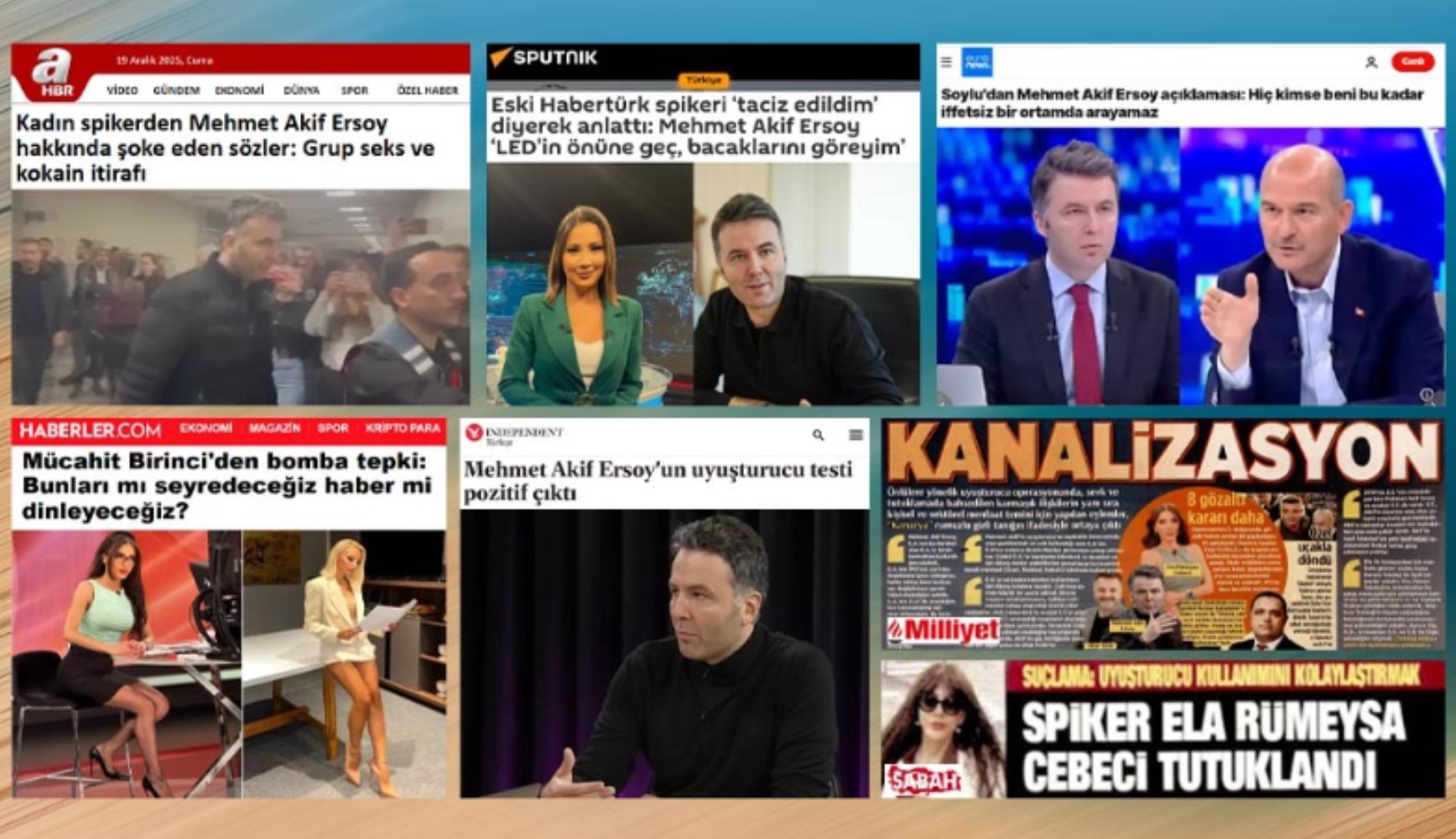
The source of stories in news sites like Yeni Akit, İnternethaber, and Son Dakika with headlines such as 'Reaction to news anchors’ attire,' 'Very harsh reaction to exhibitionist news anchors,' and 'Are we going to watch these?' was Mücahit Birinci.
However, these stories did not mention that Birinci, whom they wrote as a 'Former AK Party MKYK Member,' was referred to disciplinary action and forced to resign from the party when allegations emerged that he demanded 2 million dollars from a detainee to get him released.
Unfortunately, in these stories, women’s bodies were commodified by using photos of female presenters in low-cut outfits, and they were used as a tool to market the news. What should really be discussed is not the low-cut outfits of female presenters, but that they overshadow the news with their attire. The basic rule is that the person delivering the news, whether man or woman, should not overshadow the news. Yet, for some time now, male or female presenters and reporters on our televisions seem to have forgotten this rule…
It is sad that the operation at Habertürk is being discussed through female presenters, or rather, the female body. According to reports mostly spread by Sabah, it didn’t stop at female presenters overshadowing the news at Habertürk.
Unfortunately, the statements and explanations of former presenters contain clues that some female presenters were harassed, used for career advancement and blackmail, and forced into drug and sex parties. Indeed, M. Akif Ersoy is also facing accusations of 'providing a place and opportunity for drug use' as well as 'providing sectoral and financial benefits through these relationships by involving women in relationships with certain people.'
Whether these allegations are crimes that require arrest can be debated, but if they are true, what is happening cannot be viewed as private life or privacy. Of course, one should not pass judgment as the trial has not yet begun; however, the fact that a result proving the opposite came out from the Forensic Medicine while M. Akif Ersoy was defending that he did not use drugs strengthened the suspicions.
Still, let me emphasize once again; if true, very serious ethical problems have been experienced at Habertürk in terms of journalism. Relationships have become ugly, and journalism has rotted.
The “corporate journalists” in İliç
Doğu Eroğlu, who conducted the research titled 'The story of two villages in İliç: Çöpler and Sabırlı,' and 'Ortak,' an independent news center for investigative journalists, went to İliç again. Their goal was to observe what happened in the intervening time and to investigate whether the consequences of the accident had been eliminated.
Those who saw them with cameras in their hands kept asking, 'Are you also the company’s journalists?' They were very surprised. When they asked, 'No, we came to do journalism on our own. What does the company’s journalist mean?' they received the answer, 'The company constantly makes journalists write stories to create pressure for the mine to open.' They were saddened on behalf of journalism.
While they were there, the mining company officials also called the Ortak team. They were inviting them to the company, saying, 'You are in İliç, how can we help? Come on, let’s talk.' It is clear that they are uncomfortable with independent journalists wandering around there.
Anagold Mining not only uses 'journalists' for the reopening of the mine; it also campaigns in the media with 'paid publications.' I had also drawn attention some time ago to the campaign of 'Let the mine in İliç be opened,' which is carried out with copy-paste stories in many TV channels, news sites, and newspapers. A journalist should not distort the facts by taking money, and should not be a tool for the company.
Stories that resemble police bulletins
İHA reported the story, 'Terror at a school in Gaziantep: Cleaning worker stabbed a 6-year-old child!' The story, which was also used in Cumhuriyet, said:
“In the Nizip district of Gaziantep, an argument between a cleaning worker and a 6-year-old student at a school turned into a fight. The cleaning worker, who pulled out his knife during the fight, stabbed 6-year-old Efecan B.”
One inevitably wonders. What kind of argument could there be between an employee and a 6-year-old child? Thinking there must be another explanation for a 6-year-old child being stabbed, I looked at the news on other sites. It turned out that the female cleaning worker did not argue with the 6-year-old child; she injured the child while arguing with the family who were her neighbors.
Such errors show carelessness in journalism; when a journalist is writing their story, and an editor is checking a story, they should first pass what is written through a logic filter. Especially in such criminal news containing violence, they should ask if it is true or if it is possible, and seek answers.
Of course, the biggest mistake of such police-style news is that they are texts in the guise of police bulletins that do not convey the story and cause of the event in detail…
In a single sentence:
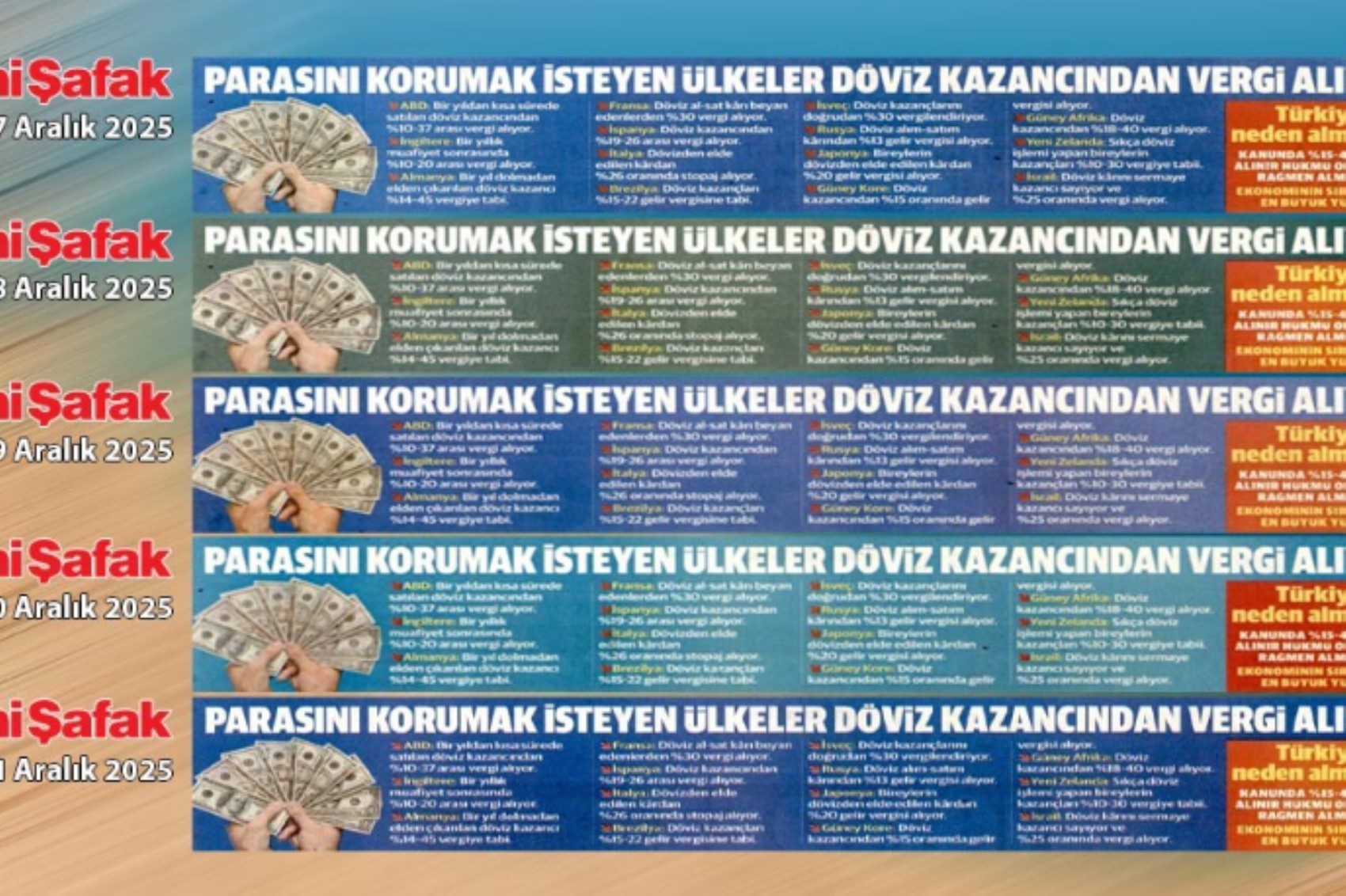
Yeni Şafak turned this issue into a campaign by publishing a text titled 'Countries that want to protect their money tax foreign exchange earnings' on its front page for five days.
Sözcü wrote in its story 'Democracy is a beautiful thing' that 'Police stopped Greek Prime Minister Mitsotakis on his way back from dinner' and 'made him blow into a breathalyzer,' but in fact, Mitsotakis was not stopped; he participated in the police practice himself.
EuroNews wrote that Ukraine hit a Russian submarine with 'underwater Sub Sea Baby unmanned aerial vehicles'; however, SSB is not an aerial vehicle, but a 'multi-purpose unmanned surface vehicle.'
com protected the business by not writing the name of the market that sold spoiled chicken in its story 'Spoiled chicken scandal at the 3-letter market.'
The 'kırat' (carat) in Hürriyet’s headline 'Marriage proposal with an 8-carat ring' was wrong; it should have been 'karat.'
Akşam’s headline 'Did fake alcohol kill?' was wrong; illegal liquor had been produced from real alcohol.
The Ministry of Trade gave a 'Consumer award' to Akşam, Sabah, Yeni Akit, and Yeni Şafak; these newspapers also published stories as if only they had received the award.
During a live broadcast on TRT Haber, a woman in the background threw her jacket on the floor and shouted 'Enough'; no statement regarding the matter came from the TRT management.
FOR YOUR CRITICISMS, COMPLAINTS, AND SUGGESTIONS: [email protected]
Most Read

Striking picture for Özgür Özel's 'New Party'

The PKK opening and Özgür Özel’s path!..

How did the newspapers view Özgür Özel's farewell to the CHP?

He killed his wife by slitting her throat: Their children witnessed the moments

What did the CHP do?

Özel’s new party move in the world press

The New CHP, against CEHAPE

Fire at TUSAŞ engine factory in Eskişehir under control

From self-efficacy to despair

Kılıçdaroğlu's first message on Özgür Özel's new party announcement