



I am not sure if there is truly an increase, as I do not have numerical data. However, I have been encountering news reports about men who commit suicide after killing their relatives quite frequently in recent days:
“He killed his wife and committed suicide in Bakırköy”, “He caused terror before the eyes of his three children: He killed his wife and then committed suicide”, “He ended his life with the same gun after shooting and killing his son and wife in Batman”, “He first killed his girlfriend and then committed suicide by the lake”, “Family massacre in Gaziantep! The father who killed his wife and four children committed suicide”.

These are some of the family-wide murder and suicide reports I have seen in newspapers and news websites over the last month. Until three or five years ago, incidents where men who committed suicide also ended the lives of their wives and children were not common. Regardless of the reason, men who committed suicide usually departed from life without harming those around them. For some reason, in recent years, we have started to encounter incidents where those who commit suicide carry out family-wide murders. And these cases are increasing.
Of course, it cannot be said that all family-wide murders and subsequent suicides are personal cases; there may also be social, political, and economic reasons. This is a subject that needs to be researched on its own and measures taken according to the results.
But there is a question I cannot help but think about every time I see a report of a family-wide murder and suicide: Do we journalists also play a role in the increase of these cases? Because while one side of these cases is murder, the other side is suicide. Due to the fact that they are contagious and set an example for others, suicides—except in exceptional circumstances—should not be reported. This is the stage that universal journalistic experience has brought us to.
Unfortunately, in Turkey, the media, especially those broadcasting on digital platforms, have stopped paying attention to the rule of not reporting suicides. They report in detail on suicides that have no criminal, political, or social cause, and that do not involve celebrities or political figures, including the methods of suicide. This is a journalistic error that may lead to an increase in these suicides.
It is possible that reports on family-wide murder and subsequent suicide cases also set an example for men who might attempt suicide. Perhaps these reports show men who have decided to commit suicide the possibility of killing their relatives first; it normalizes the murder!
We must consider the contagious nature of reports on family-wide murder and subsequent suicide cases. What would we lose if we did not publish reports of this brutality, just as we do not report suicides? Instead, we should research the causes and focus on eliminating these murders and suicides.
NEWS CHANNELS' RATINGS ARE IN DECLINE

CNN Türk announced that it was the “most-watched news channel” in all rating categories in October, just as it was in September. I was curious about the accuracy of these reports published in Demirören Media and examined them.
Indeed, according to October averages, CNN Türk is in first place in all categories. In the all-day average, CNN Türk is in first place with a 2.36 rating. It is followed by TRT Haber (1.96), Halk TV (1.66), A Haber (1.59), Sözcü TV (0.95), Habertürk (0.96), and NTV (0.77). An important difference in the AB and ABC groups is that the ratings of Halk TV and Sözcü TV are much higher than the all-day average. Halk TV is the second most-watched channel in the AB and ABC groups. The viewership rates of TRT Haber and A Haber drop in the AB and ABC groups.
I also examined the viewership rates of news channels last year. At that time, TRT Haber was in first place in the all-day category, CNN Türk was second, Halk TV was third, and A Haber was fourth. In this year's rankings, it is seen that TRT Haber and A Haber have declined.
As a matter of fact, there is a general decline in the viewership rates of all news channels compared to last year. TRT Haber's rating in the full-day average has fallen from 3.10 to 1.96, CNN Türk's from 2.81 to 2.36, Halk TV's from 2.79 to 1.66, A Haber's from 2.15 to 0.95, Sözcü TV's from 1.53 to 0.95, and Habertürk's from 1.30 to 0.96. This data shows that news channel viewers are moving away from news and discussion programs to some extent.
Especially in evening broadcasts, there is no channel other than CNN Türk that receives a rating of 2 or higher. Morning broadcasts raise the averages of CNN Türk and Halk TV. During the noon hours, the viewership rates of almost all news channels are close to zero.
Of course, the reliability of these rating measurements is also controversial. For example, during the so-called “dead hours” between 02:00 and 07:00 at night, somehow pro-government channels like A Haber, CNN Türk, and TRT Haber sometimes receive high ratings such as 6-10, while the ratings of opposition channels remain between 0 and 2. This makes the average viewership rate of pro-government channels appear high.
However, we have no other data to understand the viewership rates. The main axis of this data says that the viewer is bored with news delivery methods and “talking head” programs. It seems the time for change in news channels has come; the viewer is sounding an alarm.
I wonder if the managers of news channels hear this alarm ringing at their doors?
WHAT IS THE STATE'S POLITICAL BENEFIT?
It was not enough for them to invent the crime of “publicly disseminating misleading information” two years ago; now they are trying to create the crime of “activities against the security or internal and external political interests of the state”.
This time, without calling it “influence agenting”, they are making an addition to the “Crimes Against State Secrets and Espionage” section of the Turkish Penal Code. This article foresees imprisonment for those who “commit crimes in line with the strategic interests or instructions of a foreign state or organization against the security or internal and external political interests of the state”.
But who will decide on the security and internal and external political interests of the state? Of course, those who govern the state! The AKP government will have obtained a new legal basis to imprison critical journalists based on such vague, ill-defined expressions.
While the “influence agenting” bill is expected to be brought to the Grand National Assembly of Turkey (TBMM) General Assembly, a new attack against the opposition media came from the MHP. MHP Deputy Chairman İsmail Özdemir submitted a bill to the Speaker of the Parliament that foresees the “cancellation of RTÜK licenses of media organizations that receive funding from foreign foundations and associations”.
The arrest of 10Haber reporter Furkan Karabay, solely because of the news and posts he wrote, is a harbinger that the government aims to tighten the vise even further. Who knows how the government, which recklessly uses the “misleading information” article, will attack after these laws are passed?
Journalism professional organizations had collectively opposed it six months ago and ensured that the government took a step back on the “influence agenting” law. Objections all together are necessary once again...
RIGHT TO A FAIR TRIAL
The 14th International Crime and Punishment Film Festival's theme of “Right to a fair trial” this year is a fitting choice. Unfortunately, the perception that the “right to a fair trial” is being violated has increased significantly.
Of course, this perception does not arise from nothing. Can you imagine, the court uses the phrase “although it is controversial at this stage” for the evidence, but despite this, it rejects the objection to the detention of CHP Esenyurt Mayor Ahmet Özer!
In the case regarding the Narin Güran murder, the newspaper Hürriyet put itself in the place of the court by running the headline “Four liars facing life imprisonment”. It made the decision that all four people on trial were guilty and announced it on the front page! While Milliyet ran the headline “Two confessions in court” as if the defendant Nevzat Bahtiyar's truth had been proven, it did not mention that this person's statement contradicted his previous “confessions”! Sabah similarly ran the headline “Uncle Salim strangled Narin”.
On the evenings of the hearings, a “court” was set up on CNN Türk, A Haber, and Habertürk, and a verdict was reached regarding what happened in the hearing. The strangest thing was that former Minister of Economy Masum Türker was made to speak on CNN Türk about the case as if he were an “expert”.
In the Narin Güran case, the media has completely abandoned journalistic skepticism and a fair and balanced approach to the trial; by announcing a verdict, it is also putting pressure on the court. Well, don't the mother, the brother, and the uncle have the “right to a fair trial”? We journalists must be the uncompromising defenders of everyone's, but everyone's, right to a fair trial and the presumption of innocence.
FEHMİ KORU'S REMONSTRANCE
I had written that our media, unlike the Western media, did not show much interest in Turkey's application for membership to BRICS.
To this criticism of mine, a remonstrance came from Fehmi Koru: “The Ombudsman doesn't seem to be following the Karar newspaper”. Koru also sent his articles on the BRICS summit titled “States are playing games... Turkey has a game too, but” and “New goal: Achieving the impossible in foreign policy”.
I should also acknowledge the other remonstrances from friends; let me try to remedy my deficiency by recording that Hayri Kozanoğlu in BirGün, M. Ali Güller in Cumhuriyet, Bülent Falakoğlu in Evrensel, Barçın Yinanç, Hakan Aksay, and Namık Tan in T24, Zeynep Gürcanlı in Ekonomim, and Korkut Boratav in Sol Haber prepared extensive articles about the “BRICS summit”.
There may be other articles I missed. But my criticism remains that the application for membership to BRICS, which leads to assessments that Turkey is turning its face from the West to the East, and its results, deserve much more attention.
In one sentence:
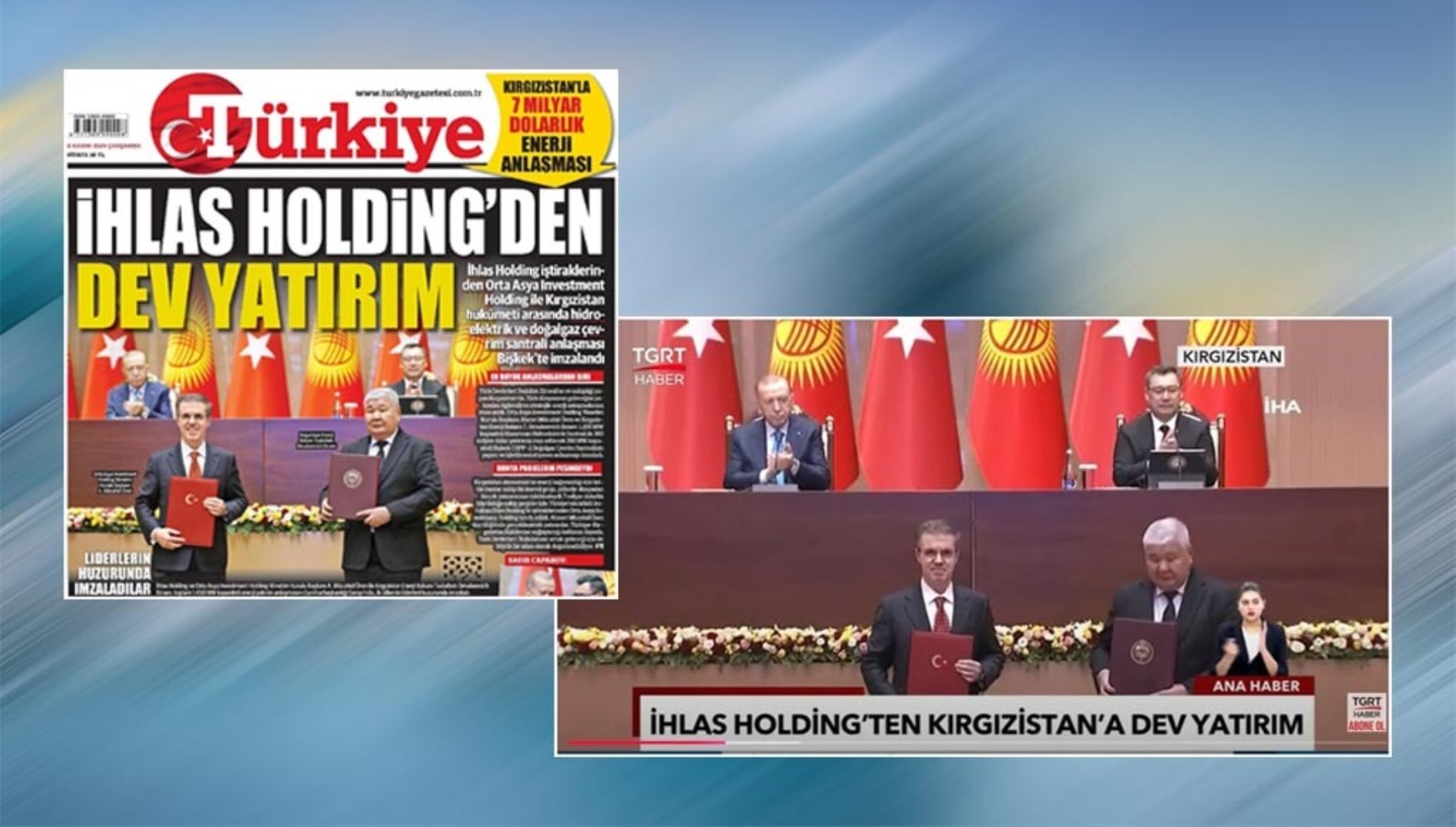
İhlas Holding's winning of the hydroelectric and natural gas combined cycle power plant tender in Kyrgyzstan was front-paged by the Türkiye newspaper in the same group, and TGRT broadcast it for 5 minutes by repeating the same footage over and over.
Like President Erdoğan, Speaker of the Parliament Numan Kurtulmuş also went on the Brazil trip with the state's private plane and took a group of journalists with him as guests.
While Akşam, Cumhuriyet, and Karar hid the name of the private hospital in the news about “The nurse slept, the baby suffocated”, İHA and Türkiye newspaper gave the name Memorial Diyarbakır Hospital.
There is no such verb as “ifşaladı” (to leak/expose) as in the headline “Bahar's Rengin, Ecem Özkaya, exposed the messages she received” on the Cumhuriyet internet and Medyaradar sites; it should have been “ifşa etti”.
In a half-page text titled “The 2026 World Cup will make our country one heart” in Hürriyet Sports, a beverage brand was being promoted, but no paid advertisement warning was included.
The opposition media did not show interest in the news that the CHP-run Ankara Metropolitan Municipality paid high fees for concerts.
The source of the conspiracy theory in Hürriyet's “Is Trump a time traveler?” news was unclear.
FOR YOUR CRITICISM, COMPLAINTS, AND SUGGESTIONS: [email protected]
Most Read

Striking picture for Özgür Özel's 'New Party'

The PKK opening and Özgür Özel’s path!..

How did the newspapers view Özgür Özel's farewell to the CHP?

He killed his wife by slitting her throat: Their children witnessed the moments

What did the CHP do?

Özel’s new party move in the world press

The New CHP, against CEHAPE

Fire at TUSAŞ engine factory in Eskişehir under control

From self-efficacy to despair

Kılıçdaroğlu's first message on Özgür Özel's new party announcement