



The most striking development in the hearings was the statement that Hüseyin Gün, who is accused of being a “spy,” received an “authorization certificate” from the then-Undersecretary of the Prime Ministry, Fuat Oktay, in 2017 to represent the state in lobbying activities.
Journalistic principles dictate that not only the prosecution's claims but also the defense must be published in a fair and balanced manner in trials. However, pro-government outlets such as Hürriyet, Sabah, and Yeni Şafak ignored Hüseyin Gün’s defense in their coverage of the case.
In fact, during the parliamentary sessions on May 12, İYİ Party Bursa Deputy Selçuk Türkoğlu brought up the issue by referring to the document mentioned by Hüseyin Gün, asking, “How is it that a person who worked on behalf of the state yesterday is suddenly declared a spy today?” Mustafa Arslan, who took the floor after Türkoğlu, said, “The fact that a person has held certain positions in the past does not grant them immunity.” However, when CHP Group Deputy Chairman Gökhan Günaydın interpreted these words as “an admission that Hüseyin Gün worked on behalf of the state,” Arslan objected, saying, “There is absolutely no evidence that he was a state official; we do not accept this.”
This debate in the Grand National Assembly of Turkey (TBMM) was also not reported in the pro-government media; it was covered up. Despite days passing, no statement has been made. Yet, Fuat Oktay is still a deputy and the Chairman of the TBMM Foreign Affairs Committee. Oktay chaired the committee meeting last week as well, but no journalist could ask him about this document. The fact that a question regarding a case that led to the seizure of Tele1 cannot be asked to a deputy among so many journalists in Parliament must be a sign of both the narrowing of journalistic opportunities and the weakening of reporting reflexes.
Can there be no principled journalism without democracy?
A reader who sent an email under the name Kemal T. criticized me by saying, “Where there is no democracy, there can be no journalistic principles”:
“You still don’t understand! The Islamists got off the democracy tram. They shelved democracy. They are applying martial law against the CHP! And you are still talking about ‘journalistic principles’ and such. You are still writing meaningless articles as if we were living in a democratic regime.”
There may be others who think this way, so let me explain. Contrary to what the reader argues, I believe that journalistic principles are always necessary and valid, and that they gain even greater importance in conditions where democracy is under heavy attack, as it is today.
Principled journalism is good journalism in my view. And good journalism informs people accurately and completely. People who know the truth can fight for democracy and freedom. That is why those who are enemies of democracy and freedoms are also enemies of the truth; they do not want principled journalism, they want partisan journalism; they try to bring journalism under control.
Political scientist Prof. Dr. Murat Somer also drew attention to this very point on social media, stating, “A well-informed public will choose democracy and the rule of law”:
“The concern that ‘if we say this, it will hurt the opposition and lead opposition voters to despair’ is not doing any favors to democracy or the opposition.”
This is exactly my effort. The duty of journalists is to inform people accurately and completely. A good journalist does not look at whose feelings might be hurt by what they write or say. Criticism and self-criticism are also essential for good journalism.
The privilege of vehicles with flashing lights
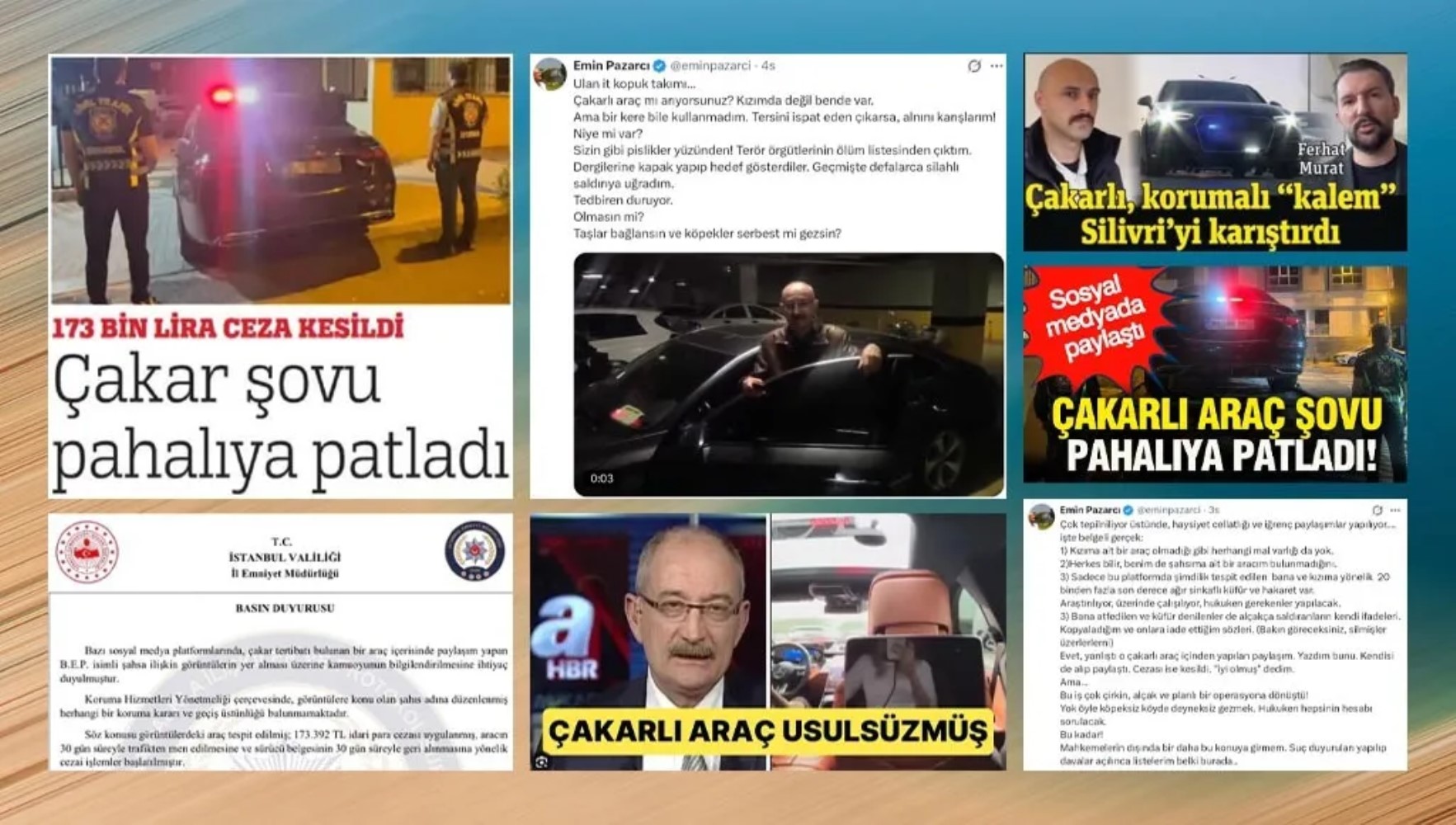
“You scoundrel, heel-clicking bunch!” This is how Akşam newspaper’s Ankara Representative Emin Pazarcı began his response to the reactions regarding his daughter, Begüm Ece Pazarcı, sharing images on social media of herself in a vehicle with flashing lights.
First, he tried to save the situation by posing in front of a car with flashing lights in a garage and saying, “Are you looking for a car with flashing lights? It’s not my daughter’s, it’s mine. I haven’t used it even once. It’s just sitting there as a precaution.” However, when it turned out that the car in his daughter’s post was different and a traffic fine was issued, he deleted his first message and said, “Everyone knows that I do not own a personal vehicle.”
If he doesn’t have a vehicle, why did he share a photo with a car with flashing lights? That remained unclear. Emin Pazarcı responded to those who criticized him—and to some posts that contained insults—with insults and profanity, as he had done before. When the reactions did not subside, his columns in Akşam were first suspended; a few days later, he had to step down from his position as Ankara Representative.
Most of the pro-government media stayed away from this issue. In fact, Akşam, where Emin Pazarcı works, did not report on it at all. Although there were pro-government journalists who defended Emin Pazarcı, they never touched upon the “flashing light vehicle” privilege.
Yet, the real issue that should be focused on is this privilege granted to certain pro-government journalists. When CHP Group Deputy Chairman A. Mahir Başarır claimed last year that “Ahmet Hakan, Ferhat Murat, Candaş Tolga Işık, and Hadi Özışık, as well as lawyer Serkan Toper, also use vehicles with flashing lights,” even some pro-government writers had opposed giving journalists such vehicles.
However, they did not make a sound when it was reported last week that TV commentator Ferhat Murat, who had denied having a vehicle with flashing lights at the time, went to Silivri in one.
We still do not know which other “journalists” have the comfort of a vehicle with flashing lights. Being able to move with privilege in traffic, where ordinary people struggle, is contrary to the nature of journalism.
Is what they call a “manuscript” an imitation?
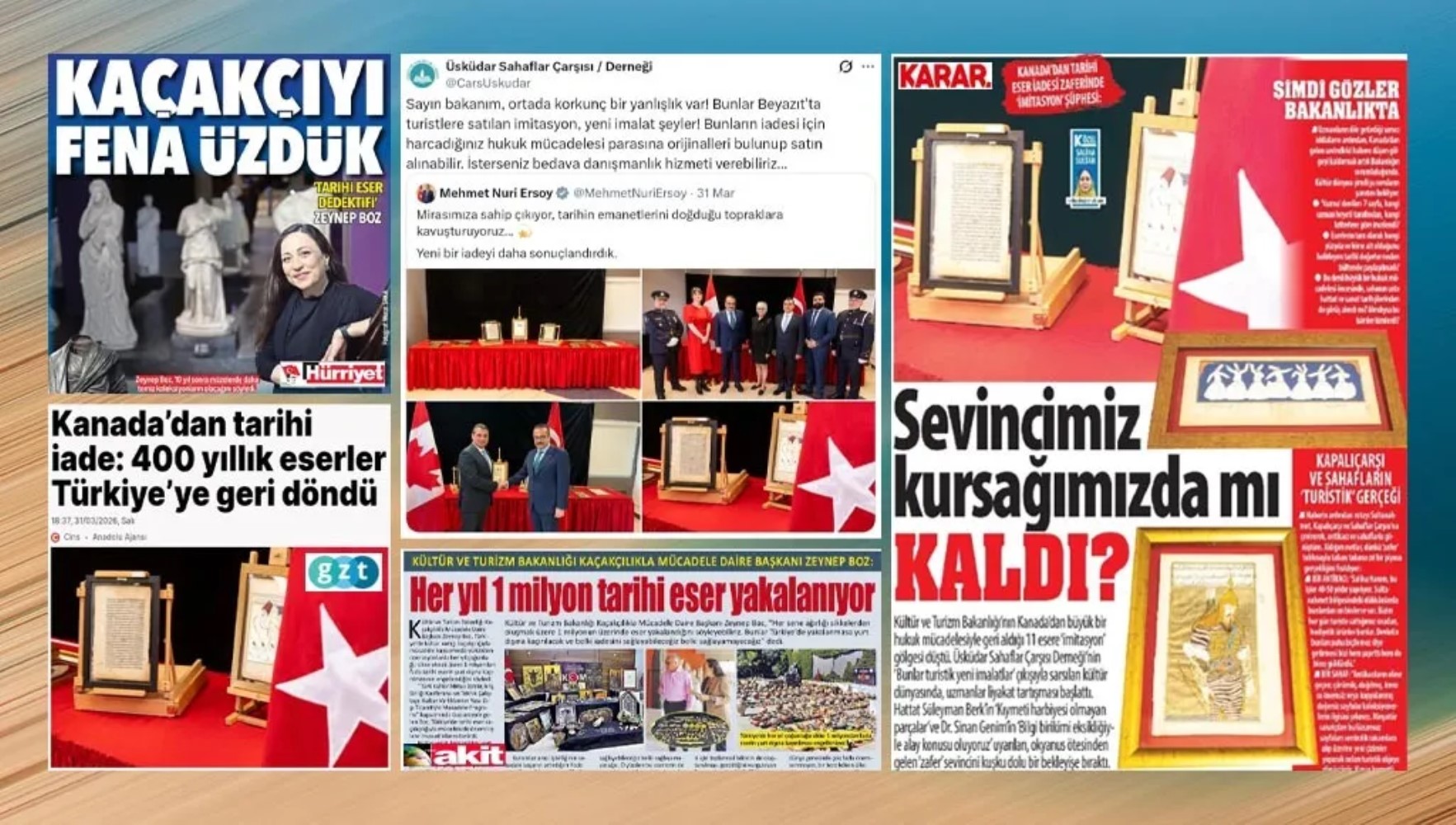
Zeynep Boz, Head of the Anti-Smuggling Department of the Ministry of Culture and Tourism, gave a statement to the Anadolu Agency regarding the “fight against the illegal trade of cultural assets”:
“The return of artifacts from abroad represents the most symbolic and powerful message given to the international public. Since 2002, we have ensured the return of 13,453 artifacts to Turkey.”
A few days later, her interview titled “We really upset the smugglers” was published on the front page of Hürriyet. In the interview, Boz boasted, “We have upset the archaeology market abroad a little.”
I think neither of the journalists who conducted these interviews is closely following the developments regarding the return of cultural artifacts. Because they missed a significant debate regarding the return of these items.
In news reports published in the media about 1.5 months ago titled “First artifact return from Canada to Turkey” and “Historical artifact return from Canada,” it was emphasized that “seven manuscript pages, two rare printed work pages, and two modern calligraphy works” were returned.
However, immediately after these reports, an objection came from the Üsküdar Secondhand Booksellers Association: “Mr. Minister, there is a terrible mistake here”:
“These are imitations, newly manufactured things sold to tourists in Beyazıt! With the money you spent on the legal battle for their return, the originals could have been found and purchased.”
The assessments of experts interviewed by the Karar newspaper, Prof. Dr. Süleyman Berk, Prof. Dr. Münevver Üçer, and Dr. Sinan Genim, also increased suspicions; the debate widened with the participation of other experts. However, no response to these criticisms came from the Ministry of Culture and Tourism.
Yet, considering that the “Menzil Stone” used as a set decoration in the TRT series “Tozkoparan İskender” was registered as a “historical artifact” by the Istanbul No. 5 Cultural and Natural Heritage Preservation Board, the objection of the booksellers cannot be dismissed at all.
The way to resolve these concerns and learn the truth was to ask these questions to the ministry bureaucrat, but that opportunity was missed.
Partisan journalists on the plane
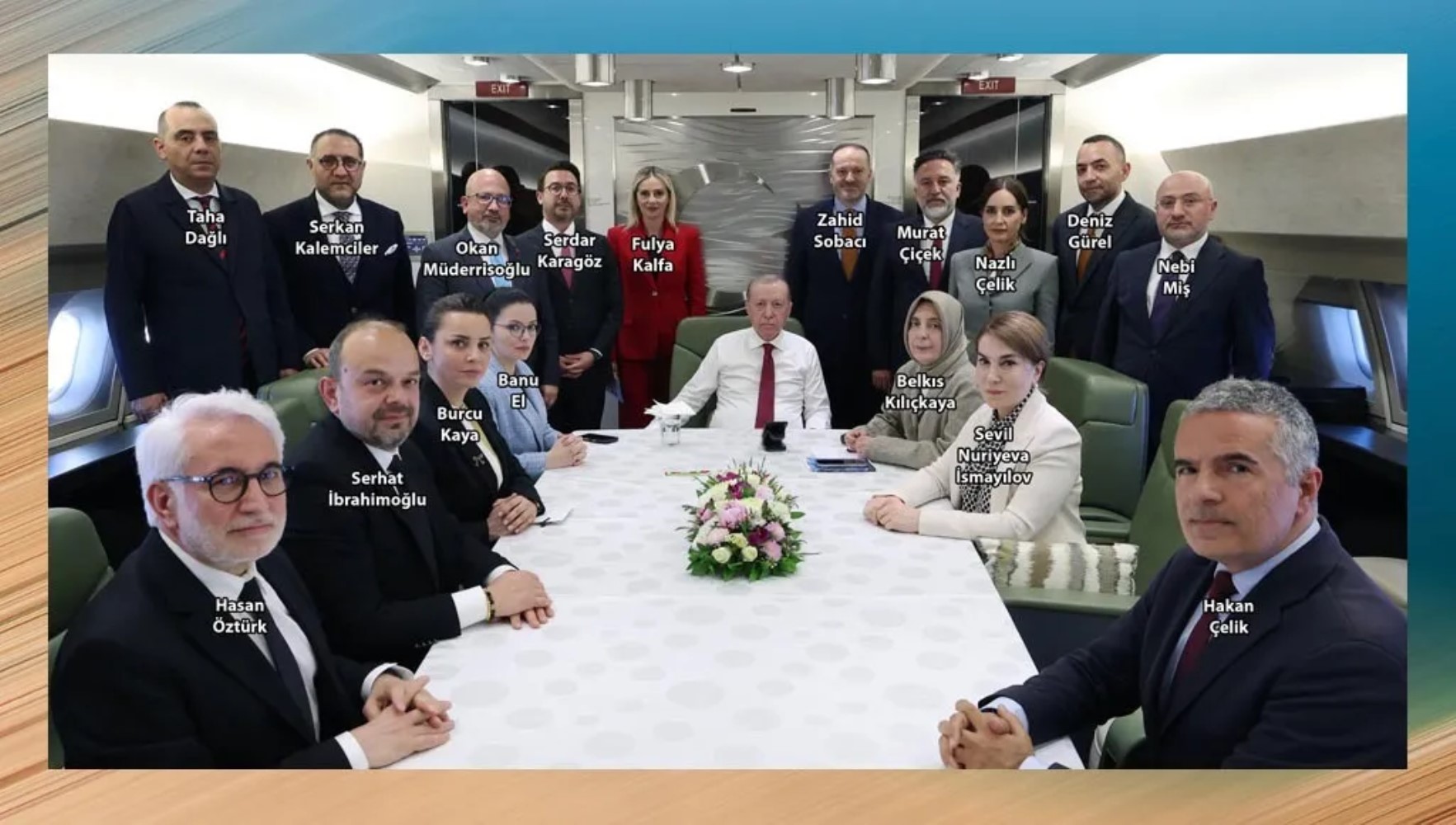
The selected journalists on the presidential plane outdid themselves during the conversation on the return from the Kazakhstan trip. So much so that even in the reports in the pro-government media, the questions were either shortened or completely removed.
One of the journalists, who entered a race to praise President Tayyip Erdoğan, asked their question by saying, “You are a leader who achieves concrete results.” Another began their question by saying, “We are a strong country both in the eyes of the US and Iran. You are also a strong leader and have good relations with these countries.”
In the questions regarding the CHP, the language of the ruling party officials was used, not journalism. A journalist who spoke of “chaos” in the CHP ended their question by asking, “Is this a crisis of confidence? Is it a security crisis?” The most incredible question is again about the expatriates:
“The times when our expatriate citizens will come to Turkey for vacation are approaching. The opposition uses ugly language regarding expatriates. Sometimes they put them in a position on the street that will dampen their spirits and make them regret coming to Turkey. I request your evaluation on this matter.”
Where and what has the opposition done to expatriates? Only a journalist on that plane could have asked such an unsubstantiated, non-concrete question. Erdoğan also responded with general expressions like “they are doing it in an indecent way.” Just think, these are also questions that were submitted and approved in advance…
They are protecting hotels, not cliffs
In the Demirören News Agency’s report titled “The occupation on the cliffs will end,” it was announced that “a demolition decision was made for 16 out of 26 illegal structures such as reinforced concrete buildings, elevators, stairs, and platforms” on the cliffs.
It was stated that the “building registration certificate” of a hotel that built an elevator and tunnel to descend to the cliffs was also canceled. However, the name of this hotel was not in the news. It was only referred to as “the hotel in the Gençlik neighborhood.” Although there was no ethical justification, they protected the hotel by not writing its name.
It is not an approach unique to this DHA report to not write the name of the penalized hotel. They never write the names of large companies, private hospitals, or five-star hotels in news reports containing negative information; they have a journalistic understanding that favors the powerful and the wealthy.
Indeed, there are two other five-star hotels in Antalya that opened elevators and tunnels to the cliffs so their customers could easily descend to the sea; DHA had also hidden the names of those hotels in a report it published last year. NTV reported that story with the headline “They hollowed out the cliffs: Secret tunnel in a 5-star hotel in a British YouTuber’s video,” and Hürriyet reported it as “Secret tunnel found from two 5-star hotels to the cliffs in Antalya.” However, they also hid the names of these hotels, which were the subjects of the news. They turned the event into an unsolved mystery by working together…
Not writing the names of these hotels, which are openly announced with videos on social media, is a mistake that renders the news ineffective. When the subject is not clear, it ceases to be news and turns into gossip; they become complicit in the “crime” of the hotels whose names are not given. They are moving further and further away from journalism.
I know that one of those hotels is the Ramada Plaza by Wyndham, because I saw it…
FOR YOUR CRITICISM, COMPLAINTS, AND SUGGESTIONS: [email protected]
Most Read

Striking picture for Özgür Özel's 'New Party'

The PKK opening and Özgür Özel’s path!..

How did the newspapers view Özgür Özel's farewell to the CHP?

He killed his wife by slitting her throat: Their children witnessed the moments

What did the CHP do?

Özel’s new party move in the world press

The New CHP, against CEHAPE

Fire at TUSAŞ engine factory in Eskişehir under control

From self-efficacy to despair

Kılıçdaroğlu's first message on Özgür Özel's new party announcement