



The debate began when journalist Ferid Demirel asked a question by placing screenshots of articles by Nevzat Çiçek and Yıldıray Oğur side by side:
“On the same day, at the same time, it occurs to both Nevzat Çiçek and Yıldıray Oğur to ask ‘security sources in Ankara’ about Syria and ‘the process.’”
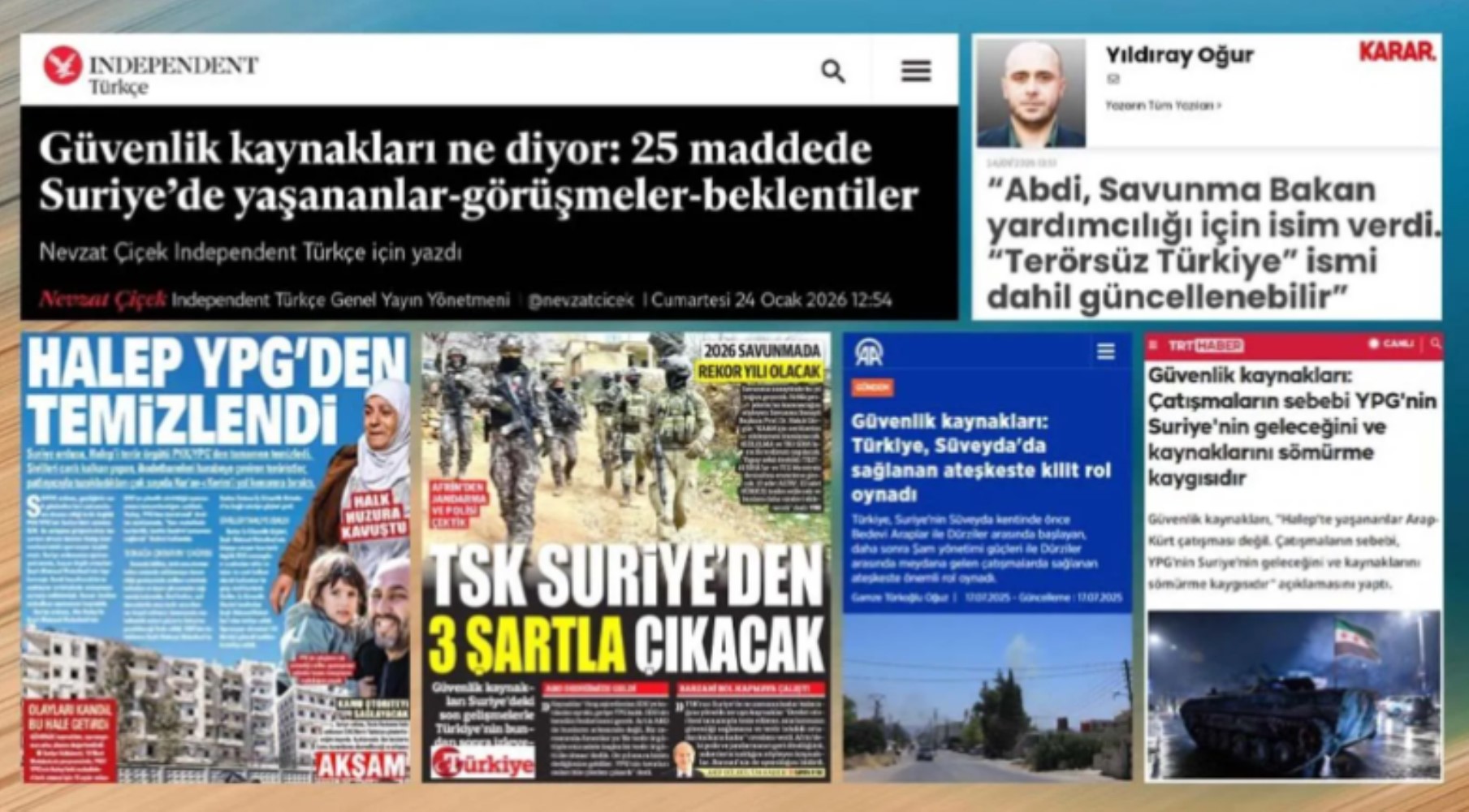
Yıldıray Oğur replied, “Could it be because we attended the same off-the-record briefing? We asked our questions, and we wrote down the answers we received by citing the source according to the method of citing sources in off-the-record meetings.”
The discussion then branched out, but let me clear up the conceptual confusion immediately. Yıldıray Oğur said “off the record,” but this means “not for publication”; it cannot be written at all. Even if it were “deep background,” the source should not have been cited.
Since Oğur cited “security sources in Ankara” in his article, it appears a group of journalists was given a “background” briefing. This is a method where the journalist “negotiates and agrees on the terms of publication with the news source.” When there are such group briefings rather than individual ones, it is appropriate for journalists to insist on the disclosure of the source and to oppose such impositions.
Unfortunately, this is rarely seen in Turkish journalistic practice. Indeed, Oğur’s article did not even mention that it was a “briefing meeting.” However, providing information about the nature of the meeting and the participants increases the credibility of the news and ensures transparency.
Furthermore, in news with anonymous sources, factual information can be conveyed, but opinions, thoughts, and views should not be reflected. This is because information can and should be verified by other sources. However, when thoughts are conveyed without disclosing the source, the journalist takes responsibility for those words.
There are sections in Oğur’s article where the anonymous source’s opinion is reflected. For example, the sentence, “According to security sources, a law must be passed first,” is a different approach from what government circles have expressed to date. It is impossible to grasp the context of these words without knowing who said them. Because “security sources” could be the MIT (National Intelligence Organization), the General Staff, or the Police...
There is also a sentence in the article: “Ankara thinks that allegations such as massacres, genocide, and starvation in Rojava are propaganda produced by the organization, which has lost large positions and territory, to cover up this defeat.”
Let’s set aside who “Ankara” is, but even if it is impossible to verify “allegations such as massacres, genocide, and starvation in Rojava,” it would have been a fairer approach to include the other side’s view instead of conveying a one-sided opinion.
In Nevzat Çiçek’s article, “What do security sources say: What is happening in Syria in 25 points - negotiations - expectations,” there are also sections containing the wishes of “security sources.” For example, Çiçek wrote, “It is stated that the ‘Right to Hope’ issue regarding Öcalan is not currently being voiced by Öcalan himself, but that his conditions have been improved.”
Yet, the minutes of the meeting in Imrali were released one day before this article; it is seen there that Öcalan told the deputies, “Bahçeli did not use the phrase ‘Right to Hope’ in vain, and I cannot work without this.” He clearly requested and voiced the right to hope. In this case, isn’t it very clear that the “security sources” provided misleading information? Moreover, the entire burden of the error has been left on the shoulders of the journalist.
Undoubtedly, the briefings of “security sources” are not limited to the one attended by Oğur and Çiçek. With the escalation of developments in Syria, such news has increased even more... They have journalists write and say what they cannot openly say themselves.
News reports such as Akşam’s “Kandil brought the events to this state,” Anadolu Agency’s “The terrorist organization YPG/SDG is clashing with the army to avoid handing over the prison in Raqqa where some ISIS members are also held,” NTV’s “Security sources: Military support will be provided if requested,” Türkiye newspaper’s “TSK will withdraw from Syria with 3 conditions,” TRT Haber’s “Security sources: The reason for the clashes is the YPG’s concern about exploiting Syria’s future and resources,” and Sabah’s “The SDG chapter is closing” were all based on “security sources.”
Even these few examples are proof that “security sources” effectively direct Syria news in the media. The fact that they have no accountability for errors is an added bonus.
The “right path” in journalism
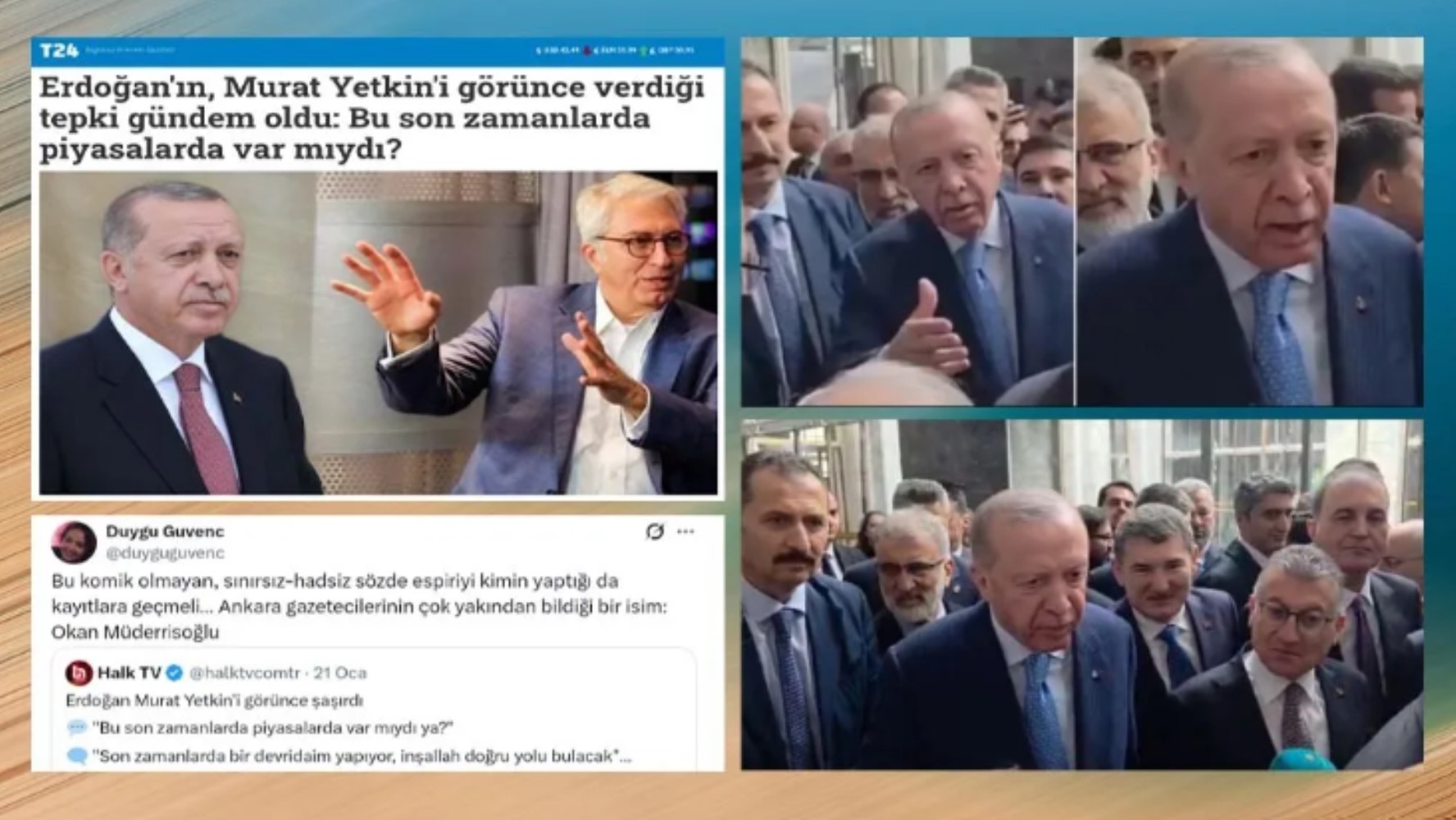
I hadn’t had the opportunity to write about the footage of President Erdoğan’s encounter with Murat Yetkin and the subsequent debates. Ünsal Ünlü also criticized me on his program, saying, “Don’t you think it was important for our profession? Wasn’t there news value in the debate about ‘finding the right path’ in front of the person in power, and it being met with laughter?”
He was right. I tried to make up for that deficiency this week by also convincing Murat Yetkin. Emphasizing that he follows the proceedings of the Turkish Grand National Assembly (TBMM) on-site as much as possible, especially trying to watch the party group meetings on Tuesdays and Wednesdays, Murat Yetkin recounted what happened in Parliament that day:
“After listening to President Erdoğan’s speech at the AK Party Group, my journalist friend Maruf Buzcugil and I said, ‘Let’s go and see, maybe we can ask a question,’ and we went out to the outer lobby and started waiting for Erdoğan to come out along with other journalists. As Erdoğan passed by us, he suddenly stopped, turned to me, and said, ‘You haven’t been around for a long time...’ I was truly surprised. Then he turned to the other journalists and said, ‘Has this one been on the market lately?’ I replied, ‘I am always here, I constantly follow the parliamentary proceedings.’”
“By the way, for those who make inferences from the footage, let me say that there was no handshake or attempt at a handshake. I am saying this not to affirm or negate it, but just to state that it did not happen.”
“Following my response to the President, Okan Müderrisoğlu interjected, ‘He has been circulating lately, hopefully he will find the right path.’ Erdoğan turned to me and said, ‘Look, look, what is he saying?’ I said, ‘Okan is not speaking correctly. I follow the parliamentary proceedings, he knows it, and the other friends know it too.’”
“There were also journalist friends who confirmed me. The President turned to me again and said, ‘Why don’t I see you then?’ I said, ‘I cannot know that, sir, but I am here.’ The President and those accompanying him walked away from us laughing. That is what happened.”
After listening to what Murat Yetkin recounted, I can say that the news reports describing Erdoğan’s attitude as “surprise” had downplayed the situation.
Because the real reason Erdoğan cannot see Murat Yetkin or opposition journalists “on the market,” as he puts it, is not the individual preferences of journalists in the opposition media, but the obstacles the government has imposed on journalism in recent years. Opposition journalists who are not “accredited” cannot even enter the halls where Erdoğan is, let alone approach him outside of Parliament.
That corridor in Parliament is also an area where pro-government journalists appear before and chat with Erdoğan. To date, very few opposition journalists have had the opportunity to ask Erdoğan a question there.
Undoubtedly, Erdoğan also knows this situation. Despite this, his mentioning not being able to see Murat Yetkin with a mocking tone is truly a contradictory attitude. His attitude is not polite at all.
Okan Müderrisoğlu’s words are an indication of the level he has reached in journalism. The “right” he mentions while supporting Erdoğan’s sarcastic words is his own right, that is, to be a prop for the government! There, he is once again trying to curry favor with Erdoğan, and in front of smiling government members at that.
Erdoğan’s attitude and Müderrisoğlu’s words actually deserved a clearer response...
English, but not a professor
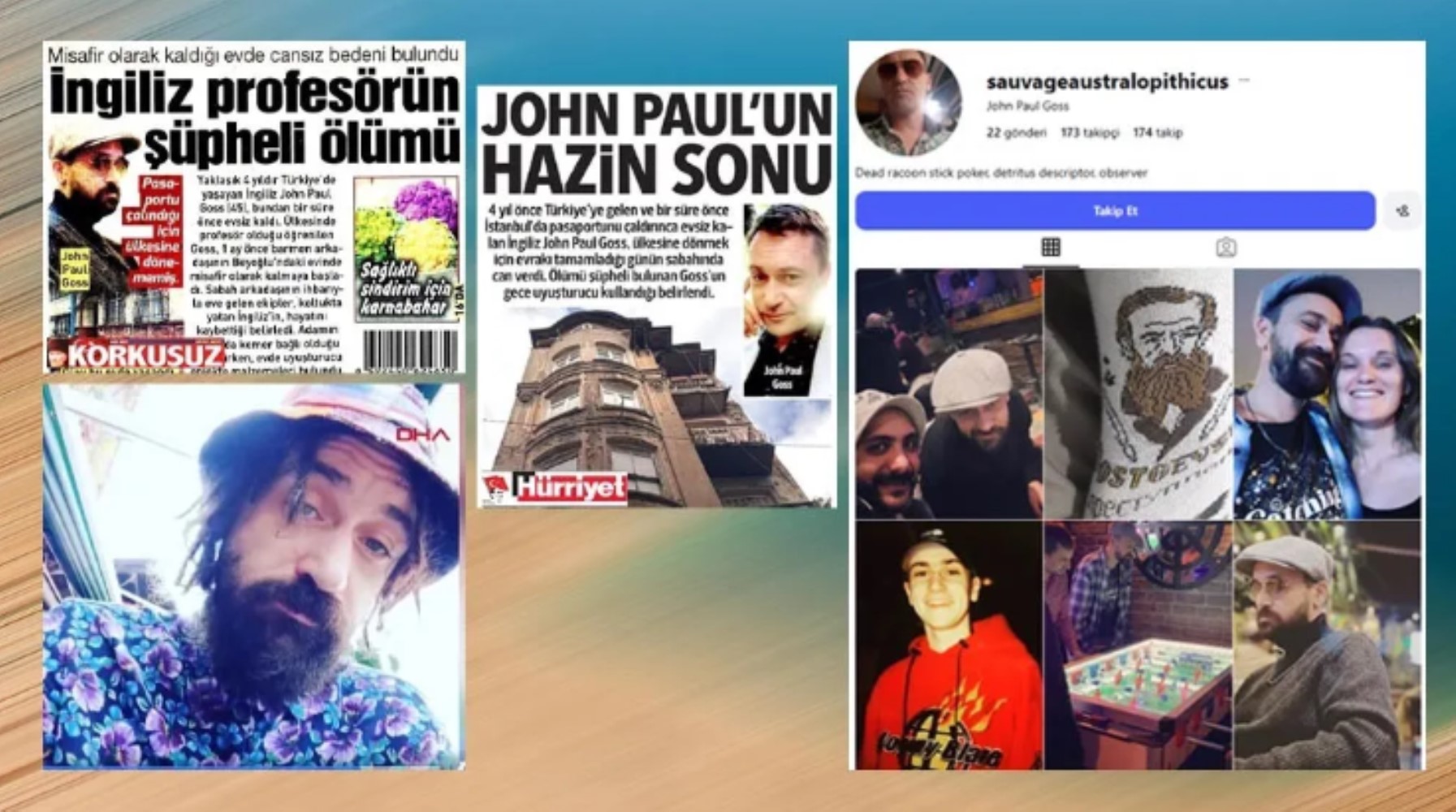
An Englishman named John Paul Goss passed away in the house where he was staying in Istanbul. Korkusuz reported the news with the headline, “Suspicious death of English professor.” Sites such as Hürriyet, Odatv, Ülketv, and İnternethaber also kept talking about the “death of the English professor.”
The information that this person was a professor was based on the words of a neighboring tradesman, Abdurrahman Tekin: “He was a professor in his own country.” No research had been done, nor had anyone else been asked.
I also checked on the internet; this person named John Paul Goss does not have a single book or article. Some local sites wrote that Goss was a senior academic and physicist working at the Faculty of Engineering at Newcastle University in England.
However, the name of the professor at Newcastle University is Jonathan Paul Goss. This professor at Newcastle University is not the same person who passed away in Istanbul. Not only do the photos in the video published by DHA not resemble him, but the university’s website also lists articles published by the professor in England in 2024-2025.
It is stated that Goss came to Istanbul five years ago and was homeless for a while, but there is no data indicating that he worked at a university here. I did not find any clues about his academic career on his Instagram account either.
It is sad that reporters have a tendency to believe everything they are told. They can easily be led into error. On the contrary, they should believe nothing they are told and should check everything they are told and everything they see. If they didn’t see any harm in writing “English professor” just to make the news more attractive, that is an even more serious journalistic error.
In a single sentence:
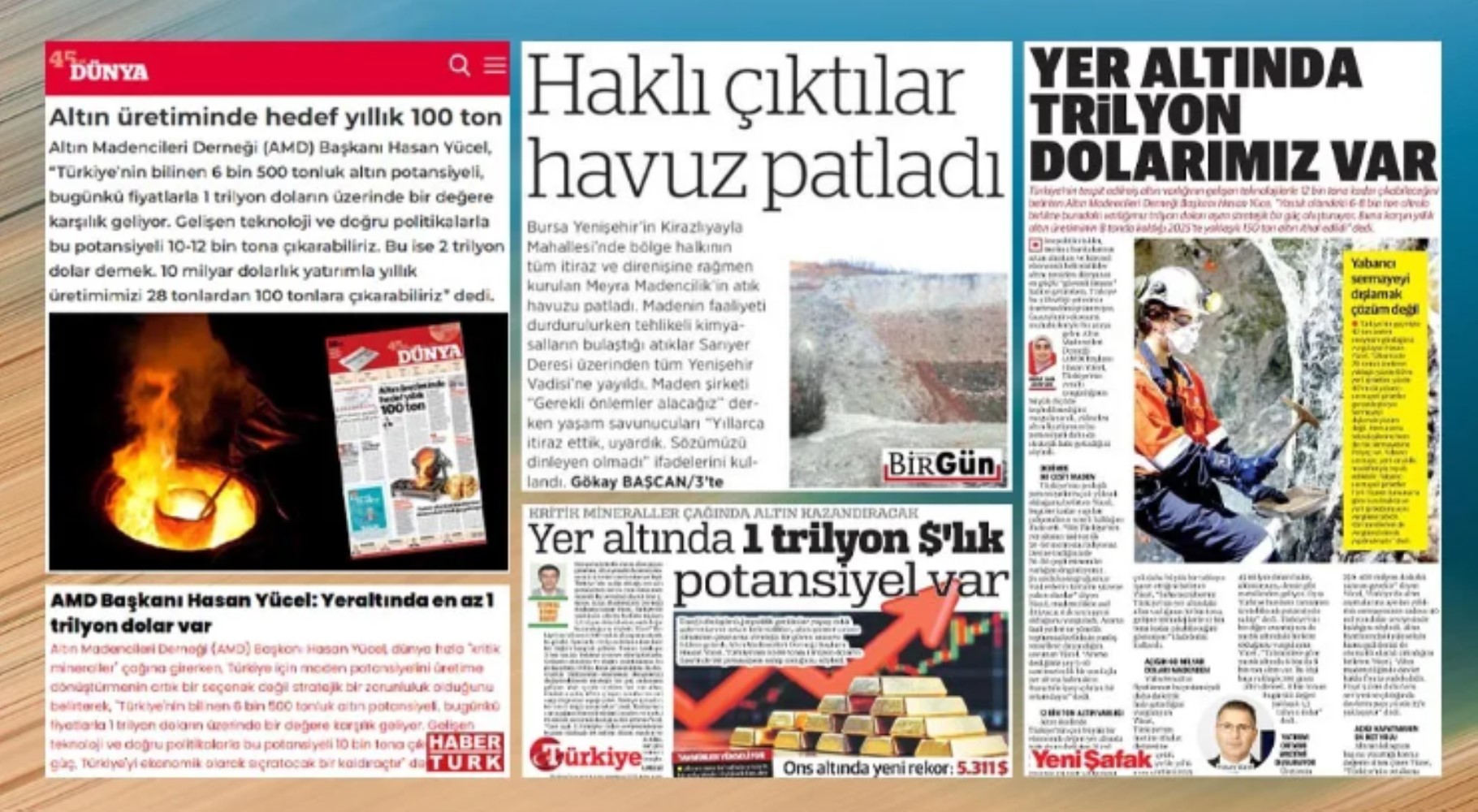
Economy reporters from Dünya, Habertürk, Milliyet, Nefes, Sabah, Türkiye, and Yeni Şafak chatted with Hasan Yücel, President of the Gold Miners Association, on the day it was heard that the waste pond belonging to Meyra Mining in Bursa Kirazlıyayla had burst; not only did they not ask about the bursting of the pond, but they also wrote news stories explaining the benefits of gold mining.
In Sözcü’s report, “The bathroom was small, we dismembered him in the living room,” the murder and its aftermath were recounted in such detailed language that it would traumatize readers and normalize violence.
Cumhuriyet, Hürriyet, Sözcü, and Odatv wrote, “Uğur Mumcu was commemorated in front of his house on Karlı Street in Ankara,” but the name of that street had been changed to “Uğur Mumcu Street” immediately after the murder.
The statement by the Progressive Journalists Association (ÇGD) that Yılmaz Özdil’s praise of “organized crime leader” Sedat Peker by saying, “I am honored by his existence,” was a “clear violation of journalistic principles” and that “a journalist’s duty is not to legitimize illegal structures” was a pertinent criticism.
Akşam newspaper published advertising pages disguised as news stories promoting the activities of AKP-run Kayseri, Esenler, and Akyurt municipalities.
Sabah newspaper, which has distributed the “Holy Quran and Quran Path Translation” to its readers before every Ramadan since 2019, will only give the “Quran Path Translation” for 29 coupons this year.
Based on the Ministry of National Defense, news that “NAVTEX was published indefinitely in the Aegean Sea” was reported in Milliyet, Sabah, and some websites, but since “NAVTEX” is the name of the device on which “navigational warnings” are published, it could be called a “NAVTEX announcement” or “message.”
As if there were no “Press Spokesperson” at the Ministry of Interior, Minister of Interior Ali Yerlikaya also announced the “Lavash gang operation” carried out in Mersin.
The reporter explaining gold prices on TGRT Haber TV said “...when it is 13 zero zero” instead of saying “...when it is 13:00.”
FOR YOUR CRITICISMS, COMPLAINTS, AND SUGGESTIONS: [email protected]
Most Read

Striking picture for Özgür Özel's 'New Party'

The PKK opening and Özgür Özel’s path!..

How did the newspapers view Özgür Özel's farewell to the CHP?

He killed his wife by slitting her throat: Their children witnessed the moments

What did the CHP do?

Özel’s new party move in the world press

The New CHP, against CEHAPE

Fire at TUSAŞ engine factory in Eskişehir under control

From self-efficacy to despair

Kılıçdaroğlu's first message on Özgür Özel's new party announcement