



When it comes to the "summits" that have become widespread in our media in recent years, the record undoubtedly belongs to Turkuvaz Medya. Turkuvaz Medya, which organized a "Sports Summit" last week, had been running from summit to summit by holding three summits within the month of November.
After every summit, the speeches of Turkuvaz Medya and Sabah executives and columnists, as well as the participating ministers and industry representatives, are turned into news; the sessions are also broadcast live on social media.
These summits allow Turkuvaz Medya to keep its relations with the ruling bureaucracy alive, alongside its journalism.
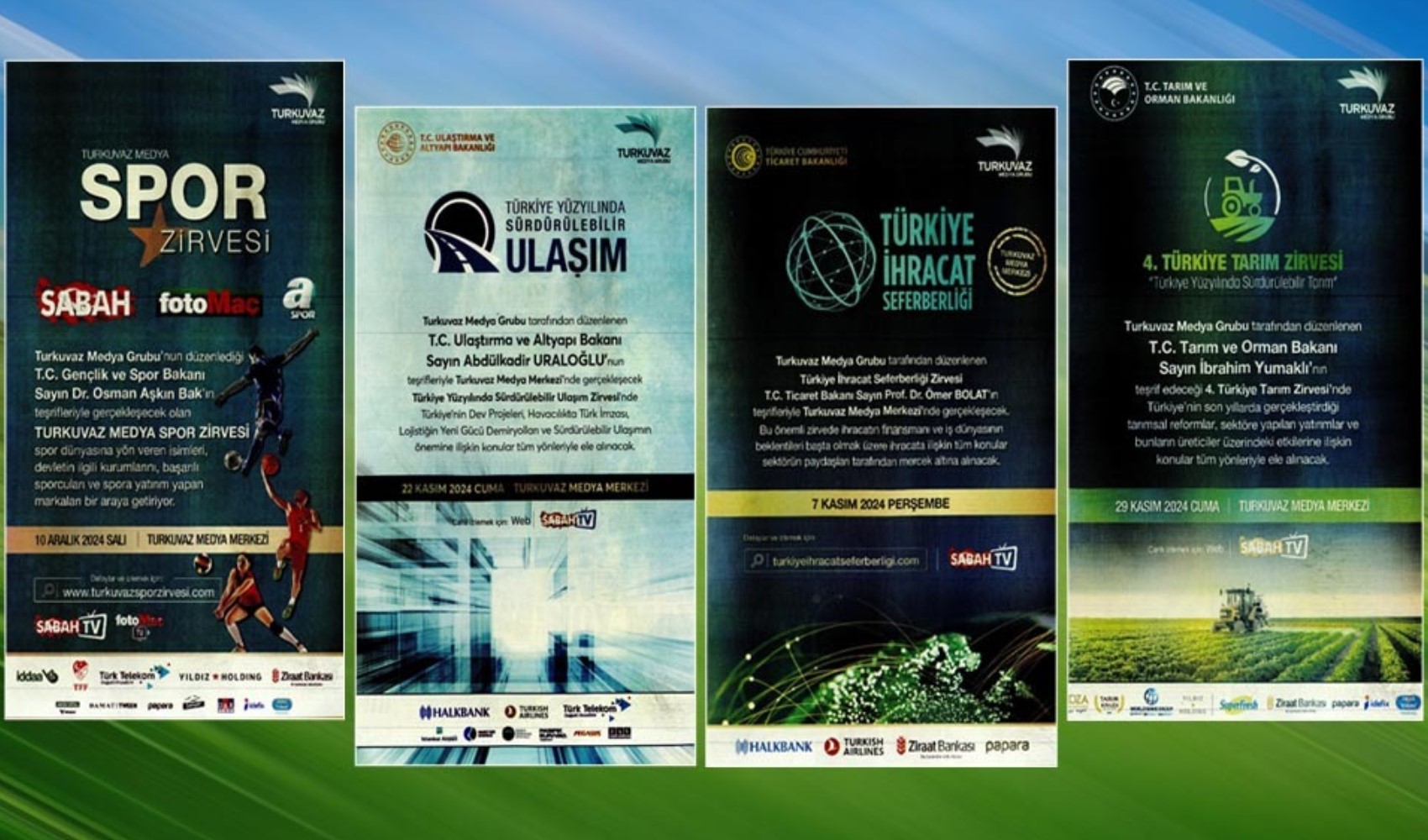
The real information regarding the nature of these summits is provided by the full-page advertisements published on the back page of Sabah before and after each summit. The banner at the bottom of these advertisements features the logos of the organizations supporting each summit; the summits are announced with the names of the ministers who will attend, and after each summit, the minister and other participants are thanked.
Judging by the logos in the advertisements, the "Turkey Export Mobilization Summit" on November 7 was sponsored by Halkbank, THY (Turkish Airlines), Ziraat Bank, and Papara.
The sponsors of the "Transportation Summit" on November 22 were Halkbank, THY, Türk Telekom, TAV, Pegasus, the Northern Marmara Motorway, the Northern Aegean Motorway, and Istanbul Airport.
The sponsors of the "Agriculture Summit" on November 29 were Ziraat Bank, Koza, Tarım Kredi, and some private companies.
The sponsors of the "Sports Summit" included Ziraat Bank, Türk Telekom, TFF, Yıldız Holding, as well as some other companies.
As is understood, public institutions such as Ziraat Bank, Halkbank, THY, and Türk Telekom are the permanent sponsors of Turkuvaz Medya.
It is understandable for Ziraat Bank to support an agriculture summit, but why would it support a sports summit? Or, the export mobilization of Halkbank is one thing, but why does it support a transportation summit? Similar questions apply to other public institutions as well.
It is unknown how much these banks and companies pay Turkuvaz for these summits or what kind of sponsorship agreement is made, but they are likely not small amounts. Considering that these public institutions also constantly place advertisements in the newspapers and television channels of this group (and other pro-government media organizations), it can be said that public resources play a major role in the financing of Turkuvaz Medya.
Media organizations must be transparent and disclose to their readers and viewers all sponsorships, advertisements, and all kinds of payments they receive, especially from public banks and public institutions.
Sabah executives and columnists, on the other hand, have no objections to their newspaper being fed by public resources, yet they constantly harp on about opposition media receiving funding and municipalities placing advertisements.
Journalism is just an excuse; the summits and the transfer of resources from the public are the real deal.
A CALL FOR TRANSPARENCY IN MEDIA FINANCING
The AKP government is secretly feeding the media under its control; journalism, which should be conducted transparently, is kept alive through covert resource transfers. We also do not know the extent of the financial support they provide.
Independent journalism cannot be possible without overcoming the problem of secrecy in media financing. That is why the call for transparency in the 'Declaration of Rights and Freedoms' recently announced by the 12 professional organizations that make up the 'Media Solidarity Group' is very valuable:
"All financial relations of media organizations, including their ownership structures, subsidies received from the public, and advertising revenues, must be made transparent. Legal criteria regarding media ownership must be determined clearly and explicitly."
The declaration emphasized that, in addition to financial relations, the ownership structure of the media must also be transparent; it demanded that media owners be prevented from participating in public tenders.
The declaration, which consists of three sections titled "Freedom of Expression and Media," "Digitalization and Intellectual Property Rights," and "Working Life," is based on the views and discussions expressed at two workshops and conferences titled "The Transformation of Journalism and Quests" held last April and September.
The declaration, which took its final form after the evaluations of journalists and professional organizations, contains the problems, demands, and solutions in the media field.
Considering its preparation process and the participation of professional organizations and journalists, the declaration is the most important text put forward since the 'Turkey Journalism Rights and Responsibilities Declaration' pioneered by the Turkish Journalists Association in 1998. This declaration, which I also participated in writing, will be a roadmap in our struggle for rights and freedoms.
I hope our journalism organizations do not leave this text on the shelves and instead turn it into a campaign.
MINIMUM WAGE JOURNALISTS
Our media attaches great importance to the Minimum Wage Determination Commission meeting; extensive news has been published for days. However, this commission has no value; the meetings are entirely a formality. The minimum wage will not be determined in that commission, but at the Presidency and the ministry.
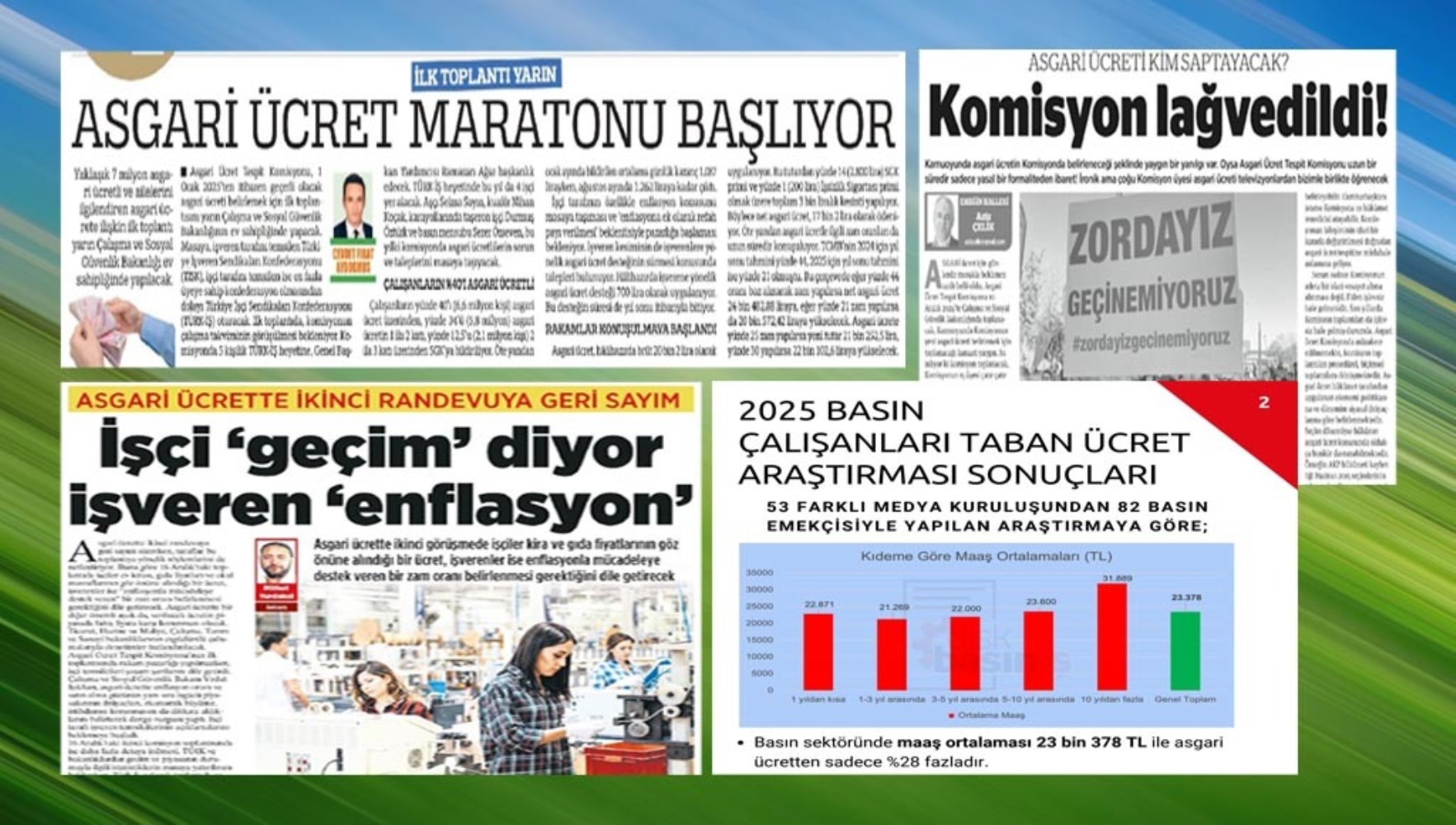
It is also wrong to report as if the minimum wage will be determined there. Indeed, at the first meeting of the commission, the members met each other and dispersed after having tea and coffee.
Furthermore, the fact that a minimum-wage journalist is participating in that commission for the first time will not affect the result. But the participation of Ulusal Kanal Ankara News Manager Sezer Özseven in the commission to represent "minimum-wage journalists" is important in terms of showing the level of journalists' wages.
On one hand, there are a small number of star journalists receiving million-lira salaries, but the vast majority of journalists receive the minimum wage or wages close to it. According to research conducted by the DISK-Basın İş Union with 82 media workers from 53 media organizations, wages are at the level of 23 thousand 378 liras. One in every four media workers works for the minimum wage or even less.
This is a distressing situation. Reducing the wages of journalists, who stand up to billionaire businesspeople when the time comes, to this level is the biggest blow dealt to journalism.
RATINGS OF NEWS CHANNELS
Sözcü wrote in its news titled "Real news is at the summit," "The Main News with Fatih Portakal is the clear leader in the Main News Category among all news channels." But they only wrote it as the December 3 ratings; there was no information about other days.
I checked the ratings, and indeed, Sözcü TV's main news bulletin broadcast at 19:00 is the leader on most days among news channels. Among all channels, the "Main News with Selçuk Tepeli" bulletin on Now TV is in first place. Now TV is followed by the news of ATV and Show TV.
However, the ranking of news channels in all-day averages is very different. In the "total" audience group average in November, TRT Haber received a 1.84 rating, CNN Türk 1.76, Halk TV 1.63, A Haber 1.53, Sözcü TV 0.88, Habertürk 0.71, and NTV 0.70. In the AB group monthly average, the ranking changed; Halk TV took first place with 2.39; it was followed by CNN Türk, Sözcü TV, Habertürk, TRT Haber, A Haber, and NTV. In the AB category, Halk TV was first on 23 days of last month.
One cannot talk about ratings without mentioning circulation. In the newspaper circulation ranking, Türkiye newspaper was again first last month. Sabah, Hürriyet, and Sözcü followed it with a small margin. The circulation of these four newspapers is slightly over 100 thousand, and they are all very close to each other. After the departure of Editor-in-Chief Metin Yılmaz and some writers and editors, Sözcü's circulation did not fluctuate much. According to the Media Monitoring Center, Sözcü's circulation was 102,766 between November 4-11; it was 100,163 in the week of November 11-17, 100,416 in the week of November 18-24, and 101,407 in the week of November 25-December 1. As can be seen, there is almost no difference.
INCOMPLETE NEWS MISLEADS
MHP Chairman Devlet Bahçeli's applause for DEM Party Co-Chair Tuncer Bakırhan's budget speech in the Turkish Grand National Assembly was published almost everywhere.
However, the news published on the websites Evrensel, Oksijen, 24 TV, and Serbestiyet, as well as in the newspapers Hürriyet, Milliyet, and Karar, regarding Bahçeli's applause for Bakırhan, was incomplete. Bakırhan was opening the way for negotiations for the Constitution by saying, "We can enter the second century with a Constitution that covers everyone. In 2025, in the 102nd year of the Republic, we can make a new beginning." News that did not include these sentences did not explain the reason for Bahçeli's applause.
Another example is the landslide on the Black Sea coastal road. The news reporting that four young people died as a result of soil flowing from the hill blocking the road was limited to the information that a natural disaster had occurred.
However, it was a man-made disaster. When this road was being built in the early 2000s, engineers had warned that building a road on the coast would lead to landslides. Indeed, after this landslide, TMMOB and Hopa Mayor Utku Cihan made statements that the coastal road caused the landslide, but the mainstream media did not include these statements in their news. Without this information, it was impossible for people to understand the cause of the landslide and who was responsible.
News with missing information is contrary to journalistic codes and is misleading. A journalist must check the elements of their news before putting the final period, and look to see if there is anything missing.
In a single sentence:
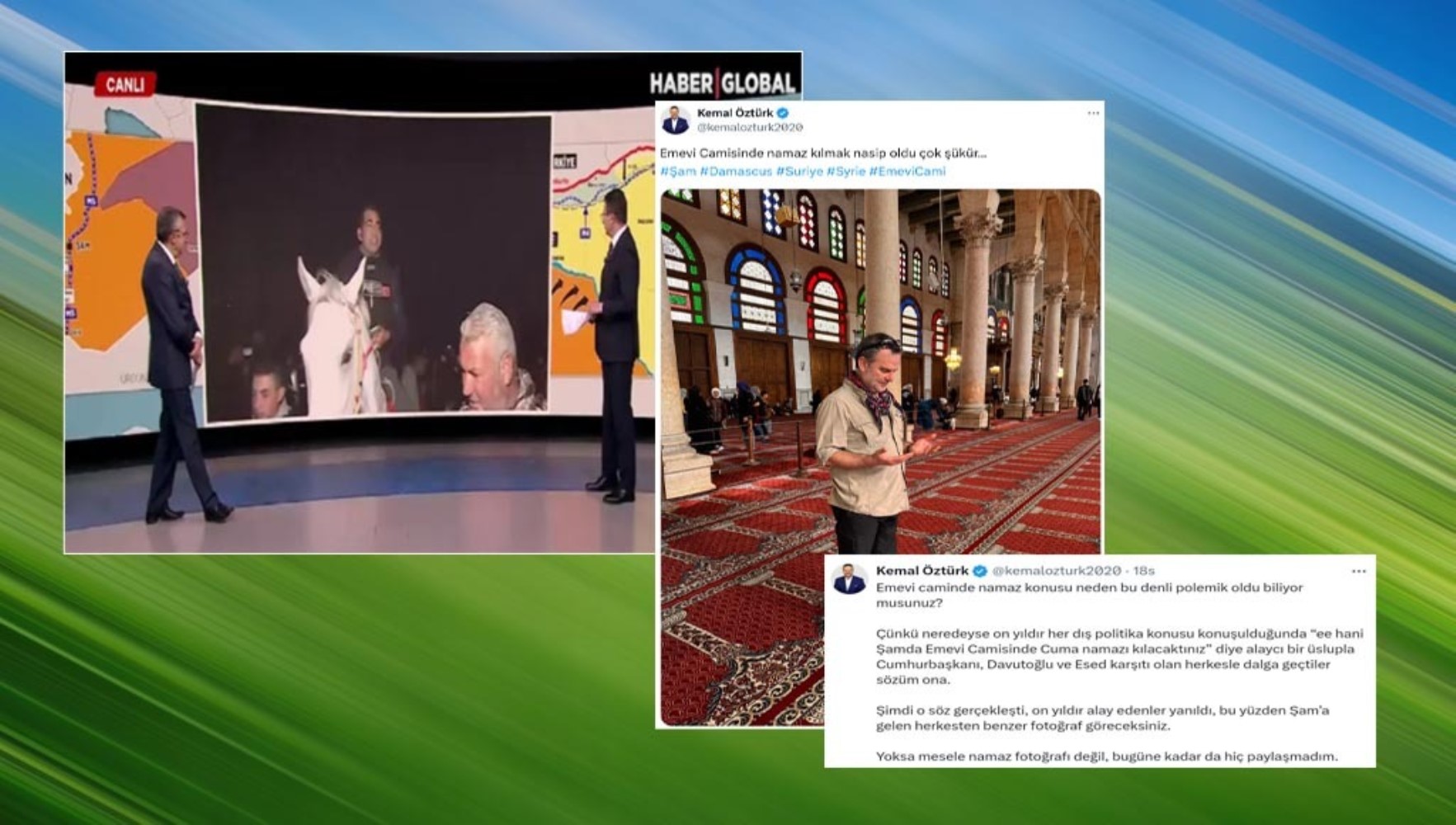
Mehmet Altunışık from Haber Global, with his broadcast from horseback in Damascus, and Kemal Öztürk from Habertürk, with the prayer photo he shared from the Umayyad Mosque and the statement he made afterward, became parties to the event they were covering and crossed the line of journalism.
In Akşam, Mustafa Kartoğlu, in his article "Which one? Colani, Culani, Jolani, Corani, Gorani," where he drew attention to the confusion in the pronunciation of the HTS leader's name, reminded that the name was inspired by the Golan region and emphasized that the correct pronunciation in Turkish is "Golani."
The Ministry of Trade gave the "Consumer Special Awards" again this year to Akşam, Anadolu Agency, DHA, Dünya, Ekonomim, Habertürk, Haber Global, İHA, NTV, Sabah, TV 100, TRT, Ülke TV, Yeni Akit, and Yeni Şafak.
The pro-government media ignores the fact that the Polonez workers' hunger strike to claim their rights and their march to Ankara were blocked by police barricades.
The headline "Assad left the phone shop with his two bodyguards: Images are from Turkey" used by the Internethaber website for photos of an Assad lookalike was deceptive.
News channels broadcast photos and footage of Syria's ousted President Bashar al-Assad taken with Russian President Putin as if they were new, without adding an "archive" warning.
CNN Türk, which did not report on the family physicians' actions against the new regulation, brought General Director of Public Health M. Emin Demirkol to the screen and made a one-sided broadcast titled "Drug debate in family medicine."
Akit TV not only brought Abdi İpekçi's murderer M. Ali Ağca to the screen and portrayed him as a reputable person, but also encouraged lawlessness and violence by broadcasting his words that he would "hang the lieutenants."
Hürriyet's news titled "Why did İlber Hoca leave the broadcast" did not include the views of the other sides of the debate, Soli Özel and Deniz Ülke Kaynak.
It was clearly written everywhere that the passenger who caused an incident on the plane was Petlas Board Member Abdülkadir Özcan, but Yeni Şafak coded the name as A.K. and did not mention Petlas.
FOR YOUR CRITICISMS, COMPLAINTS, AND SUGGESTIONS: [email protected]
Most Read

Striking picture for Özgür Özel's 'New Party'

Özgür Özel gives a dated response regarding the number of resignations

Forest fire in Antalya brought under control

The PKK opening and Özgür Özel’s path!..

How did the newspapers view Özgür Özel's farewell to the CHP?

He killed his wife by slitting her throat: Their children witnessed the moments

What did the CHP do?

Özel’s new party move in the world press

The New CHP, against CEHAPE

Fire at TUSAŞ engine factory in Eskişehir under control