



Actress Özgü Namal was on the front page of Milliyet. The headline “This stance is ‘unique’ to this nation” praised the response Namal gave to a question at the press conference held for the film “Sarı Zarflar” (Yellow Envelopes) at the Berlin Film Festival. Namal had responded to a journalist’s question, “If you could have told this story in Turkey, would your performance have been different?” in summary as follows:
“We didn’t shoot it here because we couldn’t shoot it in Turkey. Let’s correct the question. This is not a film that couldn’t be shot in Turkey. It was preferred to be shot here. There is no compulsion here.”
However, at the end of the report, the subject of the film was stated as, “Sarı Zarflar deals with the conflict between a family’s ideals and their struggle for survival.” But this sentence did not explain the reason why the journalist asked the question with the assumption that the film could not be shot in Turkey.
I looked elsewhere to understand the reason. That day, Özgü Namal was also on the front pages of newspapers such as Akşam, Hürriyet, and Türkiye. She was also in the headlines on television channels like Habertürk, TGRT, Global, and Sözcü TV. The artist was praised to the skies with headlines such as “She didn’t fall into the trap in the question,” “She didn’t play the game in Berlin,” “She left her mark on the festival,” “She won hearts,” “She put the weak in their place,” and “A lesson-like response.” On social media, she was almost at the level of a “national hero.”
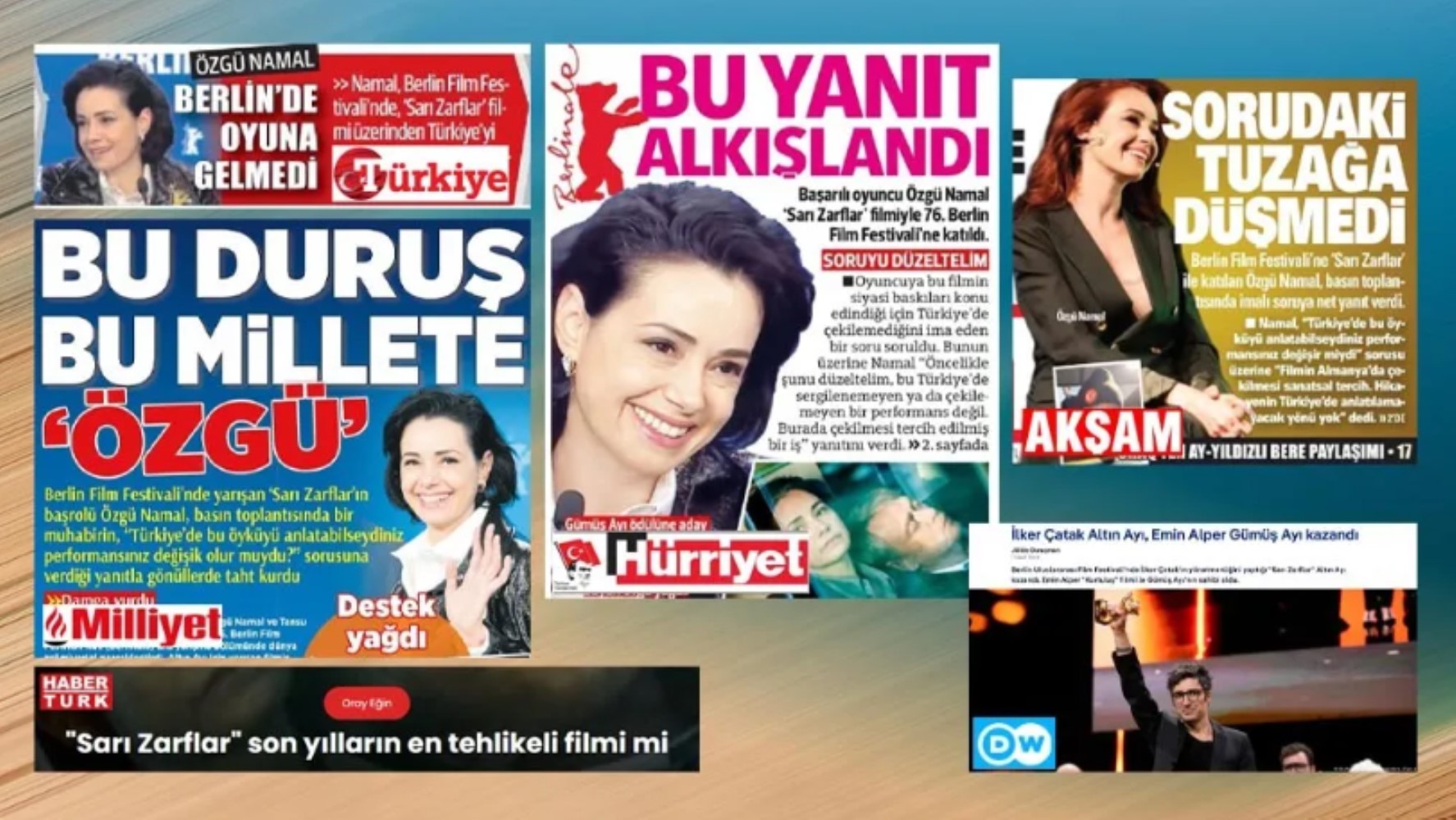
In most media outlets like Milliyet, the subject of the film was not explained. Only in the last lines of Hürriyet and Habertürk did I see the information that “Sarı Zarflar, directed by İlker Çatak and starring Özgü Namal and Tansu Biçer, tells the story of a theater couple who lose their jobs due to political pressure after the premiere of their new play and whose marriage is tested.” Oray Eğin, in his article “Is Sarı Zarflar the most dangerous film of recent years?” in Habertürk, also described the film’s political messages as “insincere” and its opposition as “superficial.”
So the issue was “political pressure”! In the trailer, today’s Turkey was reflected with images of people marching with “Rights, Law, Justice” placards. This was the reason why the journalist thought that “Sarı Zarflar,” which was shot in Berlin, could not be shot in Turkey.
While reporting on Özgü Namal’s stance, Milliyet and the pro-government media obscured information by not conveying the film’s critical approach to the current political climate in Turkey. This also proves the justification for the journalist asking that question out of concern for freedom.
The film won the “Golden Bear” in Berlin; let’s see if it will be able to find theaters in Turkey?
CONVERTING JOURNALISTIC CONSCIENCE INTO ADVERTISING
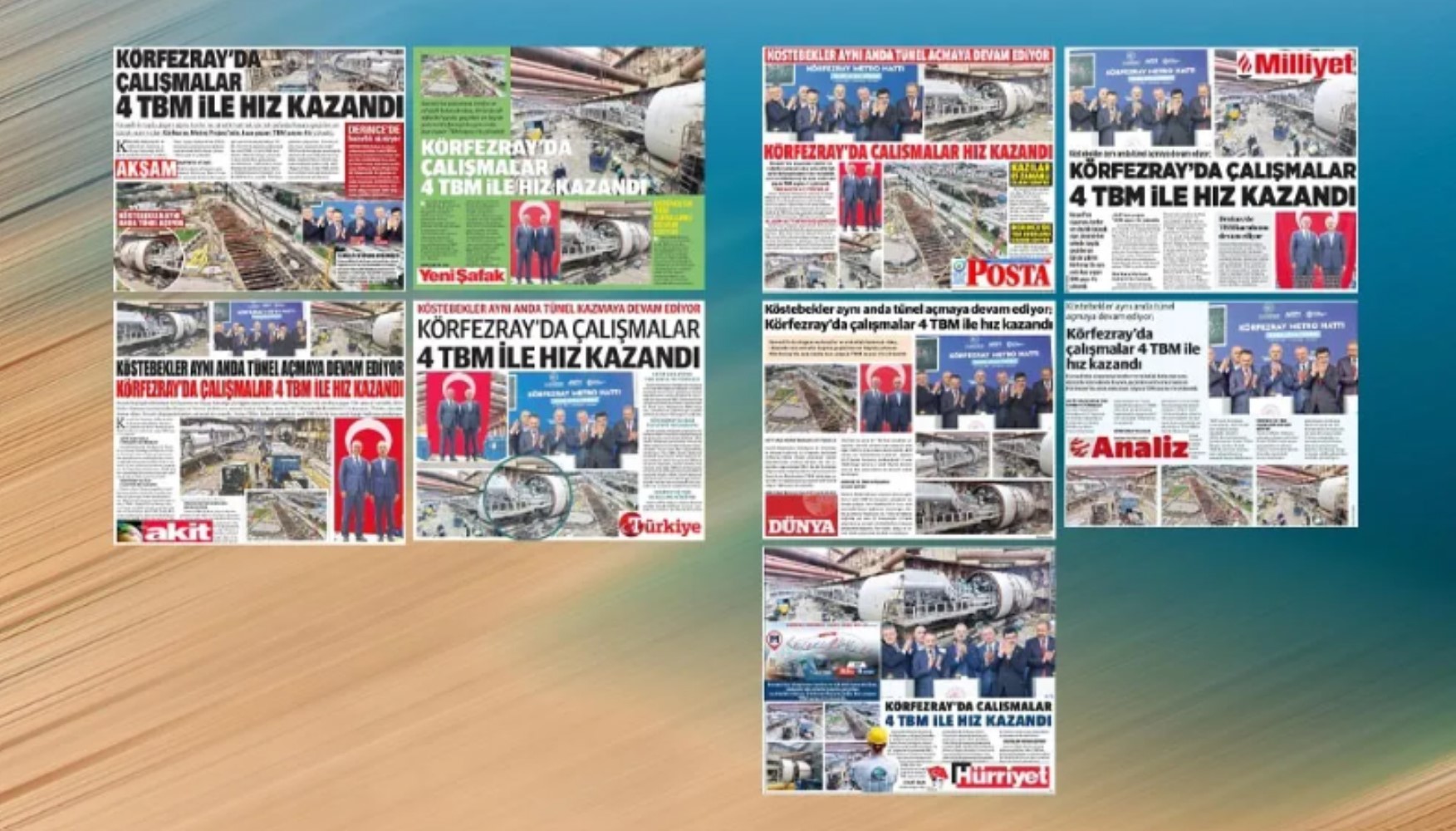
A half-page, news-like promotional text titled “Work on Körfezray gains speed with 4 TBMs” was published in 10 pro-government newspapers on the same day. In Milliyet, Sabah, Dünya, Posta, Ekonomi, and Hürriyet, a tiny “This is an advertisement” warning was placed at the bottom of the text; but in Akşam, Türkiye, Yeni Akit, Yeni Şafak, and dozens of news sites, even that was missing.
In the text, which stated, “The number of TBMs (tunnel boring machines) excavating simultaneously on Körfezray, which will add comfort and convenience to Kocaeli’s transportation, has increased to four,” the metro project of the Ministry of Transport and Infrastructure and the AKP-run Kocaeli Metropolitan Municipality was being implicitly advertised. In this way, public resources were also being transferred to the pro-government media.
The previous week, Turkish Airlines (THY), which bought new planes, had provided financial support by giving full-page advertisements to 16 pro-government newspapers saying “Our 500th star is in the skies.” Now, the Ministry of Transport and Infrastructure has provided financial support to 10 newspapers.
Feeding the media through the state also dulls journalism. The text announcing that the metro project has accelerated with such covert advertising ignores the fact that the metro construction causes ground slippage and collapses. They do not dwell on the impact of the metro construction on the collapse of a seven-story building in Gebze four months ago, which caused the death of four people from the same family, and the evacuation of 21 apartment buildings in the same place due to cracks in their columns and foundations.
The transfer of public resources does not serve good journalism, but rather the promotion of government activities. Propaganda journalism, which does not even care about human life, continues in this way.
THE RIGHT OF REPLY FOR ACADEMICS AT BOĞAZİÇİ
Let’s admit it, there is now a new type of journalism in the country called “Yeni Şafak journalism.” It is a type of journalism that presents its own opinion as news and does not feel the need for sources or evidence in its reports.
Not only do they publish the same “Salvation prescription for the economy” twice in just four months, but they can also present their own opinions and accusations against opposition groups to their readers as news.
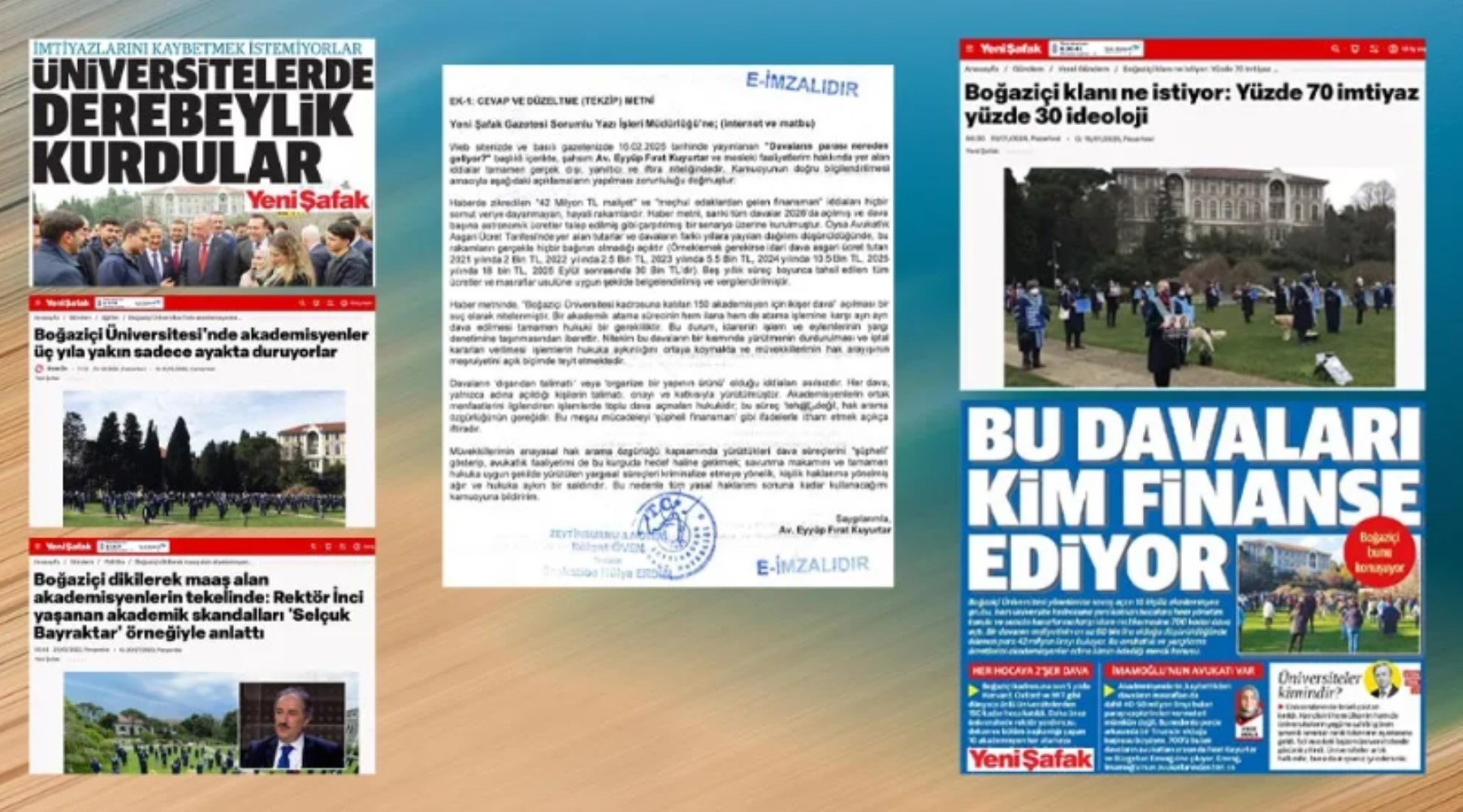
The headline “Who is financing these lawsuits?” was one of these types of reports. The report stated that 10 academics at Boğaziçi University had filed 700 lawsuits for 150 academics hired by the new administration. Then, the claim was made that “the legal and litigation fees for these lawsuits, which amount to 42 million liras, were filed with instructions and financial support from outside.”
Academics who did not stop their struggle against the university administration appointed by the government were targeted as people receiving “outside instructions.” The report contained neither a source nor concrete documents/information, nor the opposing view of those accused.
Moreover, Eyyüp Fırat Kuyurtar, one of the lawyers for the faculty members accused in the report, sent a “reply and correction text” to the newspaper through a notary. Kuyurtar stated that the astronomical cost calculation of 42 million liras, made by assuming all lawsuits were filed in 2026, was incorrect, whereas the lawsuits were filed over a five-year period. Emphasizing that 161 academics had given him power of attorney within 5 years, Kuyurtar responded to the accusations in the report in summary as follows:
“The claims that the lawsuits are ‘instructed from outside’ or the ‘product of an organized structure’ are baseless. Each lawsuit has been conducted solely with the instruction, approval, and contribution of the individuals on whose behalf it was filed. It is legal for academics to file collective lawsuits; this process is not a ‘threat’ but a requirement of the freedom to seek rights. Showing the litigation processes as ‘suspicious’ and targeting my legal practice is a severe and unlawful attack aimed at criminalizing judicial processes.”
It was not surprising that Yeni Şafak did not publish the right of reply sent by the lawyer of the resisting academics. Because they had not cared about the opposing view or the right of reply in their similar incidents before. After all, unfortunately, there is no sanction for not publishing a right of reply for media organizations that are in cooperation with the political power.
''IF WE CANNOT CRITICIZE, WHY ARE WE DOING JOURNALISM?''
To the 14 journalists in prison, they have now added Alican Uludağ. They took him from his home in the middle of the night, arrested him quickly, and put him in Metris Prison.
Apparently, they decided to arrest him first and then looked for a justification. If that weren’t the case, they wouldn’t have added the posts he made on social media throughout the last year to his report regarding “the release of ISIS members who planned the Atatürk Airport attack.” Posts that had not been objected to or investigated for a year were able to become grounds for arrest!
Alican Uludağ interpreted his arrest as the first signal of the new era that began after Akın Gürlek became Minister of Justice. In his statement at the court, he said, “This file was fabricated by saying, ‘We need to remove Alican from Ankara because he will express his comments and criticisms against many similar operations.’” He also asked the judge a very justified question:
“If we cannot criticize this country’s judiciary, members of the judiciary, and the President, then why are we doing journalism?”
Yes, the political power may have turned most of the media into a propaganda apparatus and created a mass of partisan journalists. However, there is no journalism without criticism, without objection, and without opposition. Even if there were, it would be of no use to this country or its people.
The duty that falls to us and our professional organizations is to show solidarity with our colleague who is being made to pay a price. Alican Uludağ needs to return to his reporting as soon as possible.
JOURNALISTS WHO DO NOT SEEK ANSWERS TO THEIR QUESTIONS
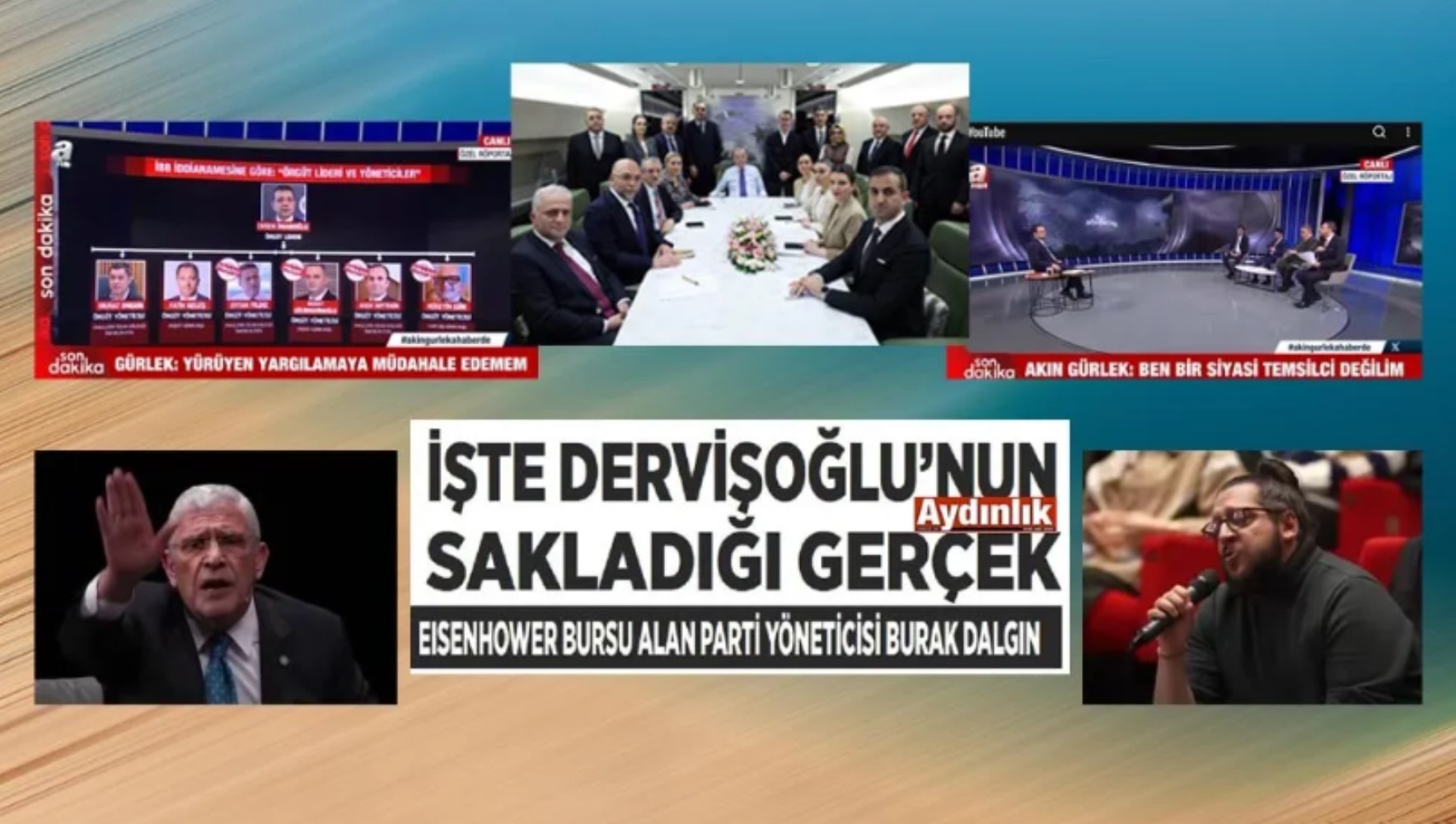
A journalist asks to get information. However, the journalists on the program on A Haber, which Akın Gürlek attended on the third day of his appointment as Minister of Justice, were not seeking answers to their questions.
You would think the Minister of Justice was chatting with his friends, not journalists. Especially Abdurrahman Şimşek kept explaining “how solid the IMM indictment was” and “how proactive Gürlek was as a prosecutor.” At one point, he completely forgot that he was a journalist:
“Ekrem İmamoğlu also has a espionage case. There are very serious allegations in the indictment. Information being provided to foreign intelligence organizations… The election is being won by Hüseyin Gün, who is connected to British, Israeli, and American intelligence.”
It was too much even for Gürlek, who said, “Mr. Abdurrahman, the questions you ask can be misunderstood. It would not be well-received for me to say anything about the trial process,” and closed the subject.
To cut a long story short, this program on A Haber was striking in terms of showing that partisan journalists cannot ask questions. An example of this also occurred on the plane on the return from President Erdoğan’s Ethiopia trip. A journalist whose name was kept secret said exactly this to Erdoğan:
“We have witnessed many times that the CHP conducts politics with a language of threats, blackmail, and insults. But at the point reached, the CHP Chairman insulted the mayor of his own party. Afterwards, CHP deputies attempted to attack the swearing-in ceremony of ministers in our Grand National Assembly. How do you evaluate the point that the main opposition is trying to carry politics to?”
Undoubtedly, this journalist was not seeking an answer either. He had just gone overboard while fulfilling his role on the plane. Of course, Erdoğan, receiving the pass he was already expecting, made heavy accusations against the CHP and Chairman Özgür Özel.
The program on A Haber and the Presidential plane are negative examples in the name of journalism. In recent days, we have also witnessed a positive example, which took place on Babala TV.
Ercan Deniz Küçük from Sol Haber’s words, “You state that you and your party are against imperialism. You have an executive who received an Eisenhower scholarship from America,” angered Good Party (İyi Parti) Chairman Müsavat Dervişoğlu. He shouted before even letting him finish the question and tried to humiliate Küçük.
Küçük, on the other hand, did not lose his composure. His question was later confirmed by statements made by the party. Deputy Chairman Burak Dalgın had received an Eisenhower scholarship.
Politicians struggle like this when they encounter real journalistic questions. If impartial journalists could face Erdoğan and Gürlek, who knows what would happen, what we would learn?
In a single sentence:
• While a drug operation was being discussed on TGRT’s “Taksim Meydanı” program, it was written on the screen “Murat Dalkılıç (vocalist of the band Duman / 17.6 grams of marijuana substance was seized)”; however, the vocalist was Kaan Tangöze; it was alleged that there were drugs in his house.
• Hürriyet, in its report “How did Tülay come out of the hospital ‘healthy’,” did not name the accused hospital nor did it take an opposing view.
• Sözcü quoted Hürriyet’s report “The venue owner’s excuse is the mafia” without citing it, with the headline “The mafia that took over the restaurant set a trap for those who came.”
• Odatv gave two separate pieces of information that contradicted each other by putting the “odatv special” logo on top and “Advertorial” at the bottom of its headline “It will add flavor to Ramadan tables.”
• The Cumhuriyet newspaper, which is in economic difficulties, announced that it “felt the need to lean on its readers” once again and increased its price to 30 liras.
• Yeni Şafak engaged in covert advertising by allocating three full pages under the “Health” headline to a private eye hospital at three-day intervals.
• Deputy Minister of Family and Social Services Zafer Tarıkdaroğlu obtained an access block on 258 links where Timur Soykan’s report “They made the state a toy for their nephew” was published and shared.
FOR YOUR CRITICISM, COMPLAINTS, AND SUGGESTIONS: [email protected]
Most Read

Striking picture for Özgür Özel's 'New Party'

Özgür Özel gives a dated response regarding the number of resignations

Forest fire in Antalya brought under control

The PKK opening and Özgür Özel’s path!..

How did the newspapers view Özgür Özel's farewell to the CHP?

He killed his wife by slitting her throat: Their children witnessed the moments

What did the CHP do?

Özel’s new party move in the world press

The New CHP, against CEHAPE

Fire at TUSAŞ engine factory in Eskişehir under control