



Once again, laziness has dominated the media. The failure to implement the Constitutional Court's decision on Can Atalay was simply labeled a “judicial crisis.” In addition to the pro-government media, much of the opposition media—from FOX TV to Halk TV, and from Artı Gerçek to Cumhuriyet—used the same definition for this issue.
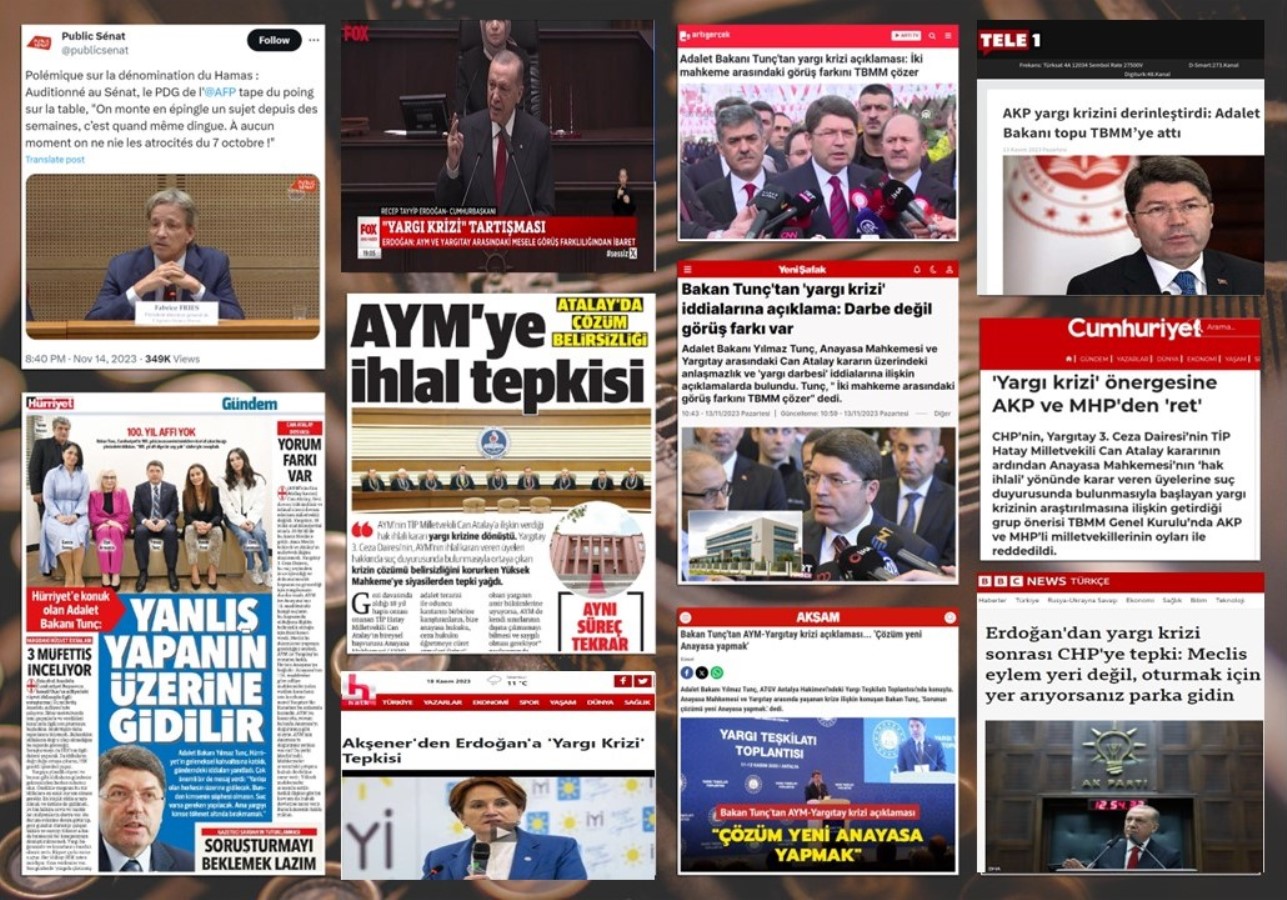
However, if the question “How did the crisis begin?” were asked, it would be seen that the issue between the courts is not merely a conflict between two judicial bodies. Let me remind you, the crisis did not begin with the Constitutional Court's decision, but with Can Atalay being elected as a deputy for Hatay. Government spokespeople took a stance against Atalay's release from the very beginning. The first sign that the Constitutional Court's violation ruling would not be followed also came from Minister of Justice Yılmaz Tunç. He supported the decision of the Istanbul 13th High Criminal Court, which declared it would not comply with the Constitutional Court's ruling. What he said during his visit to the Hürriyet Ankara Bureau was also a harbinger of the decision by the 3rd Criminal Chamber of the Court of Cassation.
We heard the “conflict between high courts” approach first from Minister Tunç, and later from the mouths of President Erdoğan and AKP spokespeople. The statements Erdoğan made while returning from Uzbekistan revealed that the political power's will was behind the refusal to release Atalay and the Court of Cassation's opposition to the Constitutional Court's ruling.
Therefore, what is happening is not a crisis, a scuffle, or tension within the judiciary, but a “political crisis.” More precisely, a “crisis of interference in the judiciary.” It is natural for the AKP, which wants to use this political crisis for constitutional change, to want to present it to the public as a conflict between high courts. But journalism, when defining an event, should not use the language of politicians, especially that of the government.
Look, AFP's reporting on Gaza is heavily criticized in Turkey, and there are valid aspects to these criticisms. But the same AFP is facing accusations of “fueling antisemitism” in its own country. Its CEO, Fabrice Fries, emphasized in his speech at the Senate while responding to the accusations that defining Hamas as “an organization recognized as a terrorist organization by the EU, the US, and Israel” instead of just a “terrorist organization” was “a requirement of independent and impartial broadcasting.”
In a statement published in Le Monde, Fries also recalled Charles Péguy's words regarding the Dreyfus affair: “We must say what we see. More importantly, which is more difficult, we must bear witness to what we see.”
Fries is quite right to oppose political pressure regarding the use of adjectives for Hamas. Journalism should use its own language, diagnosis, and definition, not the language of politicians. One cannot stand on the side of the truth by using the language of political power.
SPEAK IN FRONT OF THE CAMERAS
The pro-government media was in a state of enthusiasm that day with headlines like “Turkey effect on historic declaration,” “Key country Turkey,” and “OIC moved from condemnation to action.” TV representatives were fervently explaining President Erdoğan's influence on the declaration of the Organization of Islamic Cooperation and Arab League Joint Summit.
You would think such important decisions were made in Riyadh that Israel was forced to stop its attack on Gaza immediately. And undoubtedly, the biggest share of this belonged to President Erdoğan! Yet, the stance of Saudi Arabia, Morocco, the UAE, and Bahrain, which opposed the decision to impose an embargo on Israel at the summit, had been decisive; what was written in the declaration did not go beyond words. Only Turkey reported the obstruction by these four countries in the pro-government media; the others did not report the influence of these countries.
The interview conducted on the plane by journalists who went to Riyadh under Erdoğan's wings was the kind that would be taught in communication faculties as a bad example. They could not ask about Erdoğan's meeting with Egyptian President Sisi, whom he had previously called a “murderer,” “tyrant,” and “putschist,” or about his friendly posing and showering of praise. They could not bring up the fact that Erdoğan appeared in the same frame for the first time in years with Syrian President Assad, whom he had called a “villain,” “tyrant,” and “terrorist.” They were able to ignore two such important changes.
Upon returning from Germany, they could not remind Erdoğan, who spoke about changing the “50+1” rule in the presidential election, of the “maximum two-term limit” rule in the Constitution.
Instead of hanging their heads in shame for what they failed to do, they even take souvenir photos with Erdoğan. Go ahead and conduct those plane interviews in front of the cameras so everyone can see your journalism.
SMART CANCER DRUG AND PEDDLING HOPE
The news titled “Historic step in cancer: It will be the ‘first domestic targeted cancer drug’” by DHA was also published by Sözcü, Milliyet, and Karar with decorations of “historic step” and “good news.”
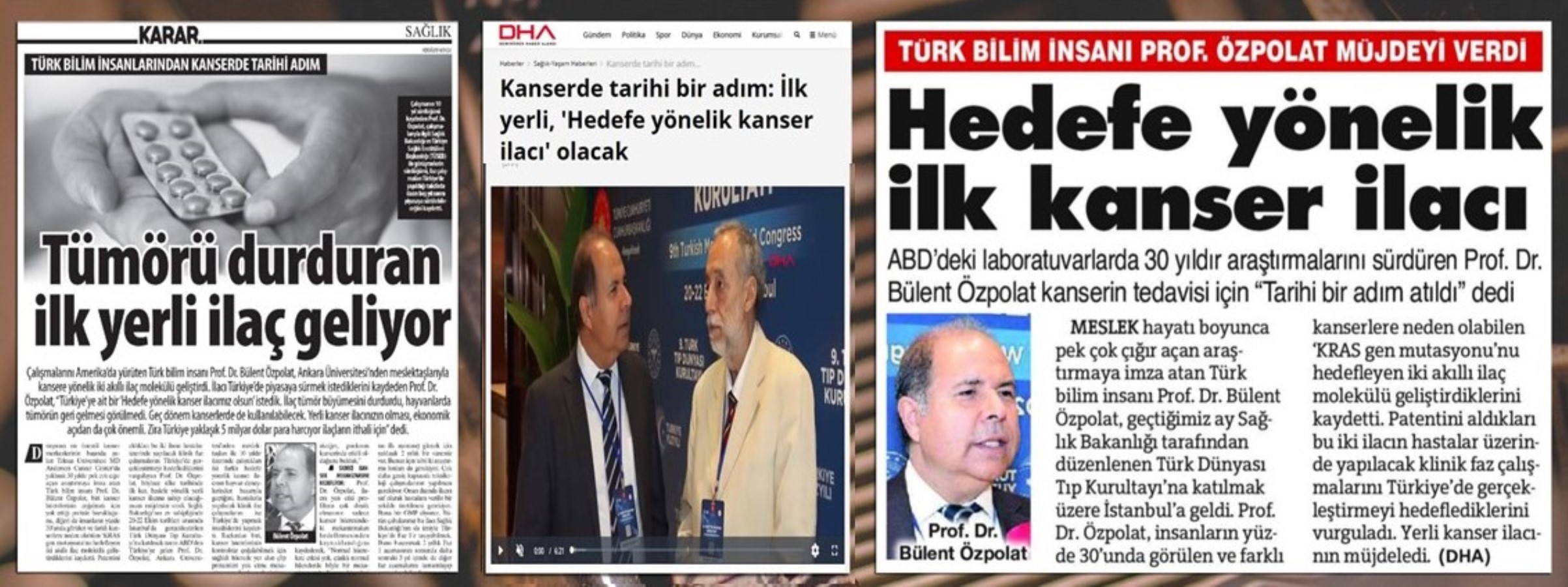
Prof. Dr. Bülent Özpolat, who works at the MD Anderson Cancer Center at the University of Texas, had come to Istanbul to attend the Congress organized by the Ministry of Health and explained his work to DHA there. Özpolat was saying that “they had received the patents for the two smart cancer drugs they developed in the US, but they would conduct clinical trials on patients” in Ankara, and that “Turkey would become the owner of a domestic targeted cancer drug.”
However, in his previous interviews, Özpolat never mentioned conducting the clinical trials of the drug in Turkey. In an interview he did with DHA three years ago, he was saying, “We will first test it on resistant cases, which we call the terminal stage. Then we will apply to the American Food and Drug Administration (FDA). The purpose of the fund given to us is to turn this study of ours into a drug.”
What changed in these few years that Özpolat decided to conduct the clinical trials in Turkey? Could it be that clinical trials on patients in the US are bound by strict rules, or that he could not find financial support there? I wish these questions had also been asked to Özpolat.
But the DHA reporter could not ask questions that scrutinized what was being said and was content with holding the microphone for Özpolat. The newspapers and websites that used the news also did not make any editorial effort. This is a deficiency frequently encountered in health news.
Publishing research that has not even reached PHASE 1 trials with headlines like “historic step” and “good news” is misleading. The molecule found may not turn into a drug after years of PHASE 2-PHASE 3 trials on volunteers and patients. It cannot be accepted as an effective drug yet, as in Karar's headline “The first domestic drug that stops the tumor is coming.”
Therefore, publishing cancer research with such hopeful headlines is pure peddling of hope. Cancer patients are being given hope for no reason. This is also a matter of conscience.
“1 TOGG EVERY 3 MINUTES” WAS AN EXAGGERATION
When President Erdoğan said, “1 vehicle is produced every 3 minutes at the TOGG facilities in Gemlik, which the opposition says ‘has no factory.’ 28 thousand this year,” the calendar showed April 24, 2023. The election had not yet been held; TOGG was one of the AKP's election trump cards.
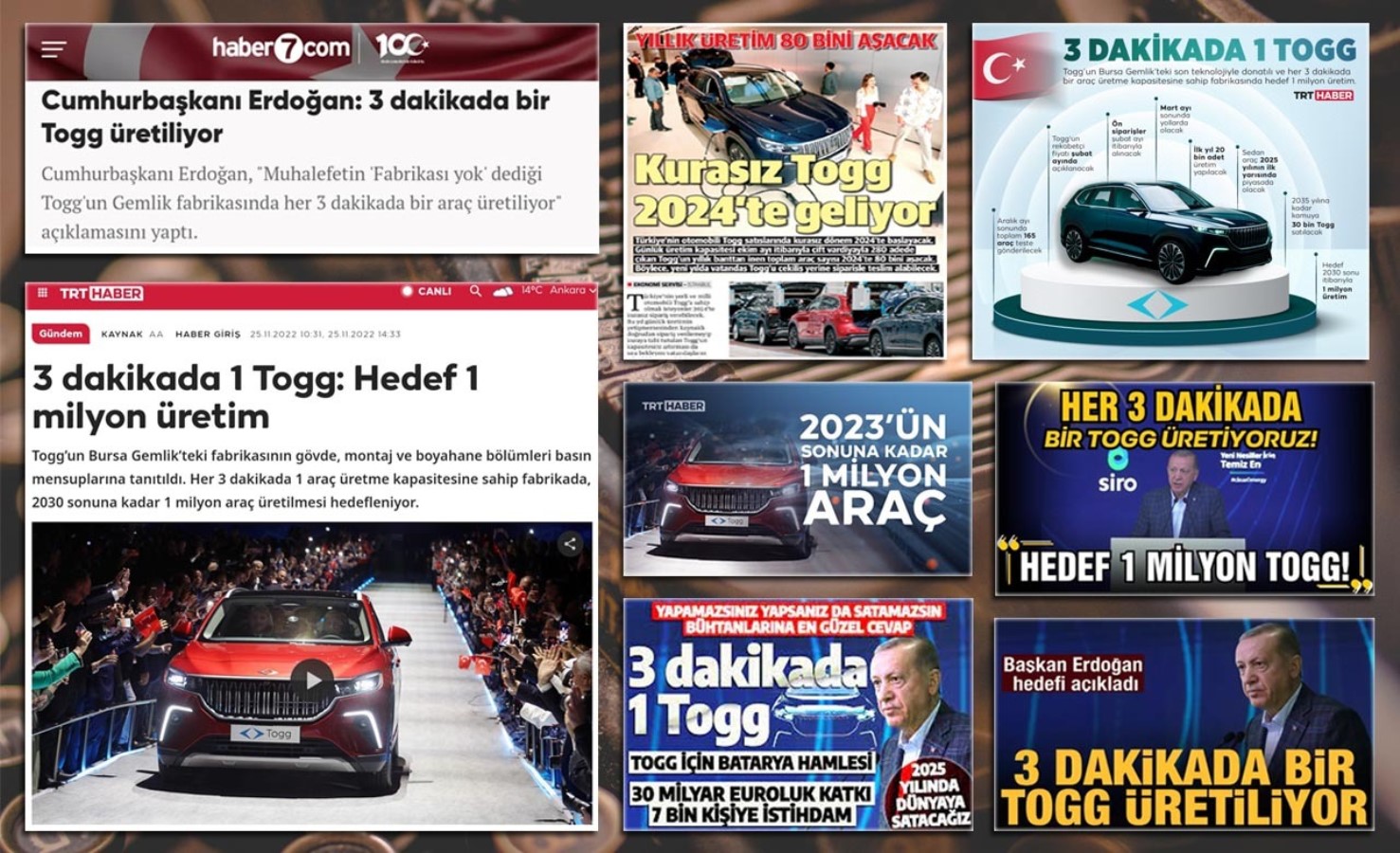
Erdoğan's words “a TOGG every 3 minutes” were used in headlines in the pro-government media; they were repeated frequently in the news. However, even the journalists who toured the factory did not investigate this “legend.”
Months have passed since the elections. Now, the pro-government media and TOGG officials have forgotten the “1 TOGG every 3 minutes legend” and are talking about new records. In TOGG's post on November 1, it was stated, “3,567 T10X in October, and a total of 9,171 T10X have met with our users since May.” The number of vehicles produced in September was also given as 2,204.
So what does this mean? Neither could 1 TOGG be produced every 3 minutes, nor did 28 thousand vehicles leave the factory!
The actual production numbers were inflated quite a bit before the election! Those who acted like propaganda officers instead of journalists deceived people by relaying exaggerated numbers without asking or questioning.
And they are still continuing to inflate them. In the news “Draw-free TOGG is coming in 2024” five days ago, Yeni Şafak gave the good news that the daily production capacity had reached 280 last month! But somehow, that daily production capacity is not confirmed by the statement made by TOGG...
FISHING FOR INVESTORS WITH REPEATED NEWS
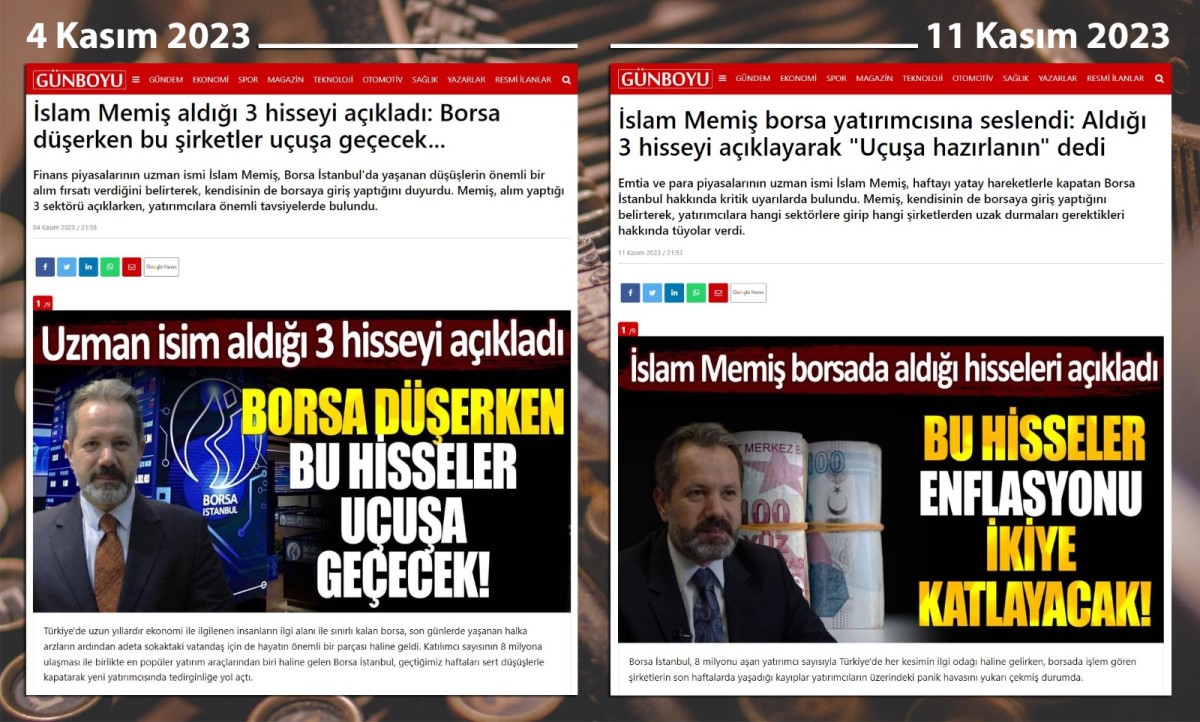
The news titled “İslam Memiş addressed stock market investors: By announcing the three stocks he bought, he said ‘Prepare for takeoff’,” was published on the site called Günboyu on November 11, and Gerçek Gündem and other sites had copied it from there.
Contrary to the headline and the spot, İslam Memiş was not announcing “the stocks he bought.” On the contrary, in the 8th section of the news, which was divided into 10 parts with various visuals to ensure the reader stayed on the page for a long time, it was said, “Memiş, who did not explain in detail the stocks he bought in order to prevent manipulation.” It was understood that a headline that did not reflect the content of the news had been used.
Furthermore, it was stated that Memiş “shifted his investments to the defense industry, technology, and food sectors.” It would be manipulation for an expert who makes analyses on the stock market, finance, and gold to buy stocks and comment on them. But I watched İslam Memiş's videos, and there was no statement from him that he had bought stocks.
While scanning the news, I noticed that a similar version of the news published on Günboyu on November 11 had also been used on the same site on November 4. The headlines and visuals of the two news items published seven days apart were exactly the same; there was very little difference in the content.
Similar analyses attributed to İslam Memiş have been published many times before on this site belonging to the Yeniçağ group. Unfortunately, news sites can publish such manipulative, bogus news to hunt for readers on stock market and finance topics, just like they do for retirees. When one publishes it, dozens of sites copy it and put it into circulation. In this method, which lowers the level of journalism, SEOs, that is, reader-hunting experts, are more effective than journalists. The new problem of journalism...
In a single sentence:
- Yeni Akit, as it has done to other democratic figures before, showered insults on journalist and presenter Metin Uca, one of the bright faces of our country, in the news of his death; it spewed hatred.
- Milliyet's news “Workers cannot be found for 50 thousand TL salary” did not mention unemployment rates, the increase in work accidents, or that the most work accidents occur in construction.
- Reporting the exit of an international company like BP from the Turkish market as “Petrol Ofisi bought BP Turkey” was a striking example of press release journalism.
- DHA protected those responsible by not writing the name of the Mesam Private Dental Clinic in Bursa in the news of “5-year-old child's death after tooth extraction” and the subsequent investigation, which was used exactly the same in all media; İHA, on the other hand, clearly wrote the name of the clinic in its second news item.
- While The Guardian, Sputnik, and DW were reporting the news of “Tool bag lost by astronauts in space,” Türkiye newspaper used the sexist headline “Scandalous mistake by female astronauts in space.”
- The photo of the “burning worker” used in the news “Wealth to the boss, death to the worker” in Evrensel was traumatic despite being slightly blurred; it contained violence pornography.
- Sözcü's news “3 lira hike on raw milk reflected on the shelves” did not contain the new price of milk.
- Karar, Takvim, and Türkiye used Milliyet's news “Here is the tip-off letter that burned the Polats” without citing it as a source.
- Korkusuz reported the interview “How I got rid of being a ‘Kedicik’” that Moroccan model İman Casablanca gave to Alev Gürsoy Cimin from Posta without citing it as a source.
- Sabah writers went to Erzurum last week after Manisa, Bolu, Ordu, Tuzla, Üsküdar, and Gaziantep under the name of “City Meetings” to contribute to the newspaper's advertising revenue.
- Sözcü's headline “Lightning struck the Yavuz Sultan Selim Bridge” was wrong; the lightning did not strike the bridge but near the bridge.
FOR YOUR CRITICISMS, COMPLAINTS, AND SUGGESTIONS: [email protected]
Most Read

Striking picture for Özgür Özel's 'New Party'

The PKK opening and Özgür Özel’s path!..

How did the newspapers view Özgür Özel's farewell to the CHP?

He killed his wife by slitting her throat: Their children witnessed the moments

What did the CHP do?

Özel’s new party move in the world press

The New CHP, against CEHAPE

Fire at TUSAŞ engine factory in Eskişehir under control

From self-efficacy to despair

Kılıçdaroğlu's first message on Özgür Özel's new party announcement