



It caught my attention on Posta columnist Şirin Sever’s Instagram account. She moderated the two-day “Brand Conference.” Other journalists and TV programmers also took the stage at the conference; Çağdaş Ertuna, Ayşe Arman, Duygu Demirdağ, Deniz Bayramoğlu, Elif Ergu Demiral, Songül Hatısaru, Kübra Par, Mehmet Akif Ersoy, Aysun Öz…
The “Crypto Fest,” which I noticed through warnings from followers on social media, is an organization similar to the “Brand Conference.” Journalists Murat Muratoğlu, Fatih Altaylı, Emin Çapa, Özlem Gürses, and Uğur Gürses were also participating in this festival organized by a cryptocurrency platform.
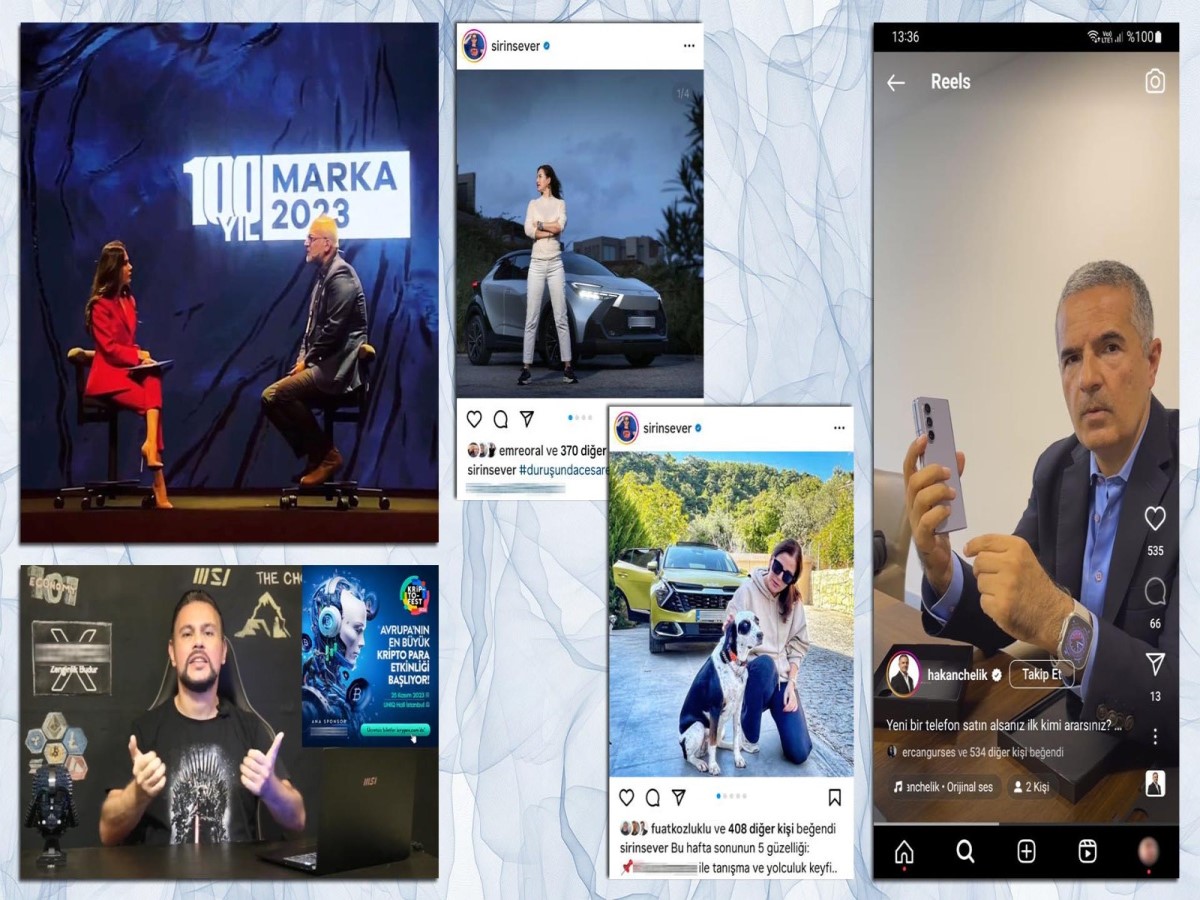 Why do journalists participate in such commercial organizations? I don’t think there is any justification for them to take that stage from a journalistic perspective. If they are being paid, this is also a problematic situation from an ethical standpoint. Entering into financial relationships with companies that are news sources creates a conflict of interest.
I could not obtain concrete information regarding speaker fees, but I came across automobile advertisement posts on Şirin Sever’s social media account. Under a photo taken in front of a new car model, she wrote, “I met this baby over the weekend.” She listed the car’s features and added #advertisement #launch tags at the very end!
Last month, under a photo she had taken in front of another car in the Kaz Mountains, she wrote, “Meeting with K… and the joy of the journey.” There is no advertisement tag, but she tagged the car brand.
Posta Ankara Representative Hakan Çelik was also talking at length on his Instagram account about the foldable mobile phone he “said he had just bought.” He did not add an “advertisement” tag, but he was praising the phone by naming the brand. He even defended the phone against a follower’s criticism.
I have written many times before about the drawbacks of journalists taking part in paid work and doing advertising; it is also included in the Turkey Journalism Rights and Responsibilities Declaration. A journalist should not use the credibility brought by their profession to market a commercial product. Because a journalist who praises a brand or company for money today opens the door to writing about other topics for money tomorrow; at the very least, it creates such a perception among their news sources and audience.
What I really don’t understand is why professional journalism organizations are content with just watching these paid jobs? Do they find it right for journalists to be so involved in paid work, or are they hesitant? If they would state their views, we could at least discuss and talk about this issue…
THIS WEEK’S FREEBIE TRIPS
While some of our journalist friends are subjected to insults and targeting by politicians, other journalists were on trips to Detroit, London, and Berlin last week at the invitation of companies. During my daily scans, I came across news reports regarding three company trips.
British American Tobacco’s Turkey representative took journalists from the newspapers Dünya, Ekonomi, and Sabah, as well as the site Patronlar Dünyası, to the “E-cigarette Summit” in London. The invited journalists were content with relaying what BAT Turkey executive Murat Güven said rather than what was discussed at the summit. While advocating for the legalization of e-cigarettes in Turkey, they did not emphasize the harm of such products - except for Patronlar Dünyası - and did not include opposing scientific views. This is exactly the kind of coverage international tobacco monopolies want anyway.
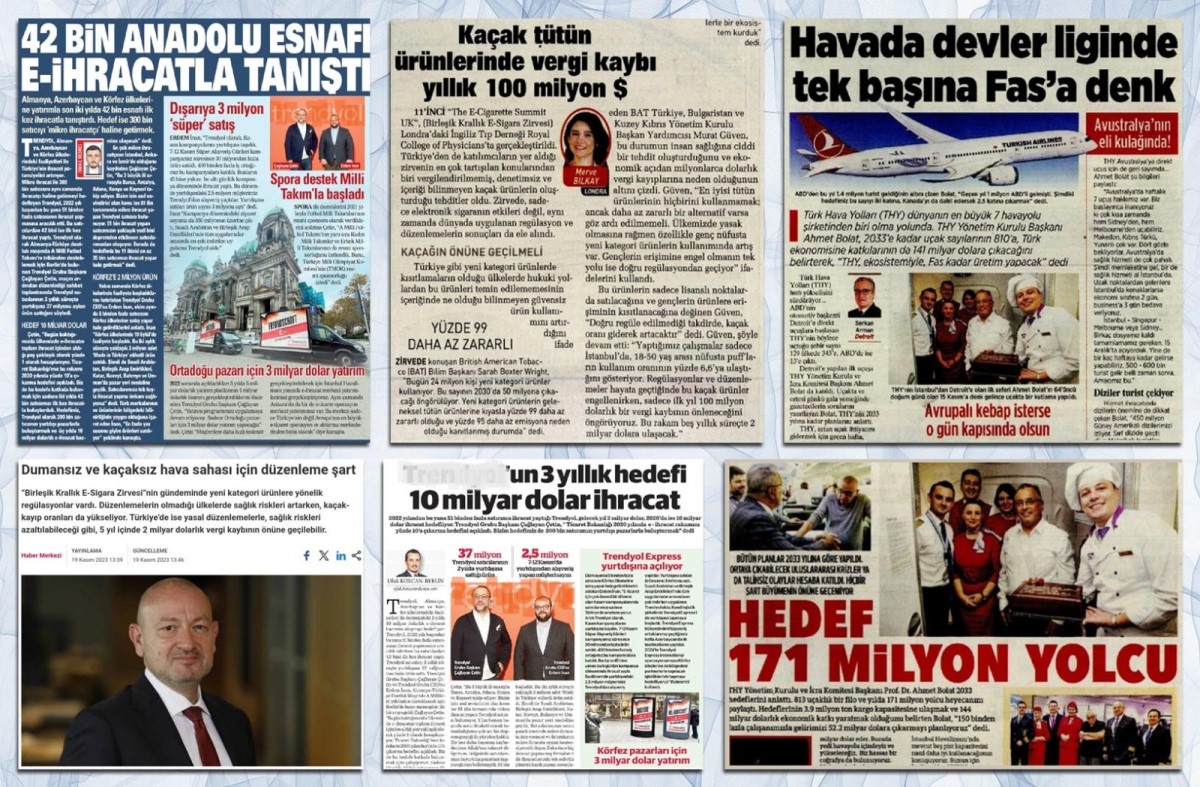
E-commerce company Trendyol also invited journalists from Akşam, Habertürk, Türkiye, Dünya, Ekonomim, and Milliyet to Berlin to watch the Germany-Turkey friendly match. The journalists, who did not mention the match, only wrote what Trendyol executives Çağlayan Çetin and Erdem İnan said about their company. Actually, they didn’t need to go to Berlin to relay those words. Indeed, all the texts were similar to each other, and the same photo was used in all of them. In fact, the same news had already been published by DHA, taken from a press release and datelined Istanbul!
THY (Turkish Airlines) also took journalists from AA, Hürriyet, Haber7, Milliyet, Posta, and Sabah to Detroit on the occasion of the start of direct flights. The invited journalists, who went to the USA on the inaugural flight, mainly relayed what THY Chairman of the Board Ahmet Bolat said. In all of them, a photo taken with the team that prepared a birthday cake for Bolat was used.
In the end, what is written from these trips serves the inviting companies, not informing the public. If that weren’t the case, why would they go to the expense of taking journalists on trips to America and Europe?
DOUBLE STANDARD FOR IMPRISONED JOURNALISTS
I received two letters from Sincan Prison. Journalists Dicle Müftüoğlu and Sedat Yılmaz, who have been imprisoned for seven months, complain about the indifference of the media and their colleagues toward them.
Dicle Müftüoğlu is the Co-Chair of the Dicle Fırat Journalists Association. She has been imprisoned since May 3 and her first hearing is on December 7. A short excerpt from her letter, which she concluded by saying, “We expect all our colleagues to defend this profession regardless of our identity”:
“I was detained in 2016 while reporting on people staying in tents while the curfew was ongoing in Şırnak. The police officer who detained me said, ‘You are meeting with people who badmouth the state here. I won’t let you report.’ In fact, the indictment prepared against me is the putting into writing of what that police chief said that day.
This state of arrest is a situation we frequently encounter as Kurdish journalists. Therefore, we are not surprised. Of course, freedom of the press will continue to take a hit in an environment where the reaction against this is not unified, remains isolated, and there is silence when the person arrested is Kurdish. In the cases we are tried in, we are trying to defend journalism.”
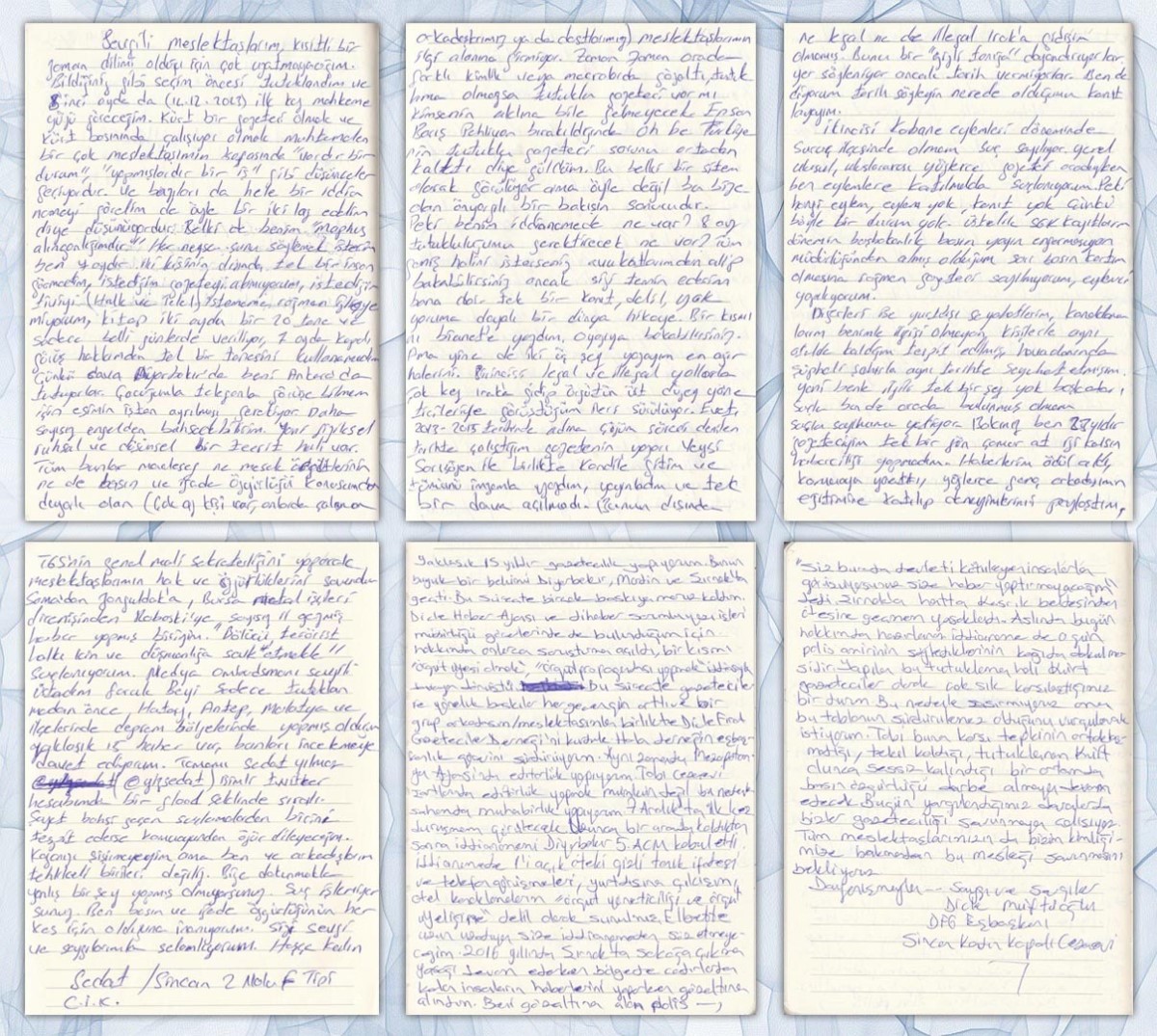
Sedat Yılmaz, like Dicle Müftüoğlu, is an editor for the Mezopotamya News Agency. He was also arrested on May 3 and his first hearing is on December 12. Yılmaz began his letter by saying, “Because I am a Kurdish journalist, thoughts like ‘there must be something to it’ are likely passing through the minds of many of my colleagues. Perhaps this is my prisoner’s hypersensitivity.” Stating that he has been in solitary confinement for seven months, he continues his letter in summary as follows:
“Unfortunately, none of this falls into the area of interest of professional organizations or my colleagues who are sensitive about freedom of the press and expression. From time to time, if there were no detentions or arrests in different identities and channels, imprisoned journalists would not come to anyone’s mind.
This might be seen as a grievance, but it is not. It is the result of the prejudiced view toward us. So what is in my indictment? I assure you there is not a single piece of evidence. It is a world of stories based on interpretation. I have been a journalist for 23 years. My reports have won awards, I have participated in the training of hundreds of young people and shared my experiences.
My dear master, the media ombudsman, I invite you to examine the 15 reports I made in the earthquake zones. If you detect one of the mentioned accusations, I will apologize to the public. My friends and I are not dangerous people. You are not doing anything wrong by touching us. You are not committing a crime.”
I summarized these letters to be able to empathize with them. Dicle Müftüoğlu and Sedat Yılmaz are not wrong. Although international journalism organizations follow with interest, our national and local professional organizations have a double standard toward Kurdish journalists who are detained and arrested. Let alone a reaction, their news is not even published in the mainstream media. For example, the release of 18 journalists detained in the Diyarbakır-based media operation after 13 months of imprisonment and their second hearing on November 9 could only be reported in three or five places.
Indifference and lack of ownership toward the trials of Kurdish journalists also mean accepting the accusations of “membership and leadership of an organization” directed at them in advance. Yet, journalists arrested in the west of the country are also mostly faced with non-journalistic accusations.
Therefore, we must approach without losing objectivity and not leave any journalist who is being tried due to their professional activities alone. Of course, while reserving all our rights to criticism and objection…
EXPOSURE ON SOCIAL MEDIA
The post made by accounts on social media such as Aykırı, Dokuz8 Haber, Haberlog, Solcu Gazete, İbrahim Haskoloğlu, Nesrin Nas, TX Haber, and Gdh before the voting concluded in the Netherlands election, claiming “Dilan Yeşilgöz has become prime minister,” had nothing to do with the facts.
Haskoloğlu’s defense that “he made a deliberately false post to expose those who steal his news” is not enough to cover up his mistake. Because Haskoloğlu is not the one exposing, but the one being exposed.
Haskoloğlu did not correct the false post himself. He deleted it only after warnings from other accounts and after being reported to CİMER, and that was the next day.
Furthermore, a person who introduces themselves as a journalist cannot, and should not, spread false information for any reason. Lies and journalism cannot stand side by side.
In one sentence:
-
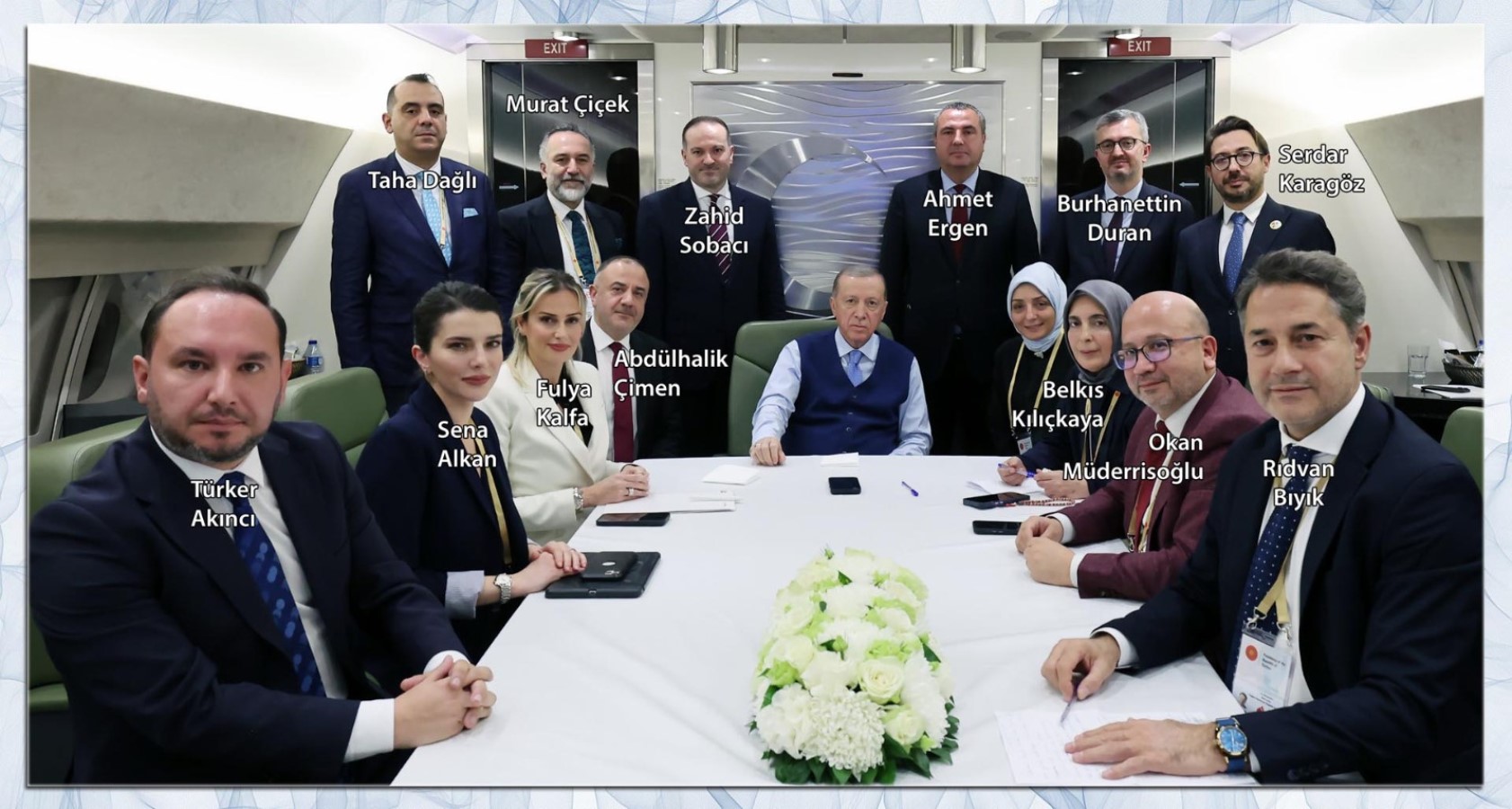
Journalists who followed the Algeria trip as guests, Türker Akıncı, Taha Dağlı, Murat Çiçek, Fulya Kalfa, Abdülhalik Çimen, Ahmet Ergen, Burhanettin Duran, Belkıs Kılıçkaya, Okan Müderrisoğlu, Rıdvan Bıyık, and Sena Alkan, did not or could not ask President Erdoğan about the “50+1 rule change” on the agenda during the conversation on the plane.
-
-
Communications Director Fahrettin Altun’s speech at the “Strategic Communication Summit” was broadcast live on NTV, CNNTürk, Habertürk, Global, TV100, AHaber, TRT Haber, Ülke TV, TVNet, Kanal B, and TGRT.
-
In the news reported by DHA and used by Evrensel, Hürriyet, and Sözcü, the surname of the child found in the squalid house, which was written in code, was exposed by writing the mother’s surname openly.
-
Two attackers who shot at journalist Yaman Kaya, who has been writing about zoning corruption in Bursa for a long time, while he was driving his vehicle, were caught but released with “house arrest.”
-
Yeni Akit published a news report full of lies, such as that the entire congregation in the mosque participated in and booed the provocation of two madmen during journalist Metin Uca’s funeral prayer.
-
Kanal D mediated the promotion of an aesthetic center owner, Dr. H.A., in the news “Her sister resembled Seda Sayan with aesthetics”; the doctor also advertised by sharing the operation on Instagram.
-
The part of Foreign Minister Hakan Fidan’s speech in the Turkish Grand National Assembly where he admitted that political decisions were made in the Selahattin Demirtaş, Figen Yüksekdağ, and Osman Kavala cases was not reported in the pro-government media.
-
Yeni Şafak published Labor Minister Işıkhan’s statement containing negatives regarding minimum wage earners as if it were good news, with the headline “Signal for one raise per year for minimum wage.”
-
There was no source for the data in Yeni Şafak’s news “2 billion lira savings with permanent daylight saving time.”
-
Akşam columnist Hikmet Genç showered German journalist Michael Fischer, who asked President Erdoğan a question in Berlin, with insults, calling him a “dingil” (idiot/jerk) and saying, “You itched a lot and Erdoğan scratched you.”
-
In the “Torture gang” news of Akşam and Sözcü, the torture inflicted on a person was relayed in detail, producing “violence pornography.”
-
Akşam, Hürriyet, Türkiye, Yeni Akit, and Yeni Şafak published the text advertising the Konya Metropolitan Municipality as a full-page news story without adding the “This is an advertisement” warning.
-
Sabah newspaper columnists, who went to Ordu in October last year to contribute to the newspaper’s advertising revenue under the name “City Meetings,” were in Ordu and Bursa again last week.
FOR YOUR CRITICISM, COMPLAINTS, AND SUGGESTIONS: [email protected]
Most Read

Striking picture for Özgür Özel's 'New Party'

The PKK opening and Özgür Özel’s path!..

How did the newspapers view Özgür Özel's farewell to the CHP?

He killed his wife by slitting her throat: Their children witnessed the moments

What did the CHP do?

Özel’s new party move in the world press

The New CHP, against CEHAPE

Fire at TUSAŞ engine factory in Eskişehir under control

From self-efficacy to despair

Kılıçdaroğlu's first message on Özgür Özel's new party announcement