



The rumors began after CHP Chairman Özgür Özel broke his foot falling down the stairs at his home in Manisa about two months ago.
Özel was forced to make a statement to refute the rumors by publishing an X-ray of his foot. Once the X-ray was released, the rumors were suppressed, and writer Abdurrahman Dilipak and social media trolls stopped pushing the claim that he had been 'shot in the foot'.
It turns out the rumors had not ended; they had branched out and grown even further beneath the surface. Ebru Küçükaydın, a writer for a local news site in Antalya, took the rumors a few steps further in an article titled 'Was the Özgür Özel knot untied in Şehzadeler?', alleging that Özgür Özel was in a relationship with the Mayor of Manisa's Şehzadeler district, Gülşah Durbay.
Küçükaydın had penned a detailed scenario, but she continued the piece, which she began by saying 'rumors reaching my ears,' with phrases like 'allegedly,' 'even if it is a claim, it is being discussed in the corridors,' and 'gossip.' Most interestingly, she concluded her article with the sentences, 'I do not want to believe that the allegations are true,' and 'I hope that Özel will respond to the allegations to dispel the rumors and... inform the public with accurate information.'
As expected, only Yeni Akit took the serious accusations based on backstage gossip and claims seriously, headlining it with, 'They brought him in with money, they will take him out with his zipper.' After that, the rumors spread to news sites and social media. Some 'YouTuber journalists' also jumped on the bandwagon.
What stopped the rising wave of gossip was Gülşah Durbay's video statement. Durbay's extremely clear words, in which she explained her illness and stated that she had filed a criminal complaint against the slander, were effective. Durbay's statement was reported everywhere.
At first, the pro-government media also approached the gossip about Özel and Durbay with careful language. But a day later, led by Y. Akit and Y. Şafak, they all intervened with headlines such as 'The fight in the CHP has hit below the belt,' 'A Baykal-style operation on Özgür Özel,' and 'The shadow of İmamoğlu on the operation against Özel'...
It is a contradiction for Ebru Küçükaydın, who talks about her 'journalistic duty,' to write down gossip and allegations despite admitting that they are not based on verified information.
Journalism is a profession of reporting facts, not spreading gossip. A journalist is obligated to prove what they write. Writing rumors you are not sure are true under the guise of 'backstage information' or 'allegedly' cannot be considered journalism; the words 'backstage' and 'information' cannot be placed side by side. A journalist takes a rumor or claim heard backstage as data. They investigate, ask the relevant parties, and if they can verify it, that rumor turns into information; only then can it be reflected in a journalistic product.
Unfortunately, it has become fashionable in the media to write unverified gossip as 'backstage information' or 'allegedly' and to recount them on TV. It seems Ebru Küçükaydın, relying on this common error, has adopted the comfortable attitude of 'I will write the gossip and let the relevant parties deny it,' but that is not how journalism works.
Furthermore, Ebru Küçükaydın is a CHP member who has previously been a candidate for parliament and the Party Assembly. Now, her expulsion from the CHP is being sought due to her article.
When journalism and party affiliation are pursued together, it is inevitable that internal party scores and gossip will become intertwined with the facts. One cannot be both a journalist and a party member.
Milliyet did not stand up for Abdi İpekçi
Abdi İpekçi, one of the legendary figures in the history of the press, was the editor-in-chief of Milliyet when he was murdered in 1979. It is expected that all media organizations would object to any negative initiative taken against his name. Naturally, this duty belongs primarily to Milliyet.
However, in Milliyet's report titled 'The strongest step for Istanbul' regarding the opening ceremony of the Basketball Development Center, which was built after the 'Abdi İpekçi Sports Hall' was demolished, there was not even the slightest mention of the issue, let alone a reaction to the erasure of Abdi İpekçi's name.
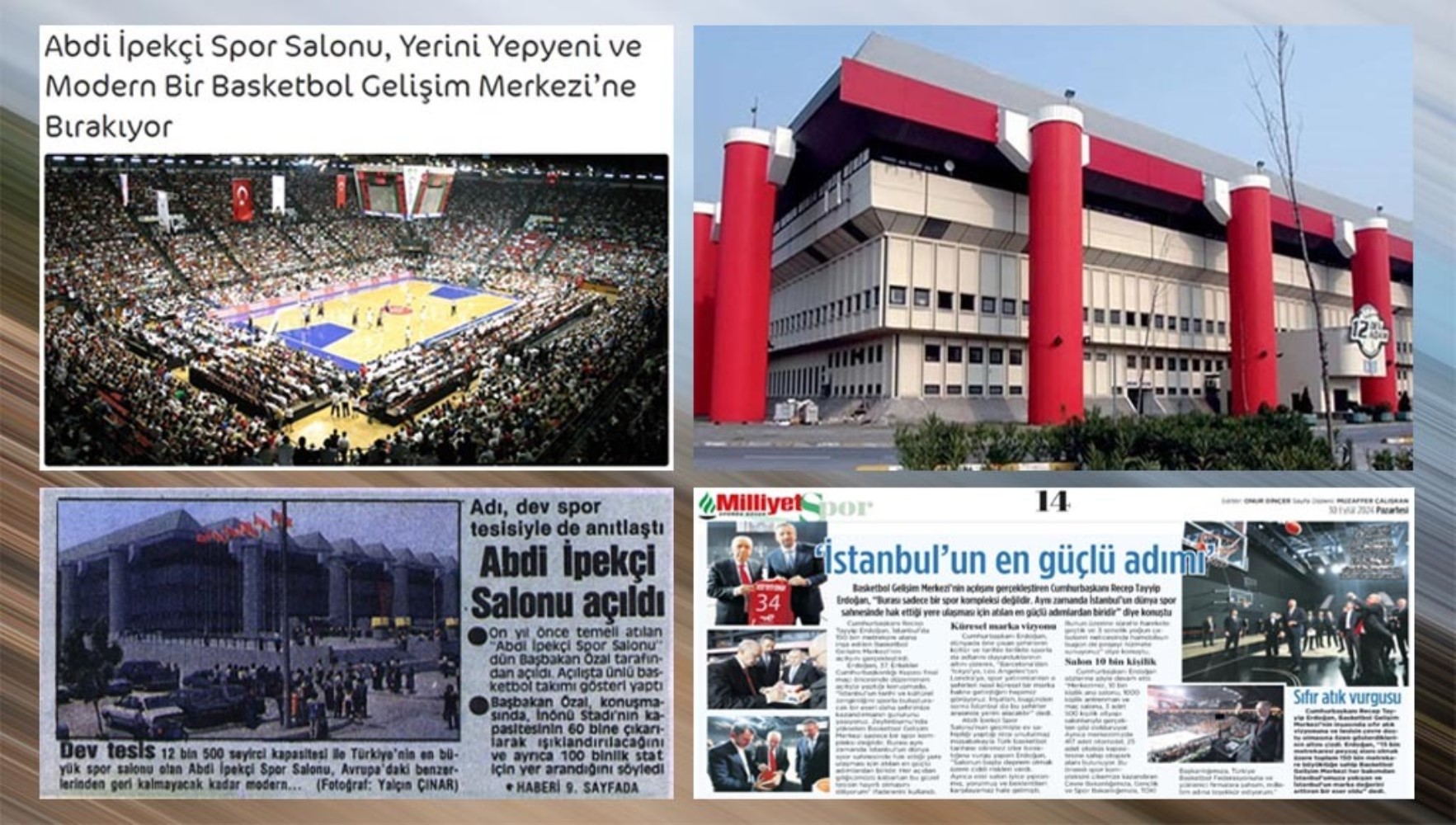
Following reports published in Cumhuriyet and Halktv.com.tr that Abdi İpekçi's name had been removed from the arena, the Turkish Journalists Association also issued a statement expressing its reaction. Unfortunately, the Association's statement, which called for this mistake to be rectified, could not even make it into the news in Milliyet.
Naming the arena after Abdi İpekçi, which was founded in the year he was murdered, was very valuable in terms of keeping his name alive. By erasing his name from that facility—as in the headline of Halktv.com.tr—they have 'killed Abdi İpekçi once again.' And Milliyet silently accepted this; what a pity...
A mistake at the BBC and a lesson in journalism
BBC presenter Laura Kuenssberg was set to interview Boris Johnson, who had compiled his memoirs from his time as prime minister into a book. However, while preparing for the interview, she accidentally sent her notes to Johnson as well.
Realizing her mistake later, Kuenssberg said, 'Honesty is the best policy,' shared the situation on X one day before the interview, and explained what happened; she also consulted with BBC management and canceled the interview. This was because the notes included the questions she would ask Johnson during the interview!
This stance by the BBC is quite a luxury for our television stations. In pro-government television channels, during interviews with President Erdoğan and ministers, let alone sending questions in advance, they often determine what will and will not be asked themselves. Unfortunately, most of our colleagues have also internalized the practice of providing questions in advance.
The stance taken after the misfortune at the BBC is valuable in that it reminds us that providing questions to a guest politician in advance detaches the interview from reality and strips it of being a journalistic activity. I hope this incident also speaks to the conscience of our TV programmers.
Censorship on the byline of a dismissed journalist
Latif Sansür is a local reporter who is also known in the mainstream media and whose work transcends his city. Although he resides in Aydın, he is a journalist who produces news from all over the region and has received awards.
Two days before New Year's last year, he was dismissed from his job at Sözcü along with 11 of our colleagues. Latif Sansür was among those who fell under the guillotine of 'cost-cutting' (!). As is well known, these are things that can happen to any journalist in this country.
He was more saddened by the removal of his name from the Sözcü archive than by being fired. His reports, for which he received awards and which were cited by other newspapers and websites, remain in the Sözcü archive, but the Latif Sansür byline is gone! For example, his byline is missing from the report titled '14 patients, including 1 baby, left to die in intensive care during the earthquake.' His byline was also removed from the 'Poison Ship' report that Uğur Dündar showered with praise.
Removing a byline from an archive is the greatest harm that can be done to a journalist. It is truly difficult to understand what kind of objection anyone could have had to the Latif Sansür byline remaining on those reports. I hope there is an explanation or that it was a mistake...
Footage of money counting on screens
A viewer was bothered by the constant use of money-counting footage in economic news on television and asked, 'Why is money-counting footage shown in every economic news report?' They then added, 'Broadcasting images of money at every opportunity is very harmful to our social psychology.'
Who could say that this viewer who emailed me is wrong? Even in decisions regarding the President's economic management appointments, developments related to agricultural policies, inflation rate announcements, and stock market news, a money-counting machine is constantly appearing on the screen. The footage often does not match the news. I think the goal is just to have some footage to fill the screen. That's all.
A viewer named Muzaffer Dinçer is also unhappy that the names of hosts and speakers are not written at the bottom of the screen during TV interviews. Dinçer, who appears to be a keen observer, is also critical of the repetitions:
TV news is mostly prepared by taking the easy way out. For example, are weekly recurring market prices, the effect of the weather on daily life, or absurd videos found on the internet really news?
Events from 2-3 days ago are presented repeatedly and as if they were new, without providing dates or times. Is it correct to display footage of previous face-to-face meetings while reporting on phone calls between national leaders?
We see that news about the murders of women or children is presented with every detail.
Very little space is given to news about art and artists. Is it not disrespectful to bring artists to the agenda only through tabloid news regarding their private lives?
Why should interviews conducted with random people on the street (where the speaker's name and surname are never asked or displayed on screen) be of interest to the entire public?
In a single sentence:
Sabah columnist Okan Müderrisoğlu, one of the 12 journalists hosted and chatted with by businessman Cemal Kalyoncu at the solar power plant in Karapınar, Konya, did not write that Kalyoncu, whom he showered with praise, is the owner of Sabah and thus his own boss.
Pro-government media hid Devlet Bahçeli's threats and targeting of journalists during his MHP group speech—where he said, 'Halk TV and CHP, watch your step. You cannot question the MHP with 4 clowns as reporters'—between the lines; Sabah did not publish it at all.
In Cumhuriyet's report regarding the case against New York Mayor Eric Adams, the information that Arda Sayıner—referred to as the 'Turkish entrepreneur who arranged Adams' second trip to Turkey'—is a Hürriyet columnist was missing.

While the Forensic Medicine report refuted the reports published after the accident with headlines such as 'Tatiana's mistake was her end' in Hürriyet and 'Fatal mistake by Russian phenomenon' in Sözcü, it confirmed the report in Sabah that 'The person who hit Tatiana was found fully at fault'.
Newspapers such as Akşam, Sabah, and Yeni Şafak, by repeating President Erdoğan's error exactly, portrayed Kemal Kılıçdaroğlu as having protested the Turkish House (Türkevi) in New York two years ago, rather than the Turken Foundation building.
The defendants in the armed attack on journalist Yaman Kaya, who was 'fighting against the rent-seeking gangs plundering Bursa,' were acquitted due to lack of evidence, and the attack remained unsolved.
NTV reporter Özden Erkuş's emphasis that they were touring the Dahiye region of Beirut alongside about 200 journalists and under the control of Hezbollah officials was a timely piece of information.
Hürriyet columnist Abdülkadir Selvi's article claiming that Zafer Party Chairman Ümit Özdağ
was 'conducting fifth-column activities' and had 'become a national security problem' meant crossing the boundaries of journalism and acting like a prosecutor and judge.
In Akşam's report on the 'aesthetic nightmare of a Dutch couple,' the name of the medical center in Bakırköy against which a criminal complaint was filed, as well as its response to the accusations, were missing.
In the reports by ANKA and İHA regarding the wedding of Çankaya Mayor Hüseyin Can Güner, the information that the wedding was held at a private wedding hall rather than municipal facilities was missing.
The headline in Yeni Akit claiming 'TOGG's sibling T10F has hit the road' was incorrect; the T10F is not a 'sibling' of TOGG, but simply a new model.
Most Read

Striking picture for Özgür Özel's 'New Party'

The PKK opening and Özgür Özel’s path!..

How did the newspapers view Özgür Özel's farewell to the CHP?

He killed his wife by slitting her throat: Their children witnessed the moments

What did the CHP do?

Özel’s new party move in the world press

The New CHP, against CEHAPE

Fire at TUSAŞ engine factory in Eskişehir under control

From self-efficacy to despair

Kılıçdaroğlu's first message on Özgür Özel's new party announcement