



Screens have become quite lively! After Sözcü TV had astrologer Öner Döşer comment on the war, Nihat Hatipoğlu also gave tactics on how Fenerbahçe could become champions during his Ramadan program on ATV.
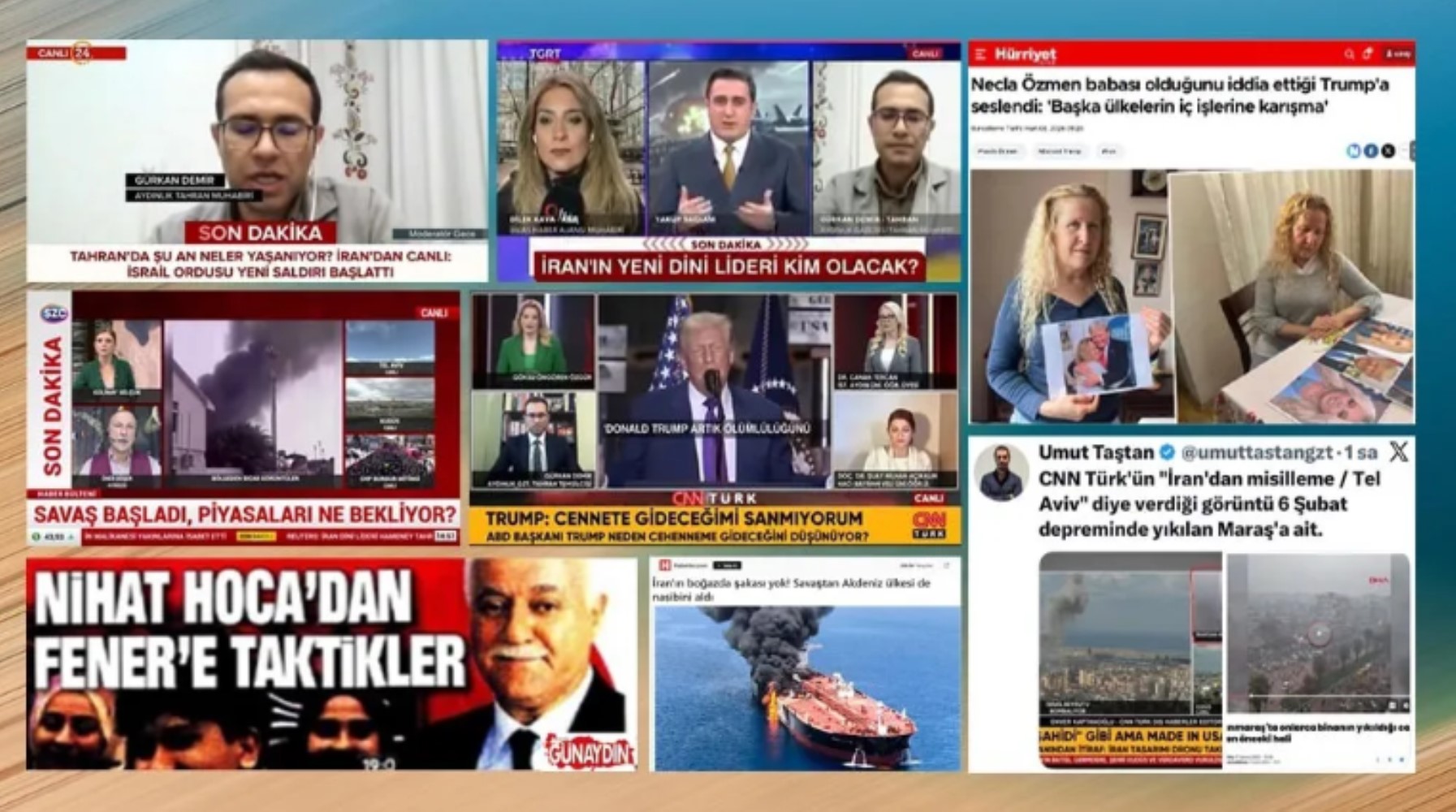
These are extreme examples of "expert" figures appearing on television broadcasts answering questions on topics they are "not experts in," or speaking as if they were experts. Screens are full of names who appear to be experts or are considered experts on every subject, but who do not actually have a full grasp of the topic they are discussing. Of course, journalists are at the top of the list of "commentators" who are experts on everything.
With the war that began with the US and Israel attacking Iran, screens were once again covered with these types of "expert commentators." This is because having a commentator speak is easy and cheap. Some programs rely heavily on "commentators" due to lack of resources, while others do so because they have lost their journalistic reflexes.
Media organizations, especially news channels, stopped employing expert correspondents a long time ago. Aside from agencies, most do not even have representatives living in Tehran and Tel Aviv. Without correspondents living in the region who know the country, it is very difficult for journalists sent later to immediately grasp the situation. Indeed, most of the correspondents sent to the region cannot go much beyond statements, the technical capacity of missiles, and images of flight in the sky and destruction.
As a result, just as in extraordinary situations, the media became dependent on international agencies and Western media for news during the Iran war. They tried to close the resulting news gap by finding people from the region in addition to commentators. For example, channels like CNN Türk, 24TV, TGRT Haber, and TV 100 constantly included Aydınlık newspaper's Iran correspondent Gürkan Demir in their programs and news bulletins. The fact that news channels need a newspaper's Tehran representative instead of their own correspondents is actually a serious weakness.
At the same time, the rush of TV stations to constantly stream footage on screen also leads to the publication of incorrect images and photos. Journalist Umut Taştan revealed that the footage CNN Türk broadcast as "Retaliation from Iran/Tel Aviv" was actually footage taken in Maraş, which was destroyed in the February 6 earthquake. CNN Türk subsequently issued a statement and admitted the error.
Another error by CNN Türk was announcing Fulya Öztürk, who was able to enter Iran on the fifth day of the war, as "the first Turkish broadcaster to enter Iran after the war started." However, Ali Çabuk from NTV was already there, and teams from A Haber and other TVs had also entered.
A similar image error occurred on Haberler.com. The burning tanker photo used in the news stories "Critical strait is ablaze! They hit another oil tanker" and "Iran is not joking in the Strait" was an old photo of a tanker that was attacked in the Gulf of Oman in June 2019.
The İHA report titled "Necla Özmen, who claims to be Trump's daughter, says: 'Father, do not interfere in the internal affairs of other countries'" was a grave example in terms of showing the level journalism has reached. Moreover, many media organizations, including Cumhuriyet, Hürriyet, Sözcü, gzt.com, and Show TV, published the absurdity of giving a title to a woman whom even the courts do not take seriously and having her address and speak to Trump!
We must tell the story of the war through the deaths of people and the destruction of countries, without turning it into tabloid fodder or turning it into a computer game by highlighting missile technology.
Paid "news" broadcasts
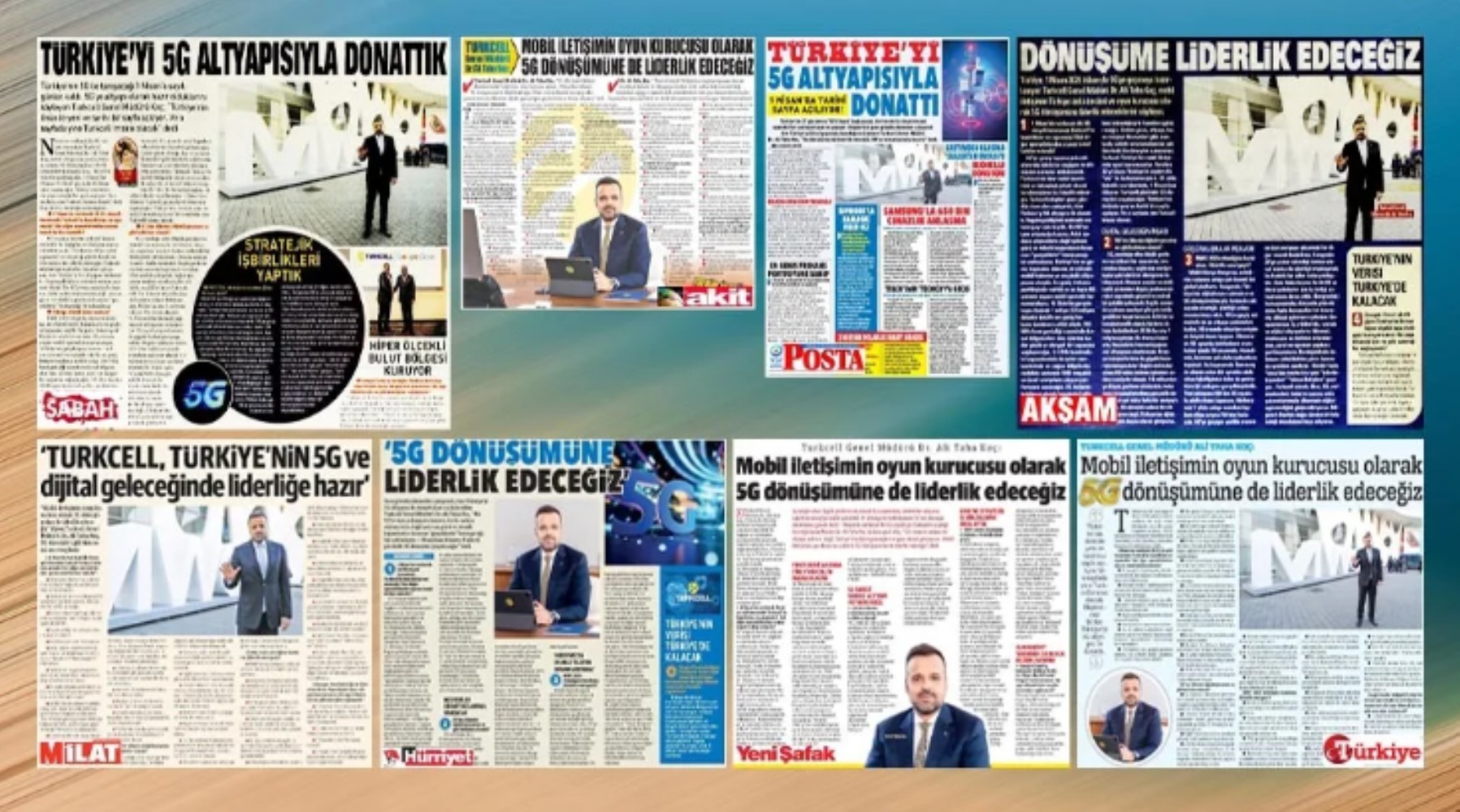
In an interview titled "We equipped Turkey with 5G infrastructure" published on March 4 in Sabah newspaper and its news site, the byline "Feride Cem/Barcelona" appeared. Feride Cem presented the interview by saying, "We talked about the 5G journey with Turkcell General Manager Ali Taha Koç."
However, the same questions, the same answers, and the same text were published in Yeni Şafak under the headline "As the game-maker of mobile communication, we will also lead the 5G transformation," and in Hürriyet under the headline "We will lead the 5G transformation." There was no journalist byline or "This is an advertisement" warning in Yeni Şafak, but in Hürriyet, it was labeled as "Economy Service."
In this text, which was published as a half-page in the economy section of all three newspapers, even the words in the questions were the same. Only in one place did Feride Cem interject with a question like "Are you ready in terms of infrastructure?", but even there, the answers were the same.
The same text, with minor changes and different headlines, was also published on March 5 in Akşam, Posta, Milat, and Yeni Akit. Dünya and Ekonomi also used this interview by putting it into a news format.
It is clear that the text came from a single source and was distributed to the newspapers. We had encountered interviews done in exchange for payment in the mainstream media before. Only in the past, it was done with a slightly more embarrassed demeanor, and an attempt was made to give it the appearance of journalism.
It seems that has been abandoned as well. Six different media organizations see no harm in publishing the same interview, consisting of the same questions and answers, as if it were a journalistic product. They are turning journalism into a commercial transaction done in exchange for payment, rather than an activity of reporting the truth.
Moreover, they are deceiving the reader by not including an advertisement warning. This is the misuse of journalism.
"Peer bullying" footage is contagious
After every violent incident involving children and adolescents, rhetoric about increasing the penalties given to "children dragged into crime" increases.
The same debate began in the media following the death of a teacher stabbed by a 17-year-old student at a high school in Çekmeköy, Istanbul, which also left another teacher and a student injured. You would think that when penalties are increased, violent incidents involving adolescents will stop as if touched by a magic wand.
No criminal case with social, economic, and perhaps political causes can be solved solely through penalties and the judiciary. The fact that non-expert journalists speaking on TV as "opinion leaders" suggest shortcut methods does not contribute to a solution; it makes it even more complicated.
Instead, it is necessary to conduct news and research that examines the causes of the problem and brings the solution proposals of experts to the agenda. The primary goal should be both the prevention of crime and the reintegration of children into society.
Unfortunately, news reports with footage of "peer bullying" are increasing. In recent months, many "peer bullying" images from Sivas, Ereğli, Çanakkale, and Ankara have been broadcast on screens and digital platforms. The DHA report, which was broadcast on Haber Global with its footage, titled "High school students in Kağıthane clashed: 'I will make you a bullet magnet'" is the latest example.
There is no concern that such violent footage and news reports that convey the details of violence might be encouraging for children and young people. The concern for viewership and attracting attention once again takes precedence over all responsibilities; the "public interest," which is the essence of journalism, is forgotten.
News centers must stop broadcasting "peer bullying" footage immediately. You cannot oppose violence by feeding on it.
Not journalism, but defamation
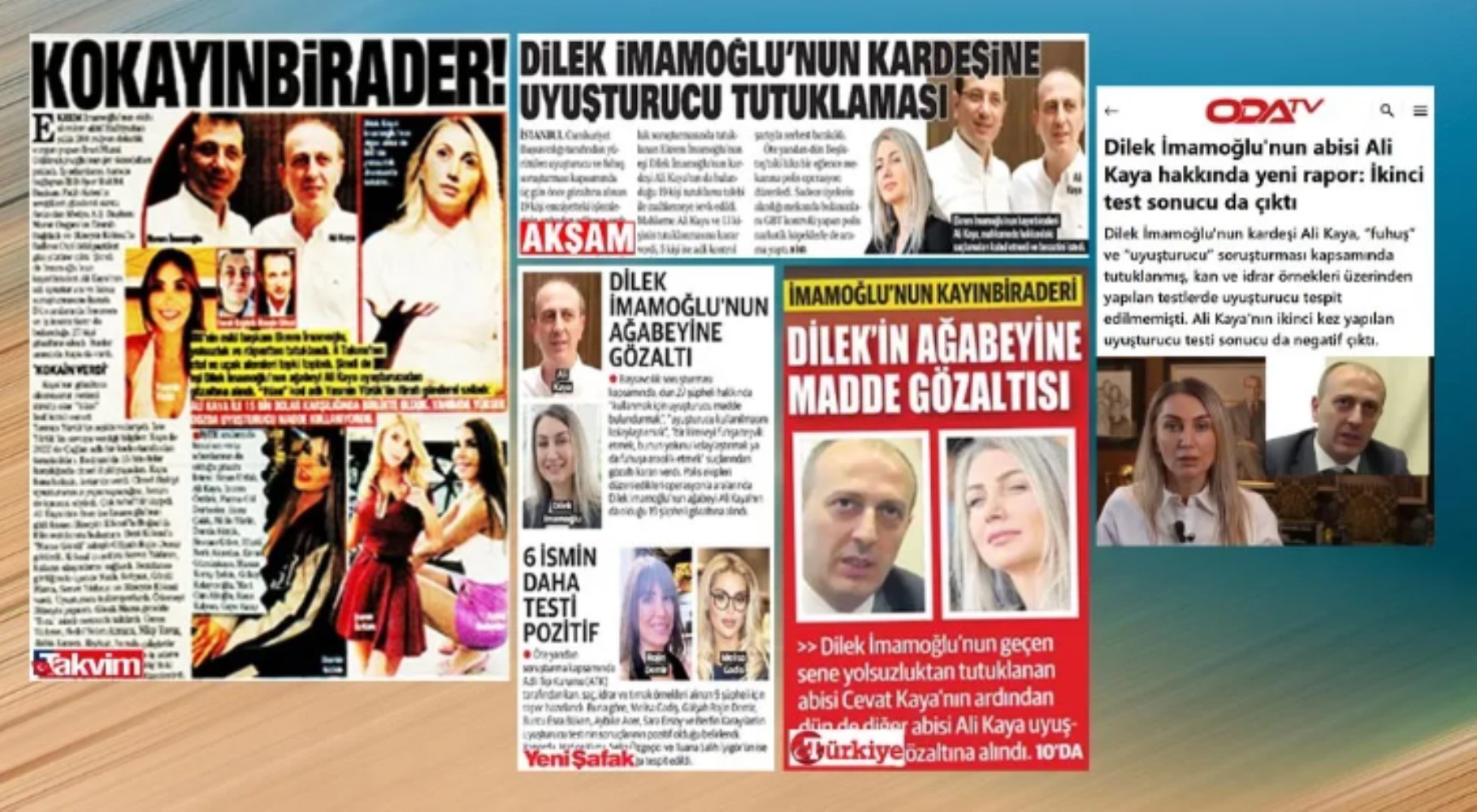
When Ali Kaya, the brother of Dilek İmamoğlu, was detained in a "drug and prostitution operation," the pro-government newspaper Takvim ran the headline "Cocaine-brother" for the story.
Newspapers such as Akşam, Sabah, Yeni Şafak, and Türkiye also wrote that Ali Kaya "used drugs" and "mediated for prostitution," based on the statements of "the escort codenamed Yılan, who became a confessor, Yasmin Yürük." They repeated similar news when he was arrested.
However, the results of the tests performed on Ali Kaya's blood and urine samples at the Forensic Medicine Institute came back "negative." The pro-government media did not report on the Forensic Medicine report regarding Ali Kaya.
Some pro-government writers claimed that Ali Kaya's nails and hair were short, which is why the test result was negative. The prosecutor's office must have been convinced, as this time nail and hair samples were taken and sent to the Forensic Medicine Institute again. However, the second report from the Forensic Medicine Institute also stated that Ali Kaya did not use drugs.
The pro-government media did not report this either. It is a great injustice that the pro-government media, which does not hesitate to declare a verdict and point someone out as a criminal, does not respect reports in favor of Ali Kaya. Moreover, this is intentional defamation journalism that cannot be explained by journalism or professional ethics.
A journalist does not close their eyes when data emerges that clears the people they have published accusations against.
New witnesses to Can Yücel's words
Upon Uğur Dündar bringing it back to the agenda, I researched the rumor that Can Yücel said to the judge in the court where he was being tried, "Sir, in Turkish, a spade is called a spade" (literally: "a 'göt' is called a 'göt'"), and based on Ahmet Nesin's testimony and Metin Celal's article, I made the following determination:
"Of course, these cannot be accepted as definitive evidence like court records or Can Yücel's own writings, but after what has been written, one cannot say 'It definitely did not happen.'"
After my article on February 16, Bülent Çelik wrote to me, "Can Yücel told that story in a TV program he was a guest on; I remember watching that program." He even took a note: "'Nurseli İdiz, Gecelerin İçinden' program, HBB, 1995." He meticulously kept his daily notes.
I scanned the archives; Nurseli İdiz did talk shows on TV in those years. But I could not find the program news. I also spoke with Nurseli İdiz; unfortunately, she could not remember.
Murat Taylan also recounted in a broadcast on Tele2 that Süleyman Sarılar had watched that hearing in 1984 as a young journalist. Upon this, I called Süleyman Sarılar, and he said "Yes" and explained:
"I was the courthouse correspondent for the Anadolu Agency at the time. I watched that hearing in the courthouse building in Sultanahmet. I remember Can Yücel's words to the judge very clearly. His lawyer, Muhittin Yüzüak, brought Can Yücel to the press room after the hearing, and we had tea. Vasfiye Özkoçak (Milliyet), Ramazan Öztürk (Günaydın), and Ahmet Tanyolaç (Tercüman) were also there. There, he told all of us that in the hearing, he said to the judge, 'We call a spade a spade, what do you call it?' I remember well; even the judge of the 2nd Criminal Court of First Instance was Osman Şirin."
Journalist Ramazan Öztürk also confirmed Süleyman Sarılar's account; he remembered that they chatted with Can Yücel at the courthouse that day, but he could not recall the details. Muhittin Yüzüak confirmed that he was Can Yücel's lawyer, but he could not recall that hearing.
The testimony of journalists Süleyman Sarılar and Ramazan Öztürk, and the notes conveyed by Bülent Çelik, are new and valuable evidence that Can Yücel said those words in court...
In a single sentence:
The headline of the Türkiye newspaper's story about CHP's Bolu Mayor Tanju Özcan said "Arrested for bribery," but Özcan was arrested on charges of "malfeasance," not bribery.
The information in Karar's story "Great reaction to the leaked photo" that "Hillary Clinton was on the verge of leaving the hall" was incorrect; Clinton had left the commission; the translation "From now on you can despise me forever" was also incorrect.
Due to the month of Ramadan, ministers lined up for "iftar" with media representatives in Ankara, but names from the opposition media are still not invited to these iftars where ministers also answer questions.
In the İHA report "Canadian woman died during aesthetic surgery," the name of the "private hospital in Antalya" being blamed was hidden.
In Akşam's report "12 thousand heavy bomb support to the genocider," the information that "Repkon USA, which undertook this sale, is the US subsidiary of the Turkish defense company Repkon" was missing.
Last week, Yeni Şafak published the covert advertisements of the AKP-run Erzurum, Tokat, K. Maraş, Konya, and Karatay municipalities under the guise of news.
In Oksijen's "Book Days received intense interest from book lovers" and Cumhuriyet's "Culture sun in Kemer" and "Literary world came together in Kemer" stories, a hotel and a "sales organization" in Kemer were being promoted.
FOR YOUR CRITICISM, COMPLAINTS, AND SUGGESTIONS: [email protected]
Most Read

Striking picture for Özgür Özel's 'New Party'

The PKK opening and Özgür Özel’s path!..

How did the newspapers view Özgür Özel's farewell to the CHP?

He killed his wife by slitting her throat: Their children witnessed the moments

What did the CHP do?

Özel’s new party move in the world press

The New CHP, against CEHAPE

Fire at TUSAŞ engine factory in Eskişehir under control

From self-efficacy to despair

Kılıçdaroğlu's first message on Özgür Özel's new party announcement