



Journalistic activities and legal operations against journalists have now become a constant occurrence. Following the arrest of Halk TV Editor-in-Chief Suat Toktaş due to a news report, this time the BirGün newspaper has been targeted.
Birgun.net Publication Coordinators Uğur Koç and Berkant Gültekin, along with birgun.net Responsible Managing Editor Yaşar Gökdemir, were detained at their homes in the middle of the night. The justification was their reporting on a visit by Sabah newspaper News Coordinator Abdurrahman Şimşek to Chief Public Prosecutor Akın Gürlek—a visit that Şimşek himself had published on social media and which was also reported by Sabah.
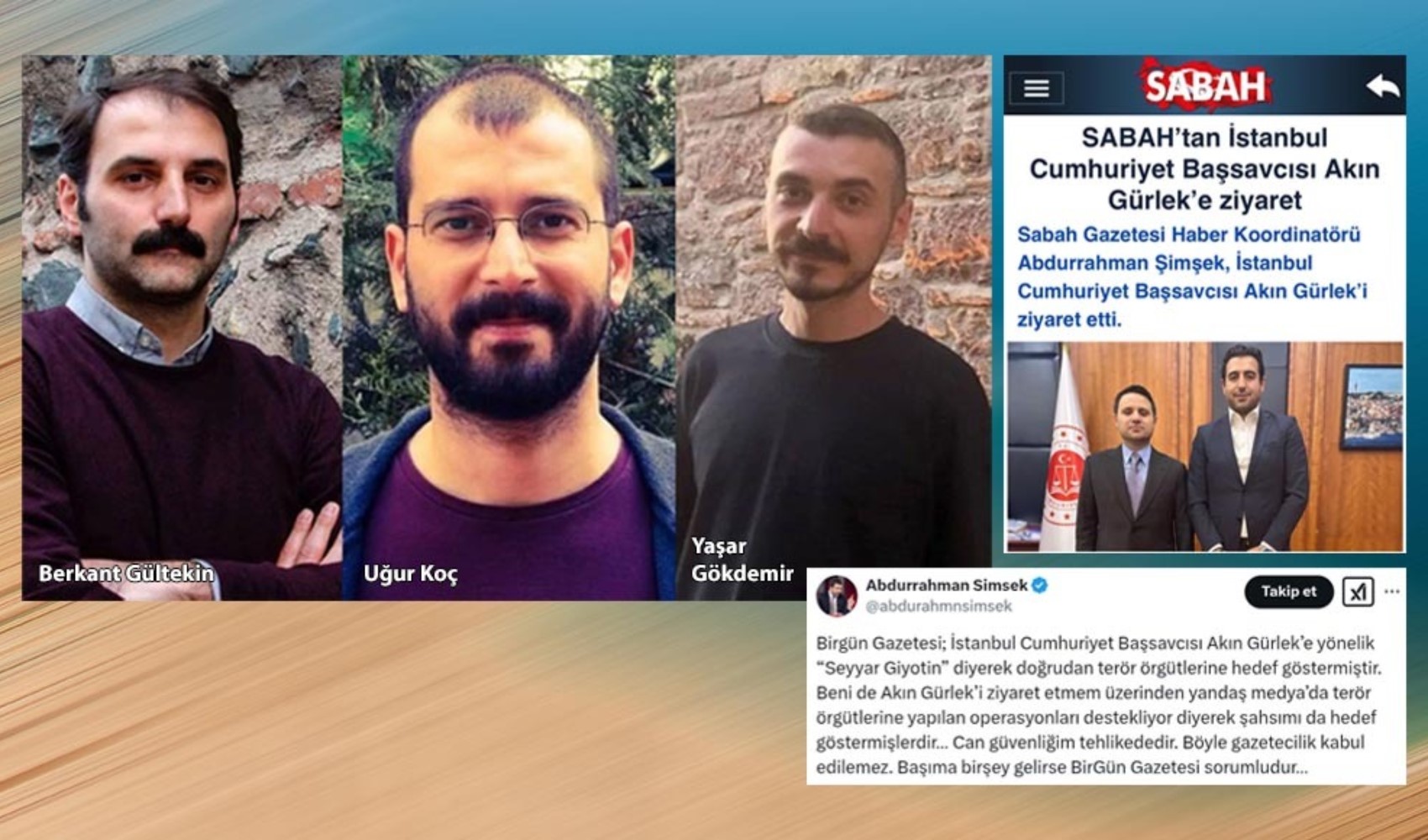
The interesting part is that Şimşek's visit to Gürlek was reported in BirGün on February 7; subsequently, Şimşek posted, 'They have targeted me for terrorist organizations.' The fact that the police showed up at the doors of three journalists the day after that post is clear evidence that the one doing the actual targeting is Şimşek. There was no expression in BirGün's report that targeted him.
What kind of journalist Şimşek is also became apparent in the testimonies during the Necip Hablemitoğlu case hearings. Müyesser Yıldız, who followed the case closely, wrote that Abdurrahman Şimşek had published an interview he conducted in Ukraine two years prior with Gökhan Bozkır, a suspect in the assassination, as if it were new, two years after Bozkır was captured and brought to Turkey; she also asked, 'Did he give the unpublished interview to the chief prosecutor?' That is the kind of journalist Şimşek is!
Unfortunately, the pressure on opposition media does not seem to be slowing down. Reports released for January also contain data on the increase in pressure on journalists and press freedom. In a statement by 41 international journalism organizations, including the International Press Institute, it was emphasized that 'violations of press freedom in Turkey are increasing, and arbitrary detentions and arrests pose a threat to independent media in the country.'
CHP Eskişehir Deputy Utku Çakırözer stated in his 'Press Freedom Report' that 'In January, journalists in Turkey appeared before judges exactly 75 times and had to defend their news reports and social media posts. 19 journalists were detained, and 9 were arrested.' The Media and Law Studies Association (MLSA) report added to Çakırözer's report the information that 'There are currently 30 journalists in prison and 4 under house arrest in Turkey.'
In the report by the Diyarbakır-based Dicle Fırat Journalists Association, it was stated that 'While investigations were opened into 74 journalists in one year in 2024, investigations were opened into 42 journalists in just January of this year. 17 of these investigations have turned into lawsuits.'
The judiciary, which the government uses as a weapon, is now trying to manufacture new criminals by scouring news reports and programs related to the 'Gezi protests' from 13 years ago. Pro-government media is also supporting and applauding this endless 'witch hunt'.
Independent, critical, and opposition journalism has entered another difficult year, yet the work of journalism continues...
WE DID NOT COMMEMORATE OUR COLLEAGUES WHO DIED IN THE EARTHQUAKE
Our media remembered the earthquake disaster on its anniversary. The pro-government media, including AA and TRT, looked through rose-colored glasses just as they did in the days following the earthquake; they broadcast as if the traces of the earthquake had been erased and all problems had been solved. They even exaggerated to the point of calling it the 'revival of the century'.
Just as they ignored the fact that 651,958 people are still living in containers and that the number of houses built remains at one-third of what was promised, they also failed to report that on the night of February 6, police used force against earthquake survivors who wanted to enter the ceremony area where officials were present, pinning three of them to the ground and handcuffing them. The book titled 'The 2nd Year of the Disaster of the Century: Construction and Revival Efforts,' prepared by the Directorate of Communications, was also a pure propaganda piece that made no mention of problems or shortcomings.
The photograph of Mesut Hançer holding the hand of his daughter under the rubble was used in almost all television channels, newspapers, and news websites under headlines like 'The symbol photo of the earthquake.' However, it was an injustice that the name of the photojournalist who took the picture, Adem Altan, was not mentioned anywhere except on Halk TV.
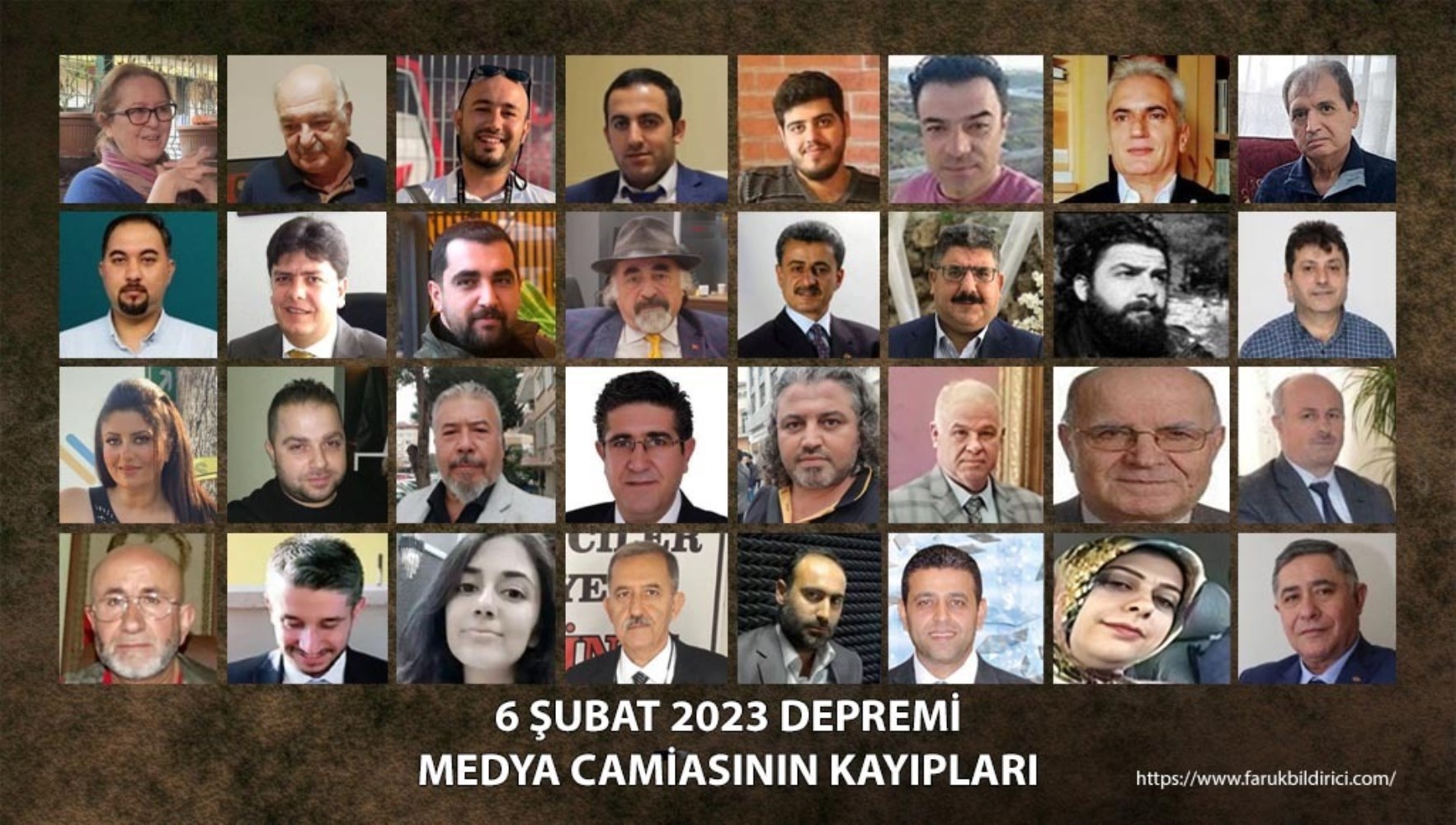
The Journalists Association of Turkey released a report regarding the problems faced by journalists in the earthquake zone. However, one shortcoming we had as journalists and professional media organizations was the failure to organize various events to commemorate our 32 colleagues who lost their lives in the earthquake disaster, including journalists, media owners, programmers, and writers. Only the Hatay Journalists Association commemorated the nine deceased Hatay journalists with a message, and that was all...
While commemorating our colleagues, we could have also discussed our experiences in earthquake and disaster journalism. So many projects that would have contributed to our journalism were voiced in the aftermath of the disaster. We forgot them again.
Yet, as journalists in a country of disasters like Turkey, we could have made earthquake (or disaster) pages and programs a constant feature, keeping the public's attention perpetually alert and accelerating the resolution of problems. It didn't happen; let alone preparing pages and programs, the mainstream media almost completely ignored the earthquake zone until the anniversary of the February 6 earthquake.
We must also acknowledge the efforts of our colleagues who have made the troubles of the people there their own. The opposition media, even if intermittently, did not neglect to report on the problems in the region throughout the past year. The ANKA news agency, especially in the last two months, became the news source for the opposition media regarding the earthquake-stricken cities through the teams it sent and its live broadcasts. Independent journalists from the region, such as Kazım Kızıl, also continued to report on the situation, providing footage and photographs.
The workload weighing on the shoulders of critical and independent journalists in this country is very heavy.
THE ABSURDITY OF BREAKFAST PRESS CONFERENCES
When TKP General Secretary Kemal Okuyan also organized a "breakfast press conference," writer and director Hakan Yavuz reacted with a post stating, "Even the communists have conformed to the system." He added, "Özal infected Turkey with these luxury 'press' conferences, driven by the mentality that 'if we provide food and drink, many journalists will come.'"
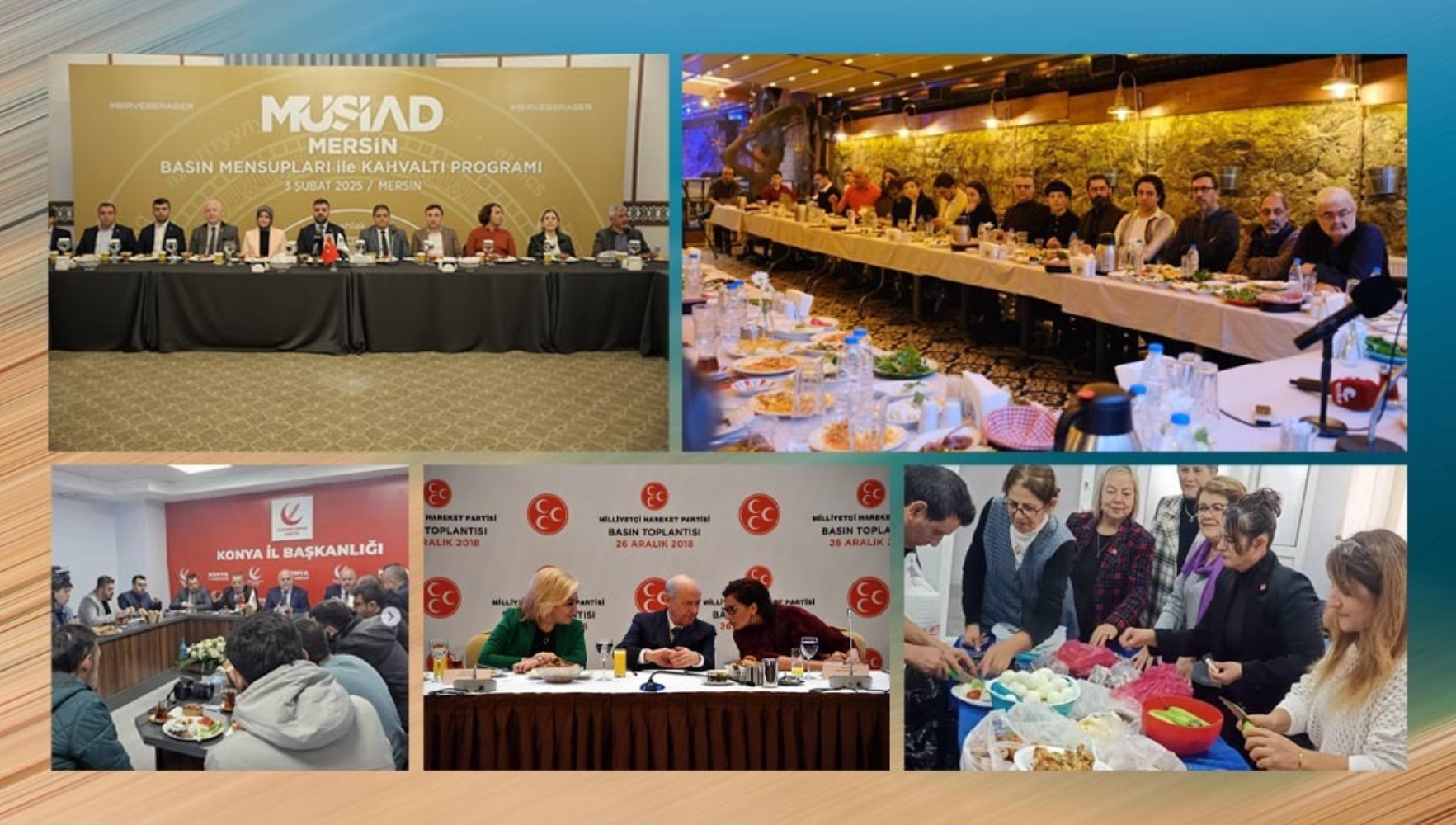
A debate naturally ensued. Some argued that "journalists do not attend press conferences for breakfast." This is true. Journalists do not rush to attend meetings just because breakfast is served.
But it is true that this trend began here during the Turgut Özal era in the 1980s. Politicians started with breakfast press conferences first. Then it spread to the business world, municipalities, unions, and everywhere else. Recently, even the Medical Association and university rectors have been holding their press conferences over breakfast.
Holding breakfast press conferences for special occasions such as introductions, farewells, or annual meetings is understandable. It provides a relaxed atmosphere for conversation. Moreover, since it is held early in the day, it saves time. Simple snacks, tea, and coffee are sufficient for an exchange of information, without the need to set up an elaborate breakfast table...
However, "breakfast press conferences" have recently been prepared with the logic that journalists have come not to receive information, but to eat and drink before leaving; there are all kinds of food on the table. In that case, the breakfast overshadows the press conference. Inevitably, it becomes difficult to focus on taking notes and asking questions.
I understand that they are trying to make press conferences more attractive to journalists with rich breakfast tables. But they are essentially viewing journalists as people who will come to a meeting for the "bribe" of a breakfast. Perhaps they are unaware, but breakfast does not increase the news value of the information and opinions conveyed at a press conference.
For a while, some politicians, union leaders, and businesspeople had also started giving "small" gifts to journalists after press conferences, but fortunately, they gave up on this after warnings. Giving gifts is ultimately the result of an unethical mindset that belittles rather than elevates the journalist. I hope they abandon this habit of breakfast press conferences soon as well...
WHAT IS THE REPORTER'S FAULT?
We frequently encounter scenes where President Erdoğan and MHP Chairman Bahçeli scold or snap at journalists who ask questions.
Now, CHP Chairman Özgür Özel has also started treating journalists harshly. When an A Haber reporter tried to ask him a question while he was leaving the group meeting, saying, "It is said that Mansur Yavaş is against the primary election," he replied, "A Haber, you won't be able to escape this alone either. Either all of us or none of us!" and walked away.
This is neither an answer nor a joke. It is not appropriate for him to treat a reporter this way as a party leader. If he wants to express his reaction to A Haber's biased reporting, the target should be A Haber itself.
Sabah's reporting of Özel's behavior as 'Threat to A Haber from Özgür Özel with DHKP-C slogan' is also a distorted and exaggerated piece of false journalism. Özel's words contain no threat, and the slogan has nothing to do with the DHKP-C. It is a slogan inspired by the poem 'All together or none of us' by the German poet, playwright, theater director, and theorist Bertolt Brecht, and it has been used in rallies and marches in Turkey for decades...
Good journalism does not distort this slogan as 'the slogan of the DHKP-C'; it also corrects President Erdoğan when he provides false information about the history of the slogan, and does not mislead its readers or viewers.
In a single sentence:
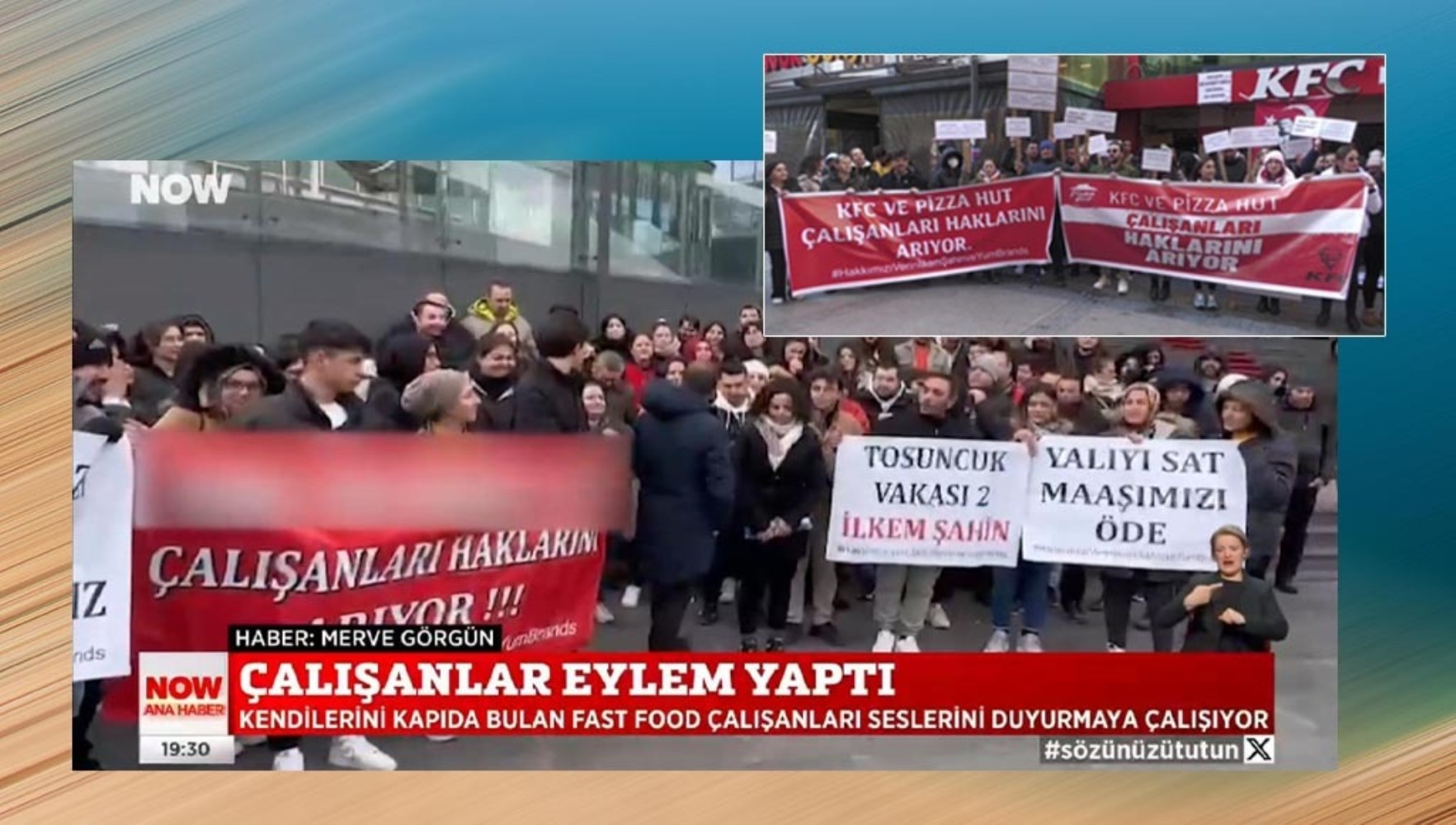
While reporting on the protest launched by 6,000 employees to receive their salaries after İş Gıda, the Turkish representative for KFC and Pizza Hut restaurants, declared bankruptcy, NOW TV did not mention the names of the companies and even blurred the name on the banner.
Alpay Var, the brother of Şarköy Mayor Alper Var, was sentenced to 8 months and 19 days in prison in the trial regarding his assault on Deniz Önal, editor of the Şarköy'ün Sesi newspaper.
Milliyet reported the January inflation rate, which exceeded expectations and forecasts at 5.03 percent, in a box smaller than a matchbox on its economy page.
The reports by İHA and Türkiye about a 'dog attack' contained no names; in summary, they provided the information that 'a dog attacked a woman in the Bağcılar district of Diyarbakır, and a man saved her'.
Sözcü, Sabah, and TGRT Haber used a photograph of Dr. Fırat Sarı in their reports on the suicide of İlker Gönen, one of the doctors being tried on charges of forming a 'newborn gang'.
While a half-page text regarding the AKP-run Kocaeli Municipality's aid in the earthquake zone was published in Hürriyet and Milliyet with the warning 'This is an advertisement,' Türkiye used it as if it were a news report.
The remarks made by Ministry of National Defense Spokesperson Rear Admiral Zeki Aktürk during a press conference regarding the dismissed lieutenants were reported in the media by citing 'MSB sources' while once again concealing his name.
In the reports by Anadolu Agency, Gazete Oksijen, Independent Türkçe, NTV, and 24 TV regarding 'Bahçeli's February 6 statement,' the information that the MHP leader was still in the hospital was missing.
The Rectorate of Ankara University awarded 20 media organizations again this year, including Anadolu Agency, TRT Haber, NTV, A Haber, Kanal 7, Yeni Şafak, and 24 TV.
TRT, which did not broadcast Kemal Kılıçdaroğlu's speeches while he was CHP Chairman, produced detailed reports such as 'Who is Kılıçdaroğlu's dagger reaction aimed at?' and 'Kılıçdaroğlu's reaction to the shadow over the CHP' when he criticized the CHP administration during a program on KRT TV.
Sabah columnist Nebi Miş, in his article titled 'Sustainable stability in Syria,' confused the word 'üst' (upper/top) with 'üs' (base) by writing 'bases to be provided to the Turkish army within Syria'.
FOR YOUR CRITICISMS, COMPLAINTS, AND SUGGESTIONS: [email protected]
Most Read

Striking picture for Özgür Özel's 'New Party'

Özgür Özel gives a dated response regarding the number of resignations

Forest fire in Antalya brought under control

The PKK opening and Özgür Özel’s path!..
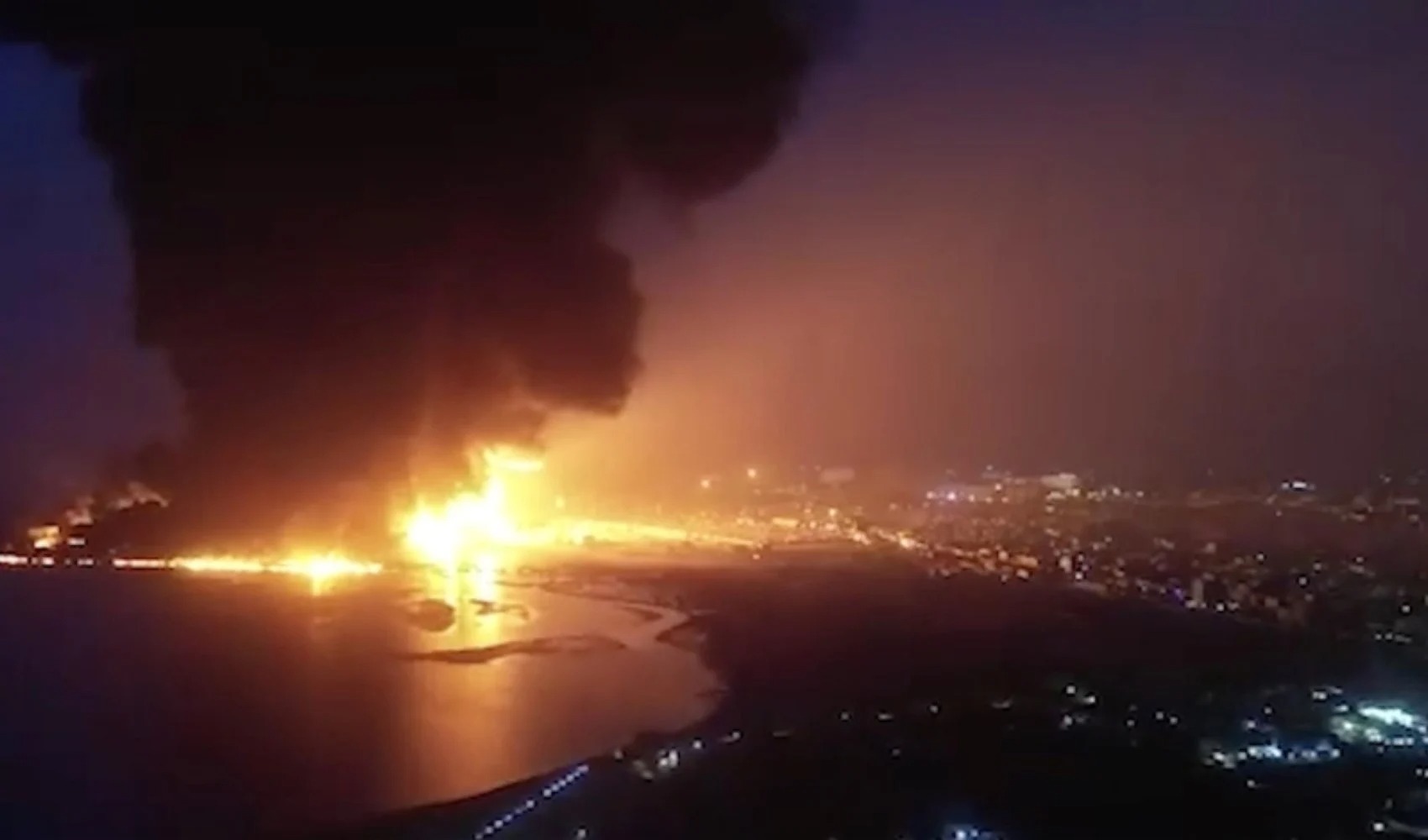
Houthis strike Saudi-owned tanker

How did the newspapers view Özgür Özel's farewell to the CHP?

What did the CHP do?

Özel’s new party move in the world press

The New CHP, against CEHAPE
4 drones shot down near US Consulate General in Erbil