



They are making news presenters act as models
For some time now, female news presenters have been sharing photos or videos taken in television studios on social media, while also writing the brand of the clothing they are wearing on them.
These posts are mostly made in the stories section. It does not stop with the posts of the news presenters; the clothing company also shares these photos of the presenters on its own account. By appearing among the photos of models showcasing clothes, the news presenters are performing the same function as them, effectively modeling and thus advertising.
I scanned Instagram and found photos and videos of female presenters from A Haber, Beyaz TV, CNNTÜRK, Ekol TV, KRT, and 24 TV promoting the brands of the clothes they wear. As far as I have learned, the management of these news channels makes agreements with companies; the companies send clothes to be worn on the programs, and in return, the female news presenters advertise that brand on Instagram.
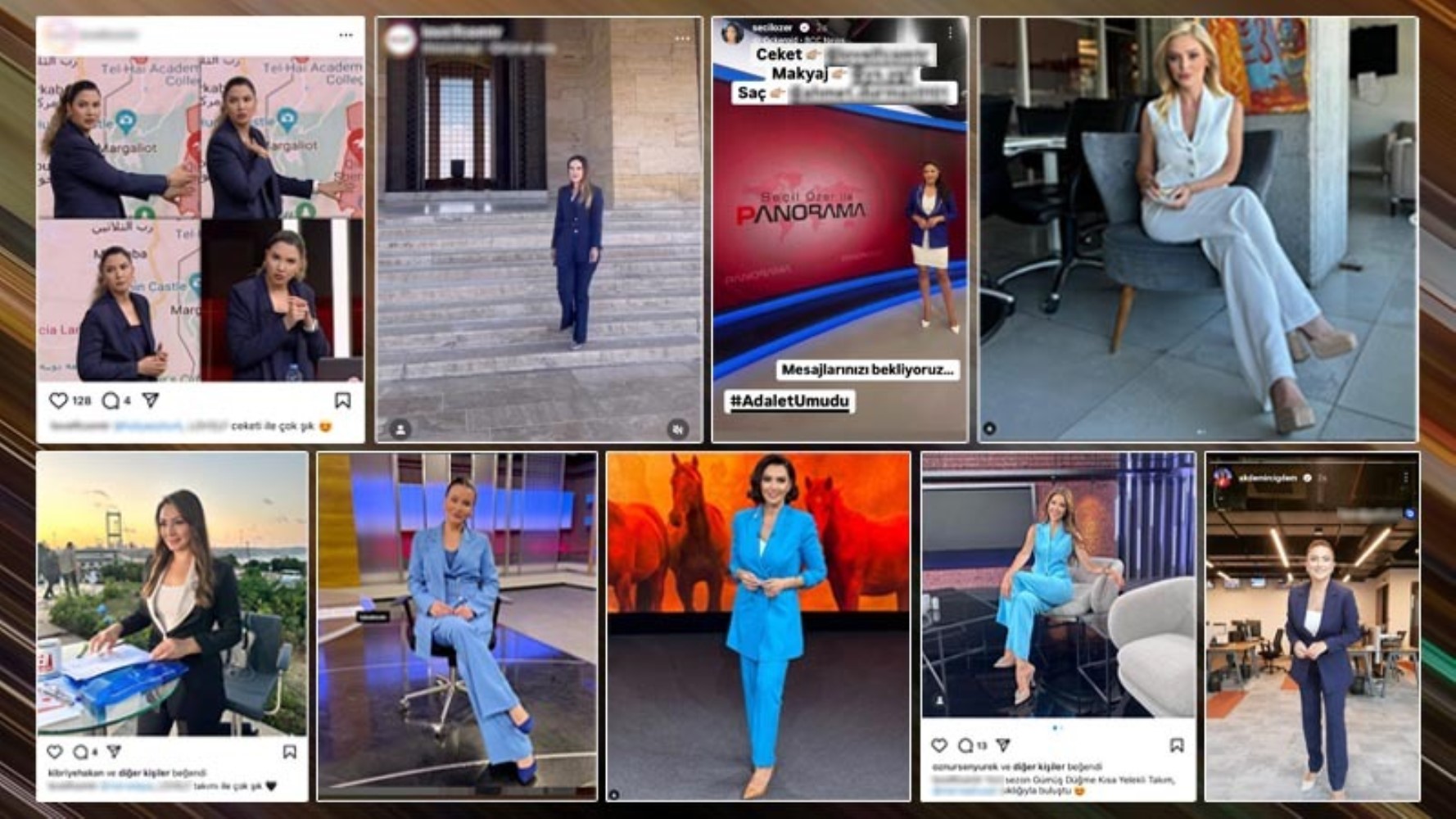
Among the posts of famous screen faces who are made to model, the most striking is the post by 24 TV's presidential correspondent Yağmur Yıldız. She must have liked clothing modeling so much that she filmed a video of herself moving on the stairs of Anıtkabir wearing the company's outfit and posted it to her account like a music video.
Some female news presenters add the #ad tag to their posts, while others do not. However, it is not ethical behavior for journalists and news presenters to engage in covert or overt advertising. The intertwining of journalism with corporate interests and financial relationships creates a conflict of interest; editorial independence is harmed. For this reason, the Declaration of Rights and Responsibilities of Journalism in Turkey includes the principle that journalists should not engage in "advertising, promotion, or product placement on social media either."
RTÜK's Broadcasting Services Regulation also allows the names and logos of those supporting a program to appear only at the end of the program; it states that sponsorship/support cannot be received for news bulletins. This means that RTÜK prohibits news presenters from making sponsorship announcements on screen with their own images.
Of course, RTÜK cannot interfere with social media, but its approach is correct. News presenters should not do on social media what they cannot do on TV screens. If TV executives are making their female presenters model—unless it is their own choice—it is mobbing.
Why do news presenters shout?
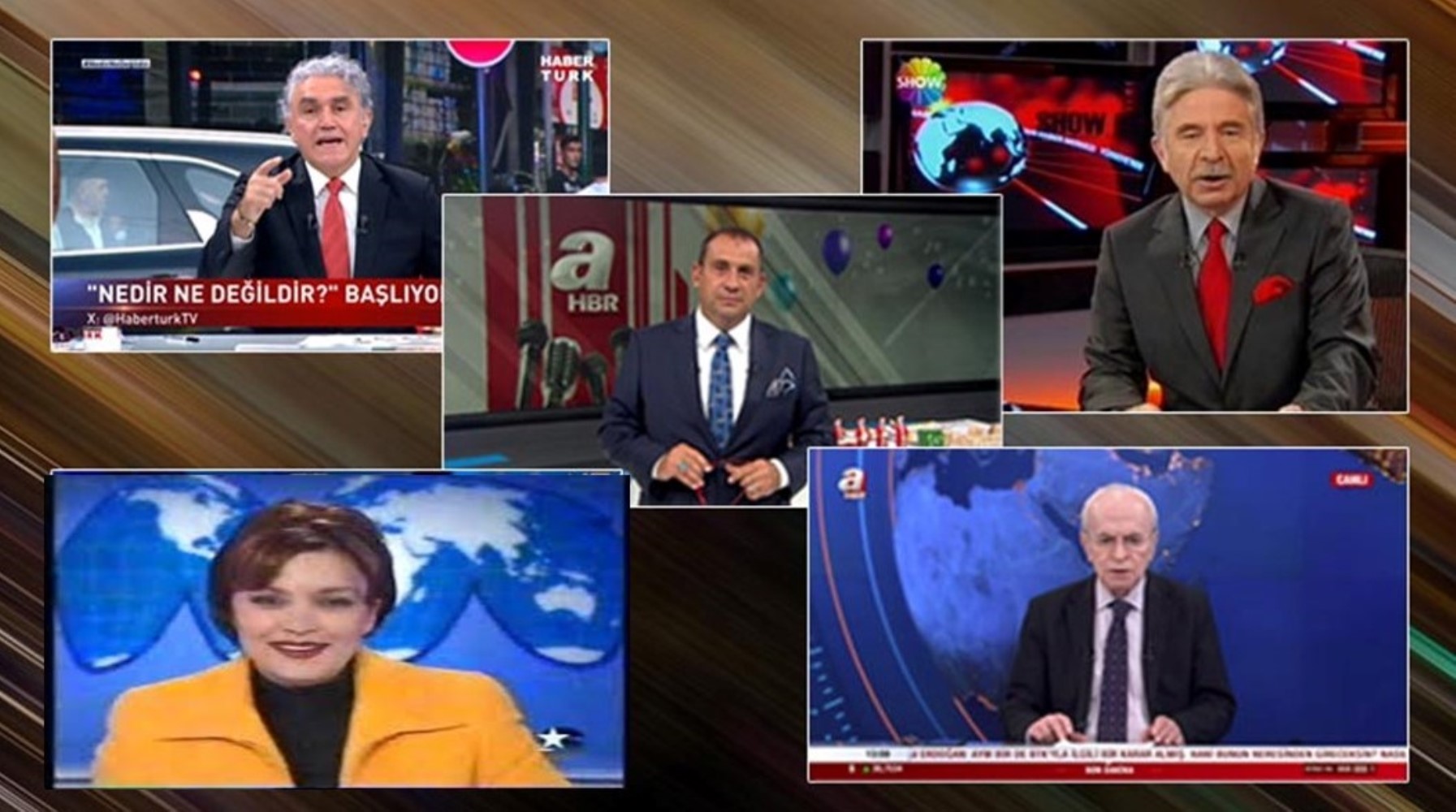
Presenting news by shouting and yelling on television has become an increasingly widespread epidemic in recent years. Faruk Aksoy, who has started presenting morning programs on Habertürk, also constantly shouts while telling the news. Even in the calmest news or conversation, his voice is at a high pitch.
Some do not just shout; they sway from side to side while standing, sometimes jumping up and down. If I am not mistaken, Erkan Tan—who left A Haber last week—started this style on TV8. Inside the studio, they present the news by frequently going in front of the LED screen in the back, coming to the desk, sometimes with movements resembling a running pace, raising and lowering their voices according to the rhythm of the news, but always "constantly wandering around."
I have not been able to figure out the necessity of them behaving this way. They might be turning the news bulletin into a show to get more viewers, but the presenters are becoming the subject of the bulletin. They are focusing the viewer on the presenter, not the news.
When the news is presented with such a commotion, as a viewer, one misses the news presentation style of Gülgün Feyman, Ali Kırca, or M. Ali Birand from years past. Each of them had their own unique style, but they neither shouted nor ran around on the screen or made excessive hand gestures. Of course, they did not insult anyone, nor did they drown the news in commentary.
Can Okanar, a veteran who comes from the TRT tradition, stays out of all this turmoil and continues his own style with determination on the pro-government channel A Haber. He pronounces words extremely correctly, and his emphasis is always spot on... He brings the news to the forefront and succeeds in keeping the viewer's attention on the news he is reporting. His problem is the content of the news he reads...
The newspaper that asks its readers about the killer
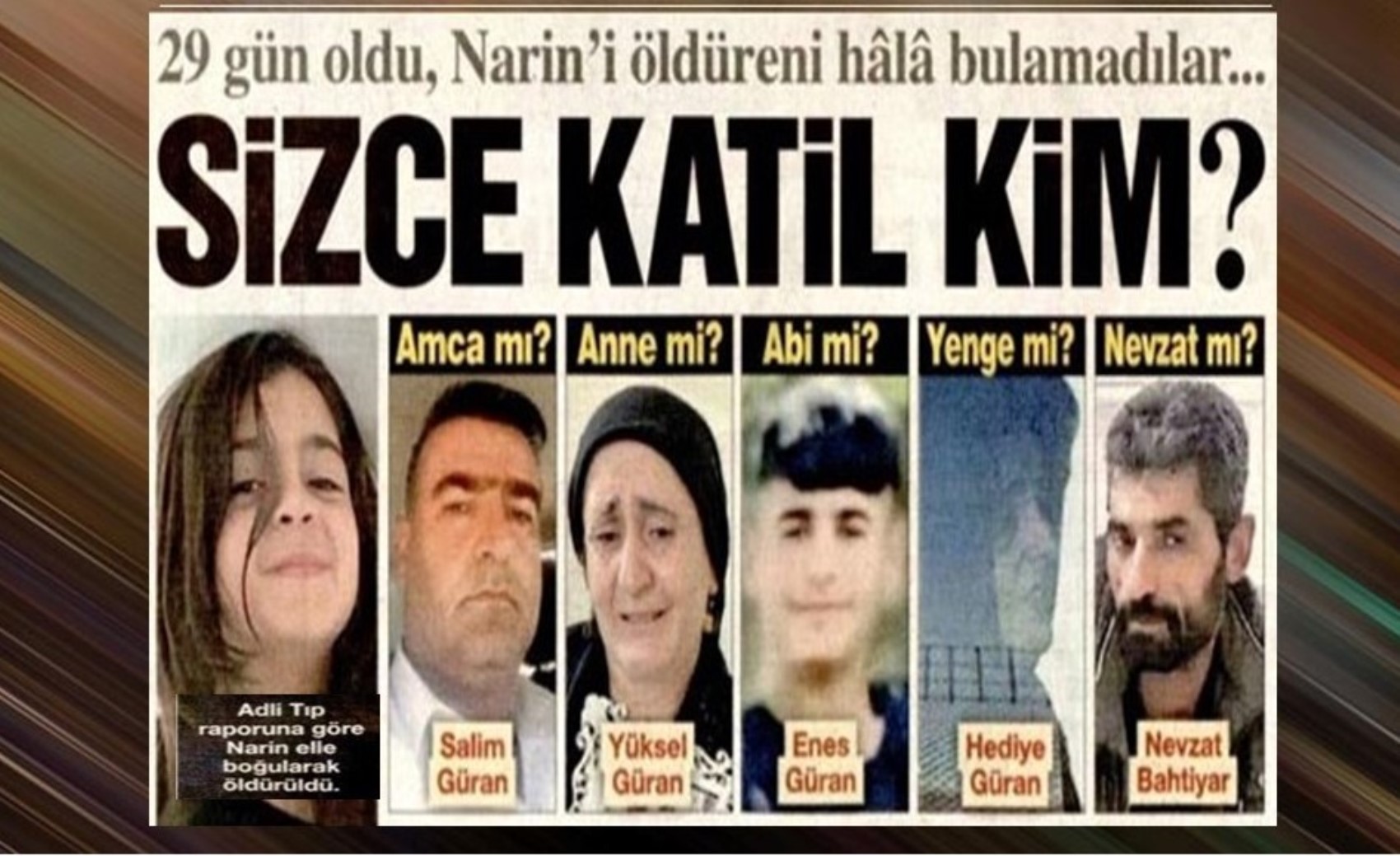
I have seen polls conducted on political events in news bulletins on television, but I had never encountered anything like this before. Sözcü asked its readers, "Who do you think is the killer?" as if the killer of Narin could be determined through a poll conducted among readers.
In the "poll" news, which carried the headline "It has been 29 days, they still haven't found who killed Narin," photos of these individuals were also included with the questions: "The uncle?", "The mother?", "The brother?", "The aunt-in-law?", and "Nevzat?"
This is extremely wrong journalism. A journalist cannot show people whose guilt has not been proven by evidence and judicial decisions as if they were guilty, nor can they cast suspicion on them, while paying attention to the presumption of innocence in such a murder case. A journalist has no obligation to find the killer, nor can the killer be found by asking readers or conducting a poll. This is, at the very least, trivializing the murder.
Indeed, the assertive news reports regarding the 37-second phone conversation between the uncle Salim Güran and his worker R.A. on the day of the murder went into the trash two days ago. In the initial reports, it was noted that the transcript entered into the investigation file included R.A. saying to Salim Güran, "Okay, it's not with me yet, she hasn't died yet." However, Anadolu Agency released a new report three days ago stating that the phone conversation transcript had been entered into the file; according to the transcript in this report, the words "she hasn't died yet" do not appear in the conversation; R.A. only says there, "Okay, I'll go and get it now"!
The fact that there is no explanation in the AA report regarding the reason for this discrepancy prevents the change from being understood with full clarity. But even in this state, the news proves that it is not correct to look at someone as definitely guilty just by looking at every piece of data published. After all, the initial transcript reports also showed R.A. as involved in the murder; this version of the transcript seems to clear him.
Look, the "confessor" Nevzat Bahtiyar, who was taken from prison back to the courthouse, accused Salim Güran in his new statement, which contradicts his previous accounts. However, Salim Güran's lawyer also argued in a statement to Milliyet that the real perpetrator was Nevzat Bahtiyar and that the allegations regarding the others would collapse. We do not know which one is true.
Since the investigation has not yet been completed, who knows what else will change, what will turn out to be wrong, and what we will learn that we do not know? Therefore, instead of passing judgment by saying "The call record that will solve the murder," it is beneficial to approach new information with caution and not to show anyone as guilty in advance.
In the meantime, the "scenario journalism" led by Hürriyet, which wrote about "scenarios that are being focused on heavily" regarding the Narin murder, might have continued. But when news of Israel's cyber terror attack in Lebanon arrived, attention in the media shifted there. Now, almost the only topic of discussion programs on news channels is the exploded pagers...
We are not obligated to make our questions pleasing
Government members are displaying intolerant behavior toward journalists' questions. MHP Chairman Devlet Bahçeli snapped at a journalist who asked about the reinstatement of the death penalty, saying, "Do not be eager to deceive with such perverse and wrong questions."
Interior Minister Ali Yerlikaya made a "hush" gesture with his hand like he was scolding a child to a journalist who wanted to ask about the Narin murder. Minister of National Education Yusuf Tekin also left journalists' questions regarding the cleaning problems in schools unanswered; he tried to teach the journalist their job by saying, "Our agenda is basketball."
There is neither perversion, nor insult, nor an attempt to deceive in the questions directed at Bahçeli, Yerlikaya, and Tekin; they are ordinary questions about topics on the agenda. Their reacting instead of answering is disrespectful to journalists and journalism, as well as to society.
For one thing, a journalist is not obligated to make their questions pleasing to politicians. A journalist asks questions on behalf of the public, and the interlocutor respects the public's right to information by answering them.
It is sad that journalists have not been able to give the necessary reaction to these behaviors. Because the power of a journalist in the field is only as great as the power of the media organization they work for! Unfortunately, when reporters are not supported, government members can make a habit of scolding journalists.
In a single sentence:
Korkusuz's headline, "He caught his wife with her lover: The airport was up in arms," which mentions an event where the names of the people and when it happened are unclear, resembled a fictional text more than news.
The pro-government media, excluding Hürriyet, reported President Erdoğan's words, "We have no issue with the first four articles," without mentioning that the discussion on this subject had been initiated by HÜDAPAR Chairman Zekeriya Yapıcıoğlu.
In the Türkiye newspaper's headline, "What kind of work is this, master," it was not emphasized that the fees requested by masters for jobs such as painting, insulation, and plumbing were the fees applicable for Istanbul.
In the promotion of Kanal D's new series and in Milliyet's news, "The 'Narin' folk song left its mark on the promotion," emotional exploitation was carried out by using the name of the murdered Narin.
The information that the factory belonged to the Oba Makarna company was missing in the news about the pasta factory fire in Sakarya by Akşam, Gazete Pencere, Posta, and Yeni Akit.
It was noteworthy that the pro-government media, including Hürriyet, Yeni Akit, and Yeni Şafak, did not write that Ayşenur Ezgi Eygi, who was killed by Israeli soldiers in Palestine, was a "socialist" while providing information about her identity.
In the news by NTV, İHA, and Sabah, "Turkey is at the peak of the global UAV market," they did not write the name of the organization that prepared it, saying "According to a report by a US-based research organization"; only TRT Haber corrected the omission by giving the name "Center for a New American Security (CNAS)."
Sabah reported the news with the headline, "He shot his son-in-law who killed his daughter," while Korkusuz reported it as a completely different case with the headline, "He fired at his son-in-law, killed his daughter."
The Türkiye newspaper reported the opening of an anti-Turkey banner at the Panathinaikos-Maccabi basketball match, which also angered Turkish coach Ergin Ataman, with a headline containing hate speech called "Greek ugliness."
Konya Metropolitan Mayor U. İbrahim Altay announced his speech at the World Assembly of Local Governments with half-page news-like advertisements he gave to Akşam, Yeni Akit, and Yeni Şafak.
In Yeni Şafak, in the column "Advisor to the civil servant and civil servant candidate," it was argued that it is not normal for the president's pension to be 73,200 TL while the pension of members of parliament is raised to 111,232 TL, and that this should be corrected.
Most Read

Striking picture for Özgür Özel's 'New Party'

The PKK opening and Özgür Özel’s path!..

How did the newspapers view Özgür Özel's farewell to the CHP?

He killed his wife by slitting her throat: Their children witnessed the moments

What did the CHP do?

Özel’s new party move in the world press

The New CHP, against CEHAPE

Fire at TUSAŞ engine factory in Eskişehir under control

From self-efficacy to despair

Kılıçdaroğlu's first message on Özgür Özel's new party announcement