



On October 22, Turkey experienced a shock.
The MHP Chairman, who for years had avoided even saying the words "Kurdish issue," addressed the PKK and DEM Party with the harshest language, and went further by trying to lump the CHP into the same pot, appeared before us one day with a completely different identity.
His threatening tone, furrowed brows, and facial expressions were the same. However, it was as if the words he spoke did not belong to him.
It was as if we were watching "deepfake" videos, which frequently appear before us on social media with the advent of artificial intelligence. In other words, it was as if we were watching a fake image created by imitating his tone of voice and mouth movements.
Thus, a mysterious process, which could not be named, began. Those who were cursed were declared peace doves. They were encouraged with the promise of freedom. Imralı visits were initiated.
The terrorist leader had become Turkey's greatest hope, elevated to the position of a respectable interlocutor by being called to the Grand National Assembly of Turkey (TBMM).
However, the most striking motif in the MHP leader's call was the emphasis that what was expected from Öcalan was unilateral. That is, Öcalan would come out, say he was liquidating the PKK, and in return, he would gain partial freedom.
Similar events had occurred during the resolution process; Öcalan had made calls to lay down arms, but no results had been achieved.
Let us look at what Öcalan said in those days in the "Imralı Records," which were taken from the minutes of the private meeting Öcalan held with the BDP delegation and published in Milliyet on February 28, 2013, when hopes for peace were pinned on him;
"Neither house arrest nor amnesty. There will be no need for these. We will all be free. If I succeed, there will be no KCK detainees left, nor anyone else. If this does not happen, there will be a people's war with 50 thousand people. Everyone should know that we will neither live as we did before nor fight as we did before."
Despite the cautious statements made after the Imralı visits, Öcalan continued to send his subliminal messages.
The first message he sent through his nephew Ömer Öcalan was as follows:
"The isolation continues. If the conditions are met, I have the theoretical and practical power to move this process from a ground of conflict and violence to a legal and political ground."
In addition to expressing his power over the organization, Öcalan was also setting out his conditions; that the legal and political bargaining be conducted in line with his own theoretical and practical background...
The statements of the DEM delegation also clarified Öcalan's thoughts.
While the rhetoric that "Öcalan is working" conveyed the message that the matter would not be concluded as a fait accompli, Sırrı Süreyya Önder's statement brought clarity to the situation.
Önder said; "Those who have paid the price for peace, especially the Kurdish community, have some concerns. The mood of society is 'cautious optimism.' Öcalan's democratic confederalism theory is built precisely on these two possibilities. Öcalan developed this theory not because he is not Kurdish, but because he prioritizes the security of Kurds as much as their freedom."
The statement made by the DEM Party on January 28 was as follows;
Öcalan assessed that we are going through a historical period where global and regional crises are overlapping. He stated that stalling or trying to gain time regarding the resolution of the Kurdish issue and the democratization of Turkey during this period of overlapping crises would be the greatest evil done to the peoples of Turkey.
Furthermore, in the last meeting, Öcalan stated to our delegation that "if Bahçeli's approach meets with state reason, it will lead to a historical breakthrough that will serve peace."
The statement made by the DEM Party on January 31 is as follows:
Öcalan expressed this very clearly in the second meeting. "There can be no peace without the opposition. If there is no opposition, this government will twist everything to its own advantage. I am working for a democratic peace ground not only to solve the Kurdish issue, but to solve the Alevi issue that has existed in this country throughout history, to ensure the representation of all different peoples and beliefs living in this country on the basis of equal citizenship rights, and to guarantee this not just in words but in essence, with a DEMOCRATIC CONSTITUTION."
The statements also indicate that the New Constitution and a new resolution model are not limited only to the Kurds.
The DEM delegation's emphasis on a "new paradigm" and the explanation of "democratic confederalism" provide the codes of the gangrenous process.
It is useful to look at the publications of Kurdish researchers to understand what is being demanded from the Turkish State in this closed and mysterious process.
KURDISH RESEARCHERS' RESOLUTION PROPOSALS AND THE CODES OF THE PROCESS
Theorists of the Kurdish movement evaluate the peace-building process under two main headings:
Negative peace defines the process where violence stops,
Positive peace defines the process where the structural causes that create violence are eliminated.
The way to eliminate the fundamental, structural causes is opened with a new Constitution.
It is stated that "in divided societies, the constitution has regulatory and constituent functions," and it is explained that the main problem is related to the constituent function.
"Constructing the people who will govern themselves and the identity of the people corresponds to the constituent function."
The definition of the "divided society" used is as follows; "the absence of a common identity shared by ethno-cultural groups, the absence of a consensus regarding the fundamental values and norms of the state."
According to the perspective of Kurdish politics, there is no doubt that Turkey is a divided society.
In the long-term and permanent peace-building model, it is proposed that the process be divided into two, with peace negotiations taking place first and constitutional amendments being left for later.
This proposal fits the process currently being experienced.
In fact, "gradual constitution-making" is also among the proposals for constitution-making. The goal here is to address issues related to fundamental democratic rights in the short term, while leaving difficult issues for later stages.
For example, while changes such as education in the mother tongue, "Turkiyelilik" (being of Turkey) instead of Turkish identity, or TC citizenship, etc., are made in the first stage for Turkey, changing the state's management model can be envisaged in the second stage.
Among the state systems proposed by Kurdish movement writers are models such as federalism and consociationalism that reject assimilation and openly recognize cultural differences in the public sphere in an equal manner.
What is consociationalism? It is the sharing of democratic power. It is a model where stability is ensured through negotiations between the elites of these societies in societies divided in terms of ethnicity, religion, and mother tongue.
In the consociational model, the represented groups are autonomous. They participate in the political decision-making process at the executive level. They are authorized in their own internal affairs, especially in education and culture. However, the principle of consociationalism must be constitutionally ensured not only in parliament and the cabinet but also in other areas of public life such as public employment, the high judiciary, police, and the army.
If ethno-cultural groups and minorities are clustered in a region, the most appropriate system is federation.
However, if these groups are geographically scattered, social groups are authorized in matters related to their own private spheres such as education and culture.
Both autonomy models can be regulated together constitutionally.
Today, examples of this system are implemented in countries such as Bosnia-Herzegovina, Northern Ireland, Lebanon, Iraq, etc.
A collective presidency system is suitable in this system. (Salim Orhan; A Possible Constitution Design for Peacebuilding in Syria, Kurdish Studies, 1.10.2025)
It is clear that these proposals are not made in vain. The proposals are compatible with Öcalan's Democratic Confederalism model.
Most Read

Striking picture for Özgür Özel's 'New Party'

Özgür Özel gives a dated response regarding the number of resignations

Forest fire in Antalya brought under control

The PKK opening and Özgür Özel’s path!..

How did the newspapers view Özgür Özel's farewell to the CHP?
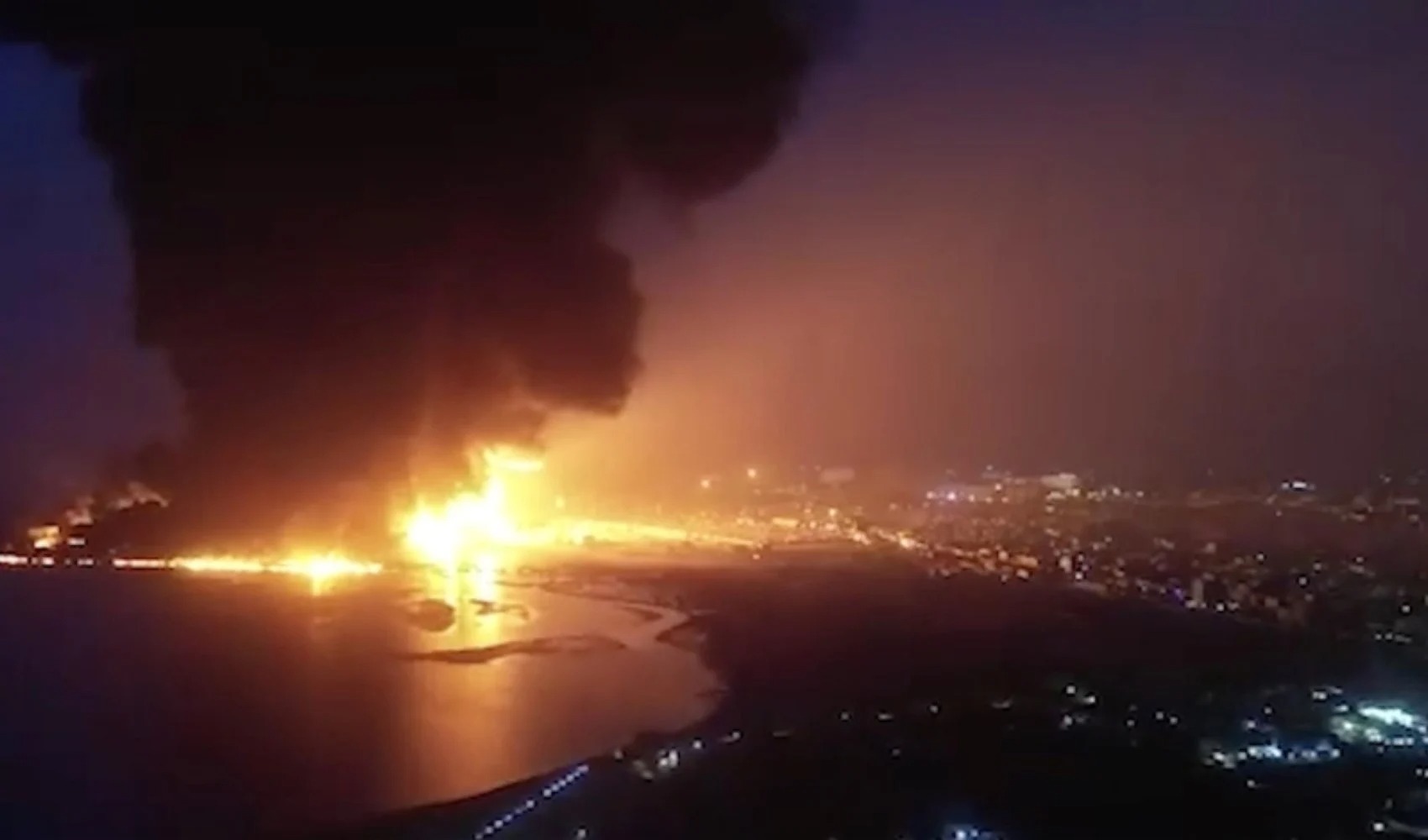
Houthis strike Saudi-owned tanker

What did the CHP do?

Özel’s new party move in the world press

The New CHP, against CEHAPE

From self-efficacy to despair