



The Roman Empire, the Byzantine Empire, and the Ottoman Empire.
Of course, there were similar empires in other parts of the world as well.
But these are the three empires frequently mentioned in our books and on which we focus.
Looking at the last thousand years of our geography, millions of people have been forced to relocate due to the friction caused by these empires.
Without going too far back, if we look at the migrations of the last 200-300 years, the Balkans, the Caucasus, and Anatolia are among the primary lands that both received these migrations and sent those within their bosom away.
We can also include the Middle East and the Northern Sahara in this category to a lesser extent.
Following these migrations, millions of our people changed their locations.
Most returned to their ancestral lands in Anatolia.
Some were driven to Anatolia simply because they were Muslim.
However, despite the lack of a nearly coordinated integration policy, people blended together over the last century.
In every family, there is either a bride or a groom from among those who were later driven to Anatolia.
But it is not well known or asked about.
Even if it is not considered shameful to ask, it is considered unnecessary.
Recently, although some intellectuals with names like Ayşe, Ahmet, Memed, Mısır, Pancar, and Yusuf, who write articles with Germanic translations, have been picking at this issue and trying to create division, they have not been very successful.
Despite their failure, they have not held back from squandering the funds they received at Cihangir dinner tables.
Anyway, let us not stray from the topic; it is hard to get back.
Anatolia, which has been trying to be invaded under the names of migration, immigrants, refugees, and temporary asylum seekers from the south and east over the last 10-15 years, has understood what is coming for it.
It did not resemble previous migrations.
Those who arrived were not muhacir (refugees) or exchangees.
Their types and appearances are strange.
Their gazes create unease.
They do not live according to civil law but according to their local customs; they marry off their children at 11-12 years old, have 10-15 children, become grandmothers at 30, do not go to school, and do not work.
They do not kiss the soil they step on with love or smell it as a homeland; they crush it with resentment.
They do not love its people; they despise them and wait for an opportunity to cut off their heads.
They are not trying to resemble Anatolia, but to make it resemble the savage lands they came from.
They want to implement reverse integration.
If the last three incidents—a girl being killed by having her head crushed with a stone, a teacher being murdered with a gun, and a farmer in Afyon having his throat slit—are not taken into account as harbingers of more tragic events to come, we will see who integrates whom by experiencing it firsthand.
Most Read

Striking picture for Özgür Özel's 'New Party'

Özgür Özel gives a dated response regarding the number of resignations

Forest fire in Antalya brought under control

The PKK opening and Özgür Özel’s path!..
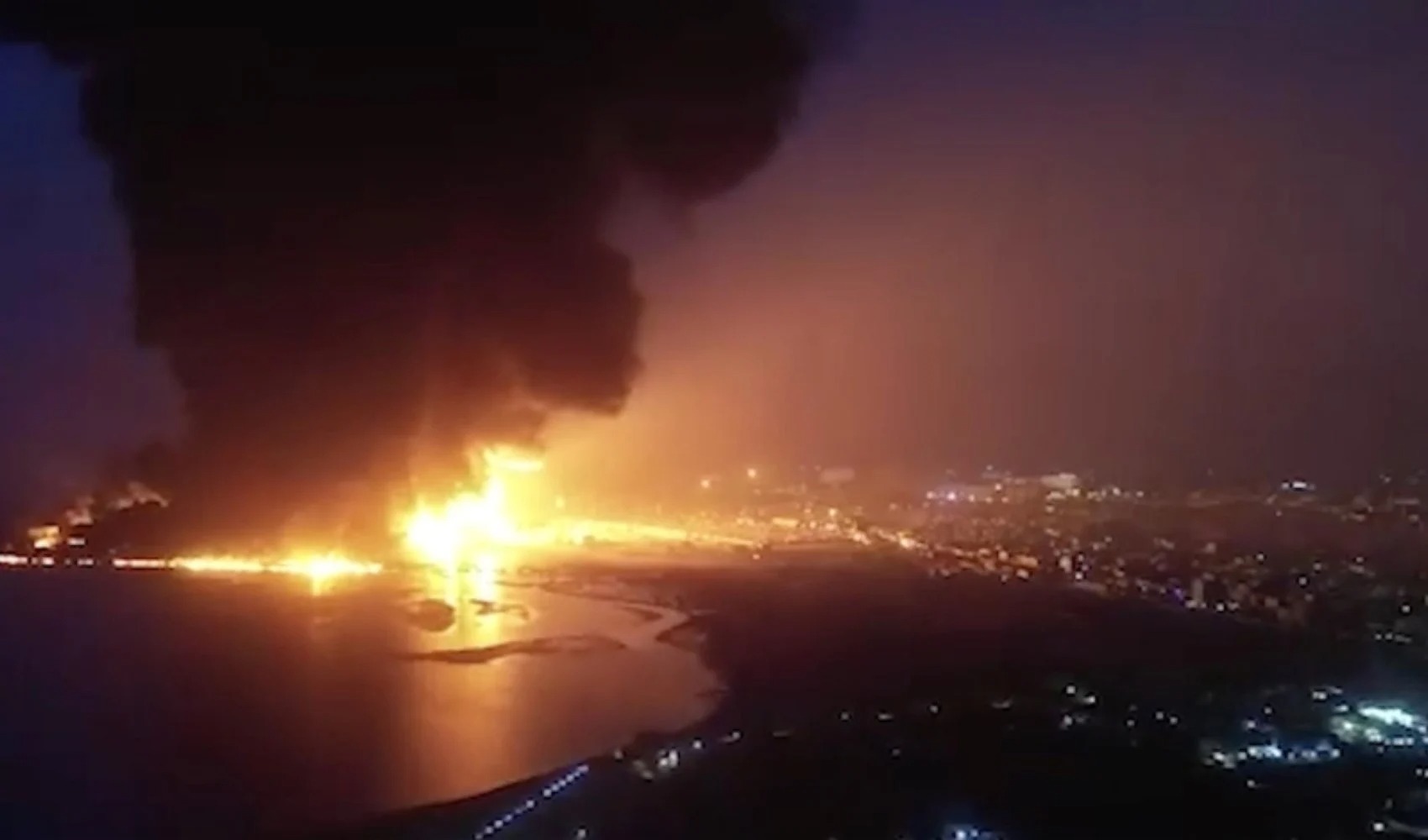
Houthis strike Saudi-owned tanker

How did the newspapers view Özgür Özel's farewell to the CHP?

What did the CHP do?

Özel’s new party move in the world press

The New CHP, against CEHAPE

From self-efficacy to despair