



When we look at historical processes, we see civilizations, empires, and nations that lack continuity.
We learn about these erased civilizations from ancient settlements recently uncovered by archaeologists, such as Göbeklitepe, Karahantepe, Çatalhöyük, and Küllüoba, as well as from prehistoric narratives.
The final rites for many empires in our recent history have long since been read.
New ones have arrived.
The newcomers heated water to generate steam power.
They produced electrical energy by dropping water stored in dam reservoirs from a height through turbines.
Afterward, they created the 3rd Industrial Revolution by introducing computers in the 1960s.
So, who did this?
Engineers, of course.
Civil, mechanical, electrical, chemical, computer, and materials engineers.
Naturally, basic scientists in fields like physics and chemistry also contributed to the process and enabled logarithmic growth.
The team of engineers moderating the industry seized capital, gained political power, and ensured the development of both their countries and their regions.
Whatever happened, countries that somehow overlooked their engineers set sail toward a systematic decline.
When you look at the countries currently shaping the world, you can easily see that those who provide space for their engineers in management are at the forefront.
All members of the Chinese Politburo are said to be engineers.
Germany, too, had previously integrated its engineers into core decision-making processes; the fact that it is now governed by a lawyer describes the crisis it is currently in.
I believe sister Merkel was a physicist.
It is also possible to attribute the current state of disarray in America to the fact that only two of its last seven presidents were engineers.
Institutions, universities, and countries led by engineers create systems that grow through production.
Engineers possess a mindset that measures, calculates, plans, and thinks long-term.
Today, this approach has been largely abandoned; decision-making mechanisms have begun to rely on interpretation rather than data, on opinion rather than calculation, and on slogans rather than systems.
Engineering is not merely a technical profession; it is also a way of reasoning.
An engineer defines the problem, collects data, analyzes scenarios, calculates risks, and aims for the highest benefit at the lowest cost.
For this reason, the engineering perspective strengthens infrastructure, increases production, reduces waste, anticipates crises, and ensures sustainable growth.
Looking at developed countries today, the traces of this disciplined mindset are still clearly visible in the state administration of countries like Germany, South Korea, Japan, and China.
Social sciences, unfortunately, have remained insufficient.
Social sciences are, of course, necessary for society.
However, when they become the sole model of governance, serious problems arise.
Because social sciences are often interpretive, whereas engineering is measurable.
Interpretation does not balance the books.
Perception does not create a budget.
Rhetoric does not build a factory.
When a discourse economy is preferred over a production economy, the result is inevitably inflation, debt, unemployment, and impoverishment.
In other words, poverty is not a coincidence.
If a country is left to the management of those who talk rather than those who calculate, and if the political calendar takes precedence over soil surveys when building roads,
if short-term populism takes precedence over engineering when planning energy,
and if vote calculations take precedence over feasibility in industrial investments, the result is poverty.
This leads to:
Wasted gross national product
unfinished projects
inefficient investments
dependence on imports
growth without production
permanent poverty
returns to society in the form of.
What is the solution?
I will write about that in the next article, but so you don't have to wonder, I will write the most important criterion here.
Merit.
Most Read

Striking picture for Özgür Özel's 'New Party'

Özgür Özel gives a dated response regarding the number of resignations

Forest fire in Antalya brought under control

The PKK opening and Özgür Özel’s path!..

How did the newspapers view Özgür Özel's farewell to the CHP?
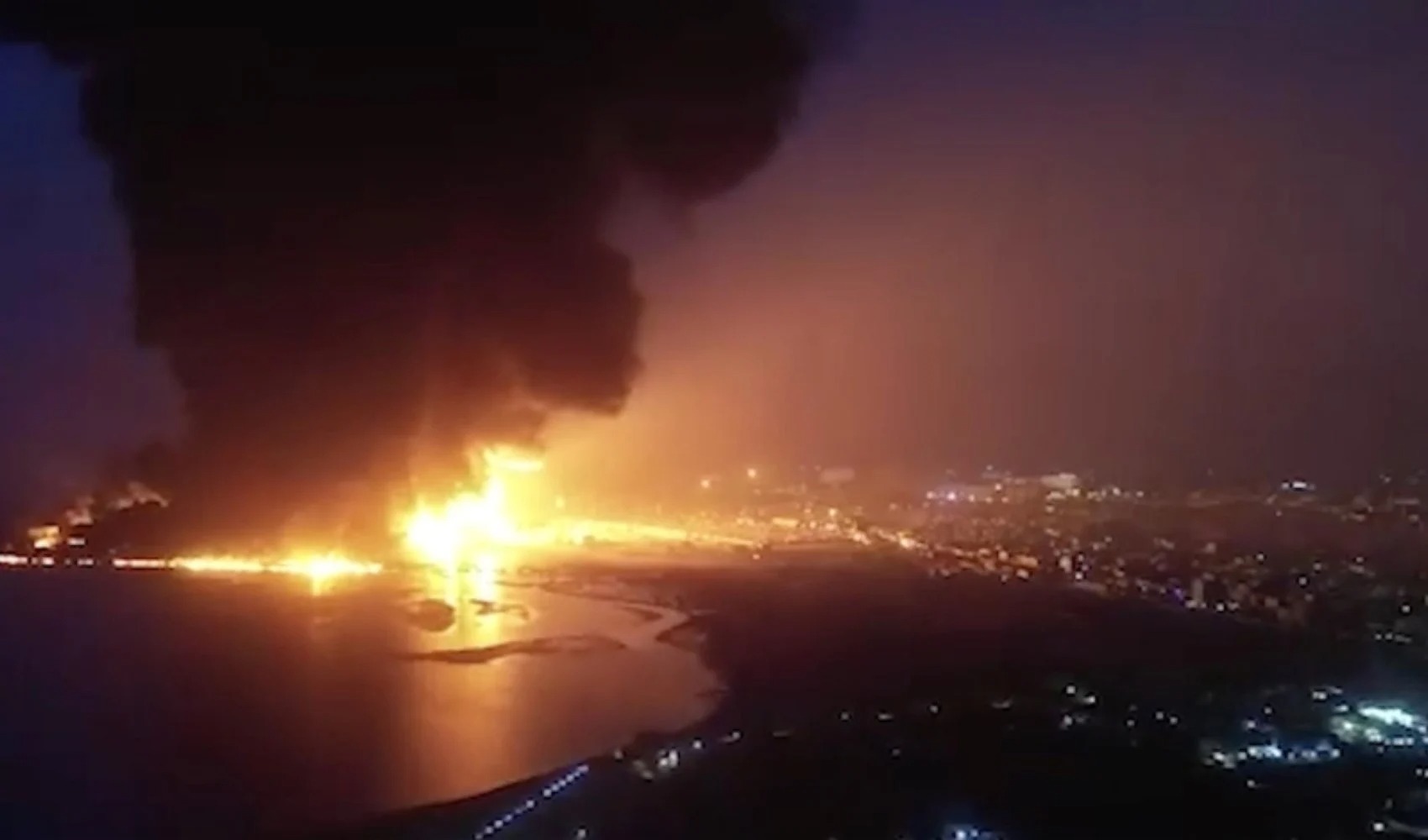
Houthis strike Saudi-owned tanker

What did the CHP do?

Özel’s new party move in the world press

The New CHP, against CEHAPE

From self-efficacy to despair