



I have carefully read Mr. Alpar's response (12punto, 26.11.2024) regarding my article, which I believe shows unnecessary sensitivity, as he concludes that I called him a liar. When I wrote in my article, "I am saying there is a major post-truth phenomenon here," what I meant was not any lie by Alpar, but rather the effort by TÜBA (Turkish Academy of Sciences) at the time to cover up the reality of the Doğramacı-Spock plagiarism, by thinking it through, deliberating, and almost systematizing it. The truth is not hidden only by lies. Remaining silent in the face of a lie is also, invariably, a defense of the lie. There is a hadith that says, "He who remains silent in the face of injustice is a mute devil." In the introduction to my article on the subject, I stated that post-truth is a form of trickery that makes lies more palatable. This is precisely the trickery that TÜBA once engaged in. In this context, Mr. Alpar makes references to his article in Sarkaç (sarkaç.org), states his own interpretation, and says, "In my opinion, the Council should have announced to the public that the TÜBA General Assembly did not decide to support Doğramacı, but merely removed the issue from its agenda." I must give him credit. He explained the exact nature of the trickery I was referring to better than I did.
Although the target of the post-truth phenomenon in my 12punto article that started this discussion was not Mr. Alpar but the TÜBA of that time, it is also clear that I made a reproach to Alpar in the same article. After all, as I emphasized, Alpar says in both his Sarkaç and 12punto articles that what he expected from TÜBA was for it to announce to the public that it had removed the issue from the public agenda. But doesn't Alpar also have something to say about this phenomenon of removing it from the public agenda? On the other hand, in his Sarkaç article, he says with great composure, "This incident created awareness in the public regarding science and publishing ethics. Academic moral violations continue to be widespread at every level of our university system. Many administrators ignore these incidents, and even commit them themselves." I wonder if I can express it? The reason for my reproach is this composure. It is precisely for this reason that I ended my relevant 12punto article—which Alpar for some reason chose to interpret differently, pretending not to understand my irony—by saying: "I am saying there is a major post-truth phenomenon here. Does this mean that the primary responsibility lies not with the TÜBA of the time, which knew how to get things done and positioned itself according to the situation, but with the place that speaks the truth in my country? How so? Perhaps what happens to those who speak the truth gives courage to those responsible for the corruption. Why can we never think that if TÜBA had acted a little more properly in the incident in question, at least some of what Mr. Alpar correctly observed might have been prevented, perhaps even to some extent?"
Let me elaborate a little further. TÜBA never made any comment regarding the Doğramacı-Spock plagiarism that once occupied its agenda so much, or the process that ended with me being convicted and then cleared by the European Court of Human Rights after Doğramacı sued me for speaking out about it (Bir Aşırma, Hasan Yazıcı, İletişim Yayınları, 2nd Edition, 2024). I was having difficulty understanding this. However, an ethics book published by TÜBA in 2008 unfortunately made the situation crystal clear.
At that time, the non-pecuniary damages lawsuit Doğramacı had filed against me had concluded against me, and I had taken the case to the European Court of Human Rights. The person who wrote about the subject of plagiarism in TÜBA's Handbook of Scientific Ethics (TÜBA Publications, 2008) was a famous law professor who was an expert on intellectual property rights. In one part of his writing, while discussing what can and cannot be called plagiarism, he said exactly this:
"The unfortunate decision of the Court of Cassation General Assembly of Civil Chambers dated May 10, 2006, with file number E.2006/4-230 and decision number K.2006/288, is a negative example in this regard. In the aforementioned decision, the justification was given that 'In the expert reports obtained from the beginning, it is written that both books are handbooks, are anonymous, do not contain original ideas, are not ideas developed by the authors, and therefore there is no need to cite sources.' The decision approached the event not from the point required by the case, that is, the concept of a 'work,' but from the point of 'handbooks.' This is wrong..."
The quote was from the Court of Cassation decision in the Doğramacı-Yazıcı case, which found me to be in the wrong. However, for some reason, the professor did not make any reference to which case the decision he quoted belonged to. I understood now. TÜBA was not insistent on telling the truth, the whole truth, and nothing but the truth.
At the end of his Sarkaç article, Mr. Alpar briefly explains why and how many members left the old TÜBA and founded a new Science Academy, making the necessary references to Mr. Bermek's book on the subject (Türkiye’nin Bilim Akademisi Sınavı, Engin Bermek, Boğaziçi Yayınları, 2015). I am one of those who left that old TÜBA and became a member of the new Science Academy. I, too, sincerely wish for the growth and development of the Science Academy and for it to serve my country and world science for centuries to come. However, alongside this wish, especially in light of my unfortunate TÜBA experience, I cannot help but remind our esteemed scientists that the fundamental element, the sine qua non, that constitutes a science academy is unconditional respect for the truth.
Most Read
It never ends: Another FETÖ memory
A mind fixated on leggings...
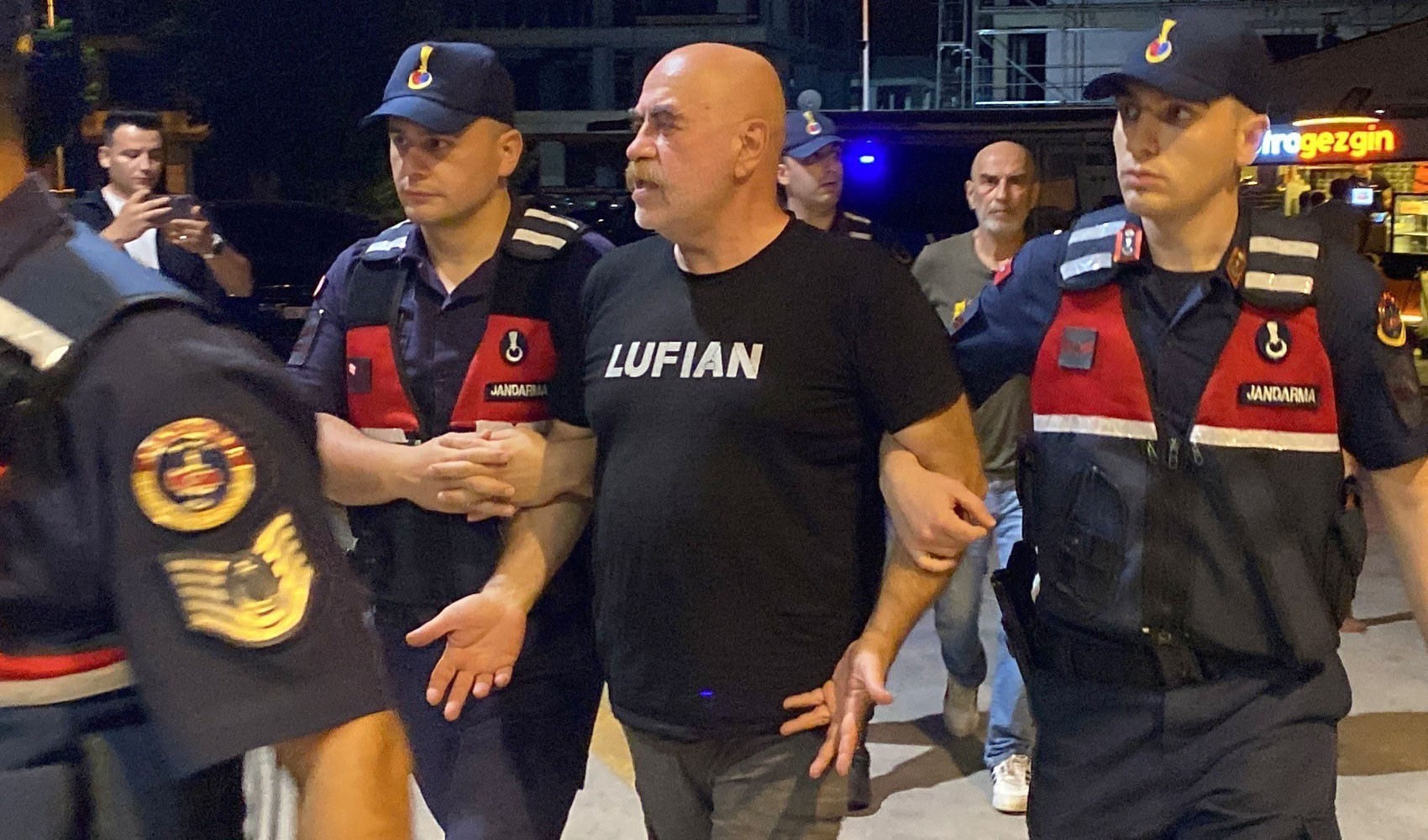
Famous director Ezel Akay and his brother have been detained
The official, rumored to be switching to the AKP, has begun a persuasion tour
The debates within the CHP do not interest me at all
Ümit Özdağ's comment on the new party
Strict oversight for novice drivers
Enver Altaylı claim in the Yazıcıoğlu file
The acting mayor election won by the CHP will be repeated starting from the third round

Warning on the risk of hair loss with GLP-1 drugs