



On September 21, Foreign Minister Hakan Fidan was a speaker at a session held at the Foundation for Political, Economic and Social Research (SETA), which was also broadcast live on YouTube. In the program, where questions were also taken from the audience, Fidan spoke about both the changes within the ministry and the second-century goals of Turkish foreign policy. I would like to share some points that I found important here, as well as a few questions that formed in my mind.
The Minister spoke at length about intelligence, both because it was his former role and because he defines the field of National Security through the triangle of diplomacy-intelligence-security. Indeed, we see that this understanding and background play a role in Fidan's restructuring of the Ministry of Foreign Affairs, the opening of new units, and even his appointment of an intelligence historian as the head of the Center for Strategic Research (SAM). It is not difficult to predict that this situation will continue in a similar way in the future. In addition to this long speech on intelligence, the minister also touched upon the aforementioned reform in foreign affairs. He stated that he is trying to carry out this reform in a way that balances tradition, the present, and the future. He emphasized that while one must be careful when changing deep-rooted institutions, it is important to present a model that can manage crises and opportunities together. The Minister's statement that in order to pursue a "dynamic" diplomacy, one must move away from the 19th and 20th-century diplomatic tradition, I believe, contained both an observation and a criticism of the ministry's structure. Frankly, this criticism is not just Fidan's. In the not-too-distant past, in the 2010s, Foreign Minister Davutoğlu also embarked on a series of reform movements in the ministry as a necessity for a "proactive" foreign policy. However, what exactly this initiative reformed was, frankly, a matter of debate. This time, I am curiously waiting to see what the attempt to reform the ministry with similar motives will correspond to. And, of course, one must also ask: How will the goal of reforming the organization, which emphasizes bureaucratic work within the ministry, be reconciled with the increasing number of non-ministerial political appointments that continue to attract public attention? I think we will be able to see the answer to this question in time.
Another topic was the changing system in the world and Turkey's place within this transforming system. According to Fidan, there are states challenging this system established after the Second World War. However, these are not the permanent members of the UN Security Council. Among the permanent members, there are countries that are more against the West than the system, and it is not difficult to guess them: China and Russia. In this context, while Fidan stated that the countries that have a problem with the system are actually different countries, he mentioned Brazil and South Africa. And, of course, Turkey... He emphasized "virtue" in Turkey's problem with the system. He said that the system should be organized on the basis of virtue, but on the other hand, he stated that this concept of virtue cannot be effective without power. The question that can be asked at this point, I think, is this: When talking about international politics and Turkish foreign policy, what exactly do the emphases on abstract concepts, such as virtue, correspond to? A similar question can be asked for the frequently used topic of "values." How are these concepts or words, which have been frequently used in the last decades, defined within Turkish foreign policy? Are these definitions left somewhat vague because they change according to the subject at hand? It should be noted that when you convey foreign policy and international politics with such abstract concepts, a blurred image is formed in the mind. So much so that Turkey has a systemic problem, but has this problem fully transformed into a concrete and achievable goal or policy? I think we need to question this. I would like to open a long parenthesis here. For the BRICS issue, which we have been discussing in recent weeks within the framework of systemic changes, Fidan used the term "work in progress." Regarding EU membership, he stated that there is no change in Turkey's stance, but that the EU discusses the issue through identities. In short, he passed the ball more to the EU. On the other hand, he said that both sides have interests in issues such as trade, tourism, and technology transfer. He did not, however, touch upon refugees, which I think is the most important issue in this functional relationship.
I will not go into more detail about the speech. However, before finishing the article, I would like to add two more to my question marks. First, why was no question directed to the minister regarding some regional systems that Turkey is a part of, in this session where even the diplomacy Turkey conducts in Africa was mentioned? In this session, where the goals of Turkish foreign policy in its second century were discussed, we only heard a long explanation regarding the Israel-Palestine issue in relation to the regional dynamics we are a part of. Frankly, I was more curious about the rhetoric on different regional issues. My second question is more fundamental. There were some words and themes that the Minister emphasized in particular. Dynamism was one of them. A values-based foreign policy was another emphasis. On the other hand, Turkey's presence in vast geographies was also shaped through these concepts. Well then, what exactly was the difference between this foreign policy and Davutoğlu's foreign policy? Perhaps the answer could be given as the emphasis on the national security discourse instead of the once-motto of soft power. Which, in fact, that transformation had already begun during his term for geopolitical reasons. But, on a more ideological and intellectual basis – especially in an environment where regional issues are not even mentioned – I can easily say that one needs to think hard about the differences. We will watch and see...
Most Read
Özgür Özel gives a dated response regarding the number of resignations
Houthis strike Saudi-owned tanker
Forest fire in Antalya brought under control

4 drones shot down near US Consulate General in Erbil

Özel’s new party move in the world press
Famous director Ezel Akay and his brother have been detained
The new rule of the field: Attrition
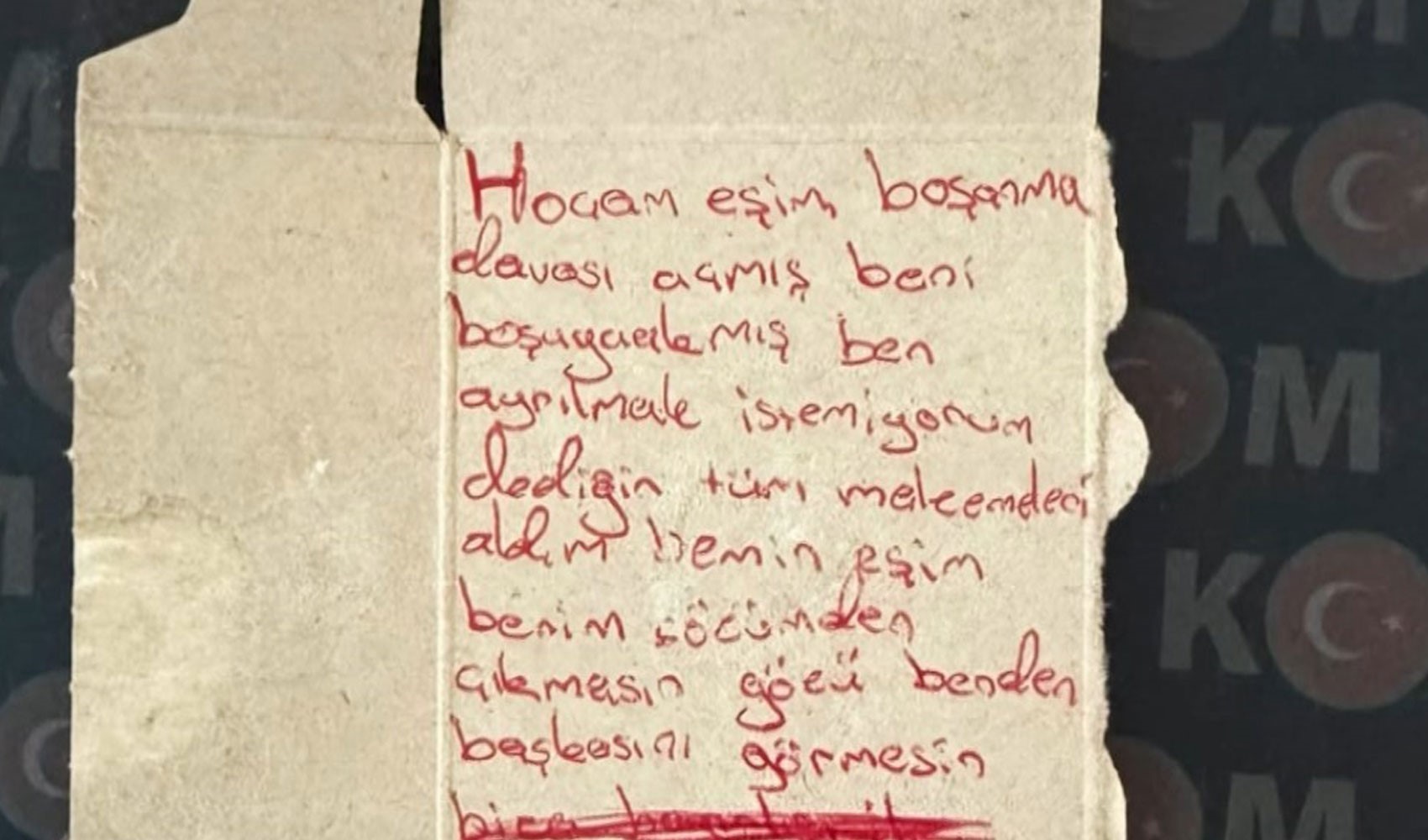
'Papers with spells and curses' operation: 'Master, my spouse filed for divorce'
Key figure in Epstein files found dead at home
Bad news for the 'New Party' Özgür Özel is set to establish