



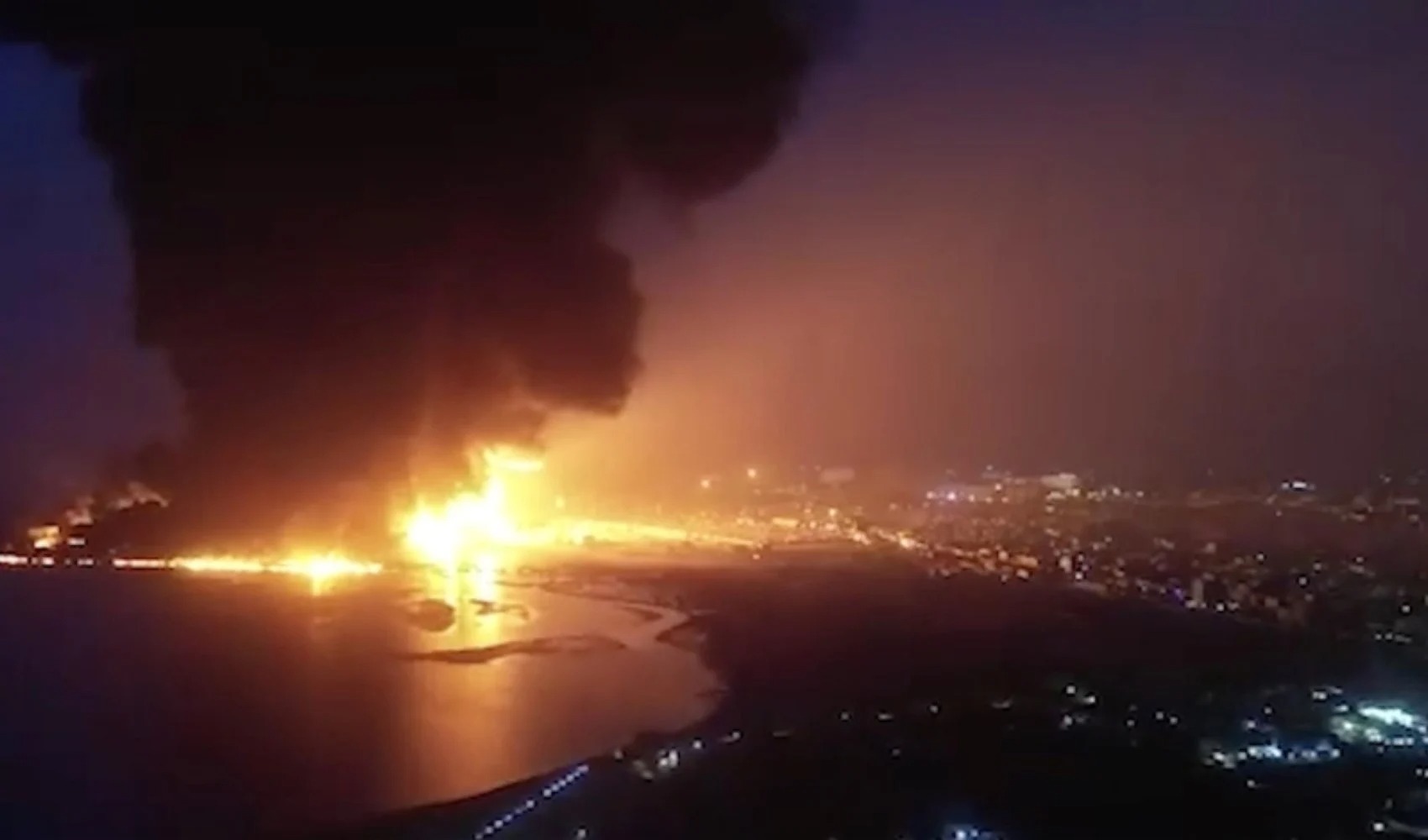
A deadlock in Hormuz, a blaze in Druzhba... The gears of global trade that operated on a 'just-in-time' basis have ground to a halt. Now is the time to redraw the map and build ghost chains. At the end of last January, on the 27th, a Russian drone struck the largest reservoir of the Druzhba Pipeline. The tank, with a capacity of 75 thousand cubic meters, caught fire, and the blaze could not be extinguished for ten days.
Today, Ukraine has completed the repairs, the line is operational, and the path to a 90 billion euro support package has been cleared, but the anxiety has not ended. Iran, meanwhile, has begun charging transit fees in Hormuz, and ship traffic has decreased by 95 percent. Companies are changing routes in a panic. The real question is this: Is it not that the road is insufficient, but that the system is changing? This is exactly where we find ourselves inside the economic labyrinth.
TWO CRISES, ONE MESSAGE
With every tension in Hormuz, an "alternative route" has started to be discussed. Yet, Druzhba taught us something different: Sometimes the road itself can cease to exist. In the attack last January, there were 25 thousand cubic meters of oil inside the tank. Flames rose, sensors burned, cables melted, and the leak detection system collapsed.
Those looking from the outside thought "there is no damage." But the inside was completely dead. This is the brutal reality of the economic labyrinth: Sometimes they block your path, sometimes they take what you have, and sometimes they erase the road entirely. In all three cases, "just-in-time" goes bankrupt.
JUST-IN-TIME IS DEAD, LONG LIVE "JUST-IN-CASE"
For years, companies were "enemies of inventory." Warehouses empty, supply tight, everything punctual. This "just-in-time" philosophy, introduced by Toyota founder Kiichiro Toyoda in the 1930s, was the golden rule of the globalization era. But if Hormuz closes, a firm can last three days, not five. If Druzhba is hit, there is no "other pipeline." The new rule in this economic labyrinth is now: "Just-in-case." IMF Managing Director Kristalina Georgieva exclaimed at last month's 2026 Spring Meetings: "Don't pour gasoline on the fire." What did she mean? Do not panic, do not impose export bans unilaterally, do not freeze prices; these things exacerbate the crisis. So what should you do? You should manage strategic reserves.
STRATEGIC RESERVE IS INSURANCE
We are not talking about panic hoarding. Proper reserve management is identifying critical raw materials in advance and stockpiling against a crisis that could halt production for at least three months.
Think of an automotive company. Chips aren't coming from Hormuz, there is no oil from Druzhba. What does it do? It waits. A firm with reserves, however, continues production. This is the secret of the economic labyrinth: Stock is no longer a cost, it is insurance. Today, keeping a container in a warehouse is cheaper than shutting down the factory tomorrow. "Just-in-time" is a beautiful theory, but it does not work in the labyrinth.
IT DOESN'T WORK WITHOUT SIMULATION
If technology is not involved, reserves are not enough either. Smart companies are now building a "digital twin" of Hormuz and Druzhba. They test with simulation: "What happens if Iran doubles the fee? If Druzhba remains closed for three months, which port can withstand it?" Today, AI-supported logistics software can automatically change routes before a crisis emerges. Any ship that sets out without these simulations moves blindly through the economic labyrinth. Planning and simulation have become as important as the shipment itself.
MULTI-SOURCING IS VITAL
A single supplier, a single route, a single port… Hormuz shattered this. Druzhba showed that a different pipeline coming from the same source can also be hit. Therefore, the new golden rule: At least two different geographies and two different logistics models for every critical product. As the exits in the economic labyrinth multiply, fear decreases.
In conclusion, Hormuz and Druzhba are not just individual cases; they are warning lights of the new order. "Just-in-time" is over, "just-in-case" has begun. Any company that sets out without strategic reserves, a "digital twin," and multi-sourcing is doomed to get lost in the economic labyrinth. The winners of today will be those who have already drawn their maps based on multi-simulation.
Most Read

Striking picture for Özgür Özel's 'New Party'

Özgür Özel gives a dated response regarding the number of resignations

Forest fire in Antalya brought under control

The PKK opening and Özgür Özel’s path!..
Houthis strike Saudi-owned tanker

How did the newspapers view Özgür Özel's farewell to the CHP?

What did the CHP do?

Özel’s new party move in the world press

The New CHP, against CEHAPE
4 drones shot down near US Consulate General in Erbil