



Today we are at the ballot box. Writing political articles is prohibited. Although ministers do not care about the election bans of the YSK (Supreme Election Council). The power of the YSK and the judiciary is not enough for them. I mainly write about the economy, but the economy and politics can become intertwined. Ministers may not be following the laws. That is their shame. Let us say we are responsible for ourselves and not write about politics today. Furthermore, traditionally on election days, I write about the kitchen and recipes, and I talk about food in TV interviews.
Today, let us scribble a little about my new book on the economy, a little about my maritime book which went into its fifth printing last month, and a little about the kitchen. There may be those who do not know, so let us remind them. In addition to my economics education, I have completed 37 years in sailing and maritime activities, which I started as a hobby. The last 5 years of this have gone beyond being a hobby; I hold a professional yacht captain's license. Maritime and captaincy naturally lead people to make trials and studies on food and the kitchen…
Every sailor, in order to survive, must know how to make meteorological observations and forecasts, first aid in the health field, simple mechanical repairs, and how to cook. Most small boat sailors, in particular, are skillful cooks.
In February, along with my latest book Turkey's Factory Settings for the Twenty-First Century/Counter-Revolution in the Economy, the fifth edition of my book Living at Sea was also published at the same time. (Both books are from Naviga Publishing)
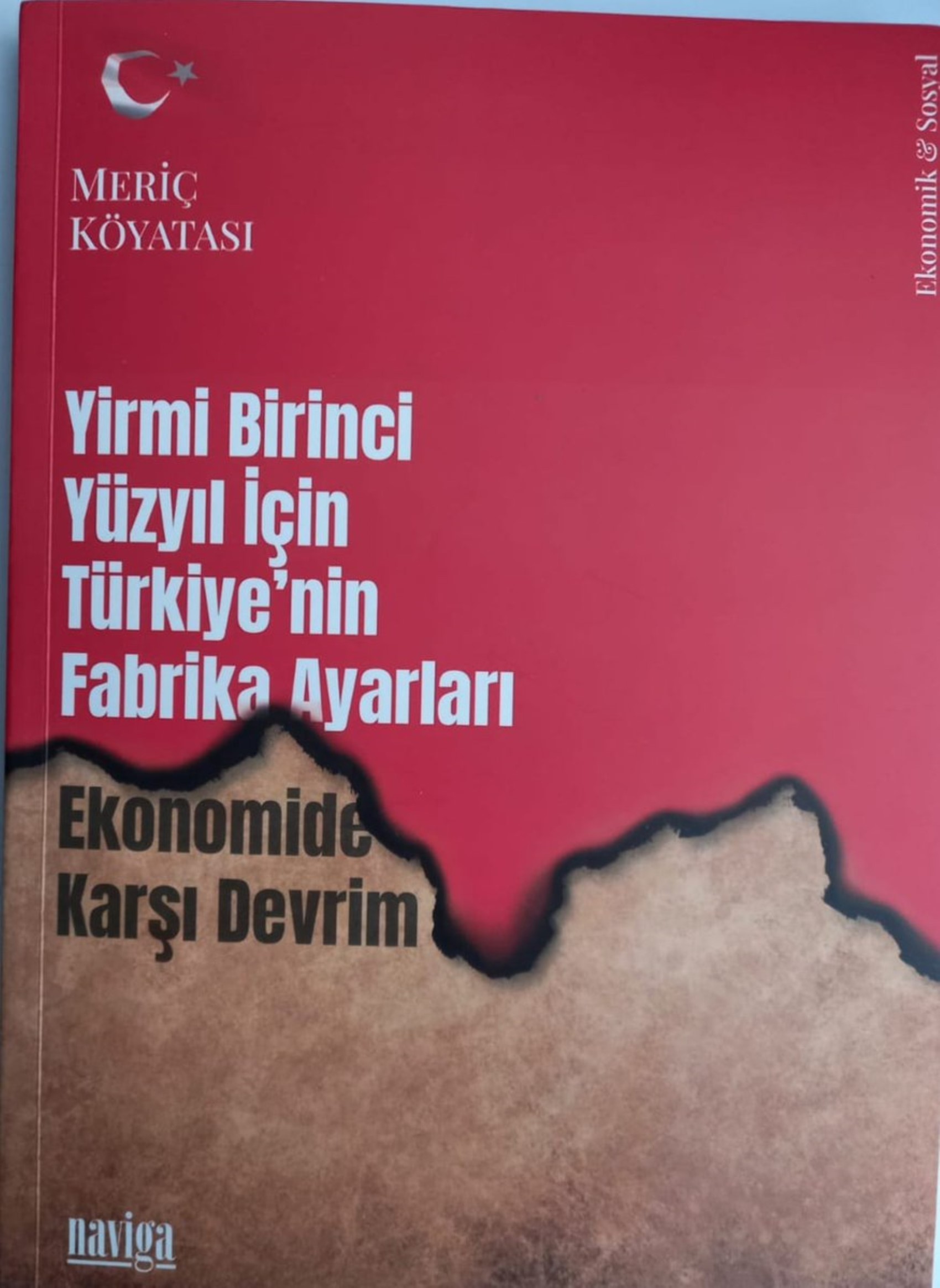
In the book Living at Sea, I tried to explain the love of the sea and nature and the basic rules of seamanship to those who want to start amateur sailing. I am quoting from what my old friend, the 50-year veteran maritime journalist Turgay Noyan, wrote on the back cover of the book:
'In Living at Sea, you will find everything from choosing a boat to what needs to be done to start amateur sailing. Moreover, not as if you are taking a lesson, but as if you are chatting with a loved one… we wrote in the first edition of this book. Indeed, the warmth of the book embraced every reader so much that it became famous by word of mouth, making it the owner of a surprising record in maritime publishing. The one you are holding is the fifth edition of this book. Moreover, this interest from the reader did not stem from preparing for any exam, but only from the passion of taking a step into sea life. We believe that Living at Sea will not leave your hands, with its examples from the boat kitchen as much as its other content.”
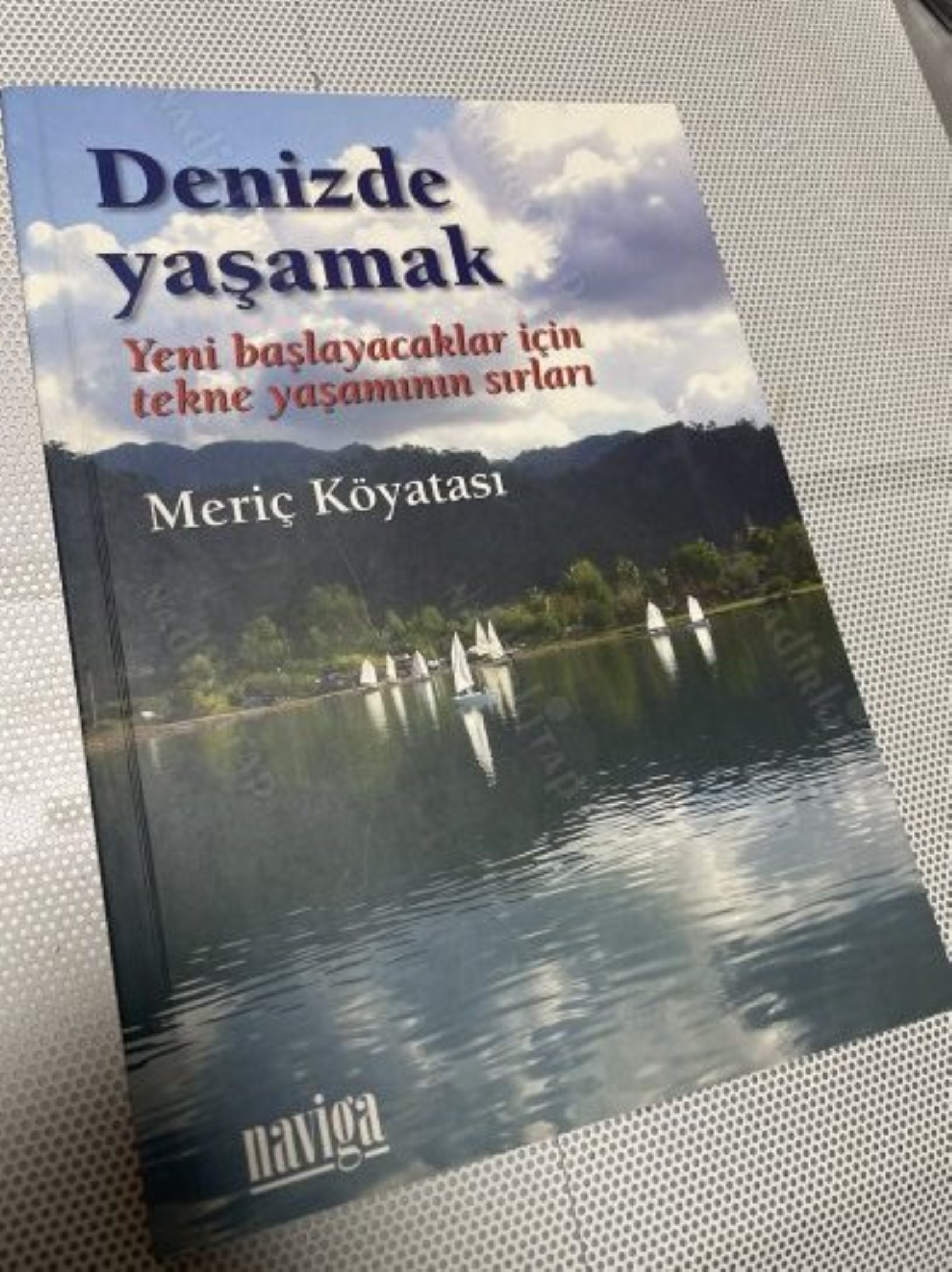
As dear Captain Turgay Noyan said, many people I have met both at maritime fairs and while traveling the seas have conveyed their thanks, saying, “I read your book and we bought a boat, now we are traveling the seas.” Of course, the recipes in the last part of the book also made a big splash, especially among the ladies. In fact, the recipes went so far that it extended to guest chef appearances for guests sometimes numbering up to 100 people at a few marinas and hotels at the Tasting Alaçatı Festival (not the Herb Festival). Before book signing meetings, I entered the kitchen, and we held dinner signing and chat meetings. Let us share a recipe from the book.
SEA BASS WITH FENNEL (ARAPSAÇI)
Arapsaçı (Fennel), is a plant that grows spontaneously in nature in the Aegean. The cultivated version is fennel. If you cannot find arapsaçı in my recipe below, you can use the leaves of the fennel plant. Its leaves and appearance resemble dill. It has an intense anise scent.
In my childhood, my late grandmother and my late mother used to make lamb with arapsaçı and fried eggs with arapsaçı very often. I would also come across it in some Aegean taverns. Curiosity, you know. “We make this with lamb and eggs, why not make it with fish.” I decided to try the stewing method with arapsaçı. However, I have a slightly different method for stewing large fish. First, I obtain fish stock. For fish stock, the fish head and spine need to boil on low heat for half an hour to forty minutes with onion, bay leaf, and celery leaves. Thus, we obtain both flavor and the collagen of the fish. If we cook the fish with its bones for 30-40 minutes to obtain collagen, the fish becomes overcooked and turns spongy. That is why I prefer fish stock.
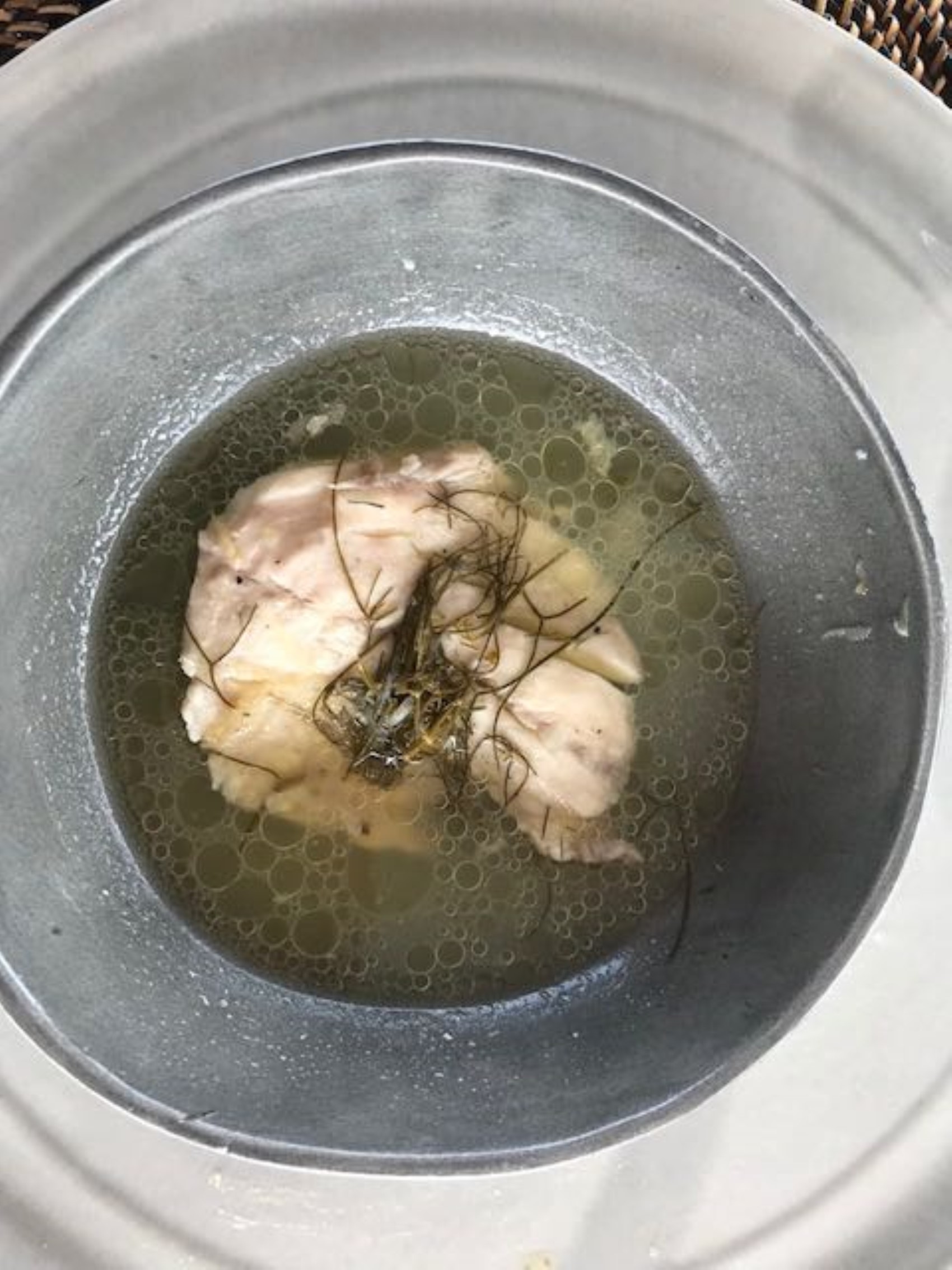
Fillet an 800-gram or larger sea bass (it can be smaller, but in that case, the amount of waste in the fish increases) or have your fishmonger fillet it. Keep the skin on. After washing the head and spine in ice water and letting the blood drain, boil them on low heat with half an onion, half a carrot, and a few stalks of celery leaves in 2 cups of water with the pot lid closed for about 30-40 minutes. Thus, we obtain a deliciously tasty and highly nutritious fish stock. Sprinkle coarse salt and black pepper over the fillets. Slice the fillets into four-finger-thick pieces. Put some olive oil in a pan. For one sea bass, sweat two to three handfuls of arapsaçı in the oil for about half a minute to a minute. Add the stock you obtained on top. Check the black pepper and salt. Throw two slices of peeled lemon into the water or squeeze a quarter of a lemon. Place the fish fillets in the pot. Cook with the lid open for about 8-10 minutes. (Depending on the size of the fish.) Then, color it on the grill of a hot oven for about two minutes, with only the top side working, and serve. Diving into the plate with a fork and spoon, and dropping a buoy is allowed.
TURKEY'S FACTORY SETTINGS FOR THE TWENTY-FIRST CENTURY
Both the 5th edition of the Living at Sea book and my latest book, Turkey's Factory Settings for the Twenty-First Century/Counter-Revolution in the Economy, can be obtained from www.amazon.com.tr and www.denizkutuphanesi.com.
In the book Turkey's Factory Settings for the Twenty-First Century, I discussed a summary look at the past, present, and future of the world economy, the economic development move carried out in the founding years of the Republic and the spirit of Atatürk's Enlightenment Revolutions, and the destruction and economic-social collapse process created in the economy by the counter-revolution in the period from Atatürk's death to the present day. In the last part of the book, I opened the manifesto of the “economic development and fair distribution model” to discussion in today's world conditions in the light of Gazi Mustafa Kemal Atatürk's Enlightenment Revolutions and principles. For me, it was an honor, and for the book, a medal, that Prof. Dr. Bilsay Kuruç, one of the pillars of our economic world, wrote the Foreword to this book.
Most Read

Striking picture for Özgür Özel's 'New Party'
Özgür Özel gives a dated response regarding the number of resignations
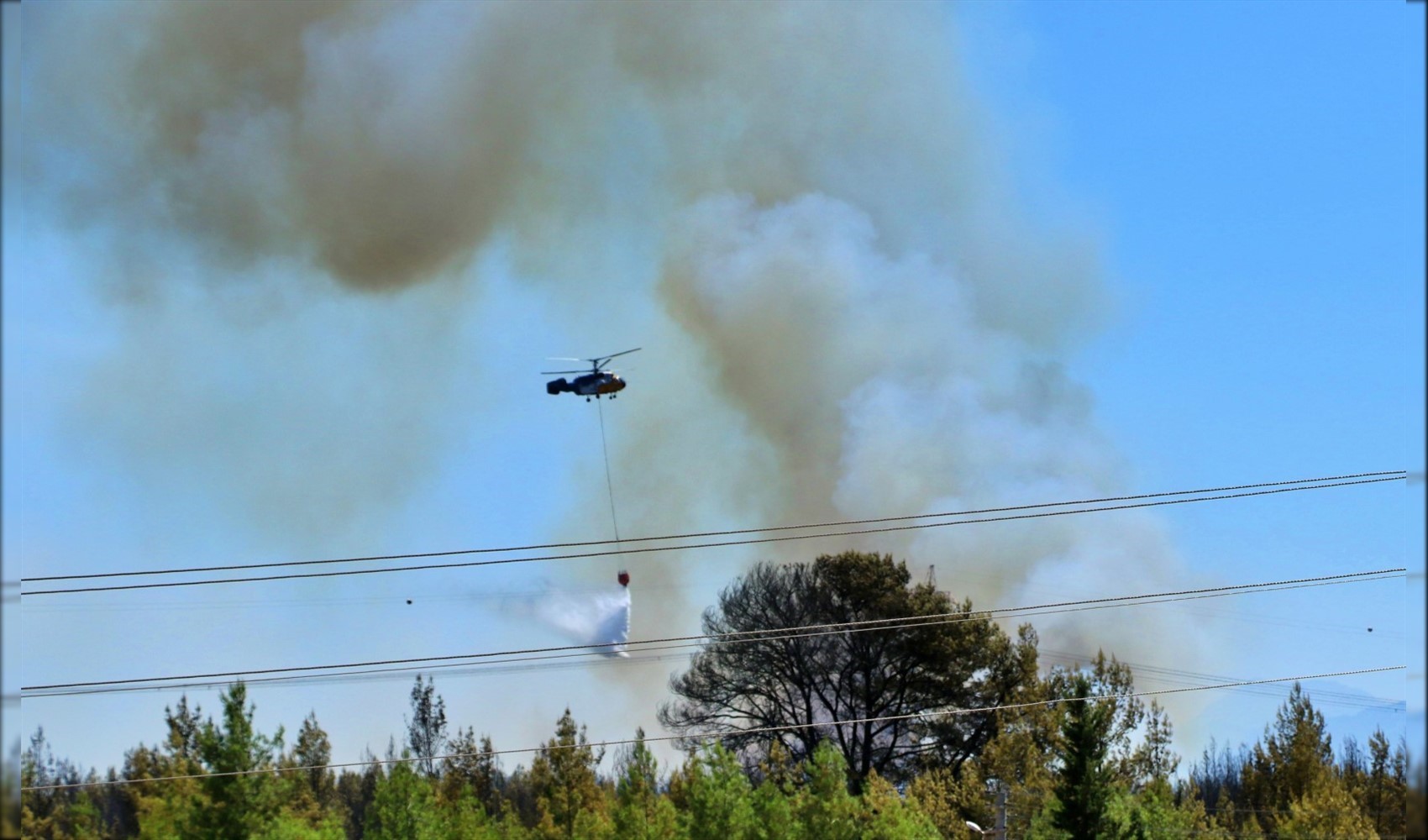
Forest fire in Antalya brought under control

The PKK opening and Özgür Özel’s path!..

How did the newspapers view Özgür Özel's farewell to the CHP?

He killed his wife by slitting her throat: Their children witnessed the moments

What did the CHP do?

Özel’s new party move in the world press

The New CHP, against CEHAPE

Fire at TUSAŞ engine factory in Eskişehir under control