



Trump's losses in war, Turkey's losses in the economy...
The war initiated by the US-Israel alliance against Iran has left its second week behind. The speculative weight of the news coming from the war zone is quite high. In this situation, it is essential for economists to evaluate numerous sources together to make sound predictions.
In such days, especially during attacks by imperialist countries coming from afar, the assessments of staff naval officers carry importance. On such days, I take into account the assessments of my esteemed friends, retired admirals Mustafa Özbey, Cem Gürdeniz, and Türker Ertürk, as well as news and analyses appearing in the US opposition press. During the week, retired admiral Mustafa Özbey made a very important assessment.
“During the Cold War, the USSR Mediterranean Fleet was called the "OneShotNavy" in NATO. Because after the missiles/torpedoes/ammunition on the ship were exhausted, it had no logistical infrastructure to resupply and return to war. Now, when I examine the US-Iran war, the description "Two-weeks of Army" fits the US Armed Forces very well...
The US+Israel is losing against Iran... The US military, together with Israel, will henceforth be referred to as the "Two-Week Army"... Iran, as the price for all the destruction it has experienced, has dealt such a punishment to the US that it has ended the 3rd World War, which was expected to take place between the US and China, before it even began... Iran has shown the world that it is impossible for the "Two-Week Army" to defeat China.”
Let me provide a brief summary of the assessments of retired admiral Cem Gürdeniz again. When viewed in terms of costs, there is an asymmetric war. The fact that the protection shield is high-cost, while Iran's offensive missiles are low-cost, clearly reveals that this war should not be prolonged for the US and Israel. The fact that the US protection shield in the Gulf countries is not working also creates a serious trust issue between the US and its allies.
The fact that the US is bringing in defense radars and batteries from Japan and South Korea is also one of the most important indicators that things are not going as planned. There can be only one explanation for shifting some of the forces in the Pacific and Southeast Asia to the Gulf: A strategic collapse from the Pacific to the Gulf. It is proof that the 3rd World War planned against China has ended "logistically" before it even started.
TRUMP’S WAR AT HOME
Now let's take a brief look at the news appearing in the American press. Analyses by Robert Reich published in The Guardian characterize this war as an "imperial presidency" move initiated by Trump to consolidate his own power.
In analyses by the New York Times and National Public Radio (NPR), known for its impartial news analysis, the criticism that Trump is dragging the country into an uncertain chaos without an "exit strategy" prevails. For the White House, the definition of "Strategic Blindness" is explicitly used. Defense Secretary Pete Hegseth's words, "there will be no stupid rules of engagement," are interpreted in the press as an "invitation to war crimes."
The opposition's budget restriction attempts in Congress and the reflection of the rise in oil prices on US inflation could also be a harbinger of difficult days for Trump.
According to data from Politico, a prestigious news and analysis organization that keeps the pulse of US politics, the Pentagon is spending approximately 2 billion dollars a day for the Iran operation. Stating that the current budget, which is valid until September 30, 2026, does not cover a war of this scale, Congress closed the door on "supplemental budget" requests. Although "War Powers Act" votes in the House of Representatives and the Senate have been narrowly rejected for now, Democrats and some Republicans are following a strategy of stopping the war by tightening the budget faucet.
I wrote about this in previous weeks. According to our Central Bank's research, every 10-dollar rise in oil prices in Turkey is reflected as a 1-point increase in inflation. According to IMF data, every 10-dollar increase in the price of oil adds 0.4 points to global inflation permanently. Considering that annual inflation is around 30 percent in Turkey and 2.4 percent in the US, it will also emerge that a 0.4 percent pressure is many times greater than the 1 percent pressure we face. This pushes interest rate cut expectations in the US and Europe to 2027.
Naturally, it is necessary to evaluate the rising oil prices, the emerging inflation danger, and Trump's rapid loss of public support together.
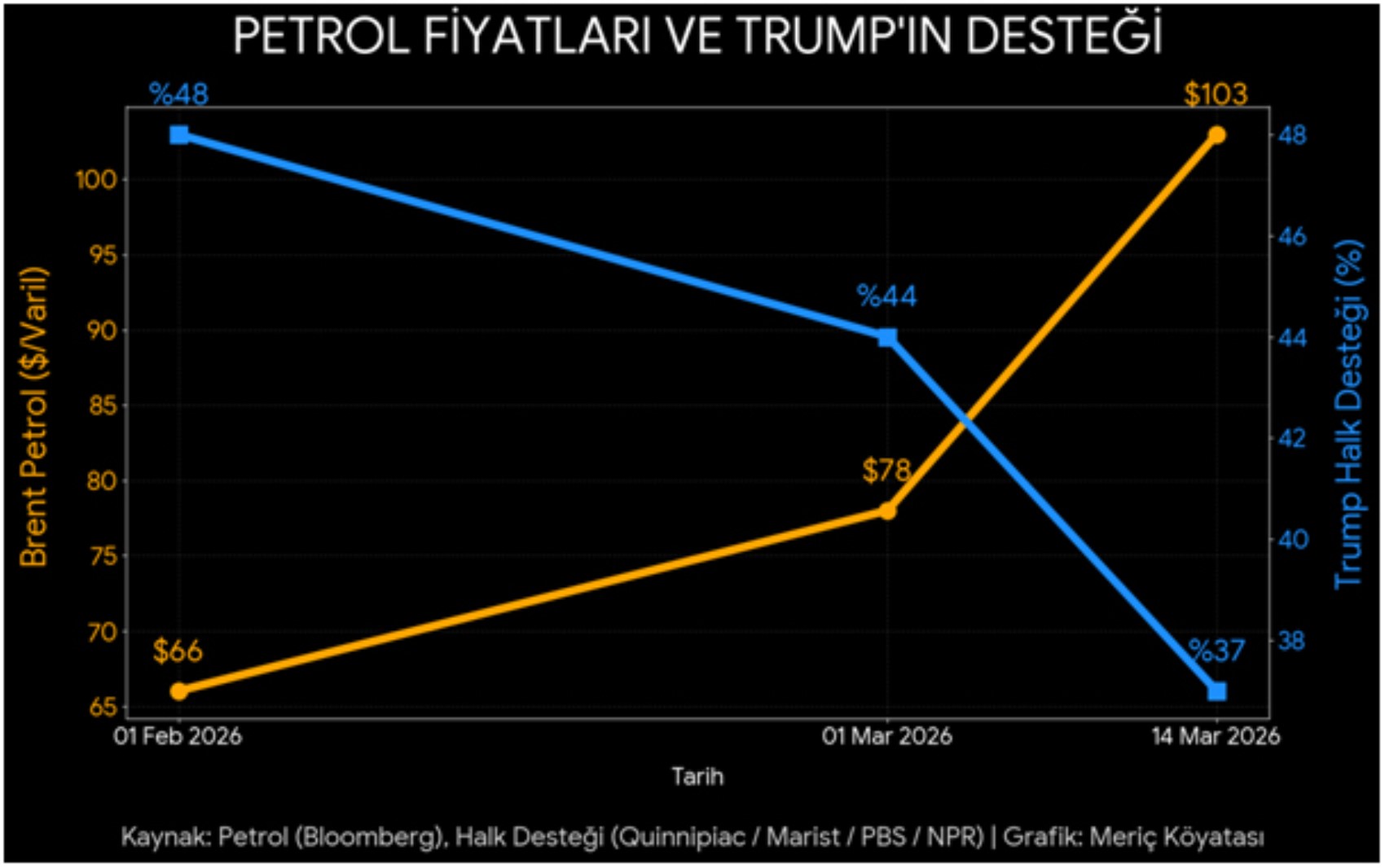
"The graph depicts a clear collapse: While the curve showing oil prices climbs with a vertical momentum from 66 dollars to 103 dollars, the graph showing Trump’s political approval reflects a downward break with the same speed.. His support drops from 48 percent to 37 percent. Trump is losing at home. Even if he achieves a Pyrrhic victory in the Gulf, this will go down in history as a loss.
WHAT AWAITS TURKEY
FOREIGN POLICY AND MILITARY RISKS: I wrote about this last week as well. Many economist friends also wrote about it. There are risks of Turkey being dragged into the war. In particular, what was provided in exchange for the 3-month postponement of the Halkbank case in such a war environment? Iran declares that it has not fired missiles at Turkey. NATO sources claim that Iran fired three missiles at Turkey and that NATO defense systems neutralized these missiles. Greece's placement of air defense systems on the island of Samothrace, right at the exit of the Dardanelles, contrary to the Treaty of Lausanne, its increasing military presence on nearby islands, and its positions in Southern Cyprus must be analyzed very well in this environment of tension, not only by military experts but also by economists who follow the markets.
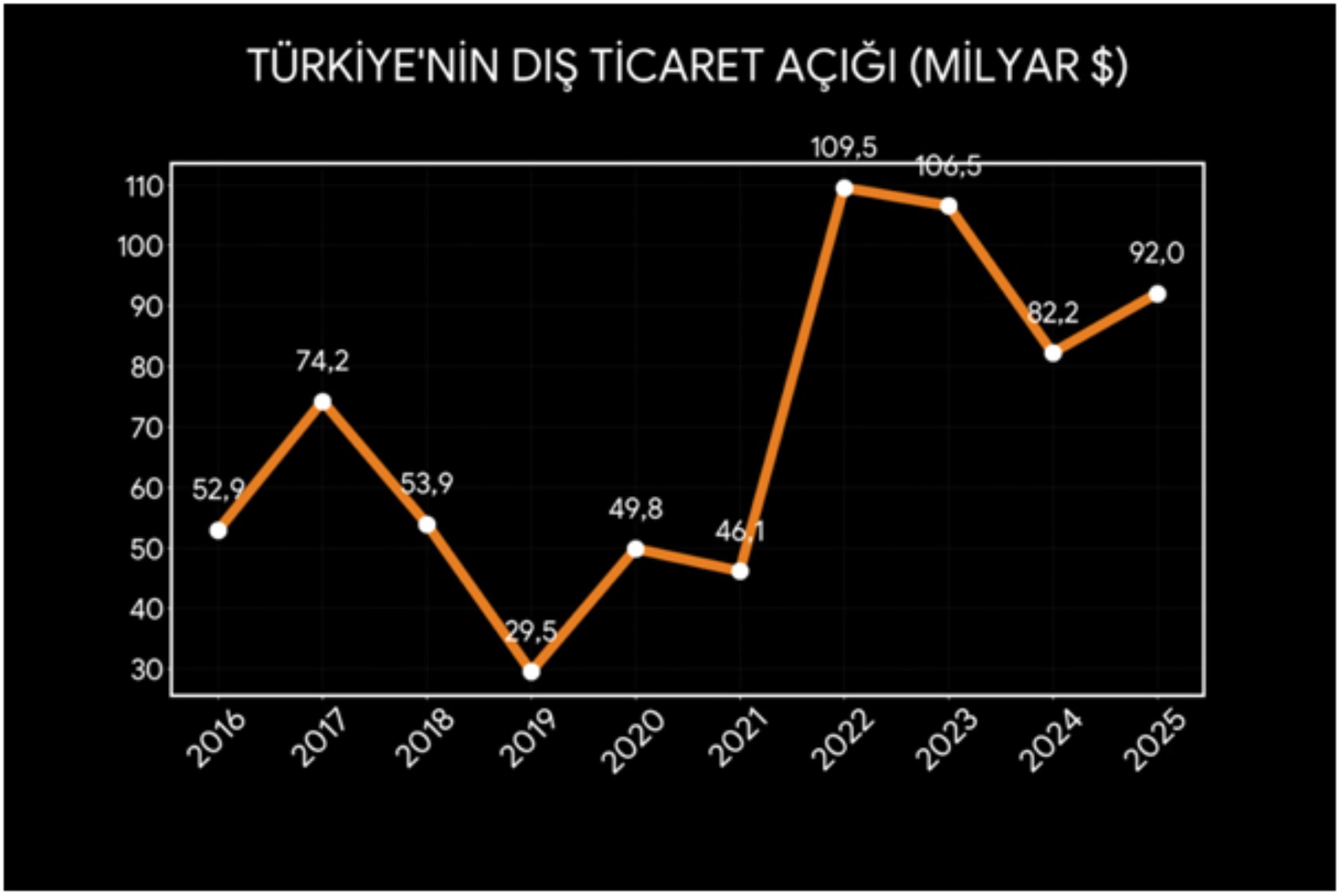
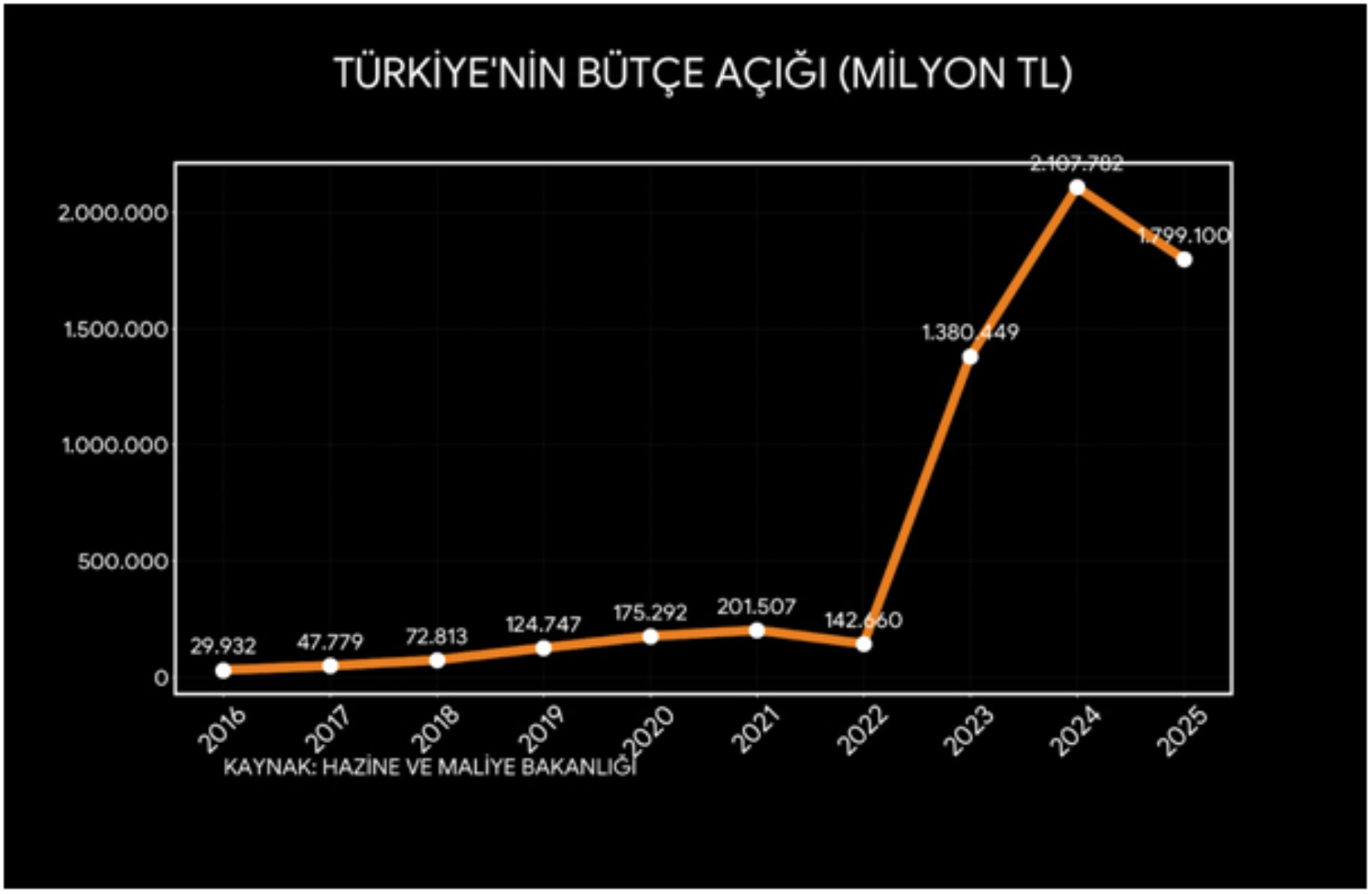
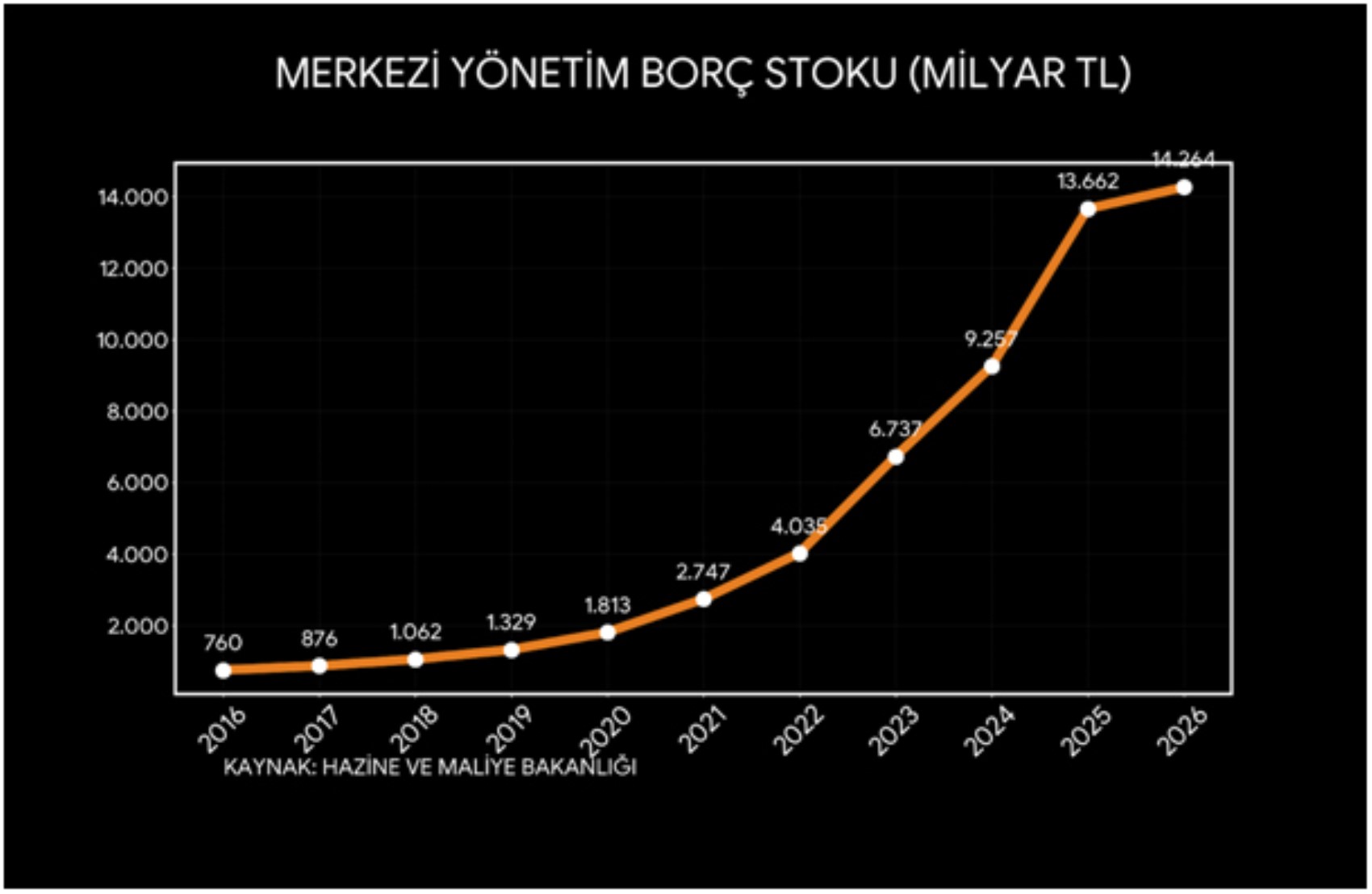
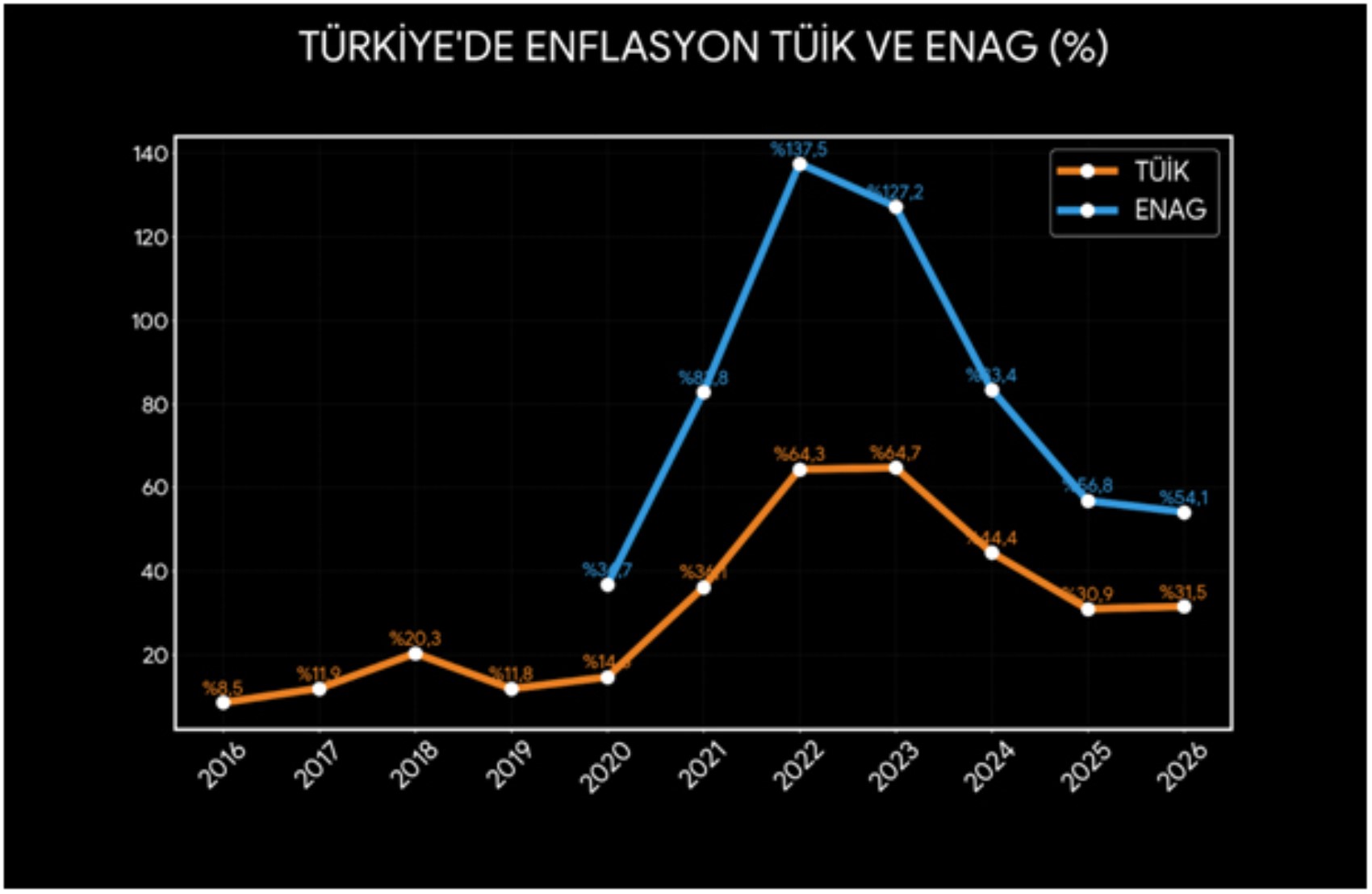
CURRENT STRUCTURE BEFORE THE WAR: Turkey, let alone a war environment, is already a country with a fragile economy even before a war breaks out, with its internal and external deficits, current public sector and external debt structure, being the third country with the highest inflation in the world, and its 92 percent dependence on oil and 98 percent dependence on natural gas. To see the dimensions of these fragilities more clearly, I will add Turkey's last 10-year foreign trade deficit, budget deficit, public sector debt stock, and inflation graphs to the end of the article for those interested.
CURRENT ACCOUNT DEFICIT DANGER: The conclusion from this is: I hope the war does not drag on. But if the war drags on, our foreign trade deficits and current account deficit will increase due to energy imports. Every 10-dollar increase in crude oil prices has a negative impact of approximately 2.5 billion dollars on our current account deficit. In the Medium-Term Program, Turkey had made all its projections for 2026 based on a barrel of oil being 65 dollars. Brent oil settling at 100 dollars could cause our annual current account deficit to increase by approximately 9 billion dollars, and settling around 120 dollars could cause our current account deficit to increase by 14 billion dollars. Due to the negativities that will occur in tourism revenues and export revenues, there is a possibility that the impact on the current account deficit will rise to 16-20 billion dollars. This means that our current account deficit, which was 25 billion dollars in 2025, will rise to 45 billion dollars.
FROM INFLATION TO STAGFLATION: Of course, inflation expectations will increase, expected interest rate cuts will be postponed, and perhaps interest rate hikes will also come to the agenda. I don't know what TURKSTAT says, but the TURKSTAT inflation, which is currently at the 30 percent level, may return to the 35-40 percent band at the end of the year, let alone falling to the targeted 16 percent. It would not be a surprise if the ENAG inflation level, which is currently 54 percent, also exceeds the 60 percent level at the end of the year. Meanwhile, I cannot be optimistic about food inflation due to the separate effect of rising fertilizer prices. Let us also recall that according to the graph shared by İnan Mutlu on the X platform, while food inflation in the world has decreased by 3 percent since 2021, it has increased by 689 percent in Turkey. Due to difficulties in accessing credit as a result of rising interest rates, there is also a risk that the slowdowns seen in industry will turn into stagnation. There is a danger of stagflation, which is stagnation within inflation. The worsening of the unemployment problem is on the agenda.
CENTRAL BANK RESERVES: It is calculated that the Central Bank sold 21.4 billion dollars in reserves between February 27 and March 11 to prevent the rise of the dollar during the war period. (İris Cibre X account post) The comparison of Turkey's short-term debt structure and the Central Bank's foreign exchange reserves is a separate subject of concern. The size of external debts with less than one year to maturity is at the level of 230 billion dollars. Turkey is not expected to fall into trouble in rolling over this debt for now, but we unfortunately see that we are paying debt with debt and its costs are increasing to the level of exploitation.
NOT INTEREST PAYMENT BUT OFFICIAL EXPLOITATION
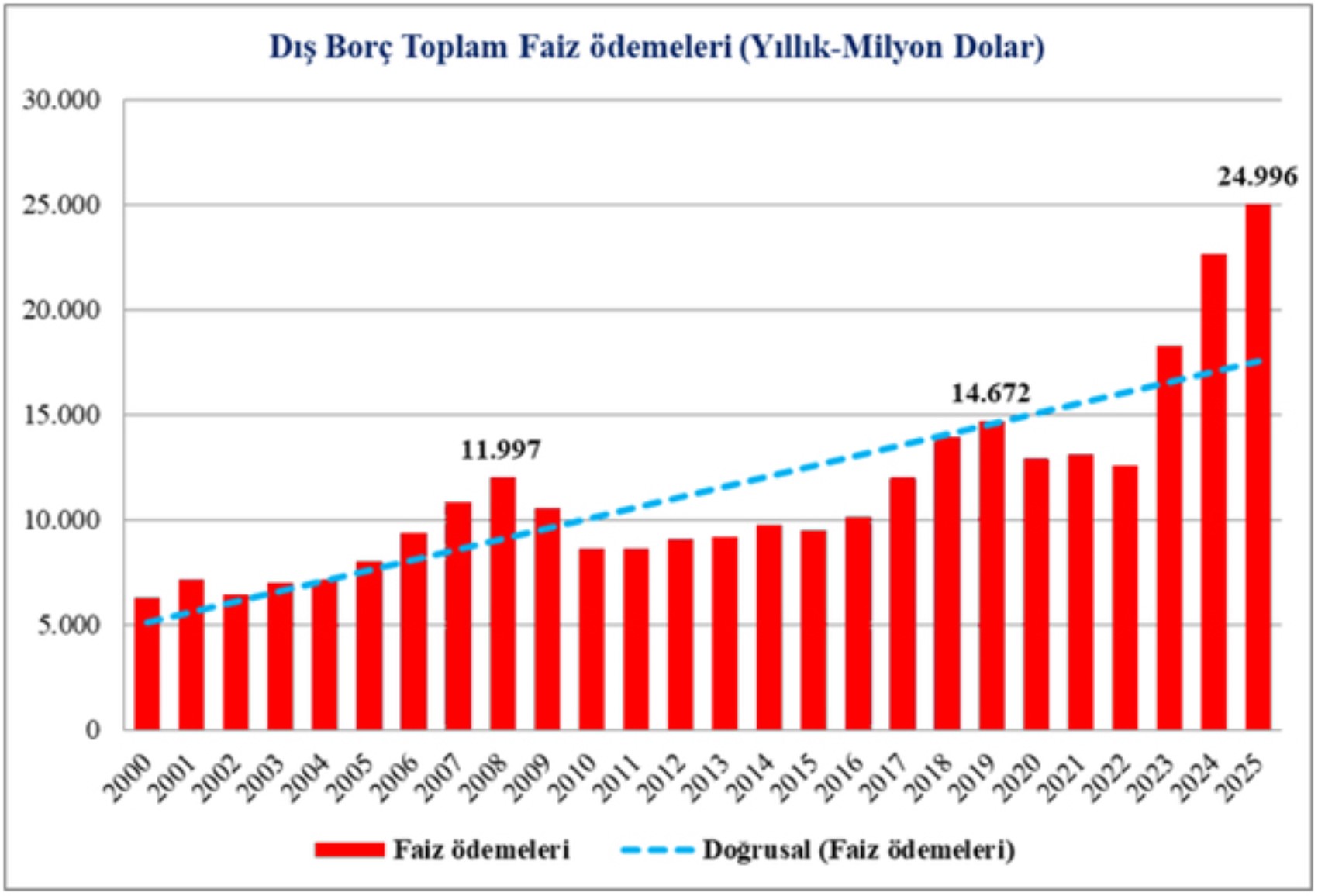
I would like to draw attention to the graph prepared by my esteemed friend, economist Prof. Dr. Yaşar Uysal. The development of total interest payments (public+private) according to balance of payments data. From 5-6 billion dollars annually to 25 billion dollars... Prof. Uysal rightly asks. Where will this road lead? This data has long since exceeded the issue of eating from one's own pocket while eating debt. We are not eating from our own pockets, but from the pockets of our grandchildren. Moreover, by losing our control over our geopolitics, by losing our independence.
Among all these fragilities, judicial operations against CHP municipalities and the decreasing trust in the judiciary every day will further increase the fragility in the markets.
TURKEY REALITIES WITH GRAPHS FOR THE CURIOUS
Most Read

Striking picture for Özgür Özel's 'New Party'

The PKK opening and Özgür Özel’s path!..

How did the newspapers view Özgür Özel's farewell to the CHP?

He killed his wife by slitting her throat: Their children witnessed the moments

What did the CHP do?

Özel’s new party move in the world press

The New CHP, against CEHAPE

Fire at TUSAŞ engine factory in Eskişehir under control

From self-efficacy to despair

Kılıçdaroğlu's first message on Özgür Özel's new party announcement