



Since 2004, Greece has begun to occupy our islands in the Aegean and Mediterranean, and since 2009, it has begun to annex them. Simultaneously, it has militarized the islands that, according to the Treaty of Lausanne, should have remained in a non-military status.
The first to be occupied were the islands of Koyun, Eşek, and Bulamaç, which fall within the borders of Aydın and İzmir. By 2012, the number of our islands under Greek occupation reached 16, and by 2022, it reached 22, including 2 rocky islets.
As a result of this Greek expansionism, which was brought to the agenda by retired Staff Colonel Ümit Yalım, former General Secretary of the Ministry of National Defense, and a handful of other people, our occupied islands are as follows:
“Sakarcalar, Keçi, Kalolimnoz, Ardacık, Koçbaba, Bulamaç, Nergizcik, Eşek, Hurşit, Fornoz, Koyun, Gavdos, Gaidhouronisi, Koufonisi, Dhia, Dionisades, Ardıçcık, Marathi, Küçük Çuha, Limoniye, Venedik Kayalıkları, and Pilati Kayalığı.”
Greece did not stop at occupying these places; it equipped the 14 military bases it opened with cannons, mortars, anti-aircraft, and anti-tank weapons.
Let us also recall the status of some of the 23 islands that were given to Greece for use in 1914, on the condition that they remain in a non-military status, by the “Decision of the Six Great Powers” and the Treaty of Lausanne.
For example, it deployed mechanized divisions to Lesbos, Rhodes, and Kos;
Mechanized brigades to the islands of Lemnos, Chios, and Samos;
And military units at the battalion-regiment level to the islands of Thasos, Samothrace, Agios Efstratios, Psara, Ikaria, Patmos, Lipsi, Leros, Kalymnos, Astypalaia, Nisyros, Symi, Tilos, Karpathos, and Kastellorizo.
Furthermore, it built airports on Lemnos, Lesbos, Kos, and Rhodes and stationed fighter jets there.
THE AKP WATCHED, DENIED, AND WARNED
What was the AKP's stance in the face of these occupations that took place in plain sight?
First, it ignored them and remained silent for the sake of EU membership.
When the issue was brought to the Grand National Assembly of Turkey (TBMM) in 2015, the then-Minister of National Defense, İsmet Yılmaz, confirmed the occupation with the words: “The Aegean islands and islets are legally under the sovereignty of the Republic of Turkey. The existing de facto Greek practices on these islands do not change the legal status.”
However, a year later, Erdoğan claimed that these islands were given away in Lausanne.
Yet, what he was referring to were the 1913 London Treaty, the subsequent Athens treaties signed between the Ottoman Empire and Greece, and finally the Dodecanese islands that Italy transferred to Greece after the Second World War.
When the islands and rocky islets occupied by Greece were brought to the agenda once again in 2017, the then-Government Spokesperson Bekir Bozdağ accused those who criticized Erdoğan of “saying the same thing as Greece,” while Prime Minister Binali Yıldırım claimed that not a single pebble had been lost from the Aegean islands during their term in power.
By 2020, the then-Minister of National Defense, Hulusi Akar, admitted: “18 islands have been militarized and troops have been stationed on them by our Greek neighbors in violation of agreements.” Two years later, he stated that Greece had militarized 16 of the 23 islands in violation of international agreements.
In 2022, after Erdoğan crossed the Greek Prime Minister off his list with the words, “There is no one named Mitsotakis for me anymore,” he issued the following warnings at three-month intervals:
“We once again invite Greece to stop militarizing the islands with non-military status and to act in accordance with international agreements. I am not joking, I am speaking seriously. This nation is determined, and if this nation says something, it follows through on it. Mr. Mitsotakis, you are probably making tourist trips to the islands. It is not possible to get anywhere with this. We warn Greece again to stay away from dreams, rhetoric, and actions that will result in regret, just as it was a century ago, and to come to its senses. Pull yourself together. Turkey will not give up its rights in the Aegean, nor will it refrain from using the powers granted to it by international agreements regarding the militarization of the islands when necessary.”
“Your occupation of the islands does not concern us; we will do what is necessary when the time comes. As we say, we may come suddenly one night.”
The result?
After the February 7 earthquake and the May elections, peace was made with Greece. Erdoğan went to Athens last month, accompanied by the words, “Let us focus on the full side of the glass... Let us end the dogfights over the Aegean, let us close this page now.”
Days before Erdoğan's visit, Greece this time claimed that our Zürafa island, right next to Alexandroupoli and Gökçeada, was “Greek territory.”
After the visit, Greek Foreign Minister Giorgos Gerapetritis stated that a sovereignty issue was never brought to the agenda by Turkey during the talks, saying, “I often hear discussions about demilitarization or gray zones. We did not discuss this... I would not allow this to be brought to the agenda... Greece will not concede a single millimeter of its rights. I am being very clear; we will never discuss sovereignty.”
THE DEVELOPMENT THAT PLEASED GREECE
Why did we tell you all this?
A few days ago, Greek Minister of Maritime Affairs and Insular Policy Christos Stylianides was in Ankara.
Look, it turns out these people have a Ministry of “Maritime Affairs and Insular Policy.” It is clear how tightly they hold onto the issue of the islands.
And for some reason, this Minister met with our Minister of Interior, Ali Yerlikaya. In the joint statement made after the meeting, it was reported that “views were exchanged on strengthening cooperation between the two countries, ways of cooperation for the joint fight against irregular migration and human smuggling were discussed, and the issue of strengthening cooperation and communication between the Turkish and Greek Coast Guard authorities was evaluated.”
It was also noted that the Greek Minister paid a courtesy visit to the Coast Guard Command.
We asked, “What does the Ministry of Maritime Affairs and Insular Policy have to do with the Ministry of Interior,” but let us also remind you of this.
After the July 15 coup attempt, the transfer of the Gendarmerie General Command and the Coast Guard Command from the Turkish Armed Forces (TSK) to the Ministry of Interior pleased Greece the most. In 2018, the then-Foreign Minister Nikos Kotzias openly stated that he was pleased that the Gendarmerie and Coast Guard Commands were connected to the Ministry of Interior, which is “very close to Erdoğan.”
Returning to Minister of Maritime Affairs and Insular Policy Stylianides; he shared his visit with the words, “A new beginning in the joint response of Greece and Turkey to the migration flow at sea.”
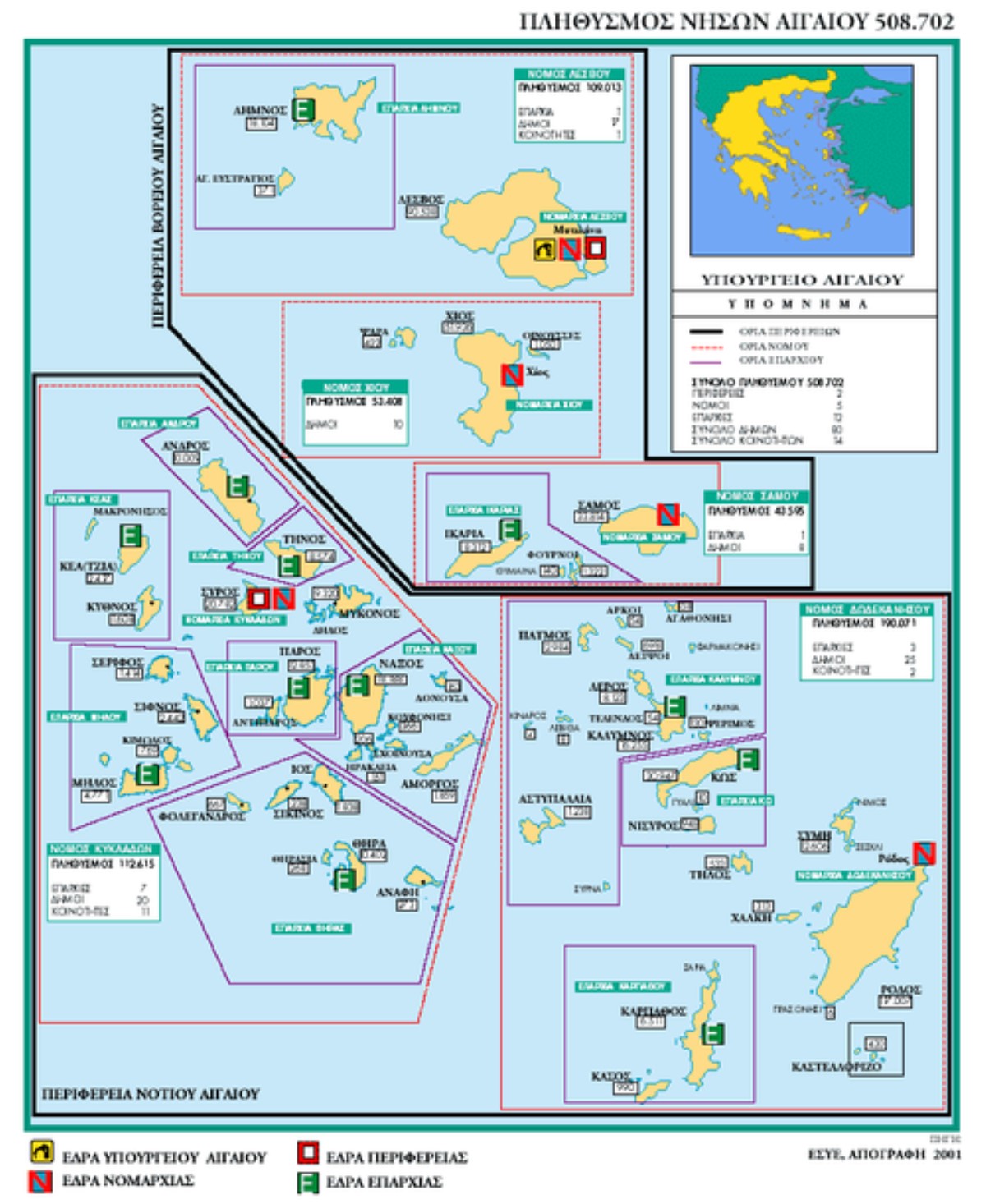
Naturally, we wondered what this Ministry does. And there, on the Ministry's website, we encountered this map showing Greece's occupations in the Aegean. All of our islands that we listed above are on the map.
Of course, it cannot be expected that Minister of Interior Ali Yerlikaya would hold anyone accountable for those occupations in a place where Erdoğan embraces Mitsotakis, Foreign Minister Hakan Fidan embraces Gerapetritis, and Minister of National Defense Yaşar Güler embraces Dendias, but it is as clear as day that this path is not the right one!..
Most Read

Striking picture for Özgür Özel's 'New Party'

Özgür Özel gives a dated response regarding the number of resignations

Forest fire in Antalya brought under control

The PKK opening and Özgür Özel’s path!..
Houthis strike Saudi-owned tanker

How did the newspapers view Özgür Özel's farewell to the CHP?

What did the CHP do?

Özel’s new party move in the world press

The New CHP, against CEHAPE

From self-efficacy to despair