



On June 7, 2026, one of those accounts on X (Twitter) that claims to be a news site/channel but whose primary function is to generate engagement shared the following post:
“‘Dopamine sites’ have started to become popular in South Korea.
You can create a fake shopping cart on these sites without paying any fees.
You can create a fake order.
You can track a courier that doesn't exist at all.
The goal is for you to feel like you have money and thus release dopamine.”
Within a week, the post reached perhaps more than intended: a total of 4.2 million views and thousands of messages, quotes, and reposts...
I joined the bandwagon myself and, as soon as I saw the “news,” I quoted it as follows: “The worst Korea…”
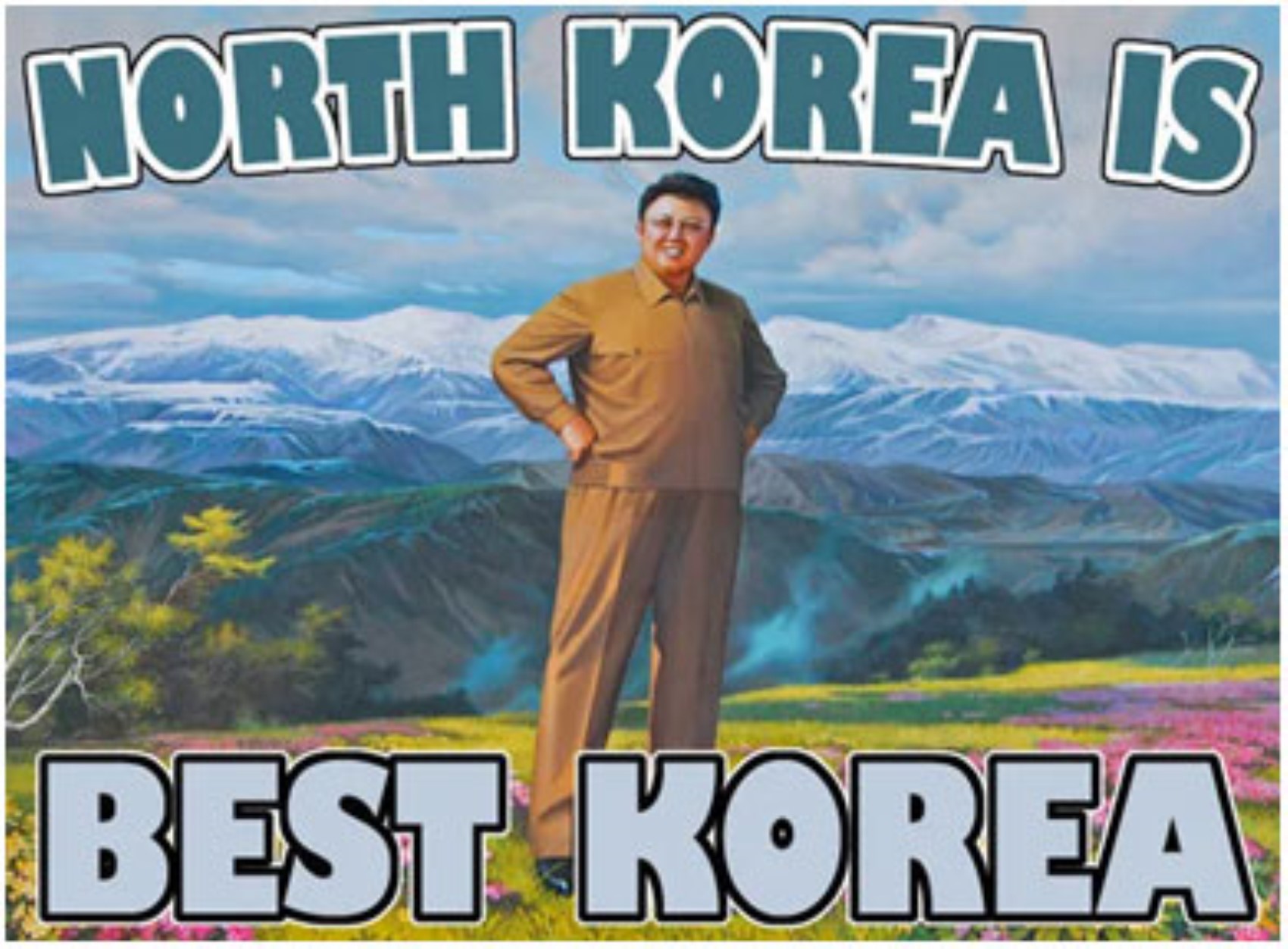
Those who shared it must have realized that the news or the post had high engagement potential. Even though I considered the possibility that it was fake news, I couldn't help but make a reference to the internet's famous meme: the image where Kim Jong Un, the current leader of the Democratic People's Republic of Korea (North Korea), poses laughing in front of a natural landscape with the slogan “North Korea is the best Korea” written on it (below).
When I looked at my own post the next day, I encountered a few unexpected reactions: Some anonymous South Korean accounts were hurling insults at the Turkish people while also pointing out that this dopamine addiction is actually a global problem.
The account that shared the news also cited the newspaper The Korea Times that same day in response to accusations that it was spreading baseless claims. The news from the Seoul-based Times, which was founded in 1950, contained even more surprising details:
“Users say these sites are not just a joke. They describe [the time they spend here] as short breaks that help clear their minds. Lee, a 24-year-old university student, visits a smoking simulator site when she experiences a lack of focus during exam periods or while working on assignments.
‘I don't actually smoke, but it feels like I'm taking a break with someone; that's why it's strangely relaxing,’ says Lee.
Lee says the site also alleviates the loneliness of studying alone.
‘When I enter the site while studying alone, I feel that other people are also struggling; so, in a way, I feel less lonely,’ says Lee. This comfort comes not from chatting, but from knowing that others have also entered the same small virtual space.”
In other words, it goes beyond fake shopping or fake food ordering to establishing human relationships that we could call “ultra” fake and “ultra” virtual.
It is not very surprising that such a development, which seems funny but actually contains great tragedies, is taking place in South Korea. Indeed, South Korea is in the grip of a system called “ultra-capitalist.” This system does not (only) represent the neoliberal dream of a world where the state does not intervene in the market at all; it refers to an order where market competition, corporate culture, and performance pressure are felt very intensely.
We are talking about a society where Confucianism is dominant, where male-female relationships are surrounded by strict boundaries, and where work ethic has historically been dominant. South Korea, which was marked by US hegemony after World War II, is a country where both its historical heritage and neoliberal competition culture combine with state-capitalist development models.
In the order called “chaebol” here, state-supported giant conglomerates, usually under family management, have a central place in the economy. Not stopping there, a competitive education system and work order prevail where career hierarchy is felt very intensely and the race to enter large companies is very fierce. Anxiety about home ownership, expenses spent on education thought to open the door to a prosperous life, status-oriented consumption, and the “consumerist” mentality that controls society push household debt to record highs.
Did this rough summary sound familiar from somewhere? Yet the situation is not limited to this.
According to OECD data, the annual working hours per person in South Korea in 2022 were 1,901 hours; the OECD average was 1,752 hours; meaning South Koreans, who are 5th in the world, worked 149 hours more than the global average (Colombia was at the top with 2,282 hours). In 2024, this number fell to 1,852 hours. The South Korean government states that it is still trying to lower this.
On the other hand, again according to the OECD, South Korea is one of the countries with the highest gender pay gap among developed countries. It is stated that in 2024, women working full-time in the country earn approximately 29% less than men. Furthermore, although women in South Korea are highly educated, they struggle to survive in business life more than men. According to traditional social rules, they are expected to become mothers and withdraw to the home after becoming mothers.
I think the gravity of the issue is understood even with this little data. Moreover, a country that experiences so many advanced-level problems; where employees sleep in their companies; where students try to establish “ultra” virtual relationships with each other in a virtual environment; and where the birth rate is the lowest in the world has already taken enough place in our imagination through both news and works of art and culture.
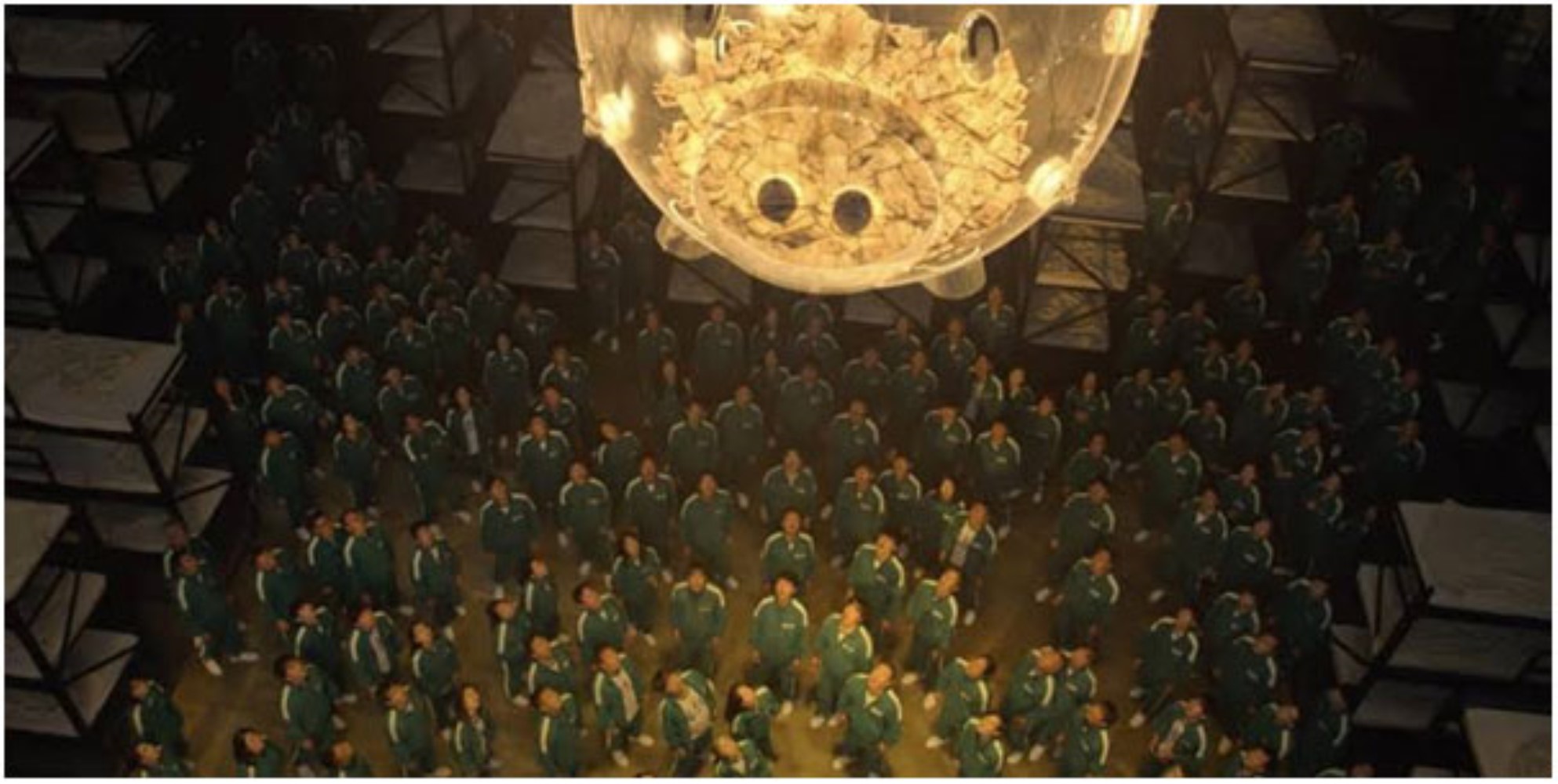
The harshest criticisms of this order also come from this country, where capitalism displays its most savage form, through productions such as Parasite (2019), Squid Game (2021-2025), and The 8 Show (2025). (Let me add the note that I think some of these have a counter-revolutionary nature and that I might write about this in the future).
Such being the case, it would not be wrong to turn around and play devil's advocate or the advocate for the anonymous South Korean accounts: Doesn't our being pushed into loneliness, our being condemned to dopamine, and our voluntary participation in an overly competitive system show that we are all South Korean?
Not only in our country, but in a large part of the world, we read news that the habit of “reading” is on the verge of being forgotten, just as new generations have difficulty learning handwriting. The reason is the phones and tablets that we do not drop from our hands.
The habit of shooting “Reels” and aimlessly “scrolling” has fallen into the grip of everyone from primary school students to their teachers, from village women to plaza men.
Ask yourself; when was the last time you (were able to) spend more than half an hour in a cafe with your friend or in your living room with your family members without looking at your phones?
Dopamine and engagement addiction have become the factors that determine every point of our lives and our future, from our quality of life to our human relationships. Let's also take a look at the “ultra” capitalism in our country and see how one becomes South Korean.
Turkey appears as the second country after Colombia in terms of weekly regular working hours in OECD data; and as one of the countries with the highest rate of those working 50 hours or more per week.
Working hours are quite long in our country as well; in fact, in terms of weekly actual work and the rate of working more than 50 hours, Turkey often presents a picture as bad as South Korea in OECD/Europe comparisons, and even worse in some indicators. The difference between Turkey and South Korea is that long working hours in our country progress more along the lines of low wages, informality, overtime, small business structure, and lack of unionization.
The similarities are many and sometimes more terrifying than South Korea. Of course, emotion and experience also play a role behind this expression.
However, most countries are paying the price for the uncontrolled progress of capitalism. It hasn't been two years since news broke that students studying at UCLA and Berkeley, some of the world's most prestigious universities in California, were sleeping in their cars or on the streets because they couldn't afford rent. A similar painful piece of news was published in Oksijen the other day with the byline of Mine Şenocaklı. Şenocaklı writes that white-collar workers in Levent and Maslak spend their mornings in their cars in parking lots, meaning they are suffering from homelessness.
So, if this is the situation of the “white” collar, what is the state of the “blue” collar? From Seoul to Los Angeles, from Istanbul to Kolkata, whose story is actually being told?
Most Read

Striking picture for Özgür Özel's 'New Party'

Özgür Özel gives a dated response regarding the number of resignations

Forest fire in Antalya brought under control

The PKK opening and Özgür Özel’s path!..

How did the newspapers view Özgür Özel's farewell to the CHP?

Houthis strike Saudi-owned tanker

What did the CHP do?

Özel’s new party move in the world press

The New CHP, against CEHAPE

From self-efficacy to despair