



October 1998,
25 years ago,
I am around 25 years old.
My path had led me to Eskişehir.
I also wanted to visit Anadolu University.
While chatting with someone I met on campus, I mentioned that I was a civil engineer and had studied in America.
They immediately gave me a name.
He was a professor who had also studied in America.
We met.
We bonded immediately when we discovered we shared some professors, locations, parks, and streets from the Stevens İnstitute of Technology, where I had studied.
When he asked me if I would like to work in Eskişehir, I accepted without much thought.
I knew about Anadolu University,
and I was at least somewhat aware of its power and influence.
I had also heard of the legend of Prof. Dr. Yılmaz Büyükerşen.
He was the creator of pioneering institutions such as the Open Education Faculty, civil aviation programs, the center for children with disabilities, the faculty of communication, and the faculty of fine arts.
Later, he also became the Mayor of Eskişehir.
And it has been continuing for years.
And it will continue to do so.
He transformed Eskişehir into a different city.
With its museums, parks, and industry focused on advanced technology, it has far surpassed the central government-supported municipalities in its vicinity.
You might be left speechless when you learn about the hotels built and the number of tourists visiting.
The projects produced do not carry water to the mills of rent-seekers, but to the mill of Eskişehir and its people.
It creates added value for the city.
While it would never cross the mind of any Eskişehir resident to buy a house in the surrounding provinces, there is significant housing demand for Eskişehir from those very provinces.
In fact, highly educated white-collar workers from Istanbul, who manage international projects online through the home-office work model, have moved into my neighborhood.
When I ask why they chose Eskişehir instead of cities closer to Istanbul or wealthier provinces, the answer I receive...
Explains why Büyükerşen needs to remain as Mayor for another term.
He completely reversed the perception that a municipality supported by the central government provides better services.
Surrounding provinces that have received support from Ankara for 20 years have remained far behind Eskişehir.
Eskişehir even established the universities of the surrounding provinces.
It seems that Professor Büyükerşen's dream projects for Eskişehir are far from over.
A Foundation University
But more importantly, a Village University will be established.
We will feed, clothe, and educate the children of low-income families in the region.
The “Village University,” with its budget, campus, and academic infrastructure already prepared, will be brought to life in a very short time.
And then the next one.
Eskişehir will thus take itself one step further as a center for universities, industry, advanced technology, and tourism.
With the story of extracting gold, they tell the public “YOU WILL GET RICH BY SHAKING OFF YOUR POVERTY” after telling this fairy tale and smearing a drop of honey on their lips, they will violate the environment, bag the money, and run away.
They will not allow those who want to turn Eskişehir into a dump with the empty promises of extracting coal, building thermal power plants, and bringing in factories.
Anyway,
I also started working at Eskişehir Anadolu University in December 1998.
It turned out to be much stronger and more powerful than I had thought or known.
I have completed my 25th year.
I learned a lot and became a well-known academic in my field. Beyond traditional academic work, I had the opportunity to produce extraordinary projects with units such as the center for the hearing impaired and civil aviation established by Büyükerşen.
I conducted studies similar to, and even more advanced than, those of the Anglo-Saxons, who are accepted as the center of science not only nationally but also internationally, and I utilized TÜBİTAK, European Union, and other research funds to the fullest.
I wrote books and managed projects.
Worth millions of euros.
Early academic advancements.
We still benefit from internationally supported funds.
He treated me like his own child.
They provided the opportunity and environment to work freely, without being subjected to archaic behaviors and practices frequently seen in other universities, such as cronyism, favoritism, nepotism, sectarianism, and tribalism.
May God bless Anadolu University; it took someone of average intelligence and turned them into a quite productive, and in their own way, famous academic.
He even has a column.
That was until the Neanderthals arrived,
After 25 years, the entire system has collapsed.
The latest data suggests that the universities in Eskişehir have completely collapsed academically.
Why it collapsed is a separate issue.
We will write about that too.
I am still happy that I prefer to look forward and set sail for new routes rather than whining about the structure.
Most of all, I am happy because I met Assoc. Prof. Dr. Ali Umut Türkcan, with whom I shared a room at the guesthouse when I first came to Eskişehir.
We started working at Anadolu University at the same time as Ali, who is currently the head of the Çatalhöyük excavations and an academic in the Department of Archaeology.
Thanks to him, we better understood the importance of archaeology, which we had previously viewed merely as pots and pans.
Much like the saying, “He who walks with a thoroughbred horse will eventually adopt its habits or its nature,” we grew closer to books and intellectual circles, blending them into the mental algorithm we had dynamized with engineering principles.
When he immediately accepted my proposal, saying, “Since we get along so well, let’s rent a house together instead of dragging ourselves through guest house corners,” we became roommates until his marriage.
We enjoyed it very much.
I was even happier when I got to know his father, and I told myself how glad I was that I had come to Eskişehir and been roommates with Ali.
It turned out that Prof. Dr. Ergun Türkcan was a graduate of Mülkiye and one of the most famous professors of the institution.
Even during his time as an assistant, his nickname was “Prof.”
When we met, he was a Presidential Advisor at TÜBİTAK.
I was younger back then, approaching my 30s.
It wasn't the first time I had met someone of such high stature, but I couldn't help but think that it was the first time I had met such an intellectual academic.
I am not sure if I have met anyone better in the years that have passed since.
I don't think so, either.
Professor Ergun,
translated Freeman's book “The Economics of Innovation” into Turkish.
With his book titled “The Rise and Fall of Planning in Turkey 1969-1980” he shed light on a turbulent period of Turkey during the Cold War.
I bought a book he wrote titled “From History to Technology” and read it at least 3-4 times,
I still find it difficult to understand.
I suppose the jargon was too heavy.
"Professor, you write very heavily.
These books will not be read only by Mülkiye graduates.
People like us, half- “literate” responding to my complaint that "engineers will read it too,"
Later on,
“Science, Technology, and Politics in the World and in Turkey” we thank our professor Ergun for writing his book in a style that even those of us who are poor in knowledge can understand.
I taught this book in my master's program for a long time.
I made it mandatory for my master's students to purchase it.
I sort of took on the role of the book's distributor in Eskişehir.
In the meantime, an academic colleague of mine, who had studied at the country's best technical university and came to Anadolu University because he wasn't given a position there, and who was my neighbor down the hall, filed a complaint against me.
He claimed I was forcing students to buy books.
As if I were forcing them to buy shirts.
Fortunately, despite the complaint, the “Self-Administrators” of Anadolu University did not take such a complaint regarding a “book” into consideration.
They also didn't ask why he had complained about this book, which would later go on to win the TÜBİTAK and Sedat Simavi awards.
But through this, I understood very clearly why the doctoral advisor at the university he came from had not given him a position.
I also understood why the Eskişehir universities collapsed 25 years later.
He had them complete their doctorates, then refused to grant them positions and sent them to us.
He kept the good students and dumped the trash in the surrounding provinces.
In the meantime, our professor Ergun has written another new book.
My goodness, our professor is very productive.
By writing, he both keeps his mind sharp and digitizes it so that future generations can benefit as well.
A digital mind transfer method, which is His “podcasts” we also follow our professor's work with great interest.
The title of the new book is:
“The Political Economy of Imperialism: Three Styles of Imperialism - From History to Theory”
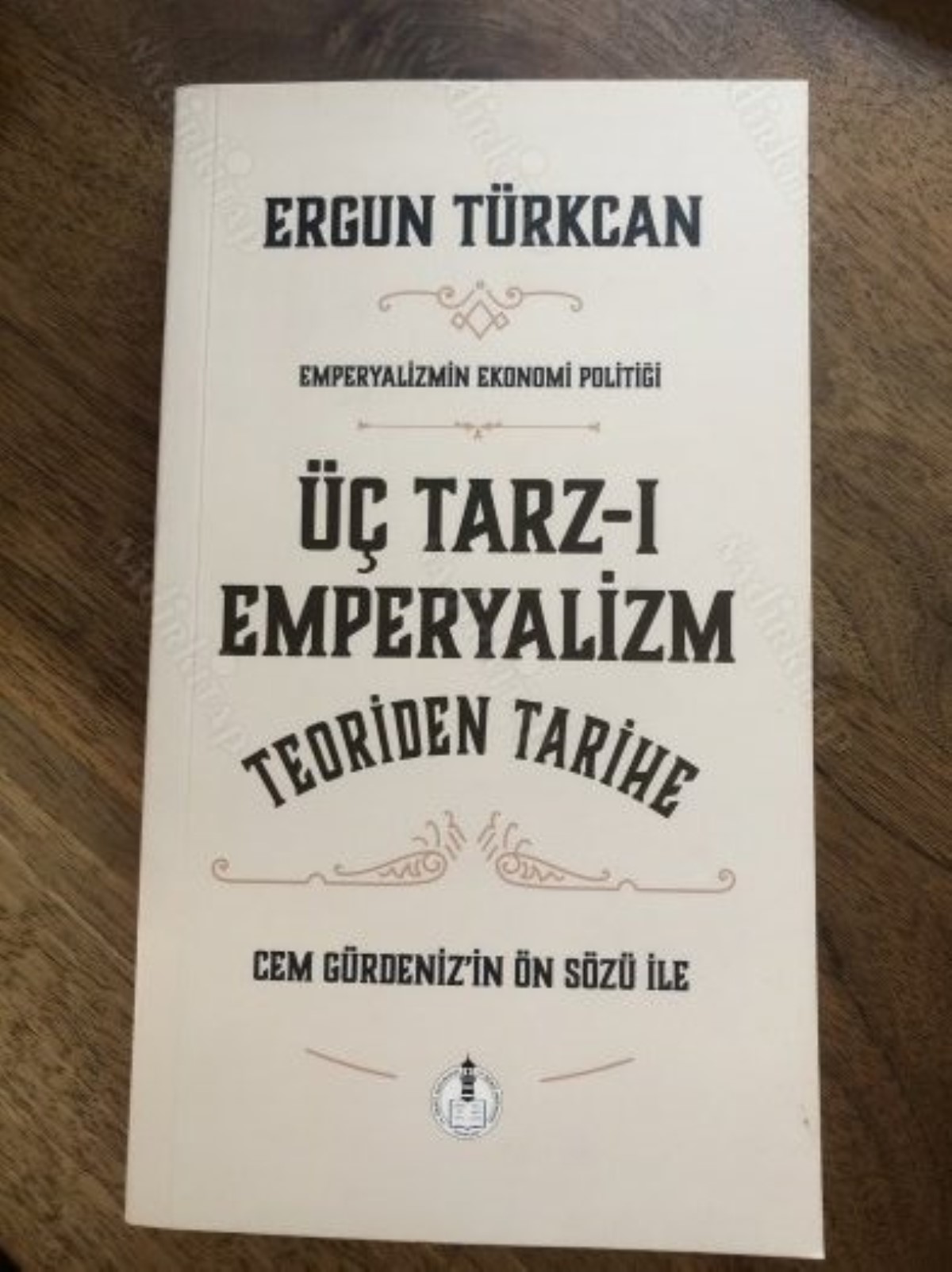
There are very few intellectuals in Turkey who can evaluate history in mutual interaction with current global, continental, and regional developments. Professor Ergun is one of the most exceptional among them.
He conveys current political, economic, and military developments to his readers and followers with an unusual synthesis, using a style that was once heavy with jargon for me, but is now more fluid and simple.
In this book, through articles published in various sources, he sheds light on the difficult period we are in by presenting developments shaped by imperialism for geopolitical and economic reasons to the reader from regional, continental, and global perspectives, with highly striking headings and flow.
He explains with examples how imperialism, despite its constant desire to succeed and dominate, undergoes transformations within itself and how it is balanced by rising new powers when the time comes.
In the middle and upper levels of the bureaucracy in Ankara, no one should take office without reading this book and scoring at least 70 on an exam based on it.
As for those currently in office, it should be mandatory for them to read the book “Three Styles of Imperialism” as soon as possible.
I am glad I came to Eskişehir,
I am glad I worked at Anadolu University.
And I am also glad that I had the chance to know Professor Ergun Türkcan.
Most Read
It never ends: Another FETÖ memory
A mind fixated on leggings...
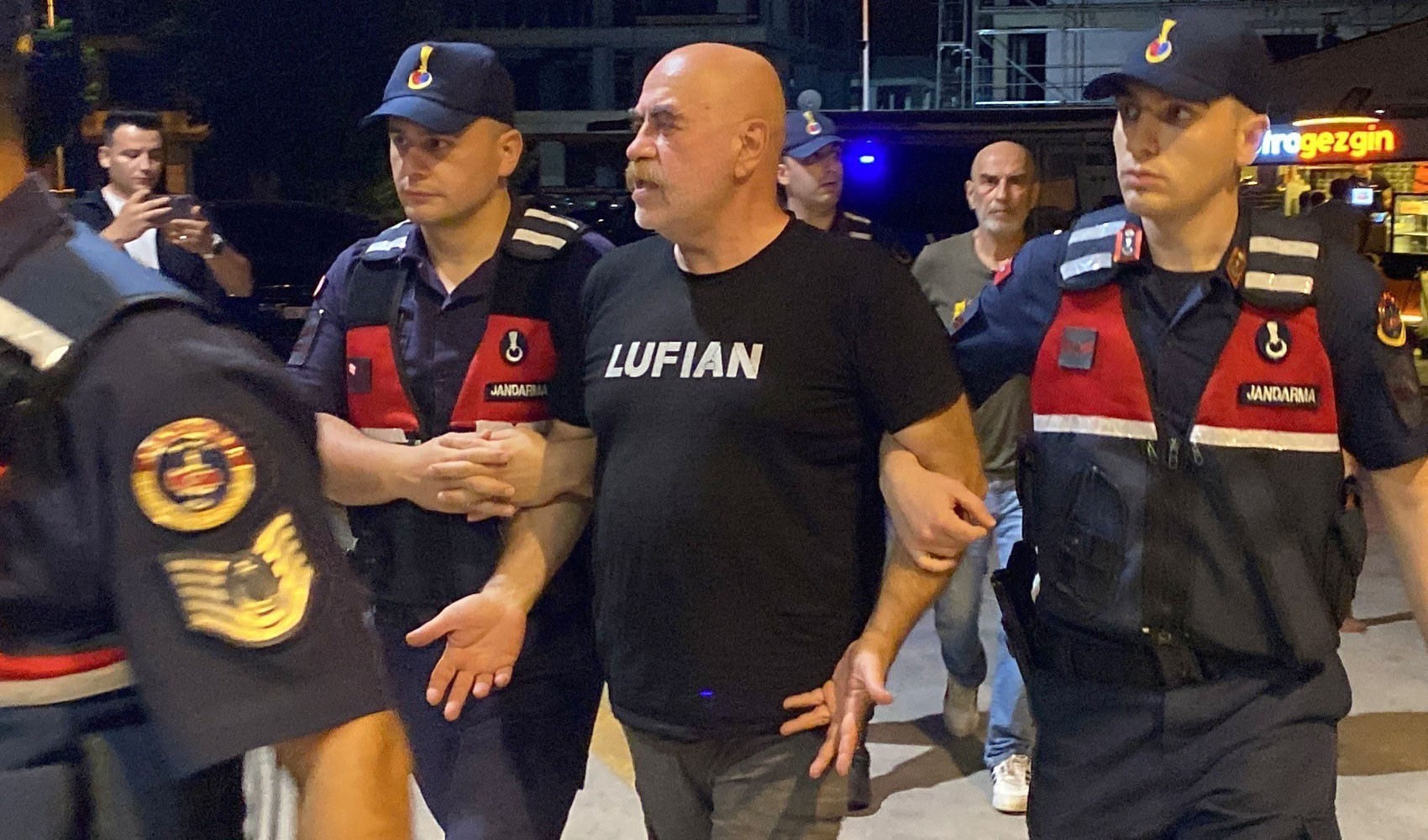
Famous director Ezel Akay and his brother have been detained
The official, rumored to be switching to the AKP, has begun a persuasion tour
The debates within the CHP do not interest me at all
Ümit Özdağ's comment on the new party
Strict oversight for novice drivers
Enver Altaylı claim in the Yazıcıoğlu file
The acting mayor election won by the CHP will be repeated starting from the third round
Warning on the risk of hair loss with GLP-1 drugs