



We have a very well-known idiom that drags our lines of thought into the irrational corridors of traditional transmission: When using a proverb or making an analogy, we say, "There is no error in a simile." With this bridge sentence, we use idioms and proverbs that are not only problematic to think about, let alone legitimate to apply, without any hesitation. We often do not reflect on how deeply a single saying or proverb, which was needed according to the context, affects our cultural codes.
For example, when a child is pulled out of compulsory education and placed in a workshop as a worker, we say "A tree is bent while it is young" to validate the child's family. Although this stereotyped maxim might be perceived as a well-intentioned sentence praising early education when first heard, it is actually a sentence that praises shaping a fragile being through pressure and forcing the child into obedience.
In other words, this proverb is nothing more than the legitimization of a behavioral pattern that foresees cruelty and approves of violence through the language of tradition.
However, we ignore the fact that children are not trees, that the act of "bending" directly targets the child's character, and what kind of adult a defenseless child whose character is broken by violence and pressure during childhood will become.
Then, increasing the dose, we say, "The flesh is yours, the bones are mine," and thus the process is sealed in the vernacular. This seal means that the child's status as a subject, whose body has been handed over to a foreign authority, is recklessly usurped by adults. The child is no longer an individual-subject; they are an instrumentalized object positioned within the production system. A child who has been deprived of the opportunity for basic education has a very low chance of encountering higher education for the rest of their life. This traps them in the socioeconomic class into which they were born.
So, if these kinds of cultural codes, which affect the structure of society in the person of a country's child individuals, have been accepted to the point of turning into that country's education system; can these words be perceived as harmless traditional patterns?
It must be insisted and emphasized that "there is an error in these similes" and cultural codes must be redesigned.
Interestingly, the saying "a tree is bent while it is young" is also an important point of distinction in the German vocational training system. So much so that Germany accepts this saying almost as a touchstone to consciously determine the direction of vocational training in the exact opposite direction.
One of the methods of creating the structural framework of a system is to determine what should never be done within that system. When it comes to children's rights and vocational training, the structural framework is first stabilized based on what the system will never accept.
The education system in Germany emphasizes this in particular: "Getting used to something and learning are not the same thing."
Because making a child a part of the production system through pressure at an early age causes all education and learning paths in that child's future life to close.
In summary, if we move from the proverb: It sees the bending of a tree while it is young not as a benefit, but as a severe deformation. It is not possible for a young sapling that has been deformed by being bent and twisted while young, and whose growth paths have been locked, to become a huge tree in the future and provide breath to the society in which it lives.
CHILD PHYSIOLOGY AND WORK ACCIDENT RISKS
Since our topic is child laborers, before detailing the vocational training system in Germany, it is necessary to talk about the neurobiological, physical, psychological, and cognitive characteristics of children at these ages and what these characteristics mean for children forced to work in the production sector.
So much so that work accidents that cause children in this age range to lose their lives are not caused by individual "carelessness"; they stem from being started in heavy working life at an age when they should not be working.
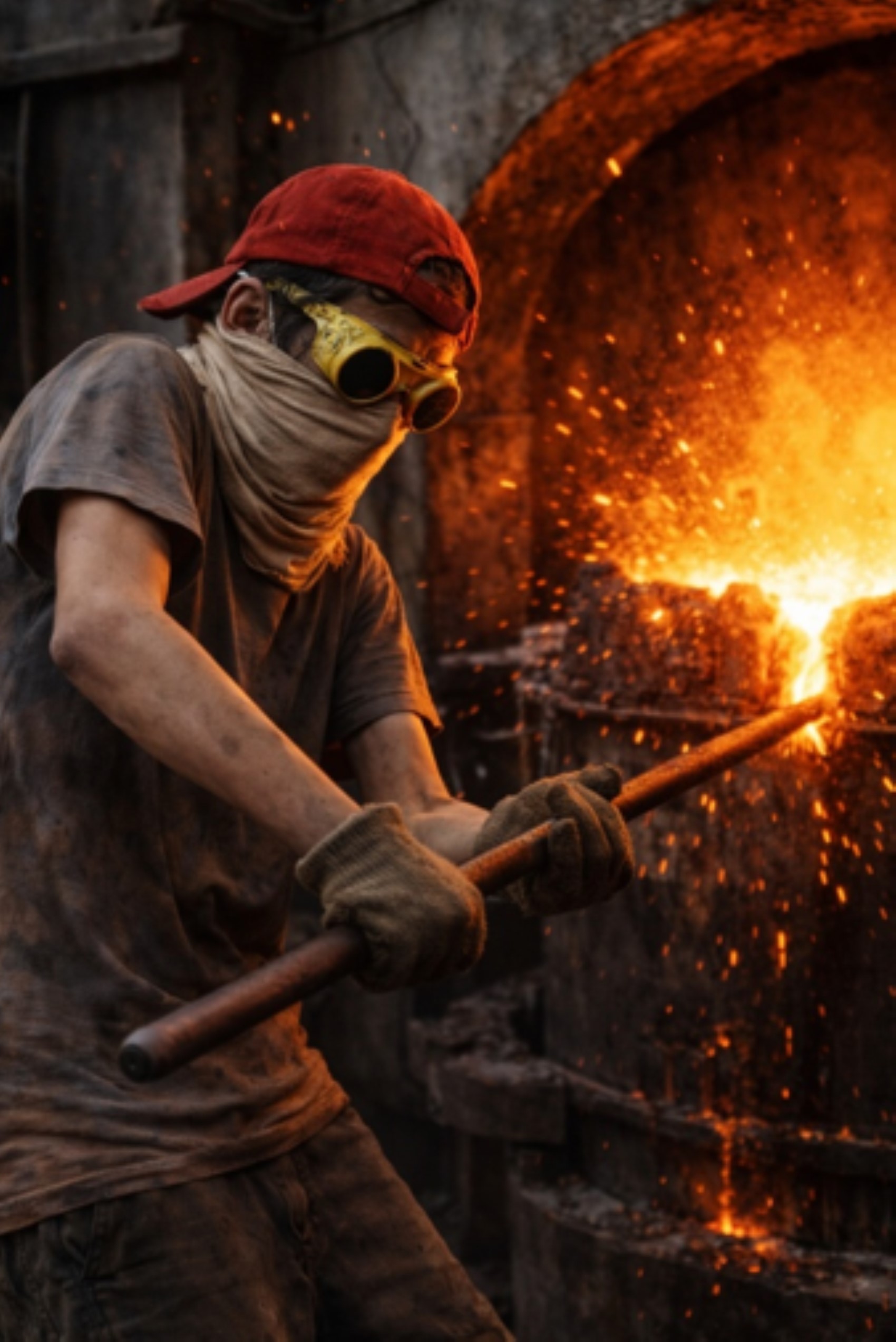
Due to their neurobiological structures that have not yet settled into place, their physical inadequacies, and their psychological and cognitive characteristics, these children are neither in a position to choose to work in these jobs with their own free will, nor do they have the stability to endure this situation. The adults around them are responsible for every kind of disaster they experience in the heavy working conditions they are forced into!
When the issue is this vital and internationally proven tendencies are this clear; it is not necessary to try to understand the system, the employer, or the family. What is essential is to examine the individual who is in the transition phase from childhood to youth, to explain to the responsible adults what they can and cannot do, and to demand strict protective measures in this regard.
As you are well aware, learning is a system that requires not only repetition but also meaning-making, distancing, and the capacity to think about alternatives. In children between the ages of 14–16 and even 18, this capacity is limited by the child's age. In fact, it is vitally important to examine and understand this subject in detail.
FROM A PHYSIOLOGICAL PERSPECTIVE:
In children aged 14–16, the musculoskeletal system begins to strengthen; but endurance and balance are not complete.
During adolescence, the faster growth of arms and legs compared to the torso constantly changes the body's center of gravity; therefore, movement coordination is not fully established.
The balance here does not only mean standing; the child is also unstable in terms of distributing power correctly while carrying loads, using machines, or making sudden movements. This balance, which is automated in adults, does not exist in a child between the ages of 14–16. Fine motor skills and risk anticipation are also not as developed as in an adult.
Therefore, while a child is working in a heavy job, they cannot establish a cause-effect relationship, cannot correctly read their own physical limits, and cannot intuitively distinguish risk.
In the 14–16 age range, growth plates (epiphyses) are still open. These plates are active cartilage tissues that allow bones to grow in length and are much more sensitive to mechanical stress than adult bone.
Heavy machines such as drills, grinders, and presses constantly produce micro-vibrations. Constant repetitive loading, vibration, and heavy physical strain at these ages lead to early partial closure and microscopic damage in the growth plates.
These damages do not always appear as sudden fractures; in fact, they are often not noticed in childhood and appear in adulthood under the name of occupational disease. Moreover, these damages are not recorded as "work accidents"; however, they continue for a lifetime as an occupational disease.
These hidden deformations that occur naturally increase the risk of work accidents in children of this age by causing loss of control and sudden reflex errors.
FROM A COGNITIVE PERSPECTIVE:
Abstract thinking is not yet stable in a child in this age range. The ability to evaluate long-term consequences is still in the formation stage.
Concepts such as profession, future, and career are shaped not by experience, but often by the guidance of authority. Career choice is based on the expectations of the family, school, or economic conditions rather than individual interest. For this reason, guidance provided at this age functions more as early fixation than as a choice.
FROM A PSYCHOLOGICAL PERSPECTIVE:
Adolescence is the most sensitive stage of identity formation in psychology; in this stage, the individual does not yet test "who they are," but rather "where they are accepted." Therefore, the individual in adolescence seeks belonging, wants to be approved, and avoids conflict with authority; because they do not want to be excluded. The capacity to say "no" is low; saying no is perceived as risking relationships, so they may prefer short-term compliance over long-term benefit.
In other words, when the family or the educator authorities around the child say, "Are you going to go to a general high school, go to university, and end up unemployed? You won't be able to learn a trade after that age, this is better for you, it's already very hard to make a living, at least you'll have a trade, you won't be a burden to your mother and father," these suggestions are not perceived by the child as erroneous suggestions that can be objected to, but as well-intentioned guiding truths.
SO WHY IS THE CHILD'S CAPACITY TO SAY "NO" LOW?
Saying no requires cognitive maturity, emotional resilience, and skills such as social risk-taking, but all of these skills are still very fragile during adolescence. Especially in countries with family and education systems based on obedience, it becomes even more difficult for young people to think about their own long-term benefits. This situation becomes even more pronounced in children coming from lower socioeconomic classes.
THE RELATIONSHIP BETWEEN SOCIOECONOMIC RISK, PHYSICAL DEVELOPMENT, AND WORK ACCIDENTS
In children growing up in socioeconomically disadvantaged conditions, inadequate and irregular nutrition, limited access to health services, and chronic stress push the child into a disadvantaged position from the very beginning. There are significant differences in strength, endurance, and attention between children in the same age group living in better conditions and these children.
A child experiencing socioeconomic disadvantage in the 14–15 age group has lower muscle mass, weaker bone density and durability, and naturally experiences more attention loss due to fatigue! This significantly increases the risk of work accidents, especially in jobs involving machinery, load carrying, noise, and dangerous equipment.
Pedagogy and occupational health literature unite at this point and say: Children who are not yet physically mature and carry socioeconomic risk are disproportionately harmed in dangerous working environments.
Look at the ironic functioning of the system, that current practices proceed in the exact opposite direction of what they should be. So much so that while all scientific facts stand before our eyes, young children of poor families are chosen as victims to the gears of this wheel with terrible cruelty.
It is unknown how rational it is for authorities who defend child labor as an education system to act; however, it is necessary to insistently explain how this system is applied in countries that have the best vocational training systems at the international level. Even if ideas are different, finding a common denominator in the benefit of the country is the only way to defend the children's right to life. In this vein, I hope that examining the education system in Germany will be a guide.
VOCATIONAL TRAINING IN GERMANY
First of all, it should be stated that vocational training schools are one of the strongest pillars of education in Germany, and after high school education, children who continue school and work life together through the vocational training method (dual education / duale Ausbildung) can continue to work in the field they learned and were trained in, and are also encouraged to pursue higher education for specialization. In the universities they attend, they are both more successful and more prestigious than children who start university directly. Because they are proficient in the field in which they receive higher education both in practice and in theory. This advantage accompanies them when they enter the job market.
First of all, knowing the age ranges and areas of responsibility of children included in the vocational training system in Germany will be useful in clarifying our view of the system.
CLEAR RED LINES BASED ON AGE IN GERMANY:
Children between the ages of 14–15 participate only in educational activities; they never get involved in the production process, this is strictly prohibited, and there are heavy penalties for business owners in this regard.
In case of violation of this prohibition, in accordance with the legislation on the protection of child and young workers in Germany (Jugendarbeitsschutzgesetz), there is a fine of up to €15,000 for employers; in cases of severe and intentional violations, stricter sanctions are applied, including imprisonment for up to one year.
Young people who have completed the age of 15 are offered the opportunity to start vocational training, provided that they have completed their basic education. However, it is strictly forbidden for them to work in jobs that may be dangerous for them.
The work areas that are strictly prohibited for young people under 18 are: heavy industry, high-risk machinery, and activities where they may be exposed to chemicals. These areas are seen as red lines, and young people are consciously kept away from these areas.
So what is the hallmark of these strict age limits?
Proceeding with a question-and-answer technique on this subject will be useful in simplifying the topic.
WHY ARE CHILDREN IN GERMANY NOT STARTED IN VOCATIONAL TRAINING BEFORE FINISHING THE 10TH GRADE?
In Germany, basic compulsory education is 12 years. For a child to start vocational training, they must first have finished the 10th grade; thus, they will have completed 10 years of compulsory education. However, having completed the 10th year of education does not mean that the child can work actively; it only means that they can continue their education in a vocational direction by their own choice.
During the vocational training, which lasts between 2.5 and 3.5 years, the child retains student status. The weekly working time is a maximum of 40 hours. Approximately 3 days of these 40 hours, i.e., 24 hours, are spent at school, and 16 hours are spent at the workplace. The time the child spends at school is also considered working hours and is subject to payment.
DO CHILDREN IN GERMANY EARN MONEY DURING VOCATIONAL TRAINING?
Yes, they do, and this money they earn is enough for them to live in a house separate from their families. In other words, the child can pay their rent and meet their basic needs with the money they earn. This does not mean that the child is cut off from their family; because the family is also a part of the education system and supports the child to become an independent individual. The goal here, in addition to providing the young individual with professional skills, is to support them in forming this stage of their personal development as an independent individual within society. Families, schools, and firms act together.
There are very important laws that protect children who start vocational training. A base monthly wage is determined for each training year; it is mandatory for the received wage to increase gradually every year during the training period. It is against the law for the employer to pay a low wage. There are also extra protection laws for those under 18 in this area. For example, it is forbidden to go to the workplace after a long school day; the school day is counted as a full working day.
The wages received are roughly as follows:
While base wages are fixed, there are also firms that pay above these amounts. These young people are very valuable to firms; because the need for skilled personnel is high in Germany, as it is in many parts of the world. During this period, young people continue to receive the child benefit (currently €250) paid by the state in addition to their salaries. This money is deposited into the bank accounts of children living apart from their families. The wages paid during the vocational training of young people are given below, and there are no deductions from these wages.
In the industry/metal/electrical field, approximately €1,000–1,100 in the 1st year, €1,250–1,400 in the 3rd year;
in public, municipal, and large companies, €1,050–1,200 in the 1st year, €1,300–1,450 in the 3rd year;
in the trade/retail field, €850–1,000 in the 1st year, €1,100–1,300 in the 3rd year;
in small craft businesses, it is around €700–900 in the 1st year, €900–1,100 in the 3rd year.
WHAT IS THE DISTRIBUTION OF EDUCATION RECEIVED AT SCHOOL AND WORKPLACE?
Profession-specific courses:
These are courses given directly depending on the profession being performed; the child is given vocational theory training related to the field in which they will work. It includes courses such as technical drawing, reading diagrams, technical mathematics; production processes, logistics processes, and sales processes; material knowledge, quality control, measurement/electrical safety, measurements, and circuits.
General education courses:
German (professional communication), mathematics adapted to the profession, economics and law (labor law, contracts), social studies, citizenship, occupational health and safety, environment and sustainability; English in some professions.
Occupational safety training courses:
These courses are mandatory and are given by experts both at the workplace and in schools. This training is not seen as a process of getting used to a job; the main purpose of the courses is to provide the student with risk awareness and to show possible dangers. The courses that are mandatory to be given in the vocational school and at the workplace in the field of occupational safety are: risk analysis, accident prevention, rights and responsibilities, protective equipment, danger limits, and age-related prohibitions.
WHY IS IT NOT PERMITTED TO START VOCATIONAL TRAINING IN THE 14–15 AGE RANGE?
When talking about the vocational training of children between the ages of 14–16, we must first ask the system this question: Is the goal to provide the child with vocational training alongside compulsory basic education; or is it an effort to provide a production-based profession instead of compulsory education?
If the goal is to adapt the child in this age range to the production system as a worker, the German system, considering the reasons we mentioned at the beginning of the article, strictly rejects the inclusion of children in this age range in production-based vocational training.
Systems that defend the inclusion of young children in production in underdeveloped countries take a position as if they are defending children, using very similar patterns to each other, claiming that children have the right to work and that "the child's labor should be respected."
SO DO CHILDREN BETWEEN THE AGES OF 14–15 HAVE THE RIGHT TO WORK?
International law says "no, they do not."
The child has the right to protection, the right to basic education. When these rights are taken away from them, it is the family that is guilty for not protecting their child; the responsibility to provide these rights for the child lies with the state.
Ex iniuria ius non oritur / rights cannot be produced from injustice!
In other words, a behavior that is contrary to the law cannot be put forward as a "right"; because an irregular practice is not a right, it is a crime.
ILO (International Labour Organization) Convention No. 138 and the UN Convention on the Rights of the Child state that what is essential is that the child is not employed, and that their education and development are protected.
WHY IS THE DISCOURSE OF "RESPECT FOR THE CHILD'S LABOR" PROBLEMATIC?
The expression "respect for the child's labor" appears positive at first glance; but it is problematic from a pedagogical perspective. Because child labor is not labor bargained for with free will. The child's labor is shaped under the pressure of their family, school, and economic conditions.
For this reason, education literature says this:
Respect for the child's labor is not to put them on the market at an early age; it is not to demand their labor yet. Because childhood is not an economic category, it is a developmental stage.
There is a very clear distinction in international law and pedagogy literature:
The right to work is the right of an adult individual. The child's right is the priority right to protection. These two rights are not in equal status.
When it comes to a child, the "right to work" is not considered; the principle of the best interest is observed. This principle is not an ideological discourse, it is the fundamental principle of the UN Convention on the Rights of the Child.
Because the level of development of a society is not measured by how early it pushes its children into working life; but by how long it can protect them, how it educates them, and the positive results it achieves.
Most Read

Striking picture for Özgür Özel's 'New Party'

The PKK opening and Özgür Özel’s path!..

How did the newspapers view Özgür Özel's farewell to the CHP?

He killed his wife by slitting her throat: Their children witnessed the moments

What did the CHP do?

Özel’s new party move in the world press

The New CHP, against CEHAPE

Fire at TUSAŞ engine factory in Eskişehir under control

From self-efficacy to despair

Kılıçdaroğlu's first message on Özgür Özel's new party announcement